Skip to Content Facebook Feature Image

China releases seafloor "chemical map" of eastern seas after two-decade research

China

China

China

China releases seafloor "chemical map" of eastern seas after two-decade research

2026-04-14 16:58 Last Updated At:04-15 00:47

The China Geological Survey has released the results of nearly two decades of marine geological surveys in China's eastern seas, unveiling a detailed "chemical map" of the seafloor that is expected to support ocean planning, environmental protection, and resource exploration.

Based on data from more than 20,000 sampling sites, researchers inspected the sediment samples and carried out machine learning analysis, and yielded the most comprehensive and reliable geochemical dataset ever compiled for the region. Similar to a complete "elemental check-up" of the seafloor, the study effectively delivers a full-spectrum analysis of seabed sediments, covering the whole sediment transfer process from land to ocean.

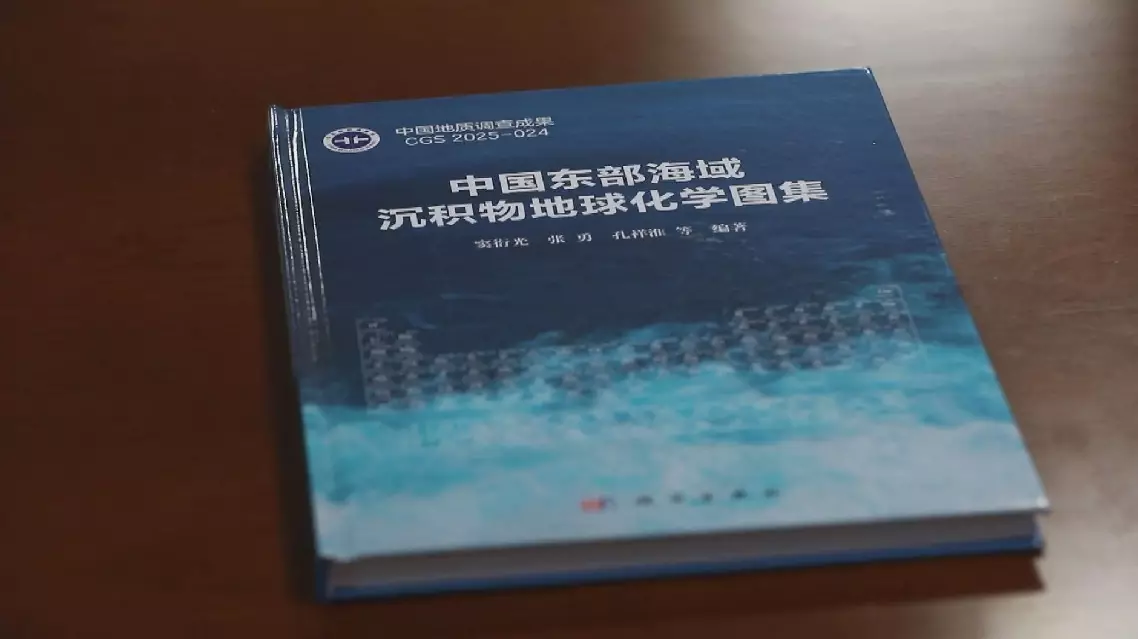
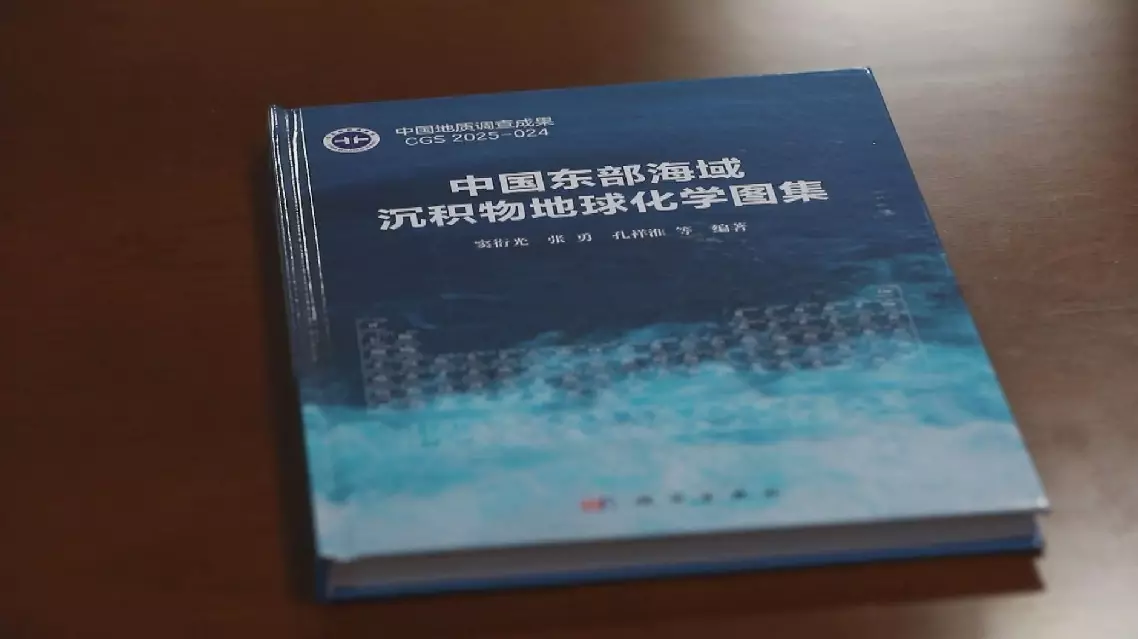
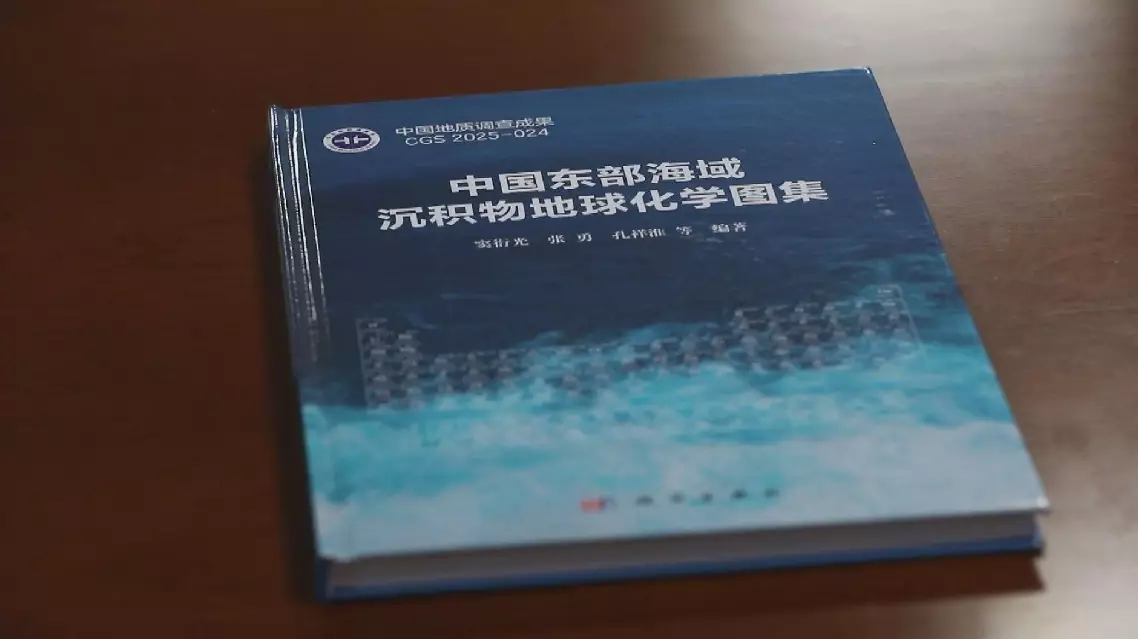
Using this data, scientists have mapped the distribution and concentration of dozens of elements, including iron, manganese, copper and rare earths, culminating in the Geochemical Atlas of Sediments in China's Eastern Seas. The atlas is expected to serve as a key reference for marine development and conservation in the region.

"Element distribution allows us to quickly identify polluted areas and ecologically sensitive zones, set protection boundaries, and better manage marine pollution and risks. It also helps pinpoint subsea mineral resources, facilitating prospection. It can also benefit scientific researches with its valuable data for understanding sea history and the Earth's evolution," said Dou Yanguang, a researcher with the Qingdao Institute of Marine Geology under the China Geological Survey.

Covering key waters such as the Bohai Sea, Yellow Sea, and East China Sea, China's eastern seas region acts as a vital link between the Eurasian continent and the Pacific Ocean. Sediment layers on the seabed, composed by soils, sand, and biological materials, preserve a long-term record of geological and environmental change, including continental movement, climate shifts, and river evolution.

The research fills a long-standing gap in systematic geochemical mapping of the area and is expected to strengthen China's role in global studies of marginal seas.
China releases seafloor "chemical map" of eastern seas after two-decade research
China releases seafloor "chemical map" of eastern seas after two-decade research
China releases seafloor "chemical map" of eastern seas after two-decade research

China releases seafloor "chemical map" of eastern seas after two-decade research

China releases seafloor "chemical map" of eastern seas after two-decade research

China releases seafloor "chemical map" of eastern seas after two-decade research

A one-legged oriental white stork has managed to find its footing again after a custom-built prosthetic was fitted at a wildlife rescue center in north China. Staff there are now assessing whether this unique bionic bird is ready to be released back into the wild.

The stork was brought to the Sunshine Wildlife Rescue and Shelter Center in Tianjin Municipality back in 2024 with a severe injury after its left leg became entangled in netting. A resulting infection was so serious that amputation was required.

While staff at the center slowly nursed the bird back to health, it was initially determined that it would be unable to survive in the wild on a single leg. To change its future, the team searched for a solution that would eventually allow it to return to nature.

Last year, staff began experimenting with prosthetic designs, testing a range of materials including carbon fiber, plastic, and rubber. Each attempt improved the outcome, but the key challenge was developing a suitable “shock absorber” to make the prosthesis feel more natural to the stork and help it fully restore its movement.

Oriental white storks typically land and step with the front of the foot first, and walking naturally requires a strong upward rebound. To deal with this, the latest prosthetic developed by the teams incorporated a mechanical component to allow for finer adjustments while providing cushioning to support the bird as it walks.

"The internal compression rod and clasp system enables [the stork to have] micro-adjustments so that the stork is able to better get used to [walking with the prosthesis]. And the [prosthesis] can match the height of the stork's remaining leg while offering both walking support and shock absorption," said Li Zheng, a staff member at the Tianjin Wildlife Rescue and Domestication Breeding Center, as he showed off the final design.

The 17-centimeter-tall prosthesis is made from resin and silicone, and it is designed to weigh roughly the same as a normal bird leg. Its orange color was also chosen to help it blend in with its peers.

The breakthrough came on the morning of Wednesday, when staff carefully carried out the fitting. After nearly an hour-long, non-invasive procedure, the prosthesis was successfully installed.

Returning to its outdoor enclosure, the stork took some time to adjust and adapt to the new feeling. But, before long, it was soon seen attempting to step up onto a rocky formation with its new leg leading the way, and after a couple of shaky moments it appeared able to keep its balance.

Next, staff say they will monitor and assess how well the stork is acclimatizing to the brand new prosthetic. If they deem it can live and move normally, the bird will be released back into the wild at an appropriate time.

One-legged stork finds feet again after being fitted with custom prosthetic leg

One-legged stork finds feet again after being fitted with custom prosthetic leg

Recommended Articles