BOSTON--(BUSINESS WIRE)--Apr 14, 2026--
WHOOP, the human performance company, is bringing its hometown energy to the 2026 Boston Marathon with a citywide activation designed to celebrate runners, engage the Boston community, and redefine how athletes approach performance and recovery. Founded at the Harvard Innovation Lab in 2012 and still headquartered in Boston’s Kenmore Square, WHOOP is uniquely positioned to shape how athletes and spectators experience one of the most iconic events in sport.
This press release features multimedia. View the full release here: https://www.businesswire.com/news/home/20260414358868/en/
Timed to a defining moment in the global racing calendar , WHOOP will deliver a high-impact, citywide presence, anchored by immersive experiences at the WHOOP HQ along the marathon route and amplified through media, transit, and community programming across the city.
Bringing Boston Together
Ahead of Marathon Monday, WHOOP will host a series of community-driven events at its Kenmore Square headquarters, creating an open space for runners, fans, and the broader Boston community. Open-invite programming will welcome runners of all levels, complemented by VIP previews and headquarters tours that showcase the Boston roots of WHOOP and the company's leadership in human performance. In collaboration with leading partners across fitness, recovery, and nutrition, WHOOP will create a central gathering point for connection, education, and celebration - from shakeout runs to post-race recovery experiences. Events will take place throughout the weekend, are free to attend, and available by ticket while capacity lasts.
A Home Base at Mile 25
Located at Mile 25 of the Marathon course, WHOOP HQ will serve as a central hub for runners and racegoers throughout the weekend, transforming into a dynamic, high-energy environment. The space will feature a cheer zone to power athletes through the final mile, alongside a recovery lab and watch party designed to support smarter recovery and extend the energy of race day.
WHOOP headquarters will be open to the public from 9:00 AM to 6:00 PM from Saturday to Monday. For more information on programming and events, follow WHOOP on social media.
A Citywide Takeover - From the Streets to the T
WHOOP will have a high-impact presence across Boston during marathon week, including full Green Line train wraps and digital displays along key transit corridors. Prominent placements near Back Bay Station and along the finish-line stretch will ensure WHOOP is embedded in the runner and spectator experience at every stage of race day.
WHOOP will also be featured across local radio and television, including Marathon Monday coverage, bringing real-time performance and recovery insights to fans across the city and extending the reach of the brand beyond the course.
About WHOOP
WHOOP delivers a wearable membership to help people live healthier, longer lives and unlock extraordinary potential. Through a powerful 24/7 wearable with a 14-day battery life, WHOOP provides intelligent health guidance across sleep, recovery, strain, fitness, and longevity. The health platform includes an FDA-cleared ECG, a Healthspan longevity feature, Blood Pressure Insights, and Advanced Labs blood biomarker analysis. Research shows that people who wear WHOOP daily log more than 90 additional minutes of exercise per week, get over two extra hours of sleep, and have 10% higher heart rate variability.
Trusted by millions of members worldwide including athletes, global leaders, military operators, executives, and artists, WHOOP has become a modern symbol of disciplined, intentional living. WHOOP was founded in 2012 and is headquartered in Boston. The company has raised more than $900 million in venture capital, ships to 56 countries, and operates in six languages. To learn more or start a one-month free trial, visit whoop.com and connect with WHOOP on Instagram, X, Facebook, LinkedIn, and YouTube.
WHOOP to Transform Boston Marathon Weekend into a Citywide Celebration of Performance, Recovery, and Community
SAN DIEGO (AP) — The smell of rotten eggs permeates Steve Egger's Southern California home, especially at night as the nearby Tijuana River foams up with sewage from Mexico before emptying into the Pacific Ocean.
Egger, 72, says he and his wife have frequent headaches and wake up congested and coughing up phlegm. Their home is outfitted with a hospital-grade filtration system that cycles the air every 15 minutes.
Despite those measures, “most nights we breathe in a horrible stench,” he said. “It’s awful.”
Since 2018, more than 100 billion gallons (378 billion liters) of raw sewage laden with industrial chemicals and trash have poured into the Tijuana River, according to the International Boundary and Water Commission. The river traverses land where three generations of the Egger family once raised dairy cows. The United States and Mexico signed an agreement last year to clean up the longstanding problem by upgrading wastewater plants to keep up with Tijuana’s population growth and industrial waste from factories, many owned by U.S. companies.
In the meantime, tens of thousands of people are being exposed to the sewage. Environmental Protection Agency Administrator Lee Zeldin said during a February visit to San Diego that it will take about two years to resolve one of the nation’s worst and longest-running environmental crises, which affects a largely poor, Latino population.
Raw sewage doesn’t just smell bad. It emits hydrogen sulfide, a toxic gas that can erode neurons in the nose and trigger asthma attacks. It can cause headaches, nausea, delirium, tremors, cough, shortness of breath, skin and eye irritation and even death, according to the Centers for Disease Control and Prevention. Its long-term health problems are only starting to be understood.
There is no federal safety standard for hydrogen sulfide except for workers at sites where the risk is extreme, such as wastewater treatment plants or manure pits. A few states set standards decades ago, but those are outdated. A California proposal would require the state's 56-year-old standard reflect the health risks of the gas. In Texas, lawmakers are also considering updating its law.
“I think when you look back when the standard was first established and then it was reviewed, it was all about nuisance — basically it was all about odor,” said the California bill’s author, Democratic Sen. Steve Padilla, who represents the Tijuana River Valley. “I don’t think we had the understanding scientifically of what the health impacts were here, and now we do.”
Even if the bill passes, the new standard would likely not be developed until 2030.
A “Stop the Stink” sign is on Egger’s fence, part of a campaign that Citizens for Coastal Conservancy launched to demand officials clean up the cross-border sewage.
The 120-mile (195 km)-long river starts in the Mexican city of Tijuana, crosses into California and empties into the ocean. San Diego County beaches nearby have closed for years, and Navy SEALs who train in the water have fallen ill.
Just since January, the Tijuana River has carried 10 billion gallons (38 billion liters) of mostly raw sewage and industrial waste across the U.S. border, according to International Water and Boundary Commission data. By comparison, a massive pipe that ruptured in January sent 244 million gallons (924 million liters) of untreated sewage into the Potomac River, affecting affluent, largely white communities. That spill prompted federal intervention within weeks.
In 2024, a sampling by San Diego County and the CDC representing the roughly 40,000 households close to the Tijuana River found 71% could smell sewage inside their homes and 69% had a member get sick from being exposed.
Even at low levels, “you’re going to feel like it’s in your sinuses. You can’t get rid of the smell. It’s going to be a constant irritation,” said Ryan Sinclair, an associate professor of environmental microbiology at Loma Linda University School of Public Health.
The EPA said it is working with local and state officials to find ways to mitigate the smell.
San Diego County this year distributed over 10,000 air filters to homes. But the air remains a threat. The river’s foam can now be seen from space.
In September 2024, Kimberly Prather, a chemistry professor at the University of California, San Diego, and a team of researchers installed air monitors in the neighborhood where Egger lives.
What they found stunned them: The hydrogen sulfide concentrations were 4,500 times higher than typical urban levels and 150 times higher than California’s air standards when river flows peaked at night.
Many residents, like Egger, felt vindicated.
“They’d been being more or less gaslit and told, ‘There’s gas. It’s a nuisance. It smells, but it’s not bad,’” Prather said.
She said her researchers have since detected thousands of other gases coming from the river that don’t smell, “and many of them are more toxic.”
Egger said doctors have told him to move, though they have not given him a written diagnosis as suffering from hydrogen sulfide exposure.
But his family's roots run deep. His wife grew up in Tijuana. His brother and his late brother’s family live in the neighboring houses on what was Egger Dairy. Nearby are the dilapidated milk barn and rusting farm equipment.
“This is where I've lived all my life, with my family, my parents, my grandparents,” he said. “This is home.”
When Egger was a boy, he swam in the river that ran only during the rainy season. Now mostly filled with sewage and industrial waste, it goes year-round. He says the river should be restored to its historical route, which is closer to the border and farther from most residences and schools. He believes then it would not pond, creating hot spots of hydrogen sulfide gas.
Less than half a mile from Egger’s home, the smell is overwhelming where the river shoots out of pipes after being forced briefly underground near Saturn Boulevard.
Scientists call it “the Saturn hot spot.” The stench permeates passing cars with the windows up, lingering inside for days.
Dr. Matthew Dickson and his wife, Dr. Kimberly Dickson, run a clinic about a mile from the hot spot. Many of their patients suffer from migraines, nausea, wheezing, eye infections and brain fog. Those with asthma say they use their inhalers more when the air reeks.
“They'd say, ‘You know, I feel better when it doesn’t smell outside,’” Dr. Kimberly Dickson said.
In August 2023, a tropical storm caused the river to overflow onto the streets. Within days, the doctors' caseloads tripled.
Electronic health records confirmed what the doctors suspected. When the river flows have jumped, the number of patients they have treated for respiratory problems has increased by 130%, they said.
“Every day that this isn't fixed,” Dr. Matthew Dickson said, “more people are getting sick.”
Pineda reported from Los Angeles.
The Associated Press receives support from the Walton Family Foundation for coverage of water and environmental policy. The AP is solely responsible for all content. For all of AP’s environmental coverage, visit https://apnews.com/hub/climate-and-environment
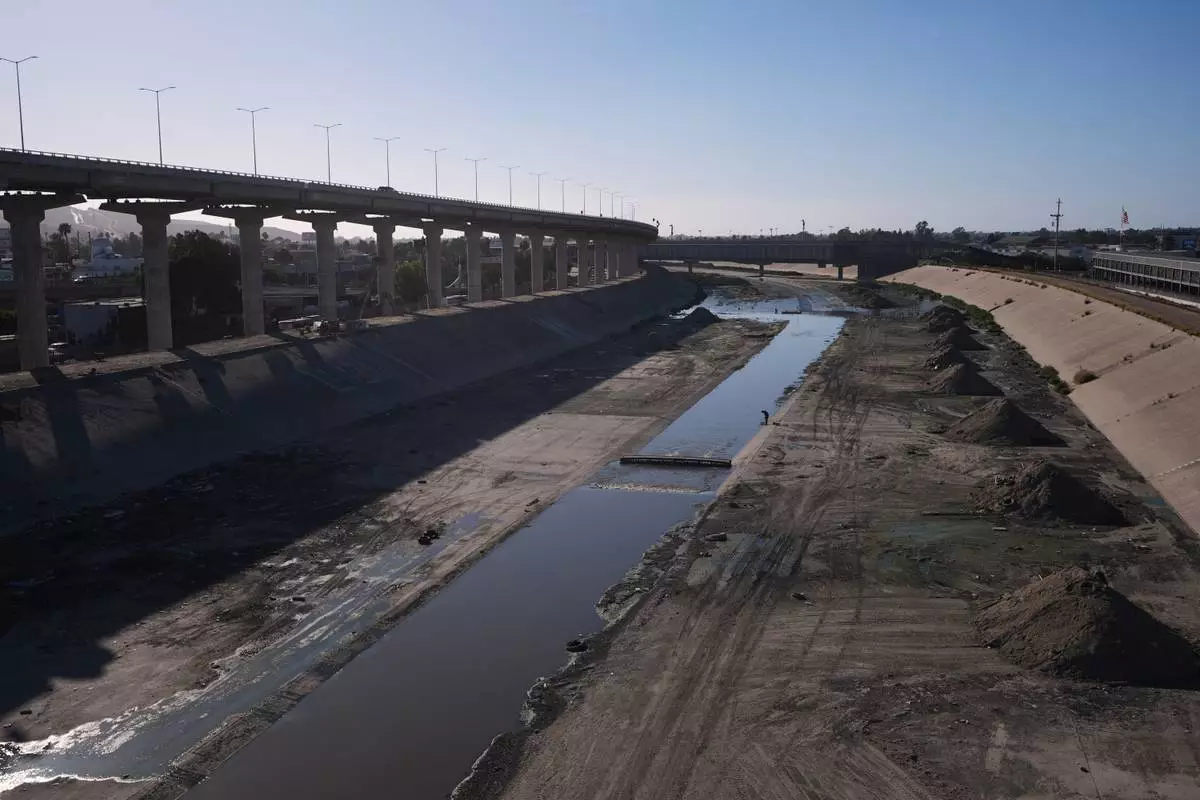
A man walks along the an aqueduct holding the Tijuana River as it arrives to the border and enters the United States, above, from Tijuana, Mexico, Wednesday, April 8, 2026. (AP Photo/Gregory Bull)
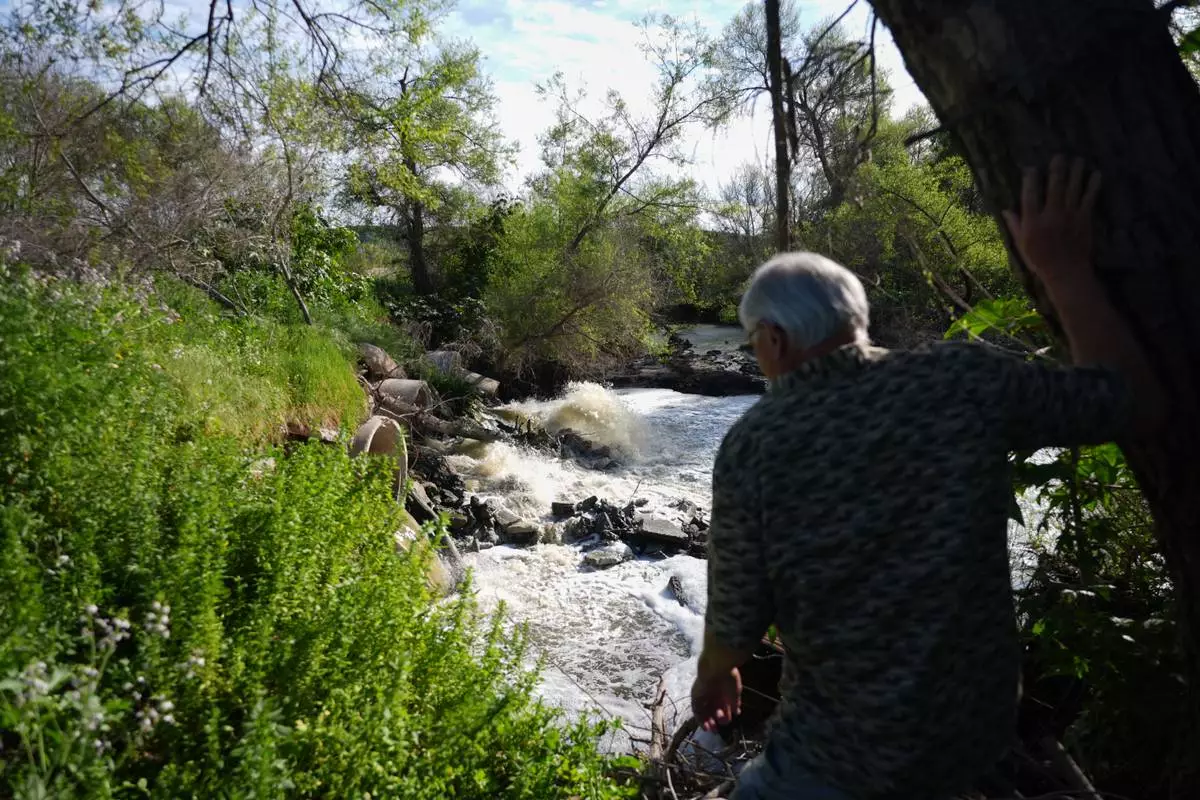
Steve Egger looks over what scientists call "the Saturn hot spot," a section of the Tijuana River where the contaminated water splashes out of pipes and creates pools of foam near his home Friday, March 6, 2026, in San Diego. (AP Photo/Gregory Bull)

Surfers pass under a wave alongside the Imperial Beach pier Wednesday, March 11, 2026, in Imperial Beach, Calif. (AP Photo/Gregory Bull)
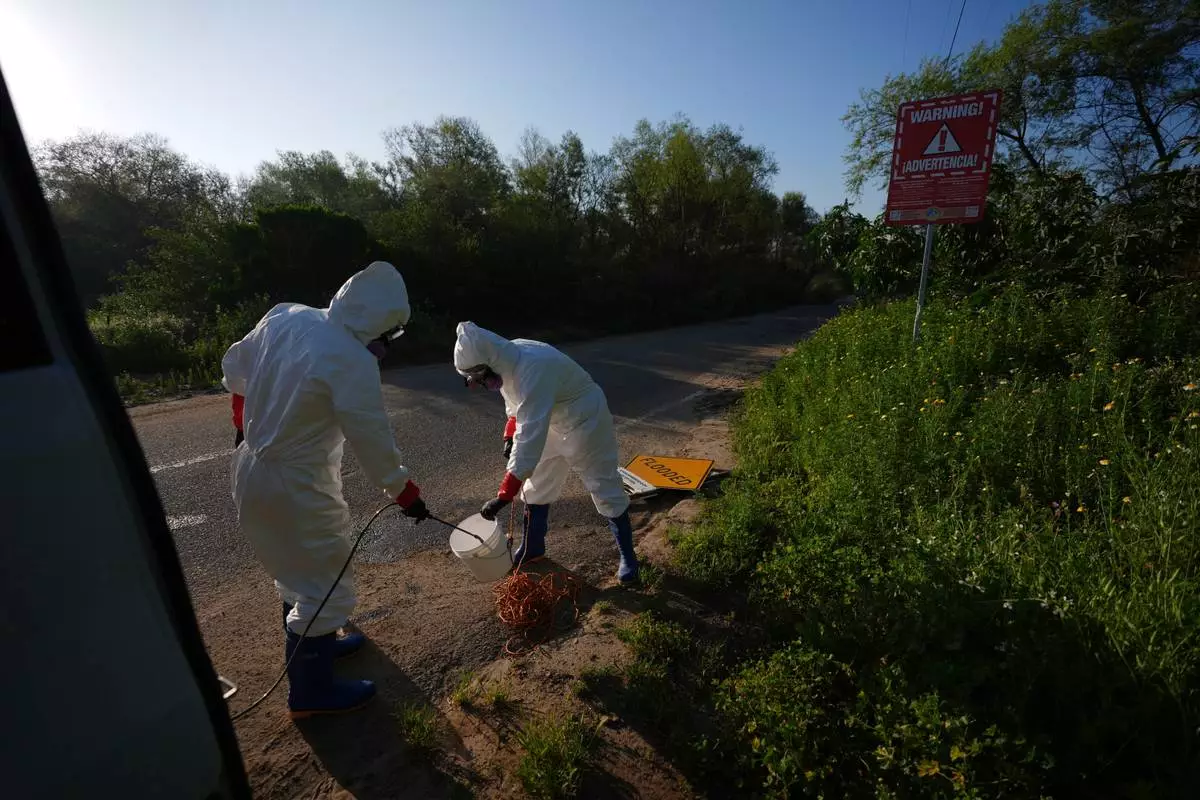
Trent Fry, right, and Leila El Masri clean a bucket after collecting a water sample of the Tijuana River, as part of a research team from the University of California, San Diego, Wednesday, March 11, 2026, in San Diego. (AP Photo/Gregory Bull)
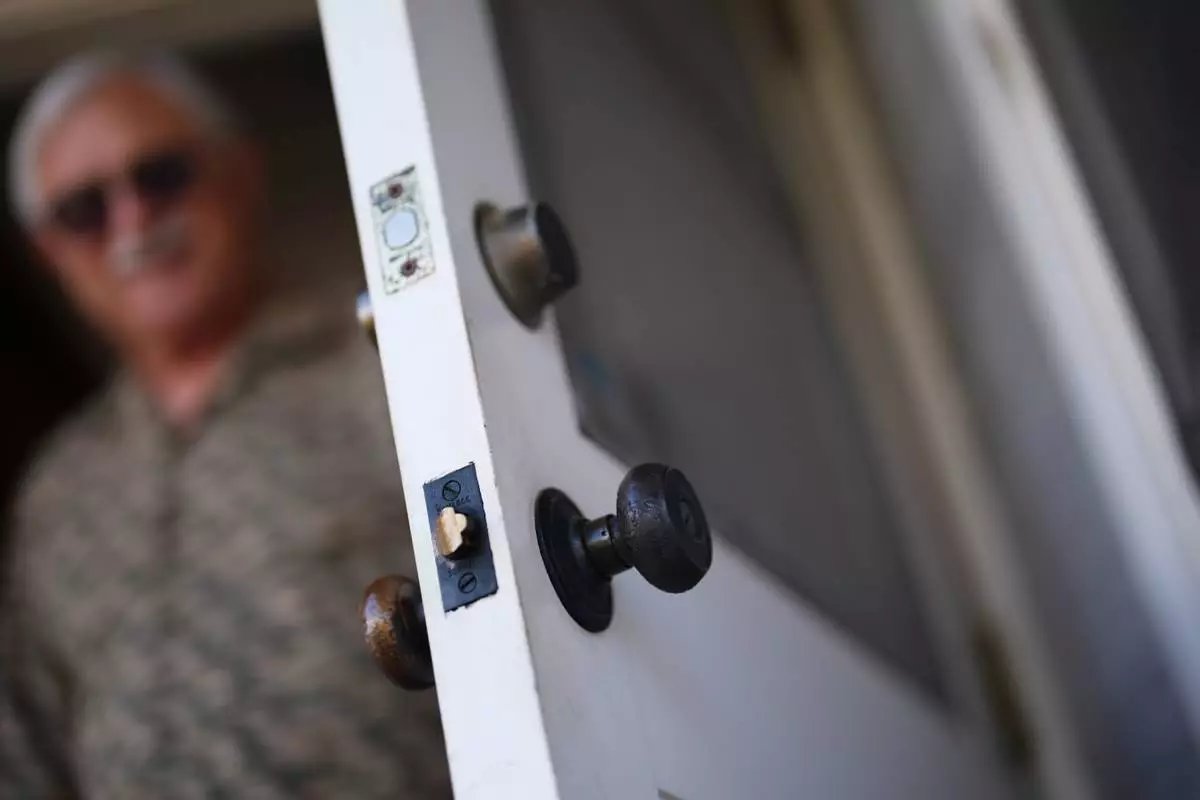
Steve Egger looks out from his door where the outer doorknob has turned black at his home Friday, March 6, 2026, in San Diego. (AP Photo/Gregory Bull)
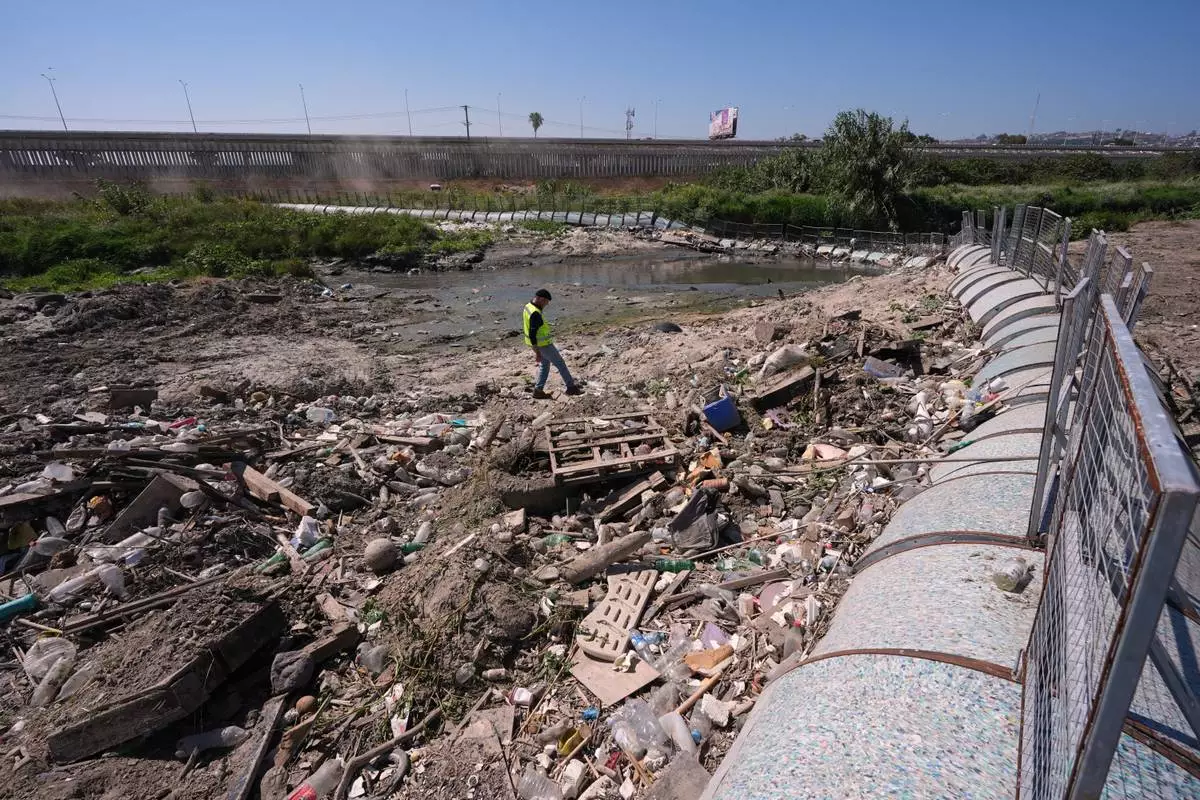
Oscar Romo walks among debris that has been captured by a trash boom installed in the Tijuana River at the border near where the river enters the United States from Tijuana, Mexico, Wednesday, April 8, 2026, in San Diego, Calif. (AP Photo/Gregory Bull)
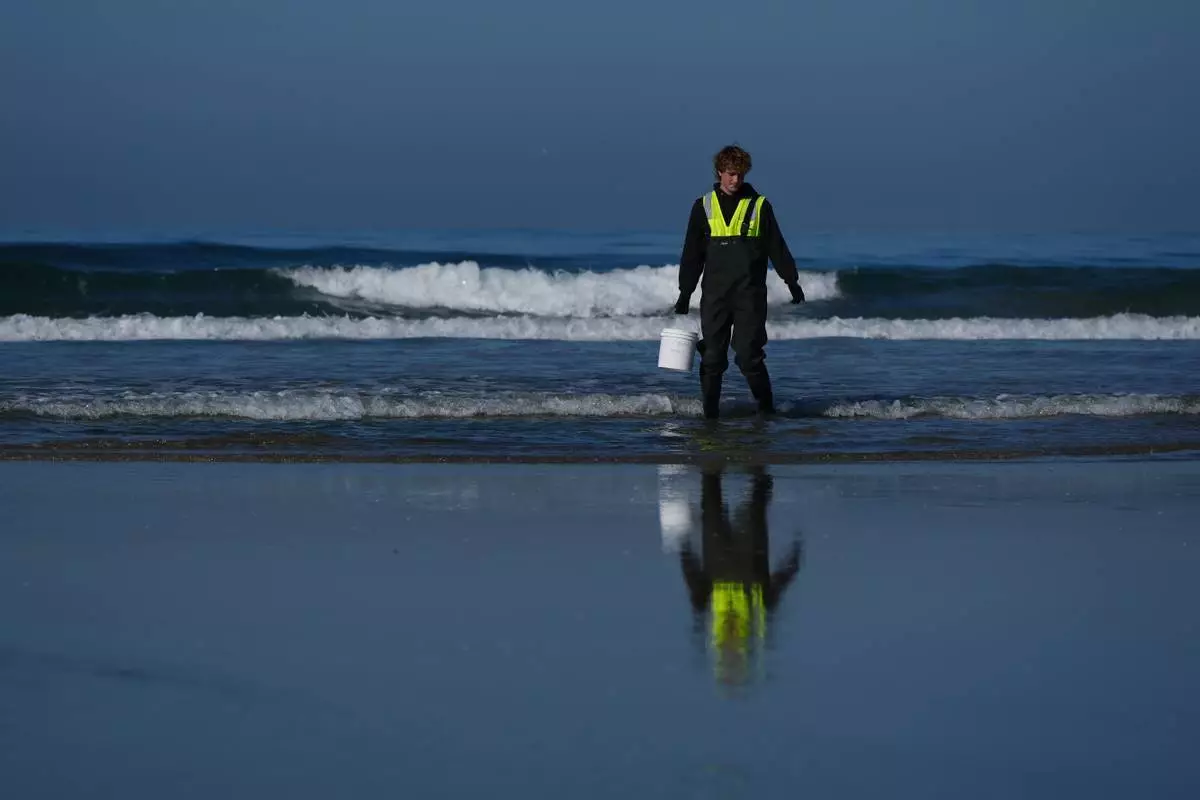
Trent Fry, part of a research team from the University of California, San Diego, takes a sample of seawater Wednesday, March 11, 2026, in Imperial Beach, Calif. (AP Photo/Gregory Bull)
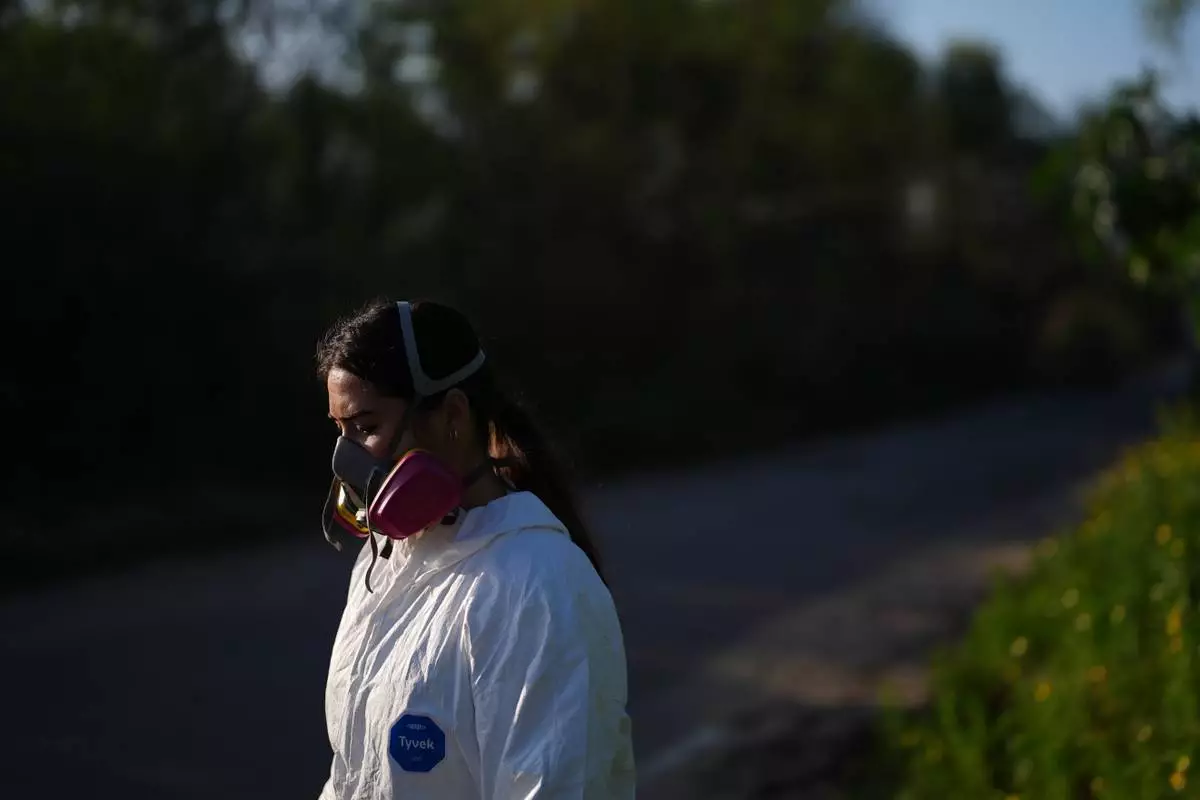
Maddie Tibayan pauses while wearing a respirator while collecting a water sample of the Tijuana River, as part of a research team from the University of California, San Diego, Wednesday, March 11, 2026, in San Diego. (AP Photo/Gregory Bull)
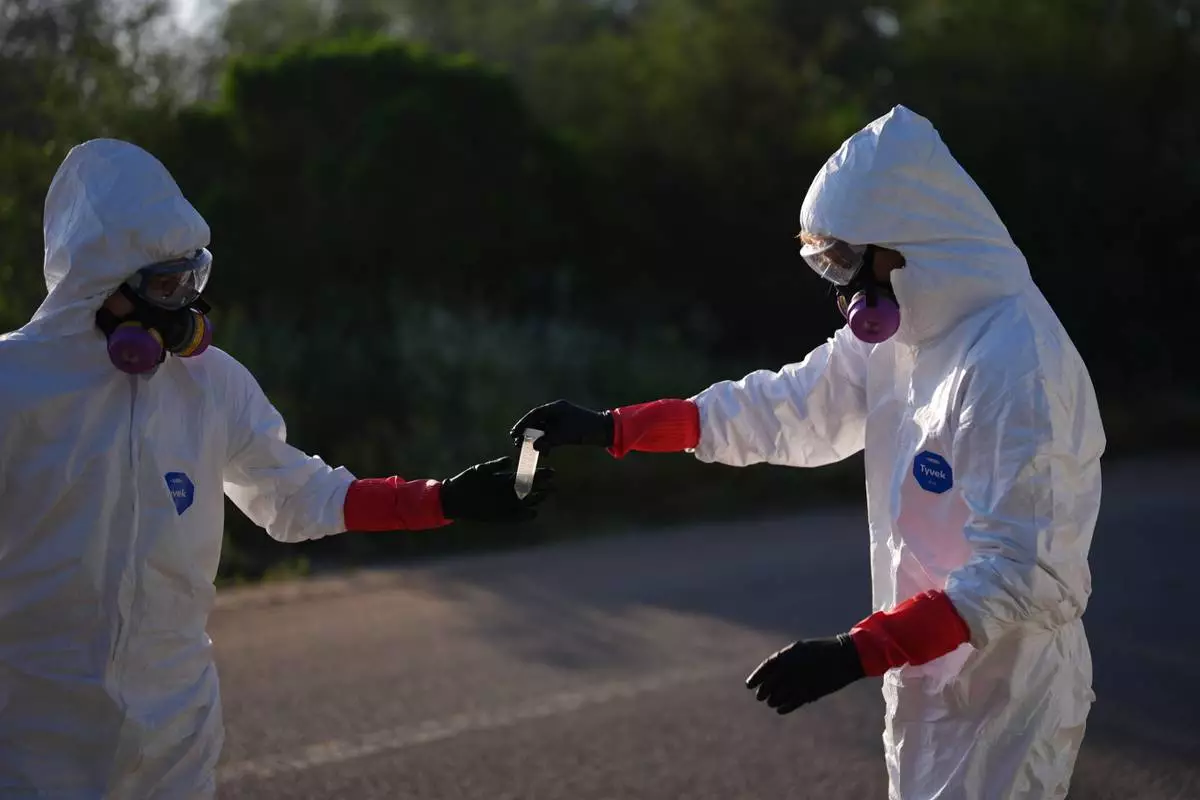
Trent Fry, right, and Leila El Masri handle a water sample of the Tijuana River, as part of a research team from the University of California, San Diego, Wednesday, March 11, 2026, in San Diego. (AP Photo/Gregory Bull)
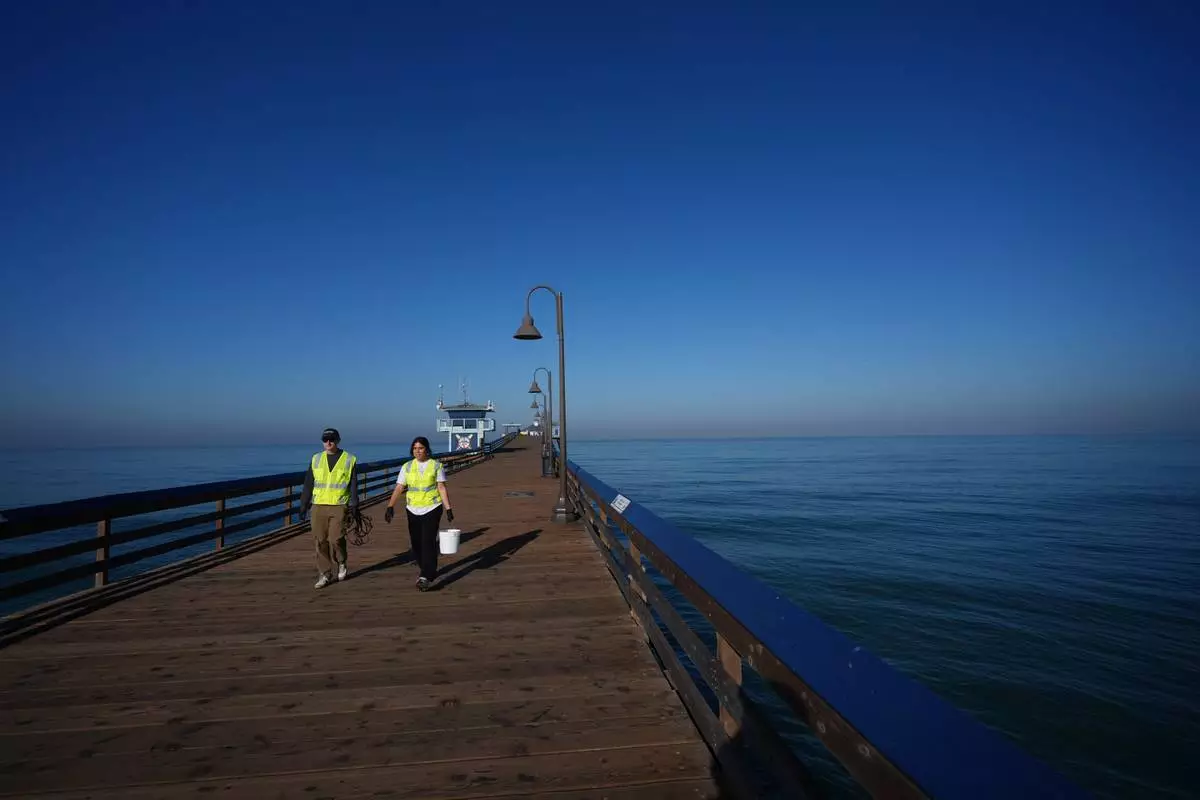
Justin Hamlin, left, and Maddie Tibayan, walk along the Imperial Beach pier after gathering a sample of seawater as part of a research team from the University of California, San Diego, Wednesday, March 11, 2026, in Imperial Beach, Calif. (AP Photo/Gregory Bull)
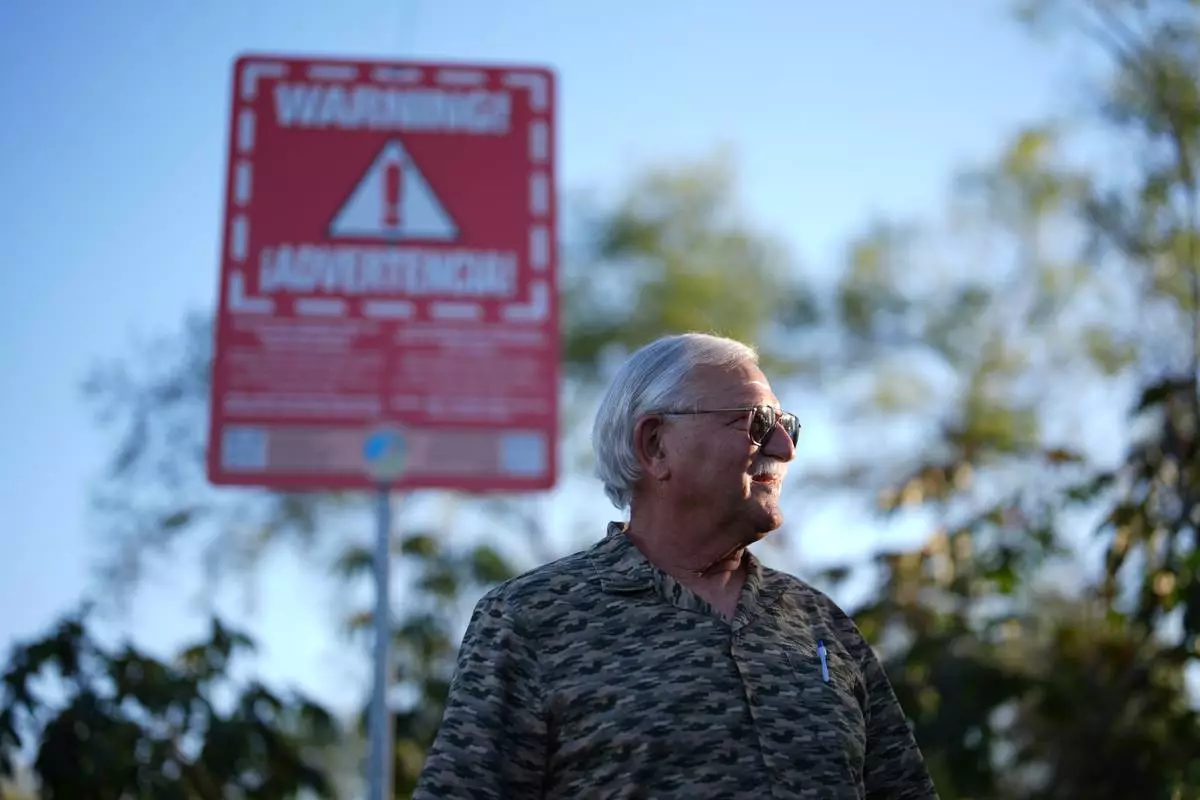
Steve Egger stands near what scientists call "the Saturn hot spot," a section of the Tijuana River where the contaminated water splashes out of pipes and creates pools of foam near his home Friday, March 6, 2026, in San Diego. (AP Photo/Gregory Bull)
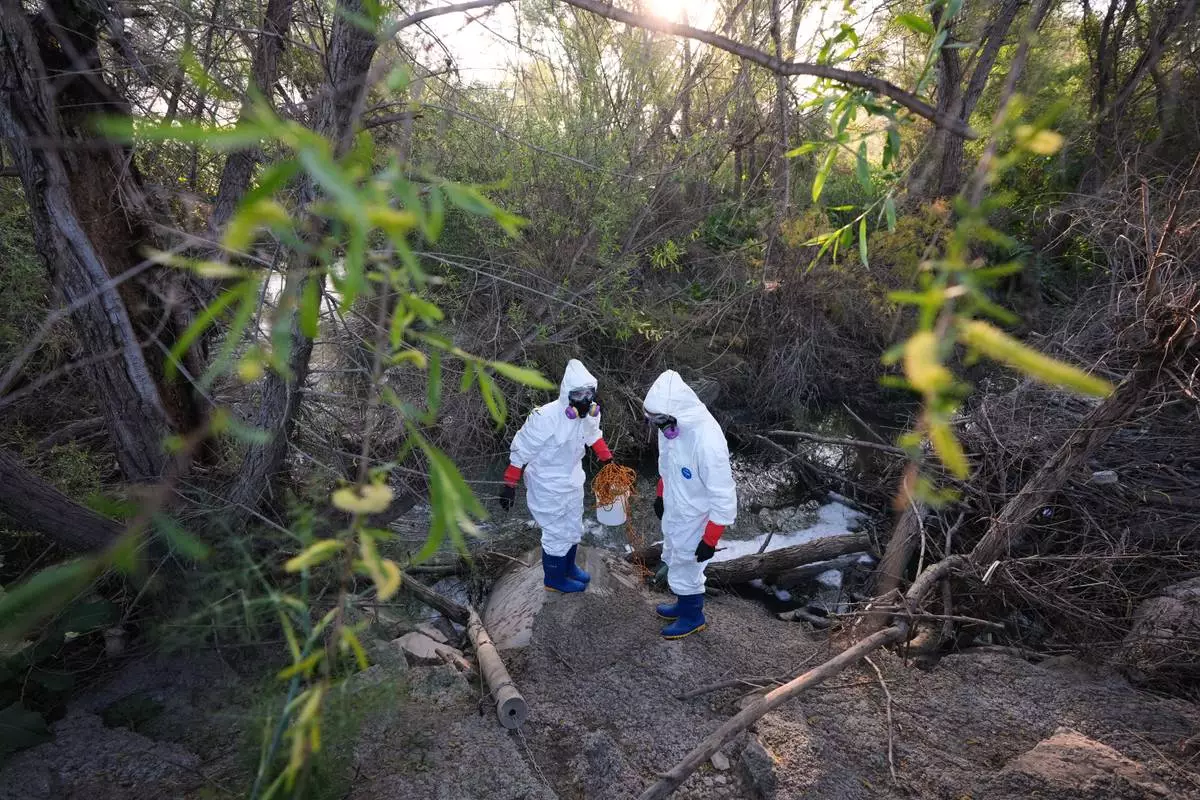
Trent Fry, right, and Leila El Masri collect a water sample of the Tijuana River, as part of a research team from the University of California, San Diego, Wednesday, March 11, 2026, in San Diego. (AP Photo/Gregory Bull)