COLUMBUS, Ohio (AP) — Alex Ovechkin had an assist on the go-ahead goal in what perhaps will be the final game of his record-breaking career and the Washington Capitals defeated the Columbus Blue Jackets 2-1 on Tuesday night in the season finale for both teams.
Ovechkin had the second assist on Jakob Chychrun's power-play goal with 4:07 remaining in the third period. He finished the season leading the Capitals with 32 goals and 64 points
Anthony Beauvillier also scored for Washington and Clay Stevenson stopped 27 shots.
Boone Jenner scored for Columbus and Jet Greaves made 19 saves.
Ovechkin — the league’s all-time leading goal scorer with 929 — is in the final season of his contract and said he is waiting until after the season before deciding on his future.
The Capitals have failed to qualify for the Stanley Cup Playoffs for just the fifth time since Ovechkin was drafted in 2004.
The 40-year-old Russian became the fifth player age 40 or older in NHL history to play in all 82 regular-season games. The last one to do it was Jaromir Jagr with the Florida Panthers in 2016-17.
It is the fifth time in 21 seasons Ovechkin has not missed a regular-season game.
The Blue Jackets were in last place in the Eastern Conference when Rick Bowness replaced Dean Evason as coach on Jan. 12.
Columbus went 18-2-4 in Bowness’ first 24 games and moved into a playoff spot after collecting a point in 12 straight games. The Blue Jackets went 3-9-1 down the stretch though and have missed the postseason for the sixth straight season.
Jenner snapped a shot from the slot that beat Stevenson on his blocker side 27 seconds into the second period.
Beauvillier evened it 10 minutes later when he got behind the Blue Jackets' defense, took a long pass from Trevor Van Riemsdyk and beat Greaves with a wrist shot on the breakaway.
AP NHL: https://apnews.com/hub/nhl

Columbus Blue Jackets right wing Kirill Marchenko (86) skates in on Washington Capitals goaltender Clay Stevenson (33) in the second period of an NHL hockey game Tuesday, April 14, 2026, in Columbus, Ohio. (AP Photo/Sue Ogrocki)

Columbus Blue Jackets left wing Danton Heinen (43) shoots on Washington Capitals goaltender Clay Stevenson (33) in the first period of an NHL hockey game Tuesday, April 14, 2026, in Columbus, Ohio. (AP Photo/Sue Ogrocki)
LIMA, Peru (AP) — Peruvians will vote in a presidential runoff in two months after none of the 35 candidates secured an outright victory in the weekend election, though by Tuesday afternoon, the two contenders in the June vote were still unconfirmed.
Electoral authorities continued to count the ballots for a third straight day as authorities were forced to extend voting into Monday after ballots had not been delivered in time to polling stations.
With 77% of ballots tallied, official results on Tuesday showed Keiko Fujimori, the conservative daughter of a disgraced former president, leading the count with 16.86% of the votes, while Rafael López Aliaga, the ultraconservative former mayor of Peru’s capital, Lima, earned 12.66%.
Jorge Nieto Montesinos was close in the third place, with 11.74% of the vote, maintaining a narrow chance of making it into the June 7 runoff.
The sluggish pace of the count mirrored Peru’s 2021 presidential election, a contest where final tallies weren't completed until five days after polls closed.
A presidential candidate needs more than 50% of votes to win outright. The two candidates with the most votes in a first round advance to the runoff. The winner will be Peru’s ninth president in just 10 years.
A European Union election observation mission said Tuesday it didn't see “sufficient grounds” supporting claims of fraud, following allegations by López Aliaga, who described the election — without providing evidence — as a “fraud of a kind unique in the world.”
The election has been mired with logistical issues that left thousands in the country and abroad unable to cast ballots. That prompted authorities to allow more than 52,000 residents of Lima to vote on Monday. The extension, announced after vote counting had begun Sunday evening, also covered Peruvians registered to vote in Orlando, Florida, and Paterson, New Jersey.
“I’m fed up,” Iris Valle, 56, said as she waited to vote on Monday at a public school in Lima, the country's capital. She feared that her employer would cut her pay for not showing up early, because she had to fulfill her voting obligation.
Voting is mandatory for Peruvians from the ages of 18 to 70. Failure to vote comes with a fine of up to $32.
The election took place amid a surge in violent crime and corruption that has fueled widespread discontent among voters, who largely view candidates as dishonest and unprepared for the presidency.
Peru’s economy, however, has defied both the crime surge and the political instability stemming from a revolving door of presidents, having had three since last October alone. Aided by its status as one of the world’s largest copper producers, the country posted more than 3% growth in 2024 and 2025, though that’s lower than the 5%-6% annual growth it saw in the 2000s.
Will Freeman, a fellow for Latin American Studies at the Council on Foreign Relations, explained that the independence of the country’s central bank has also contributed to economic growth.
“Although Peru has had all these presidents, it has had only one central bank president since the mid-2000s, Julio Velarde,” Freeman said. “He’s been a real source of stability and given investors some confidence that there is an institutional core that remains from one presidency to the next in Peru.”
Still, Freeman warned, Peru can't afford to be complacent as current growth is lower than the 5%-6% annual rates the country saw in the 2000s and recent congressional decisions point to “a more conservative economic populism.”
In her fourth bid for the presidency, Fujimori has promised to crack down on crime but has also defended laws that experts say make it difficult to prosecute criminals. The laws, which her party backed in recent years, eliminated preliminary detention in certain cases and raised the threshold for seizing criminal assets.
If elected, she has said that judges presiding over criminal cases will be anonymous and prisoners will have to work to earn their food.
Meanwhile, López Aliaga has proposed building prisons in the country’s Amazon region, and lobbied for allowing judges to conceal their identities and expelling foreigners who are living illegally in Peru.
For the first time in more than 30 years, voters were also asked to choose members of a bicameral Congress, following recent legislative reforms that concentrate significant power in the new upper chamber.
Associated Press writer Regina Garcia Cano in Caracas, Venezuela, contributed to this report.
Follow AP’s coverage of Latin America and the Caribbean at https://apnews.com/hub/latin-america

Rafael Lopez Aliaga, presidential candidate of the Popular Renewal party, speaks to supporters as electoral authorities continue to count the ballots two days after general elections in Lima, Peru, Tuesday, April 14, 2026. (AP Photo/Guadalupe Pardo)
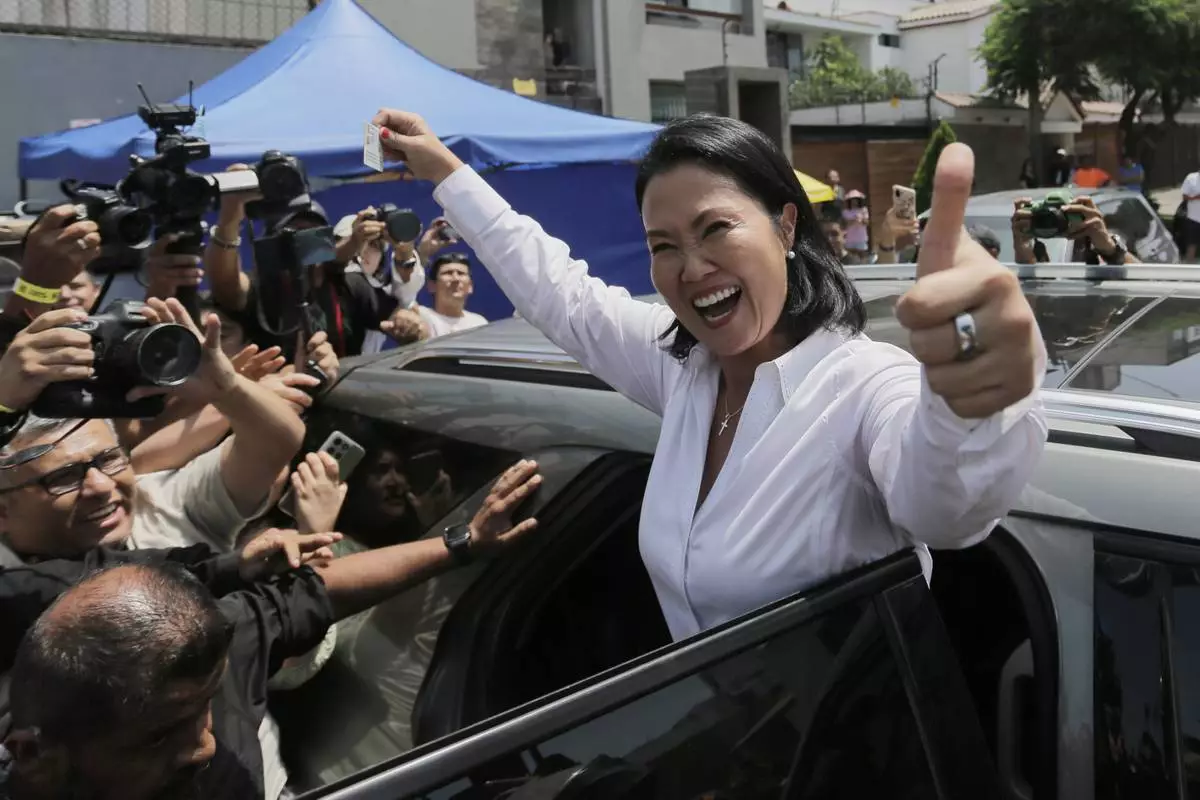
Keiko Fujimori, presidential candidate of the Popular Force party, departs a polling station after voting during general elections in Lima, Peru, Sunday, April 12, 2026. (AP Photo/Gerardo Marin)
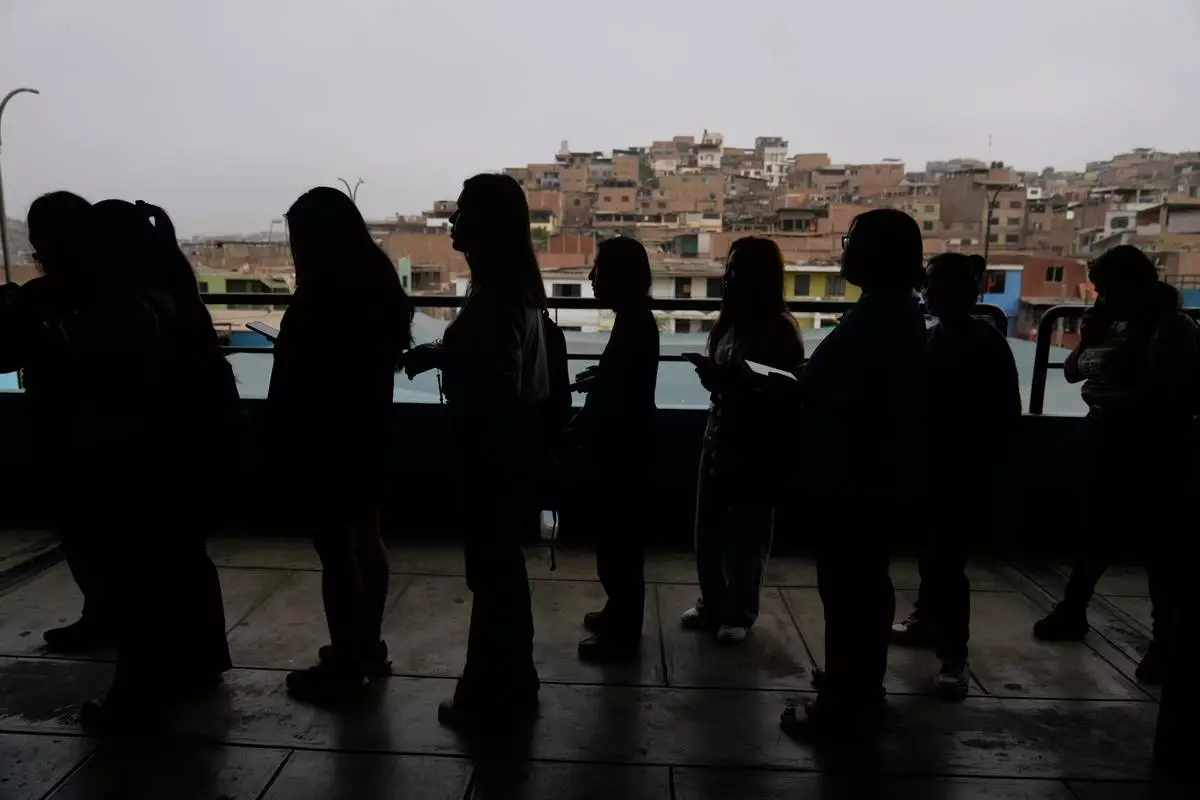
Voters line up as voting resumes at a polling stations affected by delays during general elections in Lima, Peru, Monday, April 13, 2026. (AP Photo/Martin Mejia)
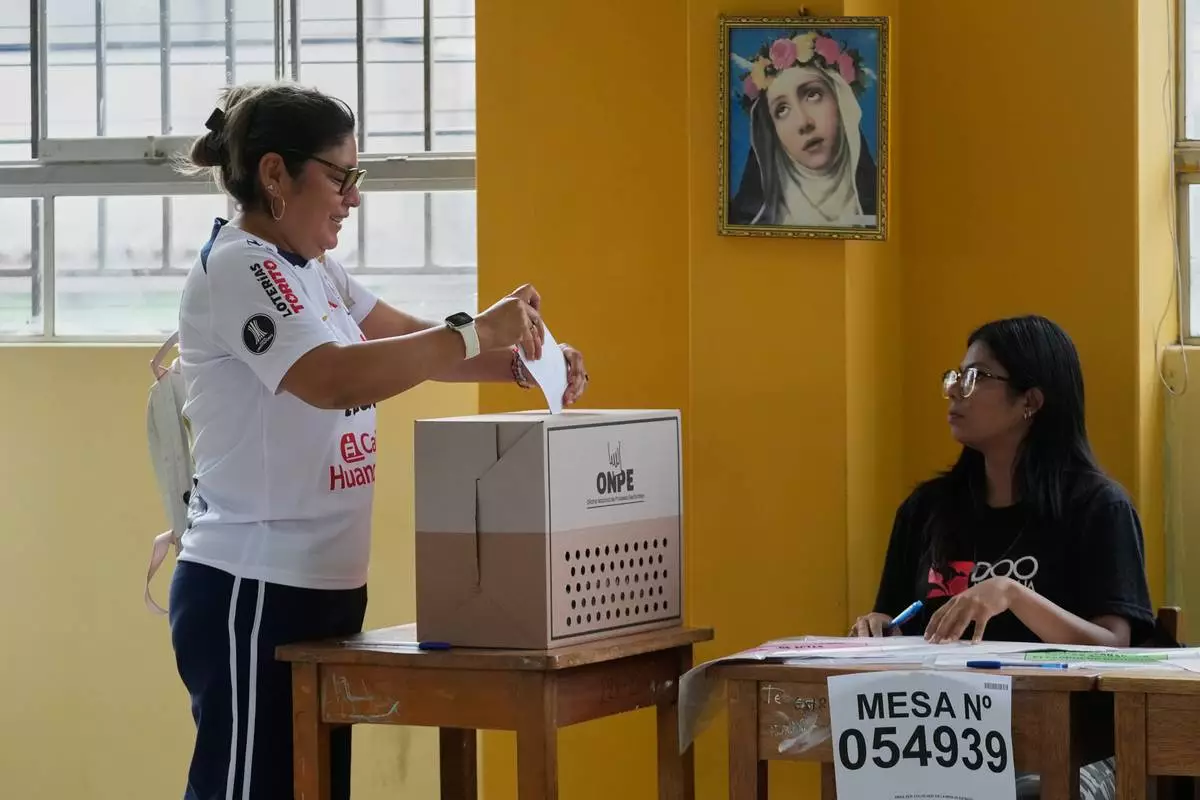
A woman votes as polling resumes at a station affected by delays and logistical problems during general elections in Lima, Peru, Monday, April 13, 2026. (AP Photo/Martin Mejia)
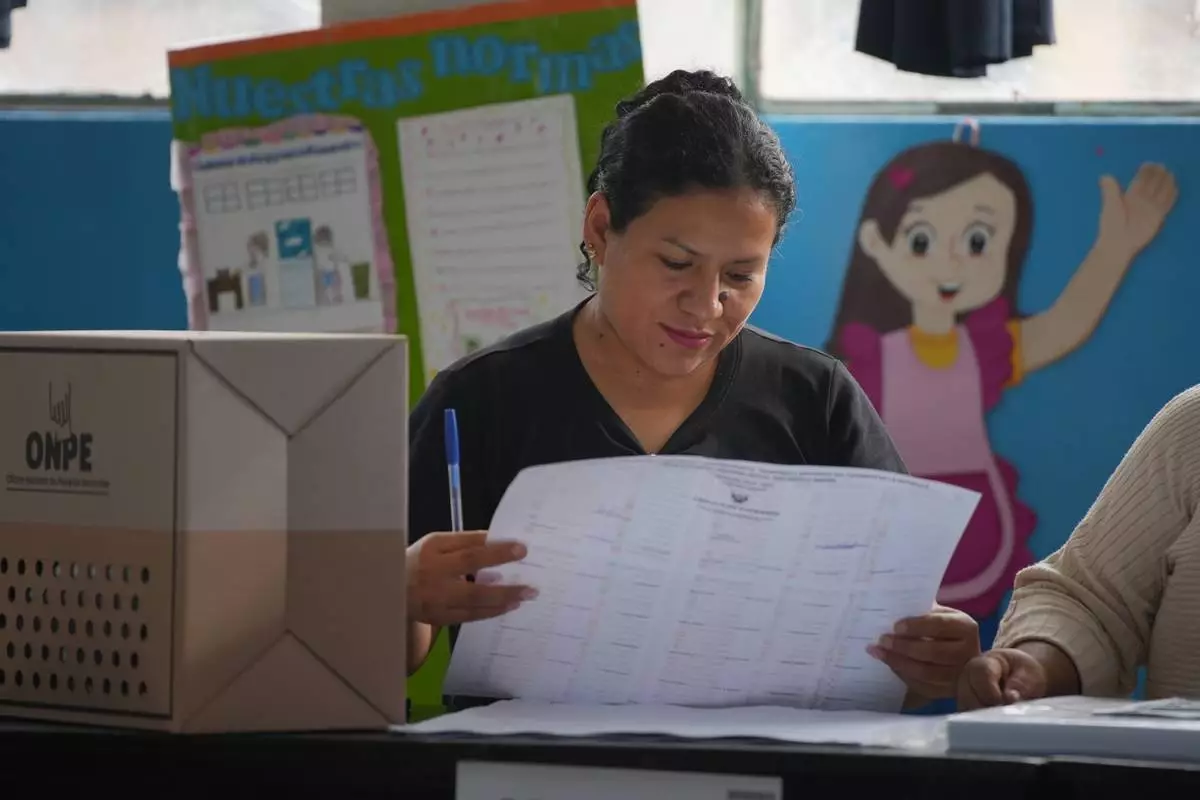
An election official checks voter lists as voting resumes at polling stations affected by delays and logistical problems during general elections in Lima, Peru, Monday, April 13, 2026. (AP Photo/Guadalupe Pardo)
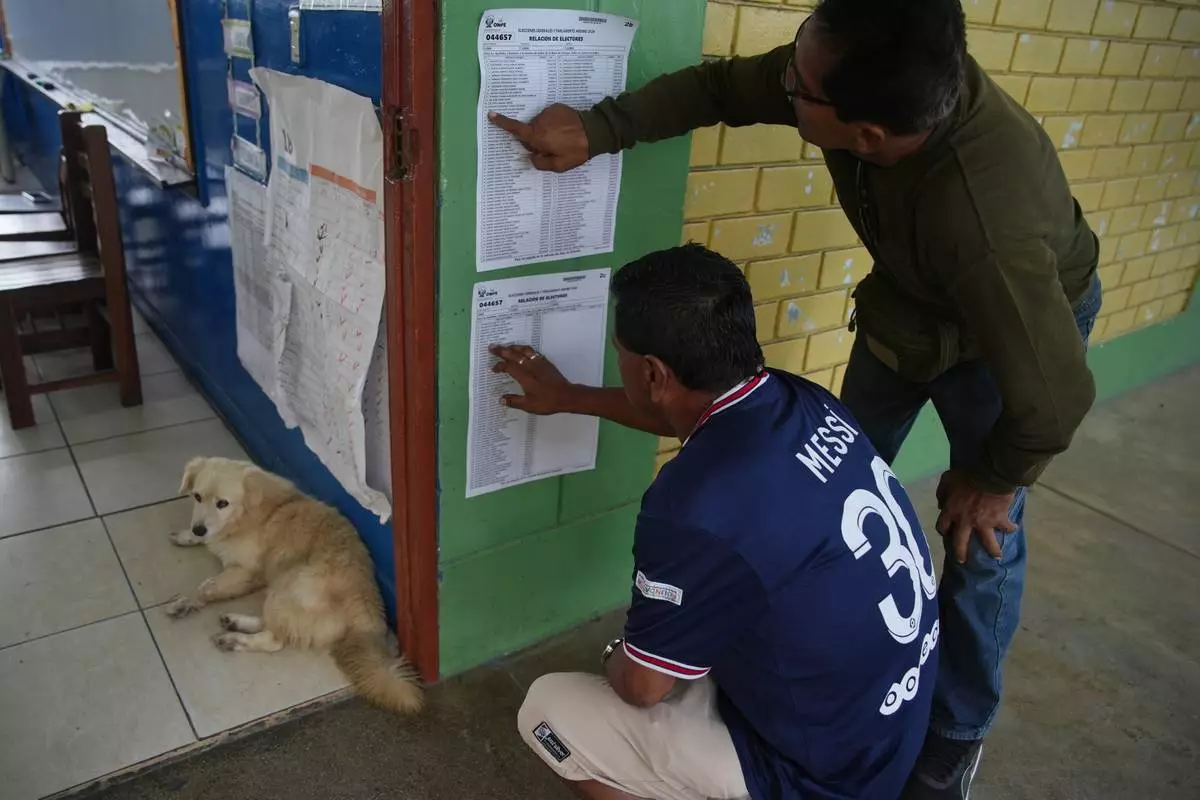
Voters check the rolls as voting in the general election resumes at polling stations affected by delays and logistical problems in Lima, Peru, Monday, April 13, 2026. (AP Photo/Guadalupe Pardo)