Skip to Content Facebook Feature Image

Peru faces a presidential runoff as election count drags on after ballot delays

News

Peru faces a presidential runoff as election count drags on after ballot delays
News

News

Peru faces a presidential runoff as election count drags on after ballot delays

2026-04-15 04:20 Last Updated At:04:30

LIMA, Peru (AP) — Peruvians will vote in a presidential runoff in two months after none of the 35 candidates secured an outright victory in the weekend election, though by Tuesday afternoon, the two contenders in the June vote were still unconfirmed.

Electoral authorities continued to count the ballots for a third straight day as authorities were forced to extend voting into Monday after ballots had not been delivered in time to polling stations.

More Images
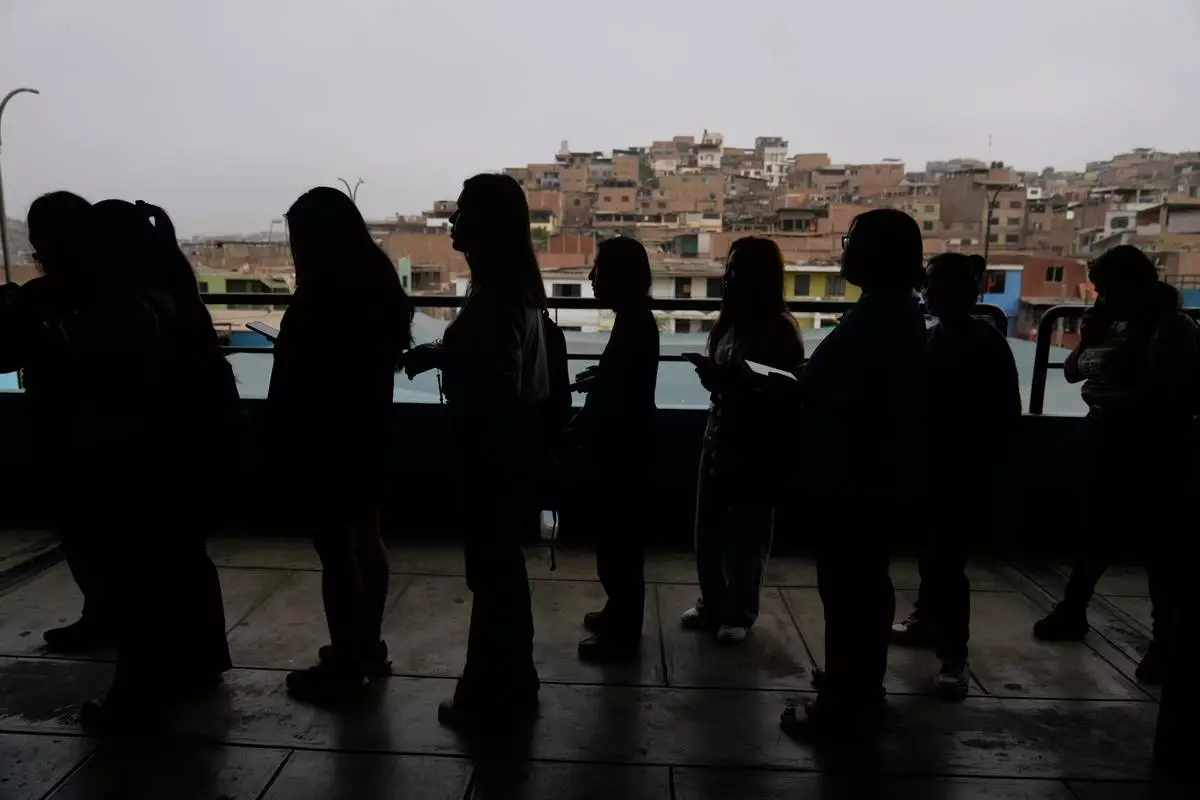
Voters line up as voting resumes at a polling stations affected by delays during general elections in Lima, Peru, Monday, April 13, 2026. (AP Photo/Martin Mejia)
Voters line up as voting resumes at a polling stations affected by delays during general elections in Lima, Peru, Monday, April 13, 2026. (AP Photo/Martin Mejia)

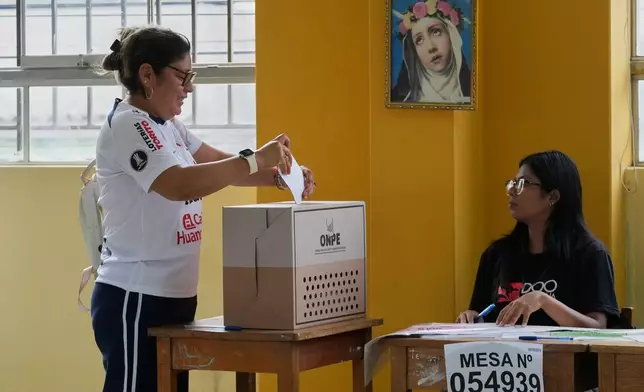
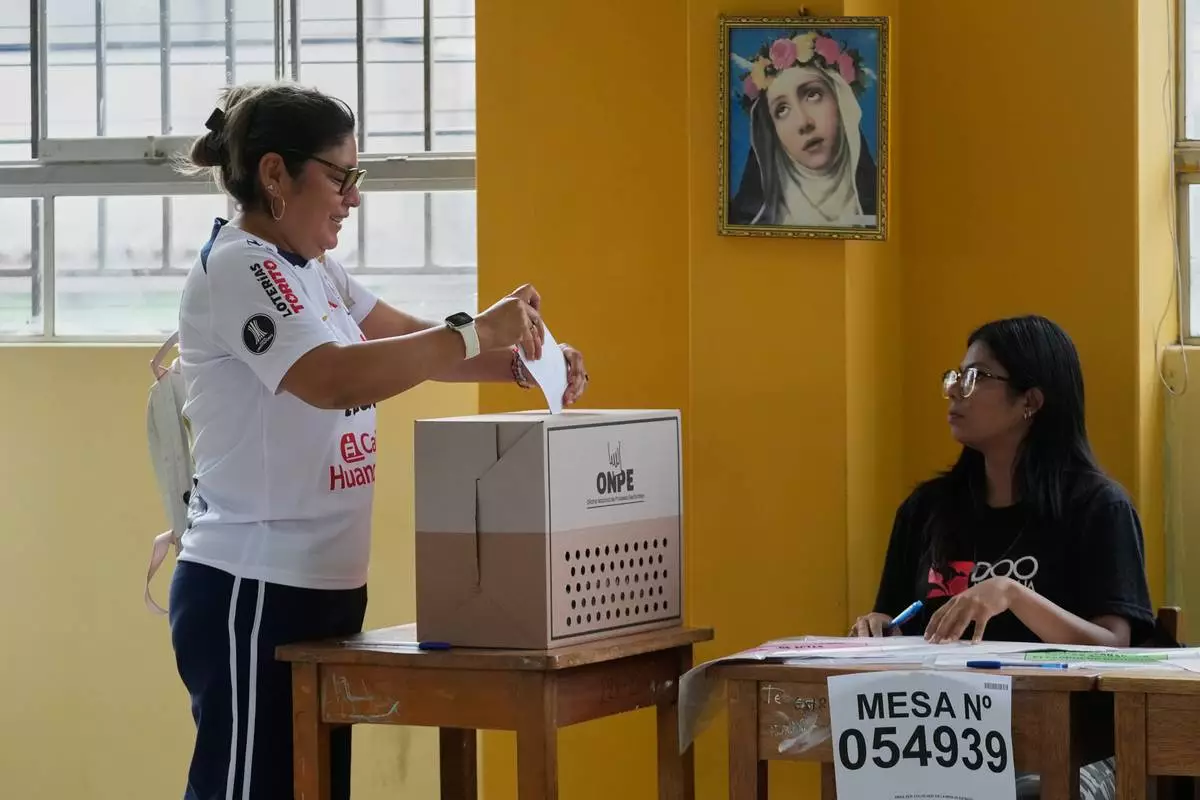
A woman votes as polling resumes at a station affected by delays and logistical problems during general elections in Lima, Peru, Monday, April 13, 2026. (AP Photo/Martin Mejia)
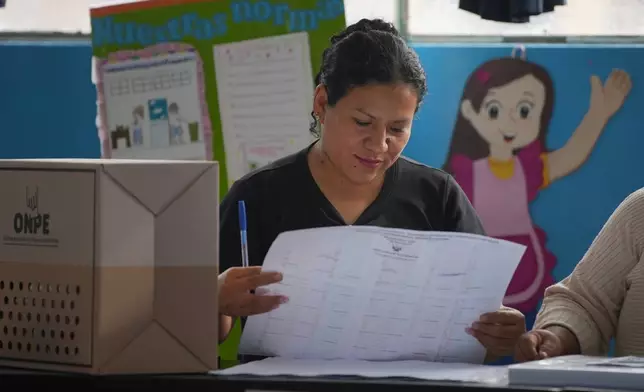
A woman votes as polling resumes at a station affected by delays and logistical problems during general elections in Lima, Peru, Monday, April 13, 2026. (AP Photo/Martin Mejia)

An election official checks voter lists as voting resumes at polling stations affected by delays and logistical problems during general elections in Lima, Peru, Monday, April 13, 2026. (AP Photo/Guadalupe Pardo)
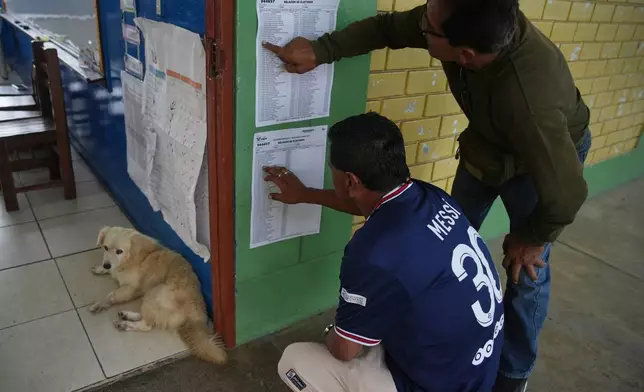
An election official checks voter lists as voting resumes at polling stations affected by delays and logistical problems during general elections in Lima, Peru, Monday, April 13, 2026. (AP Photo/Guadalupe Pardo)

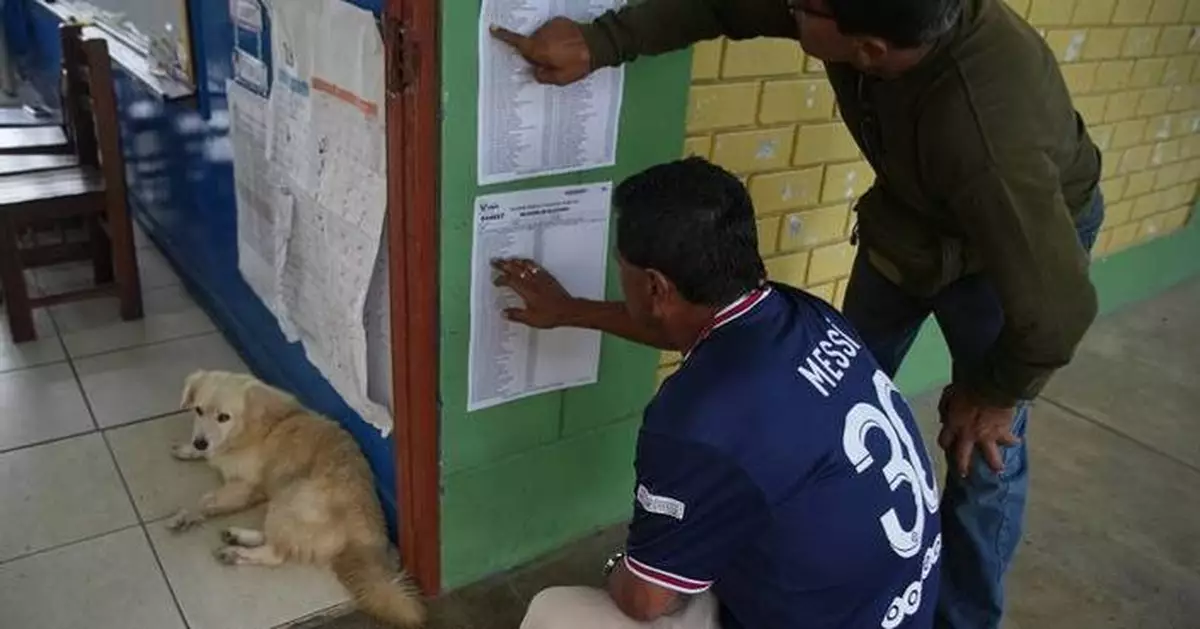
Voters check the rolls as voting in the general election resumes at polling stations affected by delays and logistical problems in Lima, Peru, Monday, April 13, 2026. (AP Photo/Guadalupe Pardo)

Voters check the rolls as voting in the general election resumes at polling stations affected by delays and logistical problems in Lima, Peru, Monday, April 13, 2026. (AP Photo/Guadalupe Pardo)

With 77% of ballots tallied, official results on Tuesday showed Keiko Fujimori, the conservative daughter of a disgraced former president, leading the count with 16.86% of the votes, while Rafael López Aliaga, the ultraconservative former mayor of Peru’s capital, Lima, earned 12.66%.

Jorge Nieto Montesinos was close in the third place, with 11.74% of the vote, maintaining a narrow chance of making it into the June 7 runoff.

The sluggish pace of the count mirrored Peru’s 2021 presidential election, a contest where final tallies weren't completed until five days after polls closed.

A presidential candidate needs more than 50% of votes to win outright. The two candidates with the most votes in a first round advance to the runoff. The winner will be Peru’s ninth president in just 10 years.

A European Union election observation mission said Tuesday it didn't see “sufficient grounds” supporting claims of fraud, following allegations by López Aliaga, who described the election — without providing evidence — as a “fraud of a kind unique in the world.”

The election has been mired with logistical issues that left thousands in the country and abroad unable to cast ballots. That prompted authorities to allow more than 52,000 residents of Lima to vote on Monday. The extension, announced after vote counting had begun Sunday evening, also covered Peruvians registered to vote in Orlando, Florida, and Paterson, New Jersey.

“I’m fed up,” Iris Valle, 56, said as she waited to vote on Monday at a public school in Lima, the country's capital. She feared that her employer would cut her pay for not showing up early, because she had to fulfill her voting obligation.

Voting is mandatory for Peruvians from the ages of 18 to 70. Failure to vote comes with a fine of up to $32.

The election took place amid a surge in violent crime and corruption that has fueled widespread discontent among voters, who largely view candidates as dishonest and unprepared for the presidency.

Peru’s economy, however, has defied both the crime surge and the political instability stemming from a revolving door of presidents, having had three since last October alone. Aided by its status as one of the world’s largest copper producers, the country posted more than 3% growth in 2024 and 2025, though that’s lower than the 5%-6% annual growth it saw in the 2000s.

Will Freeman, a fellow for Latin American Studies at the Council on Foreign Relations, explained that the independence of the country’s central bank has also contributed to economic growth.

“Although Peru has had all these presidents, it has had only one central bank president since the mid-2000s, Julio Velarde,” Freeman said. “He’s been a real source of stability and given investors some confidence that there is an institutional core that remains from one presidency to the next in Peru.”

Still, Freeman warned, Peru can't afford to be complacent as current growth is lower than the 5%-6% annual rates the country saw in the 2000s and recent congressional decisions point to “a more conservative economic populism.”

In her fourth bid for the presidency, Fujimori has promised to crack down on crime but has also defended laws that experts say make it difficult to prosecute criminals. The laws, which her party backed in recent years, eliminated preliminary detention in certain cases and raised the threshold for seizing criminal assets.

If elected, she has said that judges presiding over criminal cases will be anonymous and prisoners will have to work to earn their food.

Meanwhile, López Aliaga has proposed building prisons in the country’s Amazon region, and lobbied for allowing judges to conceal their identities and expelling foreigners who are living illegally in Peru.

For the first time in more than 30 years, voters were also asked to choose members of a bicameral Congress, following recent legislative reforms that concentrate significant power in the new upper chamber.

Associated Press writer Regina Garcia Cano in Caracas, Venezuela, contributed to this report.

Follow AP’s coverage of Latin America and the Caribbean at https://apnews.com/hub/latin-america

Voters line up as voting resumes at a polling stations affected by delays during general elections in Lima, Peru, Monday, April 13, 2026. (AP Photo/Martin Mejia)
Voters line up as voting resumes at a polling stations affected by delays during general elections in Lima, Peru, Monday, April 13, 2026. (AP Photo/Martin Mejia)

A woman votes as polling resumes at a station affected by delays and logistical problems during general elections in Lima, Peru, Monday, April 13, 2026. (AP Photo/Martin Mejia)
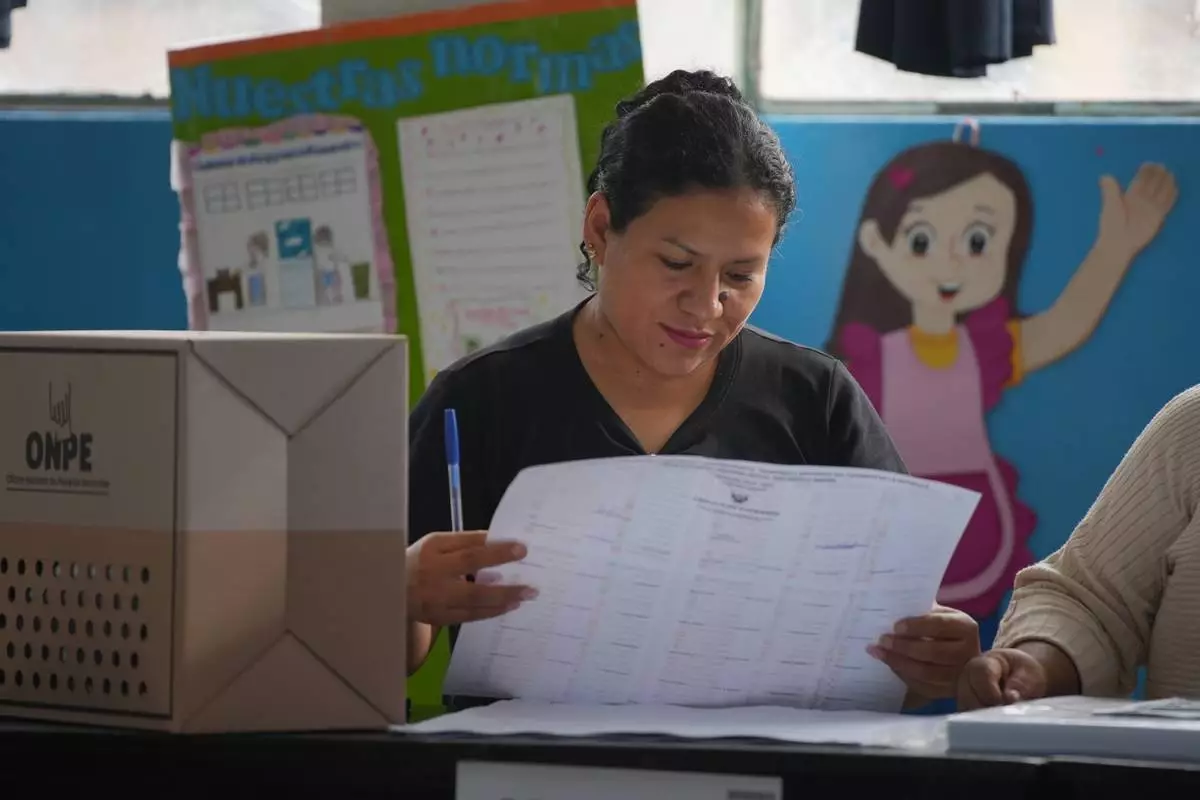
A woman votes as polling resumes at a station affected by delays and logistical problems during general elections in Lima, Peru, Monday, April 13, 2026. (AP Photo/Martin Mejia)

An election official checks voter lists as voting resumes at polling stations affected by delays and logistical problems during general elections in Lima, Peru, Monday, April 13, 2026. (AP Photo/Guadalupe Pardo)
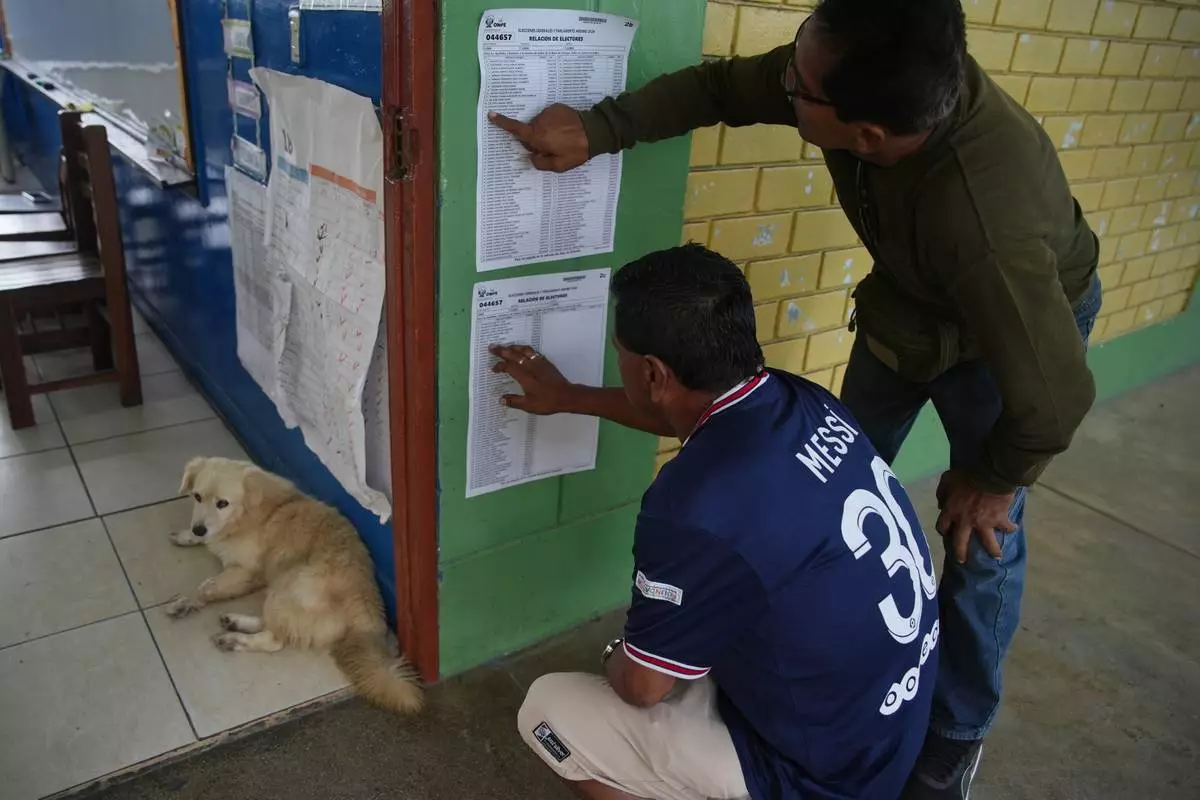
An election official checks voter lists as voting resumes at polling stations affected by delays and logistical problems during general elections in Lima, Peru, Monday, April 13, 2026. (AP Photo/Guadalupe Pardo)

Voters check the rolls as voting in the general election resumes at polling stations affected by delays and logistical problems in Lima, Peru, Monday, April 13, 2026. (AP Photo/Guadalupe Pardo)
Voters check the rolls as voting in the general election resumes at polling stations affected by delays and logistical problems in Lima, Peru, Monday, April 13, 2026. (AP Photo/Guadalupe Pardo)
WASHINGTON (AP) — Lebanon and Israel held their first direct diplomatic talks in decades on Tuesday in Washington following more than a month of war between Israel and the Iran-backed Hezbollah militant group, with U.S. Secretary of State Marco Rubio calling it a “historic opportunity” but making clear that no breakthrough agreement would happen right away.

In a statement after the two-hour session ended, the State Department praised the two sides for what it called “productive discussions on steps toward launching direct negotiations between Israel and Lebanon.” Hezbollah opposed the direct talks and was not represented, appearing to step up its fire on northern Israel as the discussions began.

“The United States affirmed that any agreement to cease hostilities must be reached between the two governments, brokered by the United States, and not through any separate track,” the State Department said.

Israeli Ambassador to the U.S. Yechiel Leiter hailed what he called a convergence of opinion about removing Hezbollah’s influence from Lebanon, saying he was encouraged by a “wonderful exchange."

“The Lebanese government made it very clear that they will no longer be occupied by Hezbollah," he said. "Iran has been weakened. Hezbollah is dramatically weakened. This is an opportunity.”

Lebanese Ambassador to the U.S. Nada Hamadeh Moawad “reaffirmed the urgent need” for an end to the Israel-Hezbollah conflict, “underscoring the principles of territorial integrity and full state sovereignty.” She also called for a ceasefire, the return of displaced people to their homes, and “concrete measures to address and alleviate the severe humanitarian crisis” resulting from the conflict.

Despite Hezbollah’s outright rejection, the talks are a major step for two countries with no diplomatic relations that have been officially at war since Israel’s inception in 1948. The latest round of fighting was sparked by Hezbollah firing rockets into northern Israel on March 2, days after the United States and Israel attacked Iran, Hezbollah’s key ally and patron.

As the talks began, Rubio said the Trump administration was “very happy” to facilitate but noted that “we understand we’re working against decades of history and complexities” that will not be quickly resolved.

“But we can begin to move forward with a framework where something can happen — something very positive, something very permanent — so that the people of Lebanon can have the kind of future they deserve, and so that the people of Israel can live without fear,” Rubio said.

The Lebanese government hopes the talks will help pave the way to an end to the war. While Iran has set ending the wars in Lebanon and the region as a condition for talks with the U.S., Lebanon insists on representing itself.

Hezbollah and other critics say Lebanon’s government lacks leverage and that it should back Iran’s position. Wafiq Safa, a high-ranking member of the militant group’s political council, told The Associated Press that the group will not abide by any agreements made during the talks.

On the day of the discussions, incoming fire triggered nonstop drone and rocket alert sirens in Israeli communities near the Lebanese border. Hezbollah, so far on Tuesday, has claimed 24 attacks on northern Israel and on Israeli troops in southern Lebanon.

At least 2,124 people have been killed in Israeli strikes in Lebanon, the Health Ministry said, including hundreds of women and children. More than 1 million people are displaced. The deadliest day of the war took place last week, when Israel launched 100 airstrikes across Lebanon in 10 minutes, including in the heart of the capital, killing over 350 people.

The Israeli military has invaded southern Lebanon, a move some Israeli officials have said aims to create a “security zone” from the border to the Litani River, some 30 kilometers (20 miles) to the north.

Israel’s defense minister says hundreds of thousands of people uprooted from southern Lebanon will not be allowed to return home until the area is demilitarized and Israel believes its northern communities are safe. Hezbollah, though weakened in its last war with Israel that ended in November 2024, still fires drones, rockets and artillery daily into northern Israel and on ground troops inside Lebanon.

Hezbollah enjoys wide influence in Beirut’s southern suburbs, as well as large swaths of the country’s southern and eastern provinces. Hezbollah-allied politicians hold two Cabinet minister positions, though the group’s ties have soured with Lebanon’s top political authorities, who have been critical of Hezbollah’s decision to enter the war last month and who have since criminalized the group’s military activities in the country.

The talks are the first between Israel and Lebanon since 1993. Both countries have relied on indirect communication, often brokered by the United States or UNIFIL, the United Nations peacekeeping mission in southern Lebanon.

Lebanon’s top political authorities, critical of Hezbollah’s decision to fire rockets toward Israel on March 2 in solidarity with Iran, quickly proposed direct talks in a bid to stop the escalation, hoping that Israel would not launch its ground invasion.

Israel did not respond positively until last week, after its deadly bombardment hit several crowded commercial and residential areas in Beirut, sparking an international outcry and triggering threats by Iran that it would end the ceasefire with the United States and Israel.

Lebanese officials have pushed for a truce, which Israel has ruled out. Israel has, however, halted strikes on Lebanon's capital following the bombardment.

“Israel’s destruction of Lebanese territories is not the solution, nor will it yield any results,” Lebanese President Joseph Aoun said Monday. He came to power vowing to disarm non-state groups, including Hezbollah. “Diplomatic solutions have consistently proven to be the most effective means of resolving armed conflicts globally.”

Foreign Minister Gideon Saar on Tuesday denied having disputes with Lebanon and said, “The problem is Hezbollah.”

Hezbollah wants a return to the 2024 agreement under which talks were conducted indirectly with the U.S., France and UNIFIL as mediators.

Chehayeb reported from Beirut. Associated Press writers Farnoush Amiri at the United Nations and Toqa Ezzidin in Cairo contributed to this report.

Smoke rises following an Israeli bombardment in southern Lebanon as seen from northern Israel, Sunday, April 12, 2026. (AP Photo/Ariel Schalit)

Smoke rises following an Israeli bombardment in southern Lebanon as seen from northern Israel, Sunday, April 12, 2026. (AP Photo/Ariel Schalit)

Children look at a damaged play ground hit yesterday by projectiles launched from Lebanon in Nahariya, northern Israel, Sunday, April 12, 2026. (AP Photo/Ariel Schalit)

Children look at a damaged play ground hit yesterday by projectiles launched from Lebanon in Nahariya, northern Israel, Sunday, April 12, 2026. (AP Photo/Ariel Schalit)

Israeli bulldozers demolish homes in southern Lebanon, as seen from northern Israel, Sunday, April 12, 2026. (AP Photo/Ariel Schalit)

Israeli bulldozers demolish homes in southern Lebanon, as seen from northern Israel, Sunday, April 12, 2026. (AP Photo/Ariel Schalit)

Mohammed, 8, cries next to the coffin of his father, Hussein Makkah, during the funeral of 13 state security officers killed the previous day in an Israeli strike in Lebanon’s coastal city of Sidon, Lebanon, Saturday, April 11, 2026. (AP Photo/Emilio Morenatti)

Mohammed, 8, cries next to the coffin of his father, Hussein Makkah, during the funeral of 13 state security officers killed the previous day in an Israeli strike in Lebanon’s coastal city of Sidon, Lebanon, Saturday, April 11, 2026. (AP Photo/Emilio Morenatti)

Recommended Articles