National Security Legal Forum brings together legal experts and leaders from different sectors
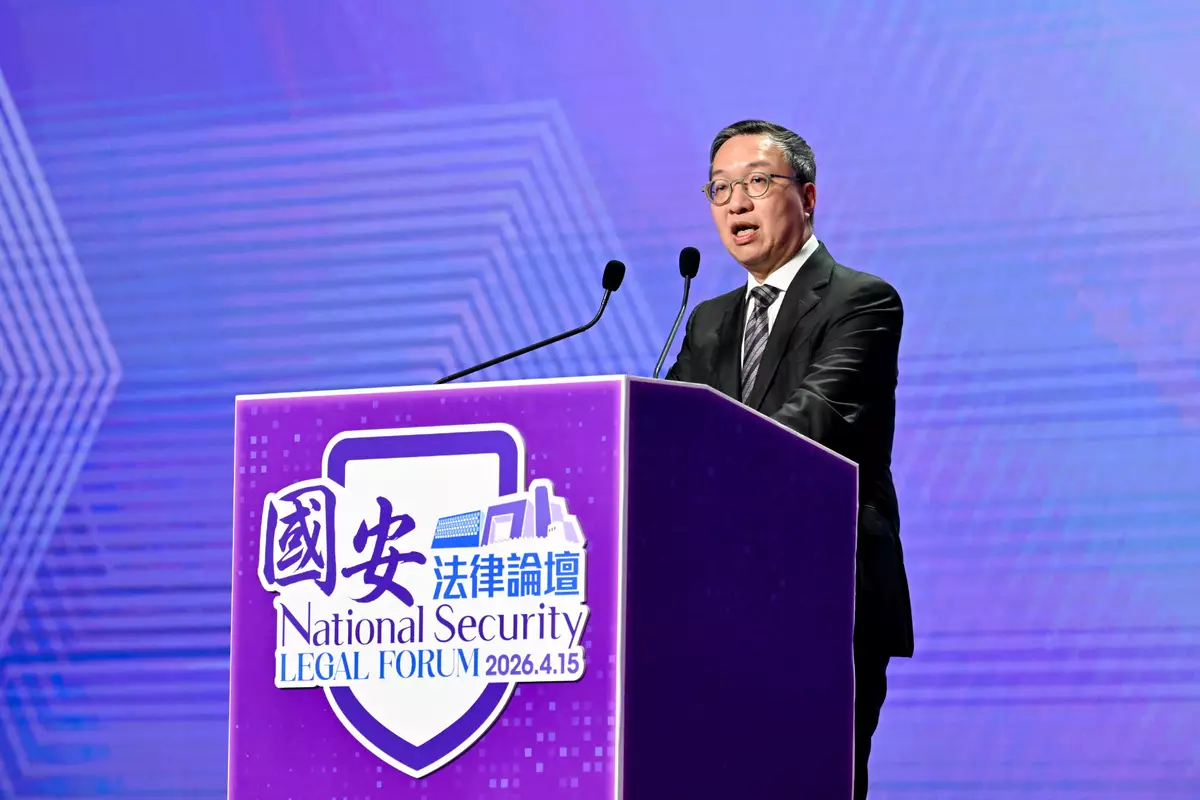
Today (April 15) marks theNational Security Education Day. The Department of Justice (DoJ) held the National Security Legal Forum on the theme of White Paper titled "Hong Kong: Safeguarding China's National Security Under the Framework of One Country, Two Systems", inviting renowned legal experts, academics, and representatives from different sectors to discuss Hong Kong's endeavours in safeguarding national security as well as the experience and insights gained in the process. The goal is to deepen the awareness and correct understanding of all sectors of the community on the city's role in safeguarding national security, actively fulfil the practical requirements of the white paper and to achieve high-quality development of the "one country, two systems" policy under the auspices of high-standard security.
Click to Gallery
National Security Legal Forum brings together legal experts and leaders from different sectors Source: HKSAR Government Press Releases
National Security Legal Forum brings together legal experts and leaders from different sectors Source: HKSAR Government Press Releases
National Security Legal Forum brings together legal experts and leaders from different sectors Source: HKSAR Government Press Releases
National Security Legal Forum brings together legal experts and leaders from different sectors Source: HKSAR Government Press Releases
National Security Legal Forum brings together legal experts and leaders from different sectors Source: HKSAR Government Press Releases
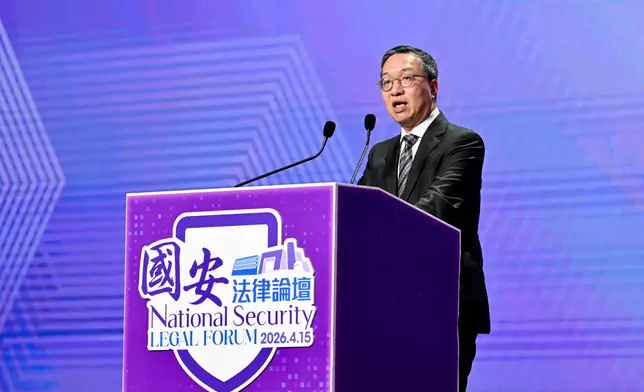
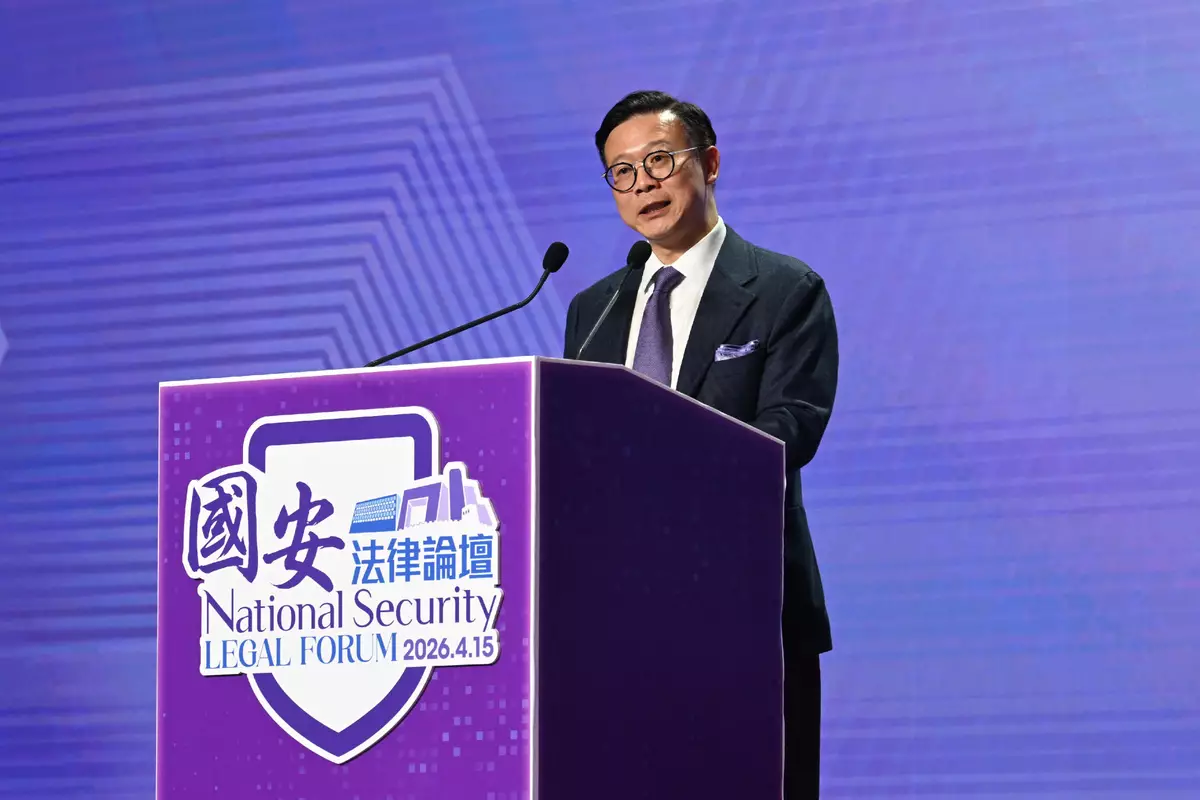
Delivering his opening remarks, the Secretary for Justice, Mr Paul Lam, SC, said that the white paper not only reviews Hong Kong's endeavours in safeguarding national security and the experiences and insights gained in the process, it also sets out six fundamental principles in building high-standard security in order to support the high-quality development of Hong Kong.
In this regard, Mr Lam said that Hong Kong does not pursue "absolute security" or "generalised security" in safeguarding national security, but rather "relative security," which is also the definition of national security in the country's national security laws. The white paper states that Hong Kong should follow a holistic approach to development and security, and achieve a dynamic balance between the two; safeguard security with greater openness; respect and ensure human rights; safeguard security under the rule of law, especially with the judicial authorities exercising adjudicative power independently and free from any interference in trying cases pertaining to national security in accordance with the law.
Mr Lam stated that national security, like air and sunshine, is something without which one cannot survive, yet too often, mistakenly, is taken for granted. To arouse the awareness and vigilance of people in this respect and provide them with a proper and sufficient understanding of the fundamental principles that Hong Kong follows in safeguarding national security, he urged various sectors of the community to study the white paper carefully.
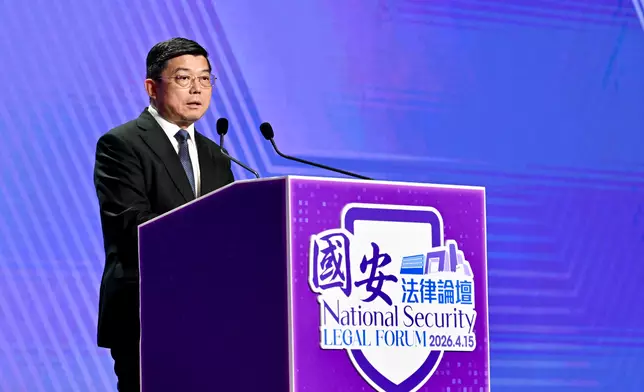
This year's forum invited Vice President of the Chinese Association of Hong Kong and Macao Studies and Professor of the School of Law of Tsinghua University Professor Wang Zhenmin to deliver a keynote speech to share his insights on the main content and principles of the white paper.
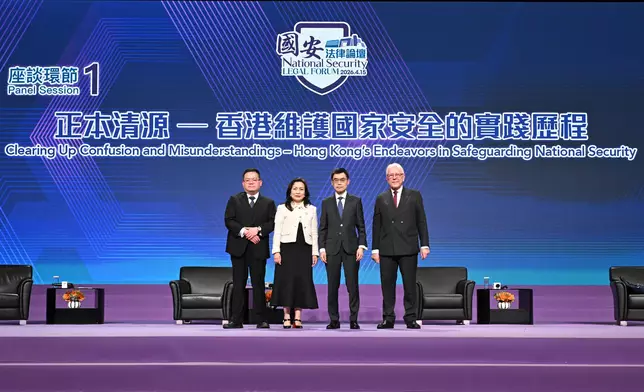
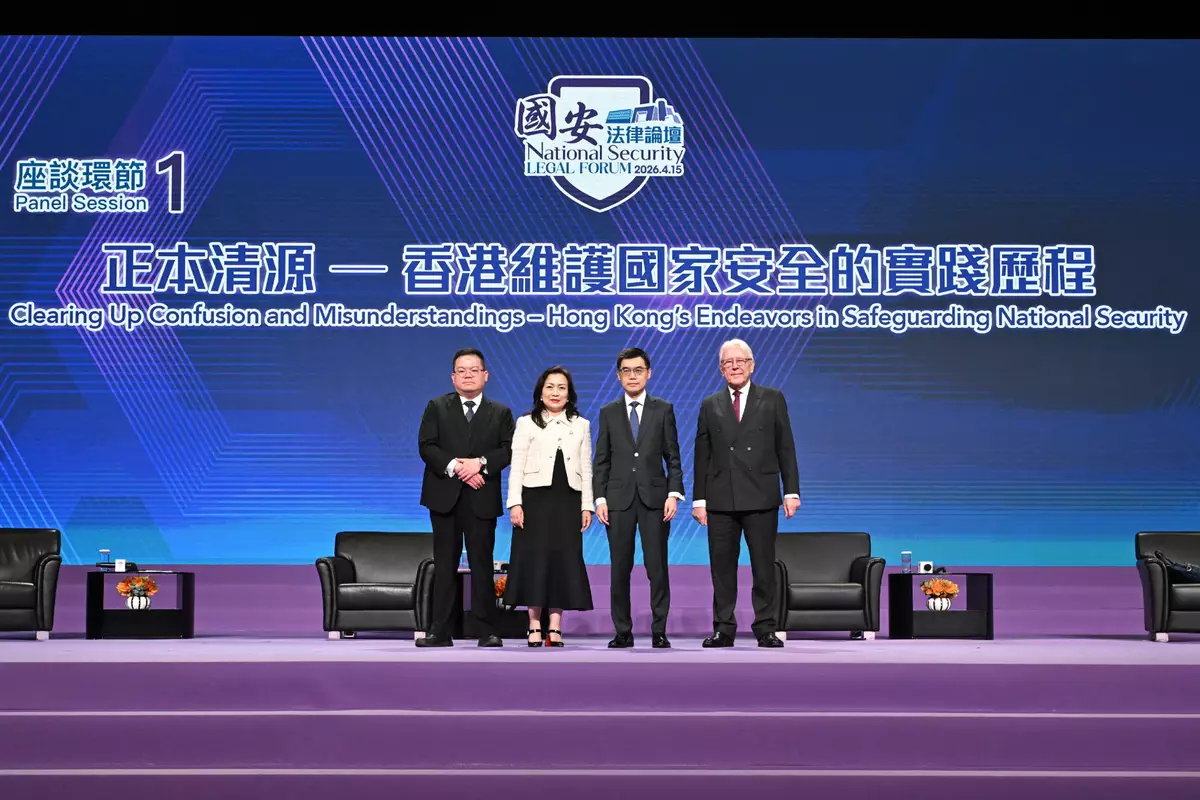
Following were two panel discussions, beginning with the first titled "Clearing up confusion and misunderstandings - Hong Kong's endeavours in safeguarding national security". Speakers from the legal sector reviewed the development of Hong Kong's laws for safeguarding national security, discussed relevant judicial cases, and conducted a comparative study and analysis of the relevant national security cases and laws in other countries, demonstrating Hong Kong's consistent adherence to the rule of law and respect for and protection of human rights in implementing national security laws.
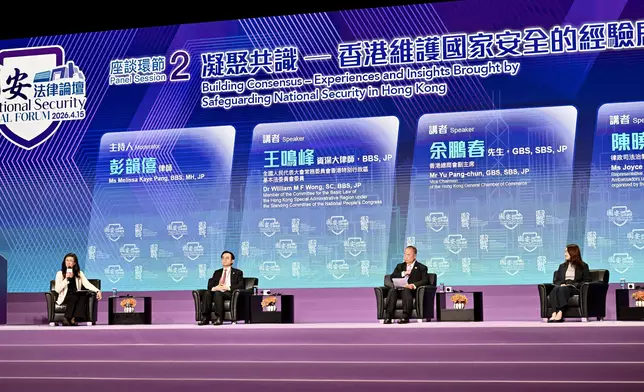
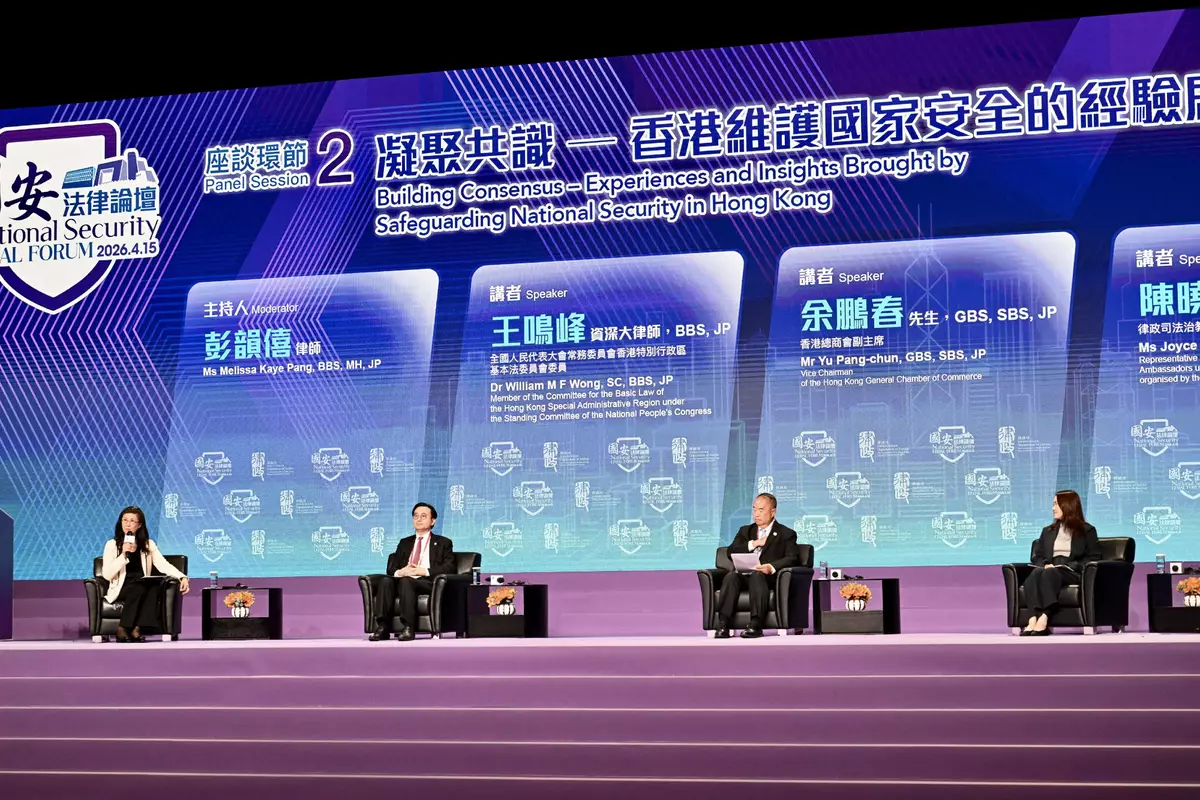
The second panel discussion - featuring a member of the Committee for the Basic Law of the Hong Kong Special Administrative Region of the Standing Committee of the National People's Congress, an esteemed leader of the local business sector, and a Rule of Law Education (ROLE) ambassador under the ROLE Stars Train-the-Leaders Programme of the DoJ - explored how Hong Kong can achieve a dynamic balance between development and security, and how promoting national security education can build social consensus to safeguard the steady and long-term implementation of the "one country, two systems" principle with high-standard security.
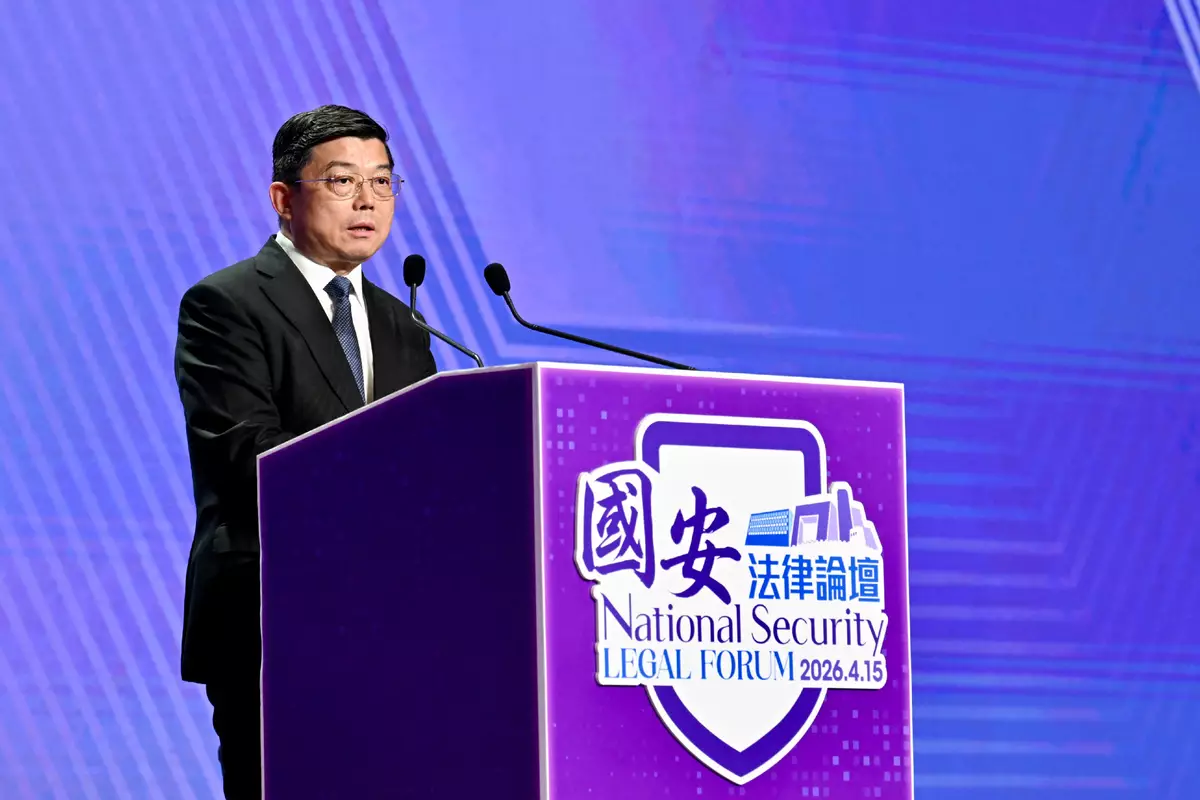
The Deputy Secretary for Justice, Dr Cheung Kwok-kwan, in his closing remarks said that the white paper has significant guiding value to Hong Kong. The white paper reminded people once again that Hong Kong has the constitutional responsibility of effectively safeguarding national security, and that the Hong Kong Special Administrative Region Government and all sectors of the community should proactively implement the practical requirements of the white paper.
He noted that speakers of the two panel discussions conducted in-depth discussions from various perspectives on issues such as the development of Hong Kong's laws for safeguarding national security, and how to achieve a dynamic balance between development and safeguarding national security. The discussions provided an excellent starting point for the participants to understand the essential requirements of the white paper, Dr Cheung added.
Citing the white paper, Dr Cheung said that safeguarding national security is a responsibility shared by all members of society. Everyone is a stakeholder and beneficiary, and no one can be a mere spectator. He expressed the hope that the forum today would further enhance public awareness of safeguarding national security and enrich public understanding of the importance of the white paper, and encouraged the community to cherish today's safe and stable environment.

Source: AI-found images
National Security Legal Forum brings together legal experts and leaders from different sectors Source: HKSAR Government Press Releases
National Security Legal Forum brings together legal experts and leaders from different sectors Source: HKSAR Government Press Releases
National Security Legal Forum brings together legal experts and leaders from different sectors Source: HKSAR Government Press Releases
National Security Legal Forum brings together legal experts and leaders from different sectors Source: HKSAR Government Press Releases
National Security Legal Forum brings together legal experts and leaders from different sectors Source: HKSAR Government Press Releases
SEE's opening remarks on food safety and environmental hygiene at LegCo Finance Committee special meeting
Following is the English translation of the opening remarks by the Secretary for Environment and Ecology, Mr Tse Chin-wan, on food safety and environmental hygiene at the special meeting of the Legislative Council (LegCo) Finance Committee today (April 15):
Thank you Chairman and Honourable Members.
The Environment and Ecology Bureau (EEB) is committed to ensuring food safety and environmental hygiene, and promoting the sustainable development of the local agriculture and fisheries industries and the development of Hong Kong's food industry.
Environmental hygiene
To improve environmental hygiene, we completed the second-stage legislative amendment in 2025 to strengthen deterrence and enhance enforcement efficiency. The new provisions have been implemented smoothly since they came into effect in August last year.
Regarding rodent prevention and control, the Food and Environmental Hygiene Department (FEHD) has utilised cameras with artificial intelligence technology for tracking rodent activities, enabling more targeted measures to address rodent infestation in high-risk locations with notable results. Among the 49 locations with active rodent activities identified in the first half of 2025, over 80 per cent have shown improvement. In addition, the FEHD launched the Anti-rodent Charter to collaborate with parties such as property management companies to enhance residents' awareness of maintaining environmental hygiene. As at February 2026, the Charter covered about 720 000 households across participating residential premises. We have also continued to implement the Cross-sectoral Territory-wide Anti-rodent Action to co-ordinate efforts among different sectors towards a rodent-free environment.
The FEHD also actively handles public health nuisances, including water seepage in buildings and dripping air conditioners. Water seepage in buildings is generally caused by defective building fabric or installations. The Joint Office for Investigation of Water Seepage Complaints, jointly set up by the Buildings Department and the FEHD, plans to introduce new procedures for investigating water seepage in buildings in the first half of this year to expedite the identification of the sources of seepage by utilising technologies and enhancing procedures, thereby urging owners to carry out timely repairs. Meanwhile, the Government is stepping up efforts in promoting the resolution of water seepage disputes through co-ordination and mediation.
Regulation of food business
On food business licences, we stand ready to facilitate the trade provided that hygiene and food safety are not compromised. For instance, the FEHD and responsible departments have streamlined procedures and put in place a new "joint-vetting" mechanism for processing outside seating accommodation applications of restaurants, which takes effect this month (April 1). It is expected that simple and straightforward cases can obtain approval-in-principle, together with the specific licence requirements, in about a month. In addition, the legislative amendments to allow dogs to enter restaurants have been submitted to the LegCo for scrutiny, and permission for the first-phase applications is expected to be granted by mid-2026. This new initiative is expected to promote harmony between people and pets, while creating new business opportunities for the catering industry.
We remain committed to safeguarding food safety in tandem with regime enhancement. The Centre for Food Safety (CFS) will continue to implement the Food Surveillance Programme, adopting a risk-based principle in the collection and testing of food samples collected and handling of food incidents.
Other facilities and services
The FEHD launched the Market Modernisation Programme a few years ago to take forward renovation and enhancement projects in several markets one after another. With the positive response to stall enhancement in the Queen Street Cooked Food Market earlier ago, the FEHD has commenced similar projects at three other cooked food centres, namely the Ap Lei Chau Market Cooked Food Centre, the Luen Wo Hui Market Cooked Food Centre and the Yue Wan Market Cooked Food Centre, which are expected to be completed gradually within this year. The FEHD will continue to identify other suitable enhancement projects.
As regards burial matters, the current supply of public niches is adequate. The FEHD will enhance the public niche allocation mechanism to fulfil the public's wish to complete after-death arrangements for the deceased as early as possible. Public niches at three columbaria, namely Shek Mun, Wo Hop Shek and Cape Collinson-San Ha Columbarium, that are currently allocated on a yearly basis will, from this August, start to be allocated on a monthly basis. The monthly allocation arrangement will be similar to the one adopted for Tsang Tsui Columbarium, providing greater flexibility in the timing for application. We will later seek funding approval from the Finance Committee of the LegCo for the construction of a new crematorium at Wo Hop Shek Cemetery, to ensure that there are sufficient cremation sessions to meet the demand.
Development of agriculture and fisheries industries
The Government attaches great importance to the local agriculture and fisheries industries. We actively promote the modernisation, intensification of production, quality and effective transformation and sustainable development of the agriculture and fisheries products in accordance with the Blueprint for the Sustainable Development of Agriculture and Fisheries, with a view to aligning with the goal of enhancing the overall production capacity as well as the quality and efficiency of agriculture and fisheries in the 15th FiveYear Plan, thereby enabling Hong Kong to better integrate into and serve the overall national development.
On the fisheries front, the Agriculture, Fisheries and Conservation Department (AFCD) issued the first batch of marine fish culture licences for operation in the new fish culture zones at Wong Chuk Kok Hoi and Mirs Bay in 2025 and has provided deep-sea cages for rental by the industry. We expect that local mariculture production will be increased to 1 200 tonnes by 2027, and we strive to further increase it to about 6 000 tonnes by 2037. Moreover, research and development of fish fry and development of processing facilities for local fisheries products will continue to be supported by the Sustainable Fisheries Development Fund, so that the public can enjoy a stable and quality supply of local fisheries products.
On the agriculture front, the site formation works for the first environmentally-friendly, multi-storey pig farm in Lo Wu are expected to be completed within this year as scheduled. The AFCD is assessing the applications for operation of the pig farm. Furthermore, we are actively promoting urban farming and leisure fisheries. As at February 2026, a total of 165 eligible fisheries/farms participated in the "Agri enJoy" Scheme and the "Fish enJoy" Scheme.
To further enhance the competitiveness of local agricultural and fisheries products, the AFCD is preparing to launch a new unified brand for them in the middle of this year. This will be supported by certification, testing and traceability mechanisms, providing the public with safe, high-quality and fresh food while increasing the income of practitioners.
Development of the food industry
Hong Kong's food ndustry can leverage its reputation for quality to further expand into the Mainland and international markets. We will continue to discuss with the Mainland authorities to seek market access and simplified customs arrangements of the Mainland for a wider range of food products manufactured in Hong Kong. To lower the industry's compliance costs and encourage exports, the CFS has waived the fees related to the certification of food products for two years starting from April 1. The EEB will step up efforts to promote "Food from Hong Kong" as a brand and Hong Kong's role as a food hub. We will also engage and collaborate with the trade and Mainland provinces and municipalities to establish Hong Kong as an important gateway for Mainland food products to go global, with a view to aligning with the direction of promoting domestic and international dual economic flows in the National 15th Five-Year Plan.
Chairman, my colleagues and I are happy to answer questions from Members.

Source: AI-found images