The population of spotted seals in China's Bohai Sea is growing steadily thanks to a safe and stable environment created by local conservation efforts.
Known as "giant pandas of the sea," spotted seals are under first-class state protection in China. The endangered species is the only pinniped marine mammal to breed in Chinese waters.
China has established a national nature reserve for spotted seals covering an area of over 5,600 square kilometers in Dalian, northeast China's Liaoning Province.
Data showed that the numbers of spotted seals in the two major habitats within the nature reserve – the Huping Island and the Mayi Island -- have both increased this year. Specifically, the Huping Island population has grown from last year's 135 seals to 186 seals, while the Mayi Island population has expanded from 166 to 198.
This year, the nature reserve and the Dalian Coast Guard have conducted regular joint patrols in the spotted seal protection area.
During the patrols, researchers captured footage of large groups of spotted seals basking in the sun on a sandbank several times using drone camera without disturbing them.
On April 2, they discovered a newborn spotted seal pup on the Mayi Island, which is the latest finding of a spotted seal pup in the years of monitoring, as seals usually give birth and nurse pups on sea ice from January to February. On Thursday, the National Spotted Seal Conservation Day, a young spotted seal saved by people almost two years ago was set to be released into the wild at the nature reserve.
Named by Chinese netizens as Nana, the spotted seal was only a few months old when it was found lost and injured in waters near the Beibu Gulf in south China's Guangxi Zhuang Autonomous Region in June 2024.
After more than a year of care from local people, Nana's weight rose from 35 kilograms to 50 kilograms, and its wounds gradually healed in November 2025. And then, Nana was sent to the Liaoning Ocean and Fisheries Science Research Institute in Dalian for rehabilitation and professional wildlife reconditioning training.
Nana is now able to hunt independently and has the same health condition as that of a normal spotted seal, according to the institute.
"After five months of rearing, its weight has increased to about 75 kilograms, a gain of over 25 kilograms. Based on the time it was found, and its current appearance, weight, and body length, it should be a two-year-old juvenile. Its weight, body length, and blood parameters are no different from those of a normal seal," said Tian Jiashen, director of the Marine Rare Animal Conservation Research Laboratory of the institute.
The institute has put a multifunctional mark on Nana for further monitoring and research after its release. "The wounds have actually healed for a long time. The multifunctional mark can not only record the location of the seal after its release, but also the water depth and temperature in its activity area. This can help researchers conduct a more systematic and comprehensive study of its migration in the future," Tian said.
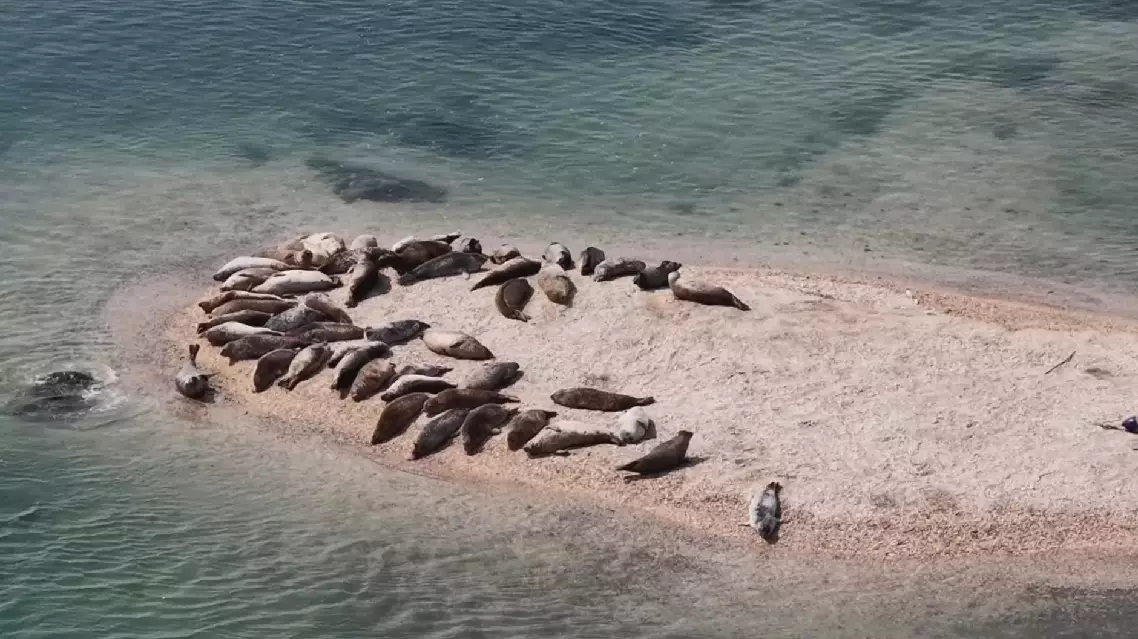
Spotted seal population grows steadily in Bohai Sea thanks to conservation efforts
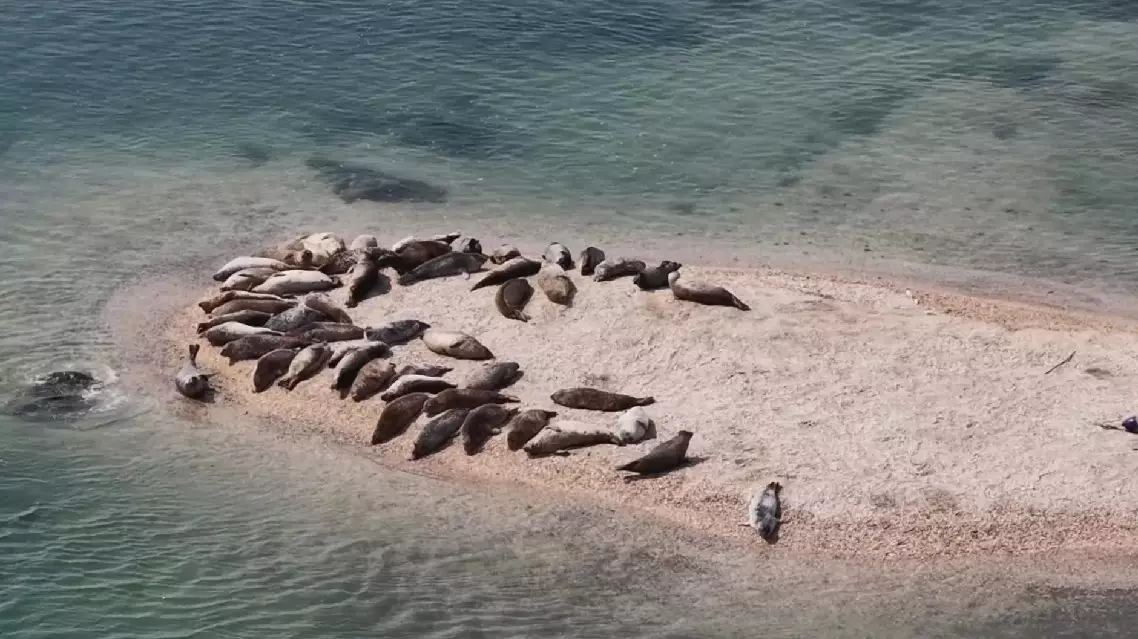
Spotted seal population grows steadily in Bohai Sea thanks to conservation efforts