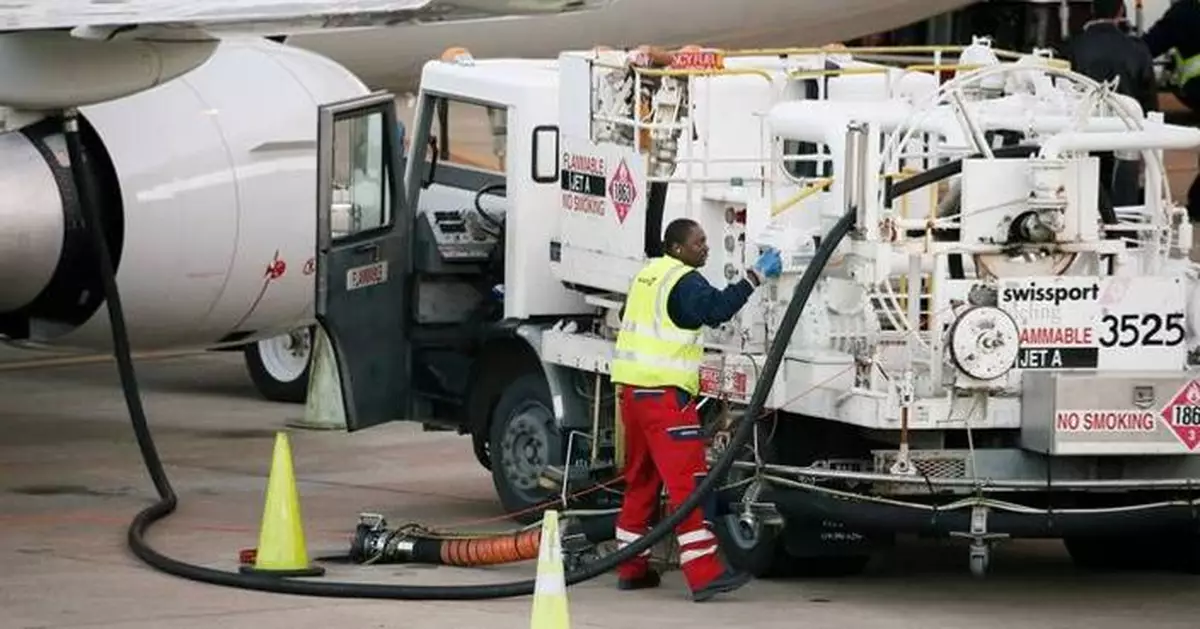
NEW YORK (AP) — A looming jet fuel shortage in Europe and Asia sparked by the Iran war and the effective closure of the Strait of Hormuz could further upend world travel within weeks if oil doesn't start flowing again soon — meaning higher airfares and flight cancellations as the summer travel season approaches.
In an exclusive Associated Press interview Thursday, International Energy Agency Director Fatih Birol said Europe has “maybe six weeks” of remaining jet fuel supplies and said the global economy faces its "largest energy crisis."
In general, some European countries hold several months' worth of jet fuel inventory at a time, according to an IEA report released this week.
Jet fuel — a refined kerosene-based oil product — is airlines' biggest cost, making up about 30% of overall expenses, according to the International Air Transport Association. And jet fuel prices have roughly doubled since the war began. Shortages could start next.
“Every passing day that the Strait of Hormuz remains shut, Europe is edging closer to supply shortages,” said Amaar Khan, head of European jet fuel pricing at Argus Media. “The strait accounts for around 40% of Europe’s jet fuel imports, but no jet fuel has passed the strait since the war broke out.”
Airline officials have largely reacted with caution, acknowledging potential fuel issues but working to reassure customers. Still, some carriers have already passed costs on to consumers by increasing fees for baggage and other add-ons, embedding costs into ticket prices, or raising fuel surcharges.
A handful of airlines already are cutting flights. Experts say other parts of air travel — such as scheduling flexibility and routes — would likely be impacted.
Here's a look at how jet fuel supplies work and how consumers might see effects.
Jet fuel is made from crude oil at refineries, which also create gasoline and diesel.
Airlines generally buy jet fuel from refineries or fuel companies, similar to drivers buying gasoline from stations, but on a much larger scale. Jet fuel travels on ships and through pipelines and is stored by airlines at airports.
Purchasing is handled by airlines. If fuel supplies are running out in a region, that doesn’t necessarily mean there will be no flights. Some airlines might have more stored than others.
But remaining flights are likely to be expensive, reflecting fuel costs.
Larger airlines have advantages in regions with shortages. They have the financial means to deal with high prices, said Jacques Rousseau, managing director at financial firm Clearview Energy Partners.
In Europe, a number of countries are now relying on less than 20 days of coverage in their fuel supplies, according to this week's IEA report. Supplies haven’t dropped below 29 days since 2020, the report said.
If that falls under 23 days, physical shortages may emerge at some airports, resulting in flight cancellations and lower demand, the report warned.
Asia-Pacific countries are the most reliant on oil and jet fuel from the Middle East, followed by Europe, Rousseau said.
Most of Europe’s jet fuel is produced by European refiners, but about 20-25% of its supply is missing because of the war, Rousseau said.
To fill some gaps, the U.S. has increased its exports of jet fuel to Europe considerably, sending about 150,000 barrels per day in April, or about six times the normal level, Rousseau said.
Availability of jet fuel is less of an issue in the U.S., a major oil producer, he added.
“I tell my kids ... we’re not so much going to run out of supply," Rousseau said. "It’s just going to cost more here, whereas in different parts of the world you could actually get to a point where there’s just no fuel.”
The world is losing 10 million to 15 million barrels of oil a day due to the closure of the Strait of Hormuz, said Pavel Molchanov, senior investment strategist at investment firm Raymond James & Associates.
“There are exactly the same refineries in exactly the same places in Asia and Europe, but if there is not enough oil for those refineries to operate, it’s going to lead to physical supply disruption,” he said.
Even though the IEA has released 400 million barrels of oil from members' emergency reserves, that won't help in the short term, he added.
“It could take until the end of the year to get all of those barrels onto the market,” he said.
Christopher Anderson, a professor of operations, technology and information management at Cornell University, said travelers should prepare for more than just higher airfares.
“This is no longer just a fuel-price story. For airlines, it is now a network-planning story,” he said. “Higher fuel costs matter, but so do longer routings, reduced scheduling flexibility and greater uncertainty about what demand will look like even a few weeks out.”
Travelers might see “a market with later booking patterns, more schedule volatility and fewer low-fare options if this disruption lasts into the core summer season,” he said.
Dutch airline KLM and U.K. budget carrier easyJet told AP they weren't experiencing current fuel shortages, without commenting further on the IEA’s warning.
Still, both airlines are among those that have seen higher costs eat into their budgets.
On Thursday, KLM said it would cut 160 flights next month — about 1% of its total European routes. The airline cited “rising kerosene costs” and said a limited number of flights are “no longer financially viable to operate.”
In a Thursday update, EasyJet said it expects to see a pretax loss of 540 million to 560 million pounds (about $731 million to $758 million) for the first half of the 2026 fiscal year. Still, CEO Kenton Jarvis said demand remains strong overall — noting that Easter travel was easyJet’s busiest ever for that holiday period.
Lufthansa said Thursday that labor disputes and high fuel prices are forcing it to immediately shut down feeder airline CityLine, earlier than planned, and take its 27 older, less fuel-efficient planes out of service. The decision accelerates a shutdown that had been expected for next year.
U.S. carrier Delta Air Lines — which frequently flies to European destinations — said on Thursday that it was “aware of the potential jet fuel supply issue” on the continent and monitoring the situation. Delta, which bought a refinery in Philadelphia in 2012 to manage its largest expense, said it doesn’t expect any “near-term impact to our operations.”
Other airlines have sounded the alarm about rising fuel prices, with some already passing along new costs to travelers, often embedded into ticket prices and add-on fees.
U.S. carriers Delta, United, American Airlines, Southwest Airlines and JetBlue have all increased checked baggage fees, for example, in recent weeks.
United CEO Scott Kirby said in a recent memo to staff that if fuel prices stay elevated, it could add $11 billion in annual costs. “For perspective,” Kirby wrote, “in United’s best year ever, we made less than $5B.”
Meanwhile, Hong Kong’s Cathay Pacific recently bumped fuel surcharges by roughly 34% across all routes, while Air India added up to $280 in fees to some flights earlier this month. Emirates, Lufthansa and KLM have also adjusted fees or fares to keep pace with the price volatility.
AP writer David McHugh in Frankfurt, Germany, contributed to this report.
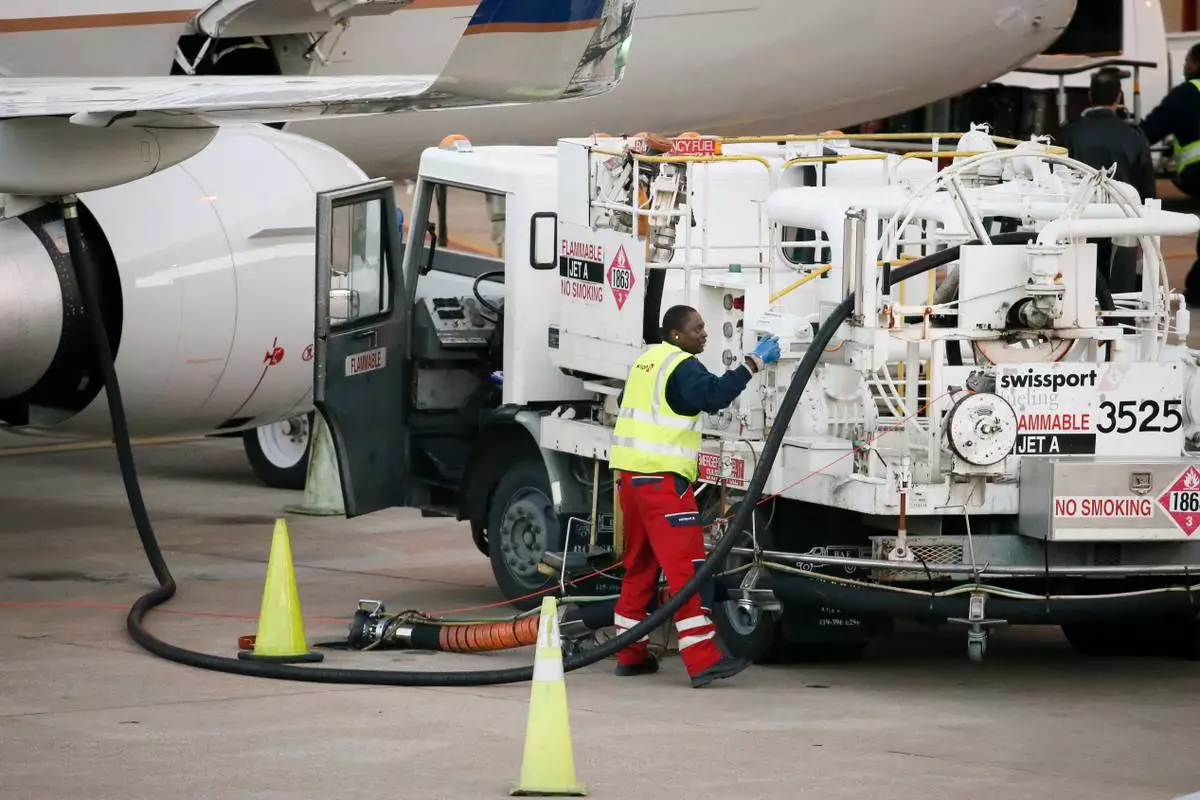
FILE - A worker prepares to fuel a United Express aircraft after it arrived at a gate at Dallas-Fort Worth International Airport, Thursday, Jan. 15, 2015, in Grapevine, Texas. (AP Photo/Tony Gutierrez, File)
BEIRUT, Lebanon (AP) — Israel agreed Thursday to a 10-day ceasefire in Lebanon, a truce that could pause fighting with the Hezbollah militant group and boost attempts to extend the ceasefire between Iran, the United States and Israel after weeks of devastating war.
U.S. President Donald Trump announced the agreement as a ceasefire between Israel and Lebanon. However, Israel has not been fighting with Lebanon itself, but rather with the Iranian-backed militants inside the country.
Hezbollah said in a statement that any truce must apply "across all Lebanese territory and must not allow the Israeli enemy any freedom of movement.”
Israeli Prime Minister Benjamin Netanyahu said he agreed to the ceasefire “to advance” peace efforts with Lebanon. “We have an opportunity to make a historic peace agreement with Lebanon,” he said in a video message.
Israeli forces have engaged in fierce battles with Hezbollah in the border area. Israeli troops have pushed into southern Lebanon to create what officials have called a “security zone,” which Netanyahu has said will extend at least 8 to 10 kilometers (5 to 6 miles) into Lebanon.
Hezbollah said that “Israeli occupation on our land grants Lebanon and its people the right to resist it, and this matter will be determined based on how developments unfold,” a stance that could complicate the ceasefire.
Netanyahu said Israeli troops will stay in an expanded security zone in southern Lebanon “much stronger, more extensive and more continuous than before.”
“That is where we are, and we are not leaving,” he said.
Trump posted the ceasefire announcement on his Truth Social platform, saying it was to begin at 5 p.m. Eastern time (9 p.m. GMT). The announcement comes two days after the countries held their first direct diplomatic talks in decades in Washington. Hezbollah had opposed direct talks between Lebanon and Israel.
Lebanon has insisted on a ceasefire to stop the fighting between Israel and Hezbollah before engaging in more talks, while vowing to commit to disarming the group.
Israel and Lebanon have technically been at war since Israel was established in 1948, and Lebanon remains deeply divided over diplomatic engagement with Israel.
Trump also invited the leaders of Israel and Lebanon to the White House for what he said would be “the first meaningful talks" between the countries since 1983.
“Both sides want to see PEACE, and I believe that will happen, quickly,” Trump wrote.
Lebanon and Israel signed an agreement in 1983 saying Lebanon would formally recognize Israel, and Israel would withdraw from Lebanon. The deal fell apart during Lebanon’s civil war and was formally rescinded a year later.
Trump said the pause in fighting followed “excellent” conversations with Lebanese President Joseph Aoun and Netanyahu.
A Hezbollah official said the ceasefire was a result of Iran’s negotiations with the U.S., in which Iran had insisted Lebanon be included in its own ceasefire, and came about through efforts by mediator Pakistan. The official spoke on condition of anonymity because he was not authorized to speak publicly.
Meanwhile, Pakistan’s powerful army chief met Thursday with Iran’s parliament speaker as part of international efforts to press for an extension to a ceasefire that has paused almost seven weeks of war between Israel, the U.S. and the Islamic Republic.
It was unclear whether the frantic diplomacy could lead to a lasting deal as the two-week ceasefire passes the halfway mark. The Iran war has killed thousands of people and upended global markets by disrupting the flow of oil.
Iranian state television did not provide details on the meeting between Pakistani Army Gen. Asim Munir and Iranian Parliament Speaker Mohammad Bagher Qalibaf, who has emerged as his country’s chief negotiator.
There was no immediate comment from Pakistan, which has become a key mediator after hosting direct talks between the U.S. and Iran that authorities said helped narrow differences between the sides. Mediators are seeking a new round before the ceasefire expires next week.
The White House said any further talks regarding Iran would likely take place in the Pakistani capital of Islamabad, though no decision had been made on whether to resume negotiations. The fragile ceasefire is holding despite a U.S. naval blockade of Iranian ports and Iranian counter-threats to target regional ports across the Red Sea.
The 14-day ceasefire expires on April 22, but Trump suggested it could be extended.
“If we’re close to a deal, would I extend?” Trump said in an exchange with reporters. “Yeah, I would do that.”
The war has jolted markets and rattled the global economy as shipping has been cut off and airstrikes have pounded military and civilian infrastructure. Oil prices have fallen amid hopes for an end to fighting, and U.S. stocks on Wednesday surpassed records set in January.
Even as the U.S. blockade on Iranian ports and renewed Iranian threats strained the ceasefire, regional officials reported progress, telling AP the United States and Iran had an “in-principle agreement” to extend it to allow for more diplomacy. They spoke on condition of anonymity to discuss sensitive negotiations.
But tensions simmered.
The commander of Iran’s joint military command, Ali Abdollahi, threatened to halt trade in the region if the U.S. does not lift its naval blockade, and a newly appointed military adviser to Iranian Supreme Leader Mojtaba Khamenei said he does not support extending the ceasefire.
Mediators are pushing for a compromise on three main sticking points: Iran’s nuclear program, the Strait of Hormuz and compensation for wartime damages, according to a regional official involved in the mediation efforts.
Iranian Foreign Ministry spokesman Esmail Baghaei said Iran is open to discussing the type and level of its uranium enrichment, but his country “based on its needs, must be able to continue enrichment,” Iranian state media reported.
The Pentagon urged Iran to make a deal, with U.S. Defense Secretary Pete Hegseth telling reporters at the Pentagon that “ultimately, they need to come to the table.”
He said the U.S. will ensure that Iran never has a nuclear weapon.
“We’d prefer to do it the nice way through a deal led by our great vice president and negotiating team. Or we can do it the hard way,” Hegseth said.
Iran insists it does not seek a nuclear weapon and its nuclear program is for peaceful proposes.
The fighting has killed at least 3,000 people in Iran, more than 2,100 in Lebanon, 23 in Israel and more than a dozen in Gulf Arab states. Thirteen U.S. service members have also been killed.
U.S. Treasury Secretary Scott Bessent said the Trump administration would ramp up economic pain on Iran with new economic sanctions on countries doing business with it, calling the move the “financial equivalent” of a bombing campaign.
Chinese Foreign Minister Wang Yi said the window of peace was opening during a phone call with his Iranian counterpart Abbas Araghchi, the Chinese Foreign Ministry said.
Since the war began, Iran has curtailed maritime traffic through the strait, which a fifth of global oil transited through in peacetime. Tehran’s effective closure of the strait sent oil prices skyrocketing, raising the cost of fuel, food and other basic goods far beyond the Middle East, and the U.S. has responded with a blockade on Iranian shipping.
U.S. Central Command said Wednesday that no ships had made it past the blockade since it was imposed two days earlier, while 13 merchant vessels complied with direction from U.S. forces to turn around and reenter Iranian waters.
Becatoros contributed from Athens, Greece. Samy Magdy in Cairo, Melanie Lidman in Tel Aviv, Israel, Munir Ahmed in Islamabad, and Ben Finley in Washington contributed to this report.
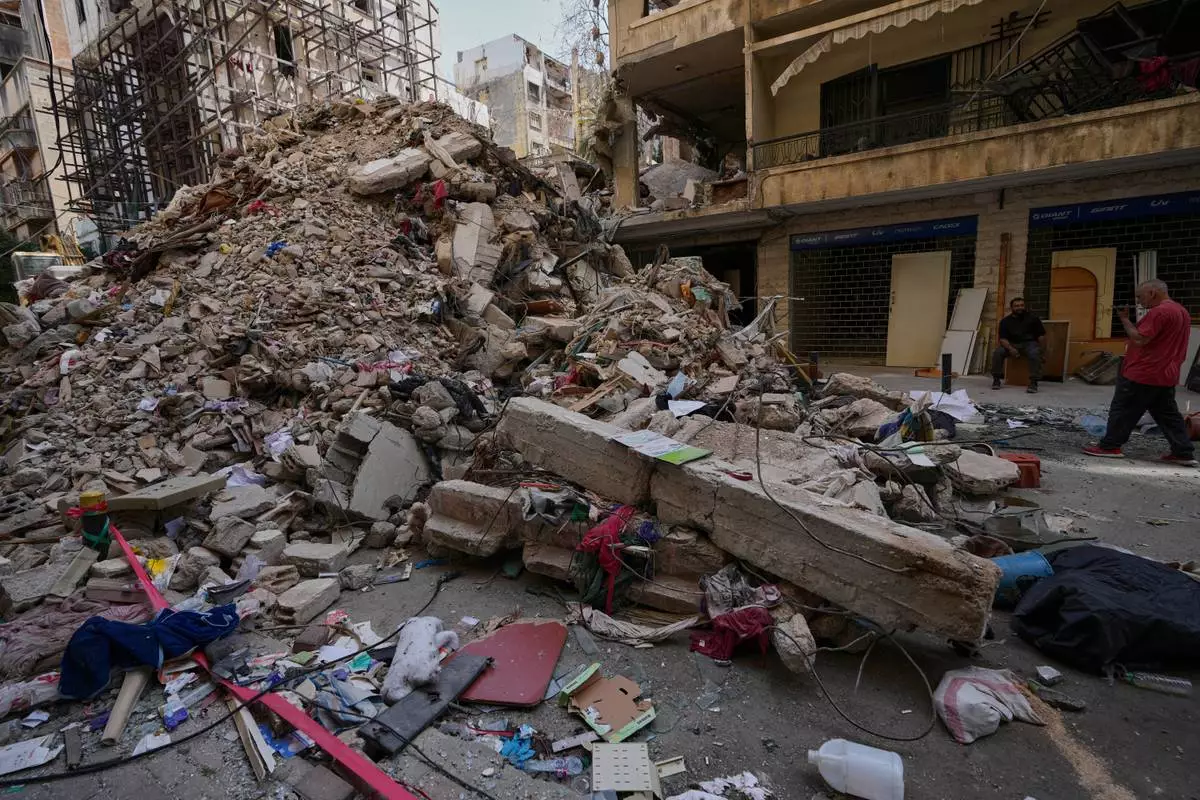
Residents stand next to the rubble of a destroyed building that was hit a week ago in an Israeli airstrike in central Beirut, Lebanon, Thursday, April 16, 2026. (AP Photo/Hussein Malla)
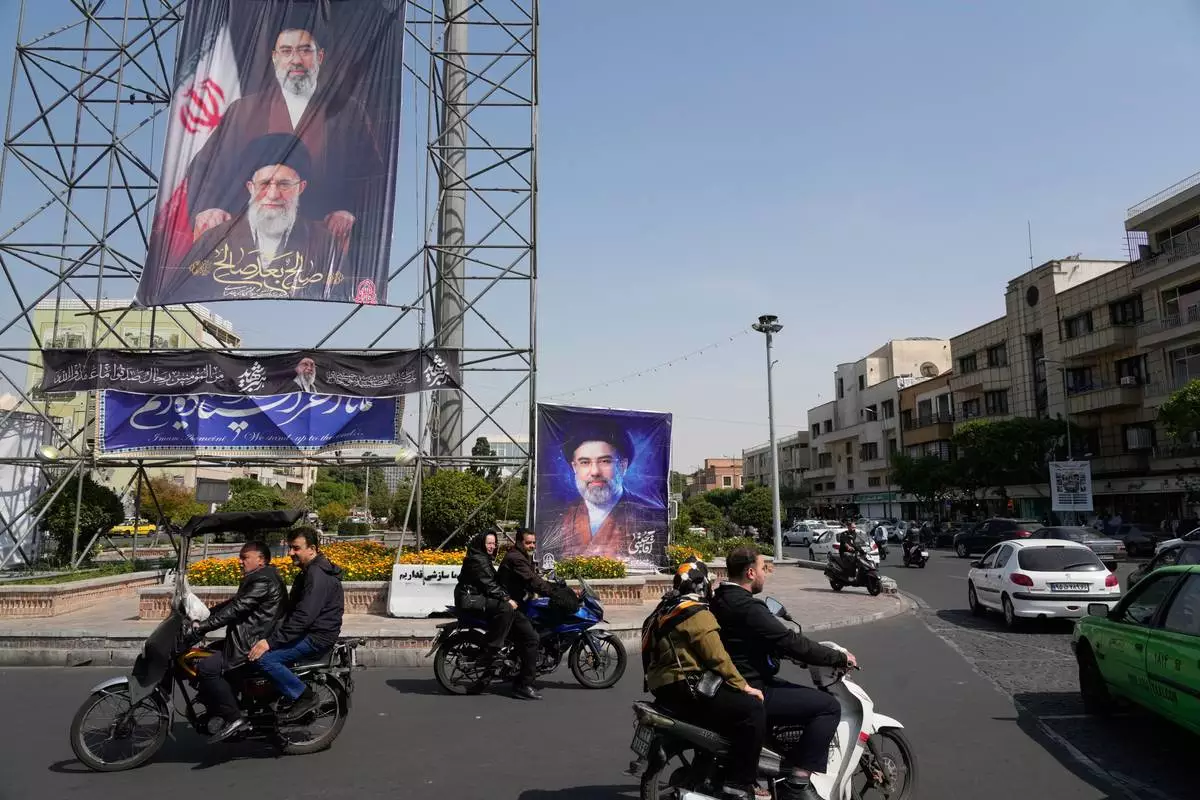
People drive their motorbikes past billboards showing the Iran's Supreme Leader Ayatollah Mojtaba Khamenei, top and right, and his father, the slain Supreme Leader Ayatollah Ali Khamenei, who was killed in U.S. and Israeli strikes on Feb. 28, in downtown Tehran, Iran, Thursday, April 16, 2026. (AP Photo/Vahid Salemi)
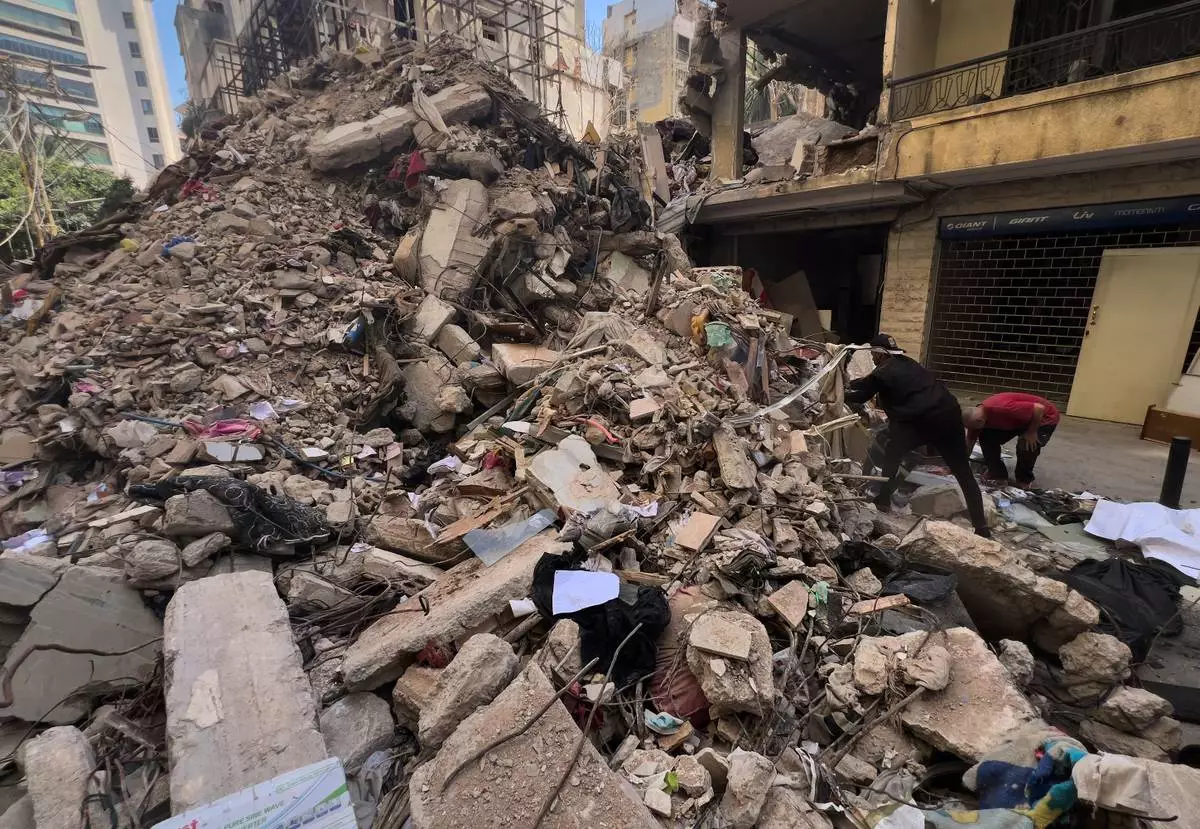
Workers search amongst the rubble of a destroyed building that was hit a week ago in an Israeli airstrike in central Beirut, Lebanon, Thursday, April 16, 2026. (AP Photo/Hussein Malla)
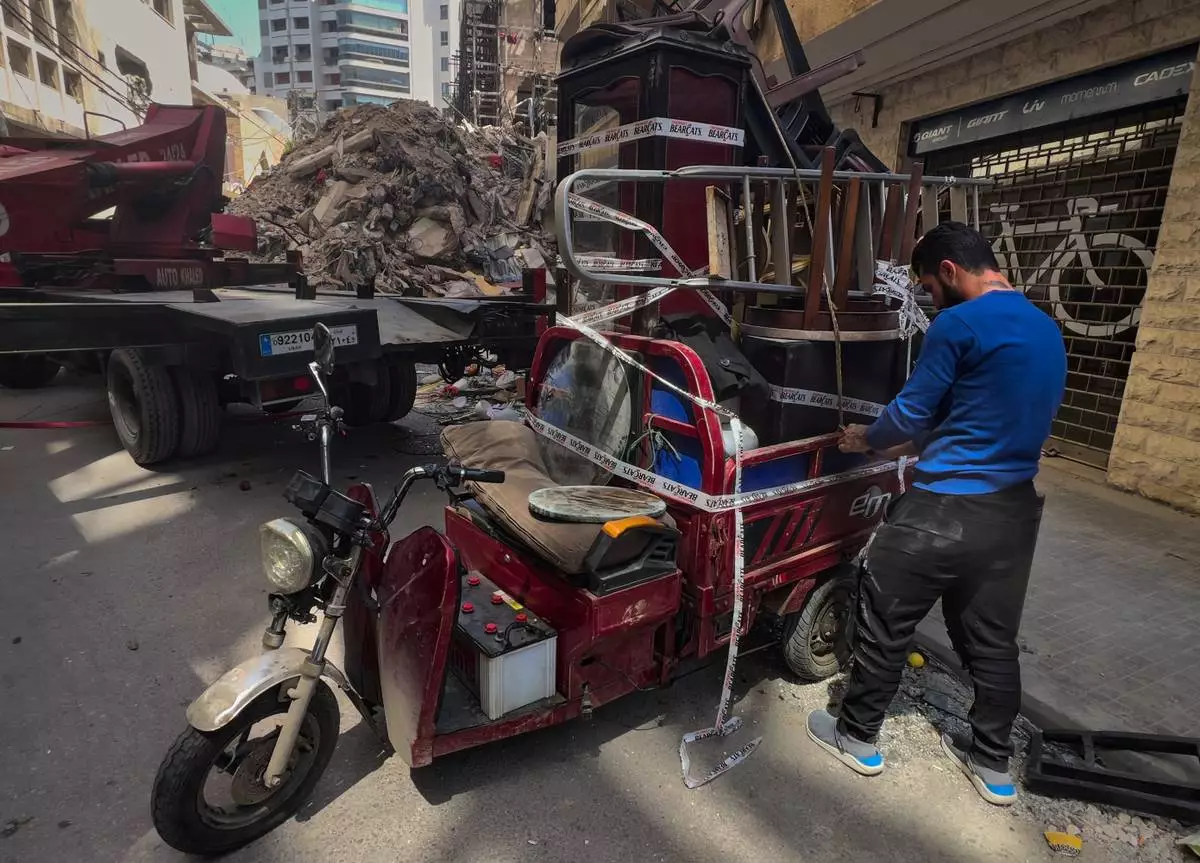
A worker arranges furniture from an apartment of a destroyed building that was hit a week ago in an Israeli airstrike in central Beirut, Lebanon, Thursday, April 16, 2026. (AP Photo/Hussein Malla)
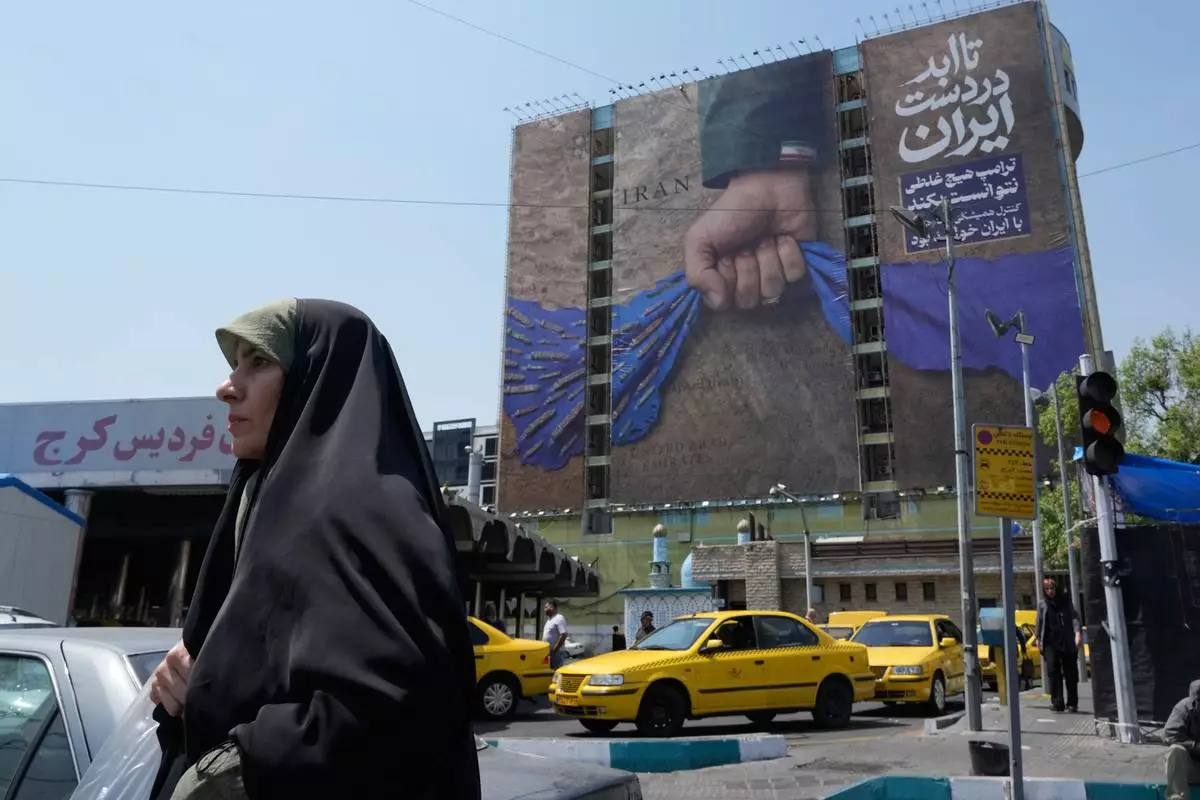
A woman walks past a billboard that shows a graphic depicting a military personnel's hand holding the Strait of Hormuz in his fist with signs which read in Farsi: "In Iran's hands forever," "Trump couldn't do a damn thing," " The control of Strait of Hormuz will be Iran's forever," in Vanak Square, in northern Tehran, Iran, Thursday, April 16, 2026. (AP Photo/Vahid Salemi)
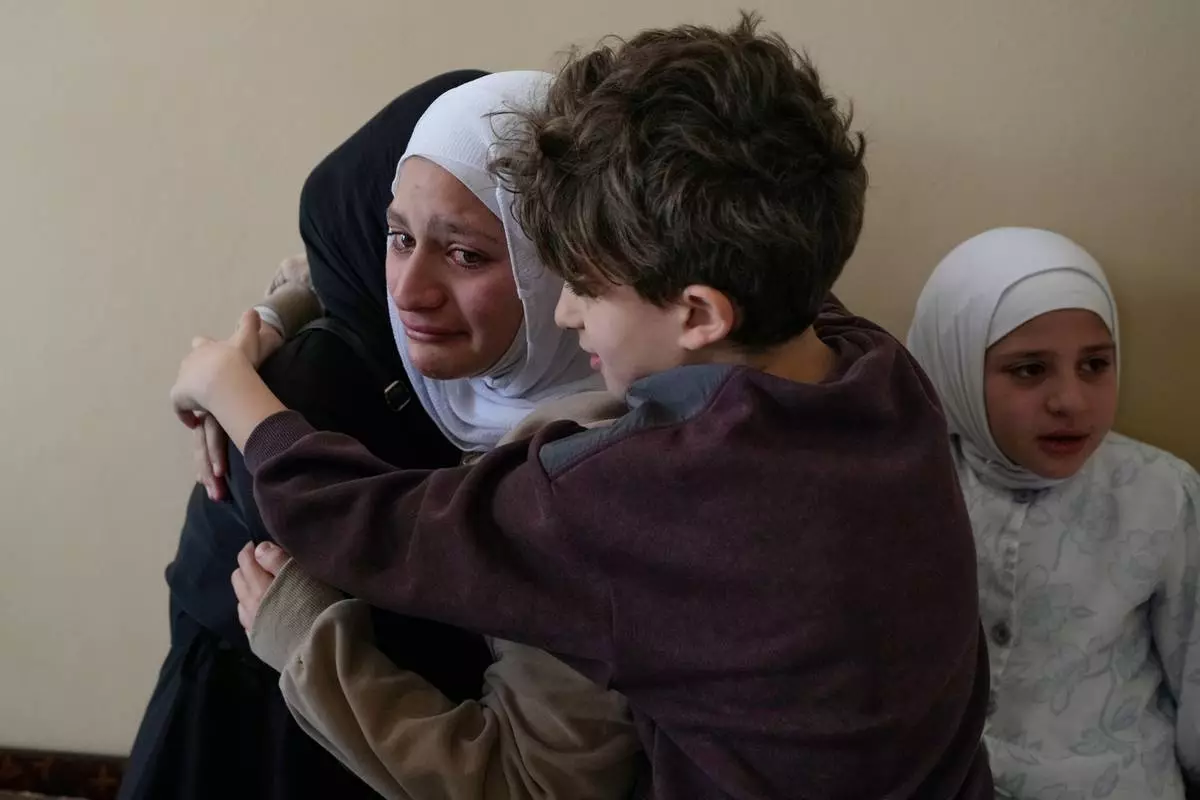
Relatives of Ghadir Baalbaki, 19, who was killed on Tuesday in an Israeli airstrike, mourn during her funeral in the southern port city of Tyre, Lebanon, Wednesday, April 15, 2026. (AP Photo/Hussein Malla)
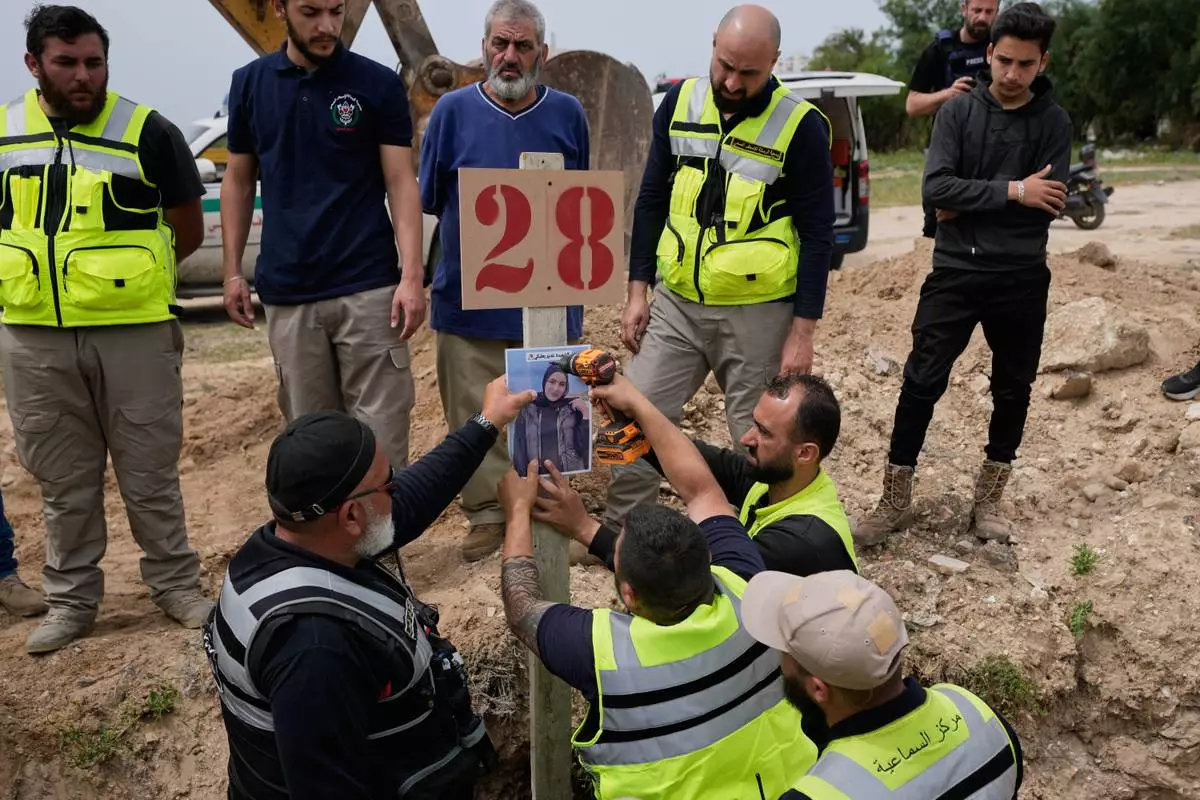
Paramedics attach a portrait over the grave of Ghadir Baalbaki, 19, who was killed on Tuesday in an Israeli airstrike, at a temporary mass grave in the southern port city of Tyre, Lebanon, Wednesday, April 15, 2026. (AP Photo/Hussein Malla)
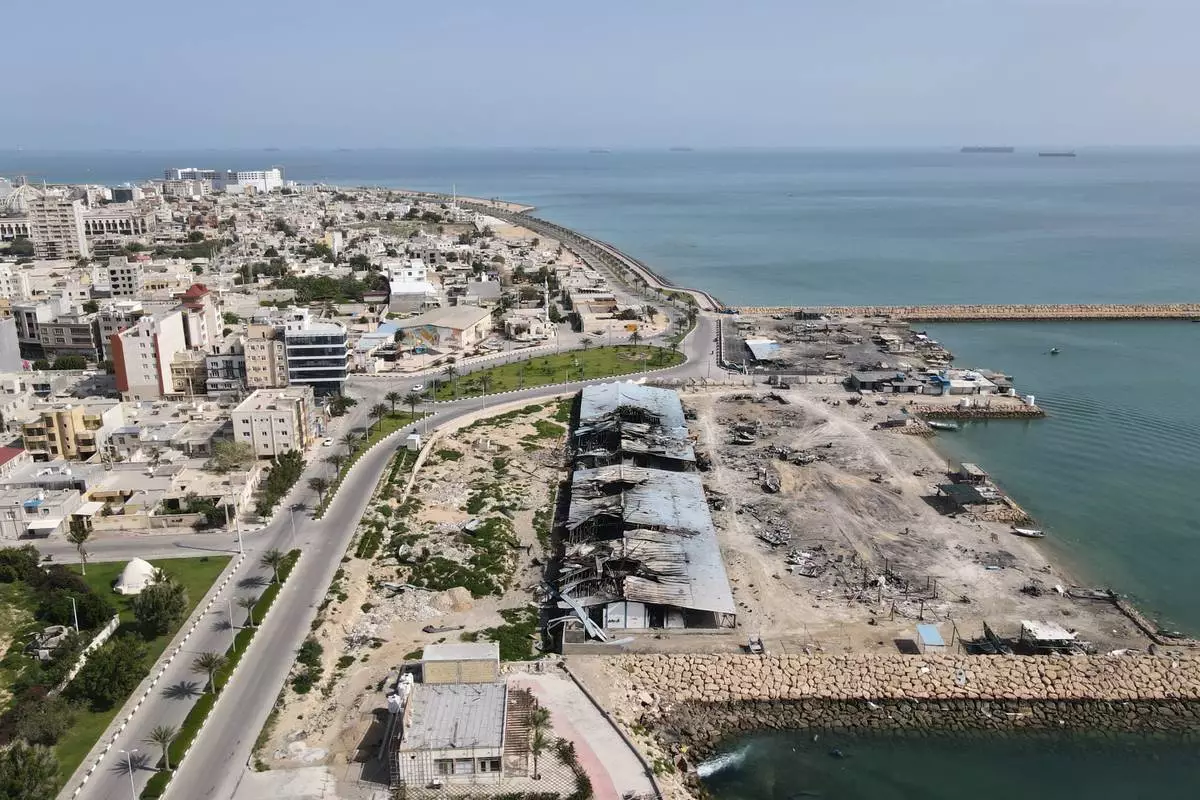
Backdropped by ships in the Strait of Hormuz, damage, according to local witnesses caused by several recent airstrikes during the U.S.-Israel military campaign, is seen on a fishing pier in the port of Qeshm island, Iran, Monday, April 13, 2026. (AP Photo/Asghar Besharati)
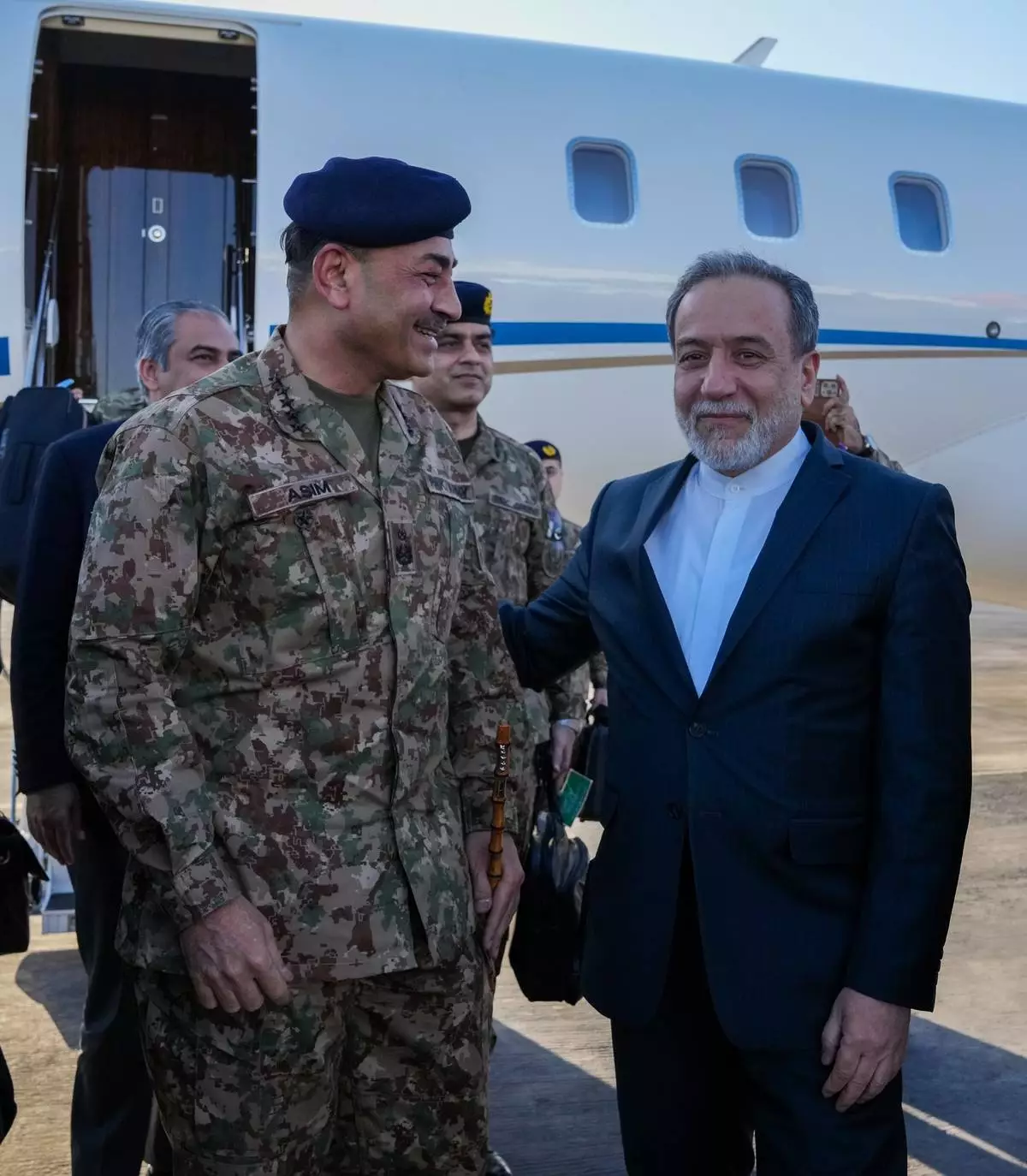
In this photo released by the Iranian Foreign Ministry, Pakistan's Army Chief Field Marshal Gen. Asim Munir, left, is welcomed by Iranian Foreign Minister Abbas Araghchi upon his arrival in Tehran, Wednesday, April 15, 2026. (Iranian Foreign Ministry via AP)
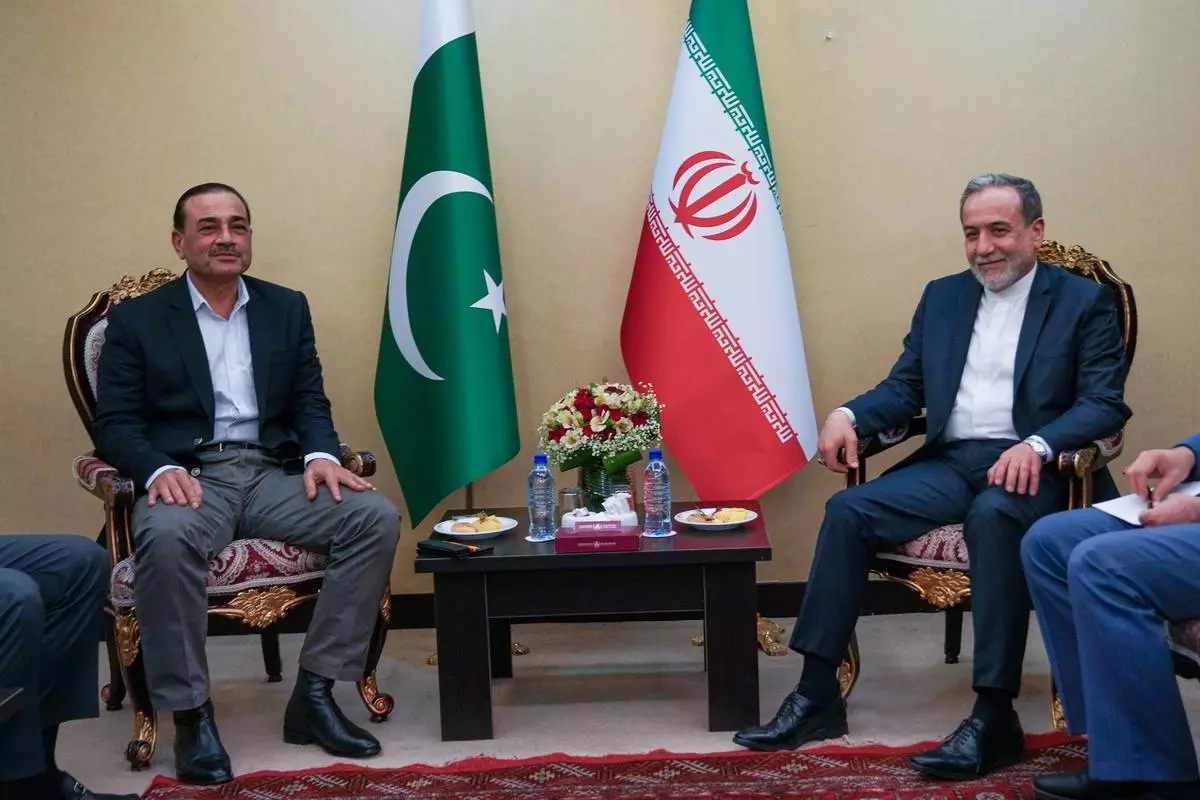
In this photo released by the Iranian Foreign Ministry, Iranian Foreign Minister Abbas Araghchi, right, meets with Pakistan's Army Chief Field Marshal Gen. Asim Munir in Tehran, Wednesday, April 15, 2026. (Iranian Foreign Ministry via AP)