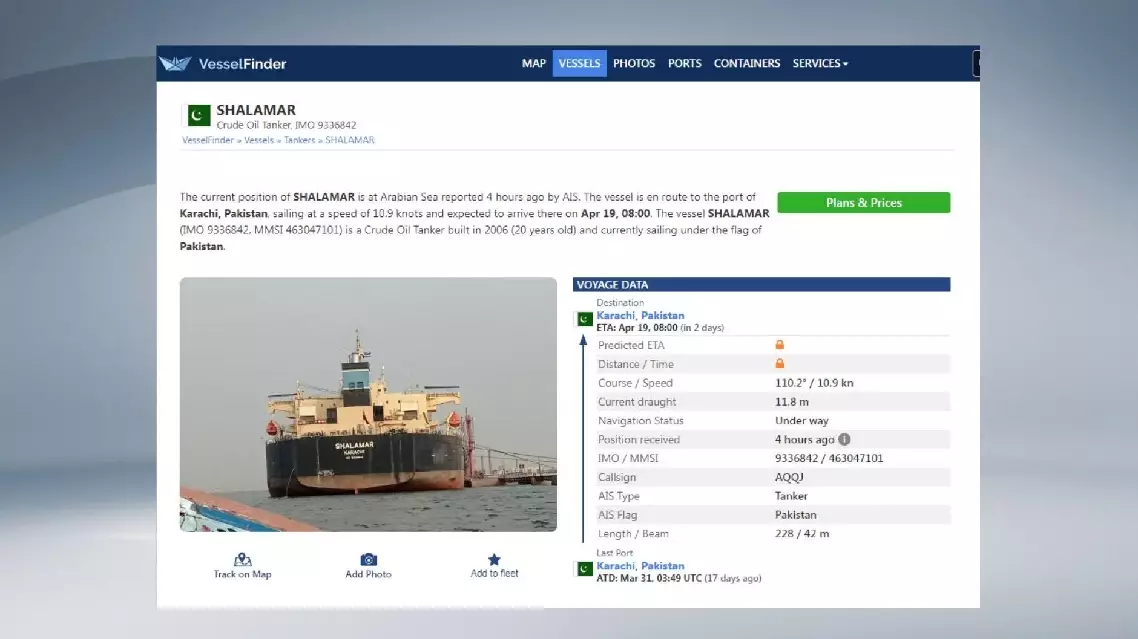
An oil tanker flagged to Pakistan has entered the Gulf of Oman after transiting the Strait of Hormuz, marking the first crude vessel to leave the Persian Gulf since the United States imposed a blockade on Monday, ship‑tracking data showed.
The Strait of Hormuz is a vital artery for global energy, with nearly one‑fifth of the world's oil passing through its narrow waters. Data from VesselFinder showed the tanker Shalamar sailing south of Iran's Larak Island late Thursday, carrying about 450,000 barrels of crude loaded at the UAE's Das Island terminal. The vessel, owned by the Pakistan National Shipping Corporation, was listed as bound for Karachi.
The U.S. has imposed the blockade on Monday after peace talks in Islamabad collapsed, deploying more than 15 warships to intercept vessels bound for Iranian ports while allowing transit to non‑Iranian destinations.
Pakistan-flagged tanker becomes first crude carrier to exit Strait of Hormuz since US blockade
China will roll out a coordinated mix of macro policies to secure the 15th Five Year Plan (2026-2030), Wang Changlin, deputy head of the National Development and Reform Commission, told a press conference in Beijing on Friday.
In the first three months of the five-year period, the Chinese economy got off to a steady and strong start, with the country's GDP posing a globally leading growth rate of 5 percent, which reversed a downward trend since the second quarter of 2025, Wang said.
"Three indicators have shown notable improvement: fixed-asset investment turned from decline to growth, service consumption grew more rapidly, and the overall price level rose moderately. In March, the producer price index rose 0.5 percent year on year, ending a 41-month streak of declines," he said.
A coordinated mix of macro policies will be rolled out, with a reserve of measures to be introduced in a timely manner as conditions require, Wang said.
The government will move to expand effective domestic demand, draft an action plan for 2026-2030 to expand domestic demand and expedite the construction of qualified major projects, according to Wang.
The official vowed continued efforts to implement major national strategies and build up security capacity in key areas to fully leverage the stimulating and multiplier effects of government investment and spur private investment.
The consumer goods trade-in programs will be steadily advanced, with unreasonable restrictions on consumption abolished more quickly, Wang said.
The country will step up efforts to boost technological innovation, accelerate the development of emerging industries, advance the "AI plus" initiative, and foster new forms of smart economy. Measures will also be taken to enhance the capacity of the service sector.
Authorities pledged stronger support to stabilize employment and raise incomes, including policies to secure jobs, improve job quality and implement income growth plans for urban and rural residents. Social security nets for vulnerable groups will also be reinforced.
China will also work to ensure stable supply and prices of key goods such as energy, resources and food, accelerate the building of a new type of energy system, and promote the stable development of the property market, Wang noted.
Official on coordinated macro policies for 15th Five-Year Plan