Skip to Content Facebook Feature Image

Official on coordinated macro policies for 15th Five-Year Plan

China

China

China

Official on coordinated macro policies for 15th Five-Year Plan

2026-04-17 21:34 Last Updated At:04-18 15:04

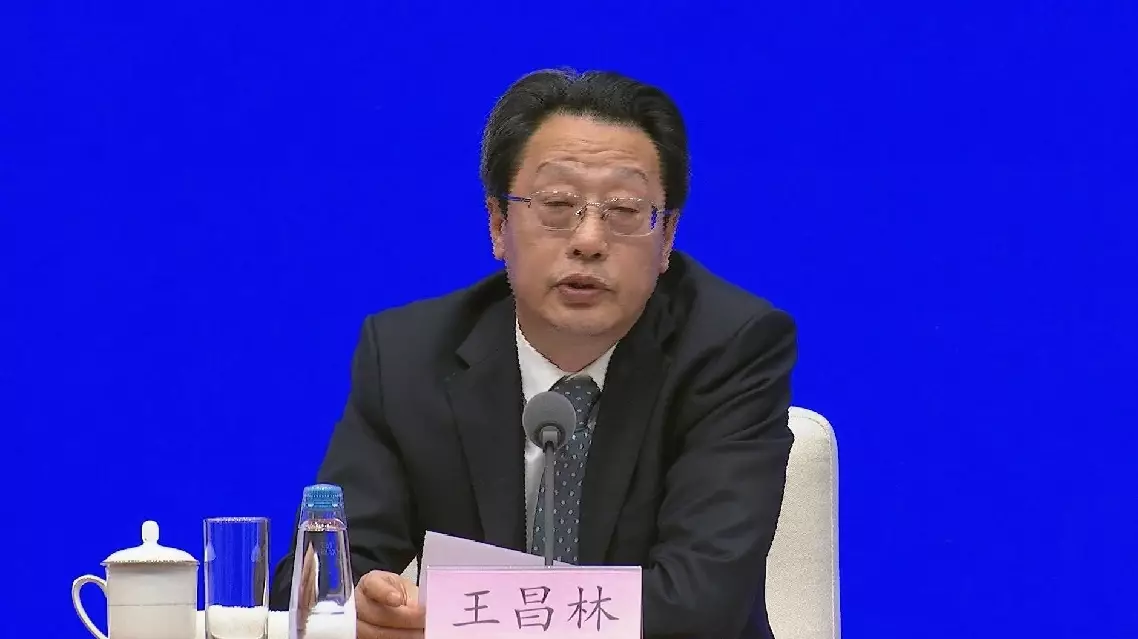
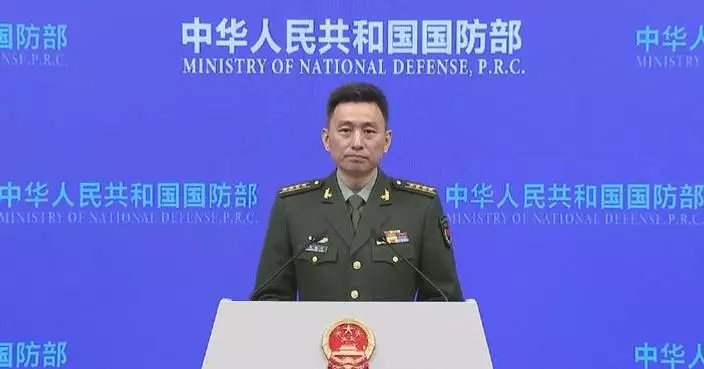
China will roll out a coordinated mix of macro policies to secure the 15th Five Year Plan (2026-2030), Wang Changlin, deputy head of the National Development and Reform Commission, told a press conference in Beijing on Friday.

In the first three months of the five-year period, the Chinese economy got off to a steady and strong start, with the country's GDP posing a globally leading growth rate of 5 percent, which reversed a downward trend since the second quarter of 2025, Wang said.

"Three indicators have shown notable improvement: fixed-asset investment turned from decline to growth, service consumption grew more rapidly, and the overall price level rose moderately. In March, the producer price index rose 0.5 percent year on year, ending a 41-month streak of declines," he said.

A coordinated mix of macro policies will be rolled out, with a reserve of measures to be introduced in a timely manner as conditions require, Wang said.

The government will move to expand effective domestic demand, draft an action plan for 2026-2030 to expand domestic demand and expedite the construction of qualified major projects, according to Wang.

The official vowed continued efforts to implement major national strategies and build up security capacity in key areas to fully leverage the stimulating and multiplier effects of government investment and spur private investment.

The consumer goods trade-in programs will be steadily advanced, with unreasonable restrictions on consumption abolished more quickly, Wang said.

The country will step up efforts to boost technological innovation, accelerate the development of emerging industries, advance the "AI plus" initiative, and foster new forms of smart economy. Measures will also be taken to enhance the capacity of the service sector.

Authorities pledged stronger support to stabilize employment and raise incomes, including policies to secure jobs, improve job quality and implement income growth plans for urban and rural residents. Social security nets for vulnerable groups will also be reinforced.

China will also work to ensure stable supply and prices of key goods such as energy, resources and food, accelerate the building of a new type of energy system, and promote the stable development of the property market, Wang noted.
Official on coordinated macro policies for 15th Five-Year Plan

Official on coordinated macro policies for 15th Five-Year Plan

The unveiling ceremony for the Sino-Russian Consortium for Innovation in Forestry Education, Science and Industry took place in Harbin, capital of northeast China's Heilongjiang Province on Monday, prior to Russian President Vladimir Putin's state visit to China on May 19-20.

Jointly initiated by Northeast Forestry University and Saint Petersburg State Forest Technical University, the consortium includes 48 universities, research institutes and enterprises from both countries.

It focuses on talent cultivation, joint research and cultural and industrial exchanges, promoting faculty and student exchanges, course sharing and joint labs to advance sustainable forestry development.

Representatives from the founding universities and an enterprise partner elaborated on the significance of the consortium and its expected impact.

Song Wenlong, president of Northeast Forestry University, highlighted the transformative nature of the partnership.

"The consortium marks a shift from loose exchanges to institutionalized, normalized and substantive cooperation. It has greatly enhanced the international cultivation of forestry talents and the original innovation capacity in scientific research, contributing Chinese and Russian wisdom and strength to deepening China-Russia good-neighborly friendship, empowering regional green development, and building a global ecological security barrier," said Song.

Irina Melnychuk, president of Saint Petersburg State Forest Technical University, spoke about the long-standing friendship and the new synergy the consortium aims to create.

"Our two universities have a long history of friendship. However, to enhance the effectiveness of our cooperation, we decided to establish this consortium. We hope it will generate this kind of synergy. For all those involved in this consortium, there is an opportunity to achieve such significant new results," said Melnychuk.

Alexander Resin, a representative of a Russian enterprise, emphasized the talent exchange and practical immersion opportunities the consortium will provide.

"Today, both China and Russia need highly professional and well-educated talents. Of course, this also provides opportunities for Chinese students to intern at Russian enterprises and for Russian students to intern at Chinese enterprises. This is a very beneficial exchange of ideas, plans, goals and tasks, as well as an opportunity to immerse oneself in real production processes," said Resin.

By 2025, China and Russia had established over 150 cooperative education institutions and programs.

Fifteen university alliances of similar types have brought together more than 800 universities from the two countries to carry out joint scientific research and collaborative innovation.

Sino-Russian forestry education consortium launched in northeast China for green growth

Sino-Russian forestry education consortium launched in northeast China for green growth

Recommended Articles