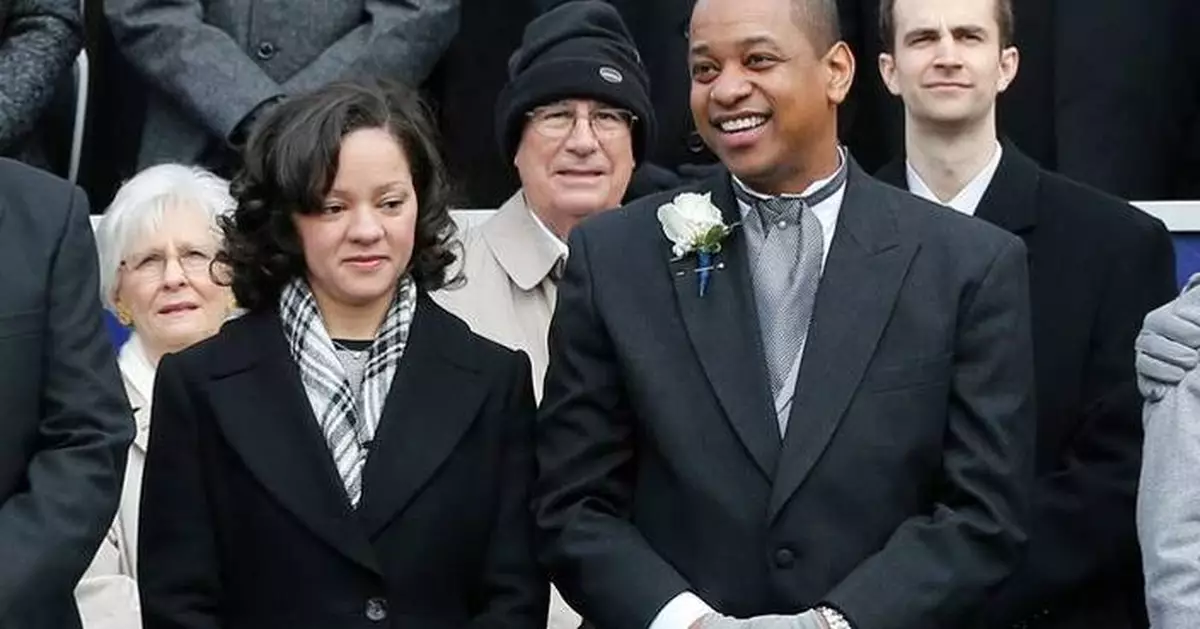
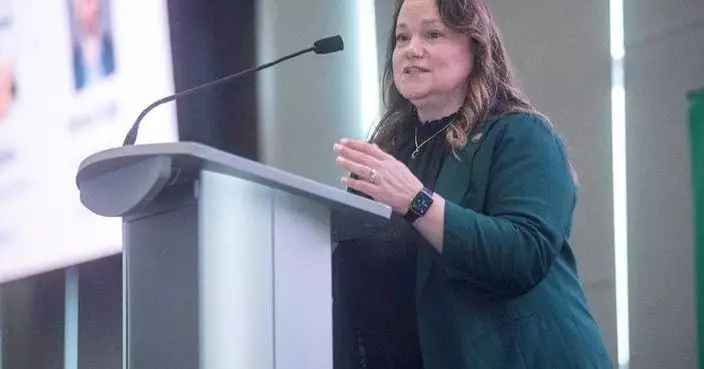
Patients and colleagues are remembering Dr. Cerina Fairfax as a devoted mother, a caring dentist and the rock at the center of her family, after police say she was killed by her estranged husband, former Virginia Lt. Gov. Justin Fairfax.
Police found both dead in their home in the Washington, D.C., suburb of Annandale, Virginia, early Thursday. They believe Justin Fairfax fatally shot his wife and then killed himself. They were going through a divorce and Justin Fairfax had been ordered by a judge to move out of the house by the end of the month.
Cerina Fairfax, 49, ran a thriving family dentistry practice in the nearby city of Fairfax. A profile page on its website described her as an avid reader who liked to travel, practice yoga, go on trail runs with her Vizsla-breed dogs and “spend time with her wonderful family.”
EDITOR’S NOTE — This story includes discussion of suicide. If you or someone you know needs help, the national suicide and crisis lifeline in the U.S. is available by calling or texting 988. There is also an online chat at 988lifeline.org
Virginia Rep. Jennifer McClellan, who knew Fairfax through her husband's campaign and the time he spent in office, said their two teenaged children were “the people she cherished most.”
“Cerina Fairfax was a loving and dedicated mother and the rock at the center of her large family," McClellan wrote in a statement.
Terron Sims II, a friend and patient, remembered her as a quiet and caring friend, whose dentistry was more than a profession.
“It was an expression of love and compassion,” Sims told WUSA-TV. “It was her way of service to others.”
Fairfax was recognized in 2015 as the Outstanding Graduate of the Last Decade by the Virginia Commonwealth School of Dentistry. Dr. Jeffrey Johnson, the interim dean of the dental school, wrote that her loss is deeply felt by many who knew her.
“As a clinician and alumna, Dr. Fairfax embodied the ideals of our profession — dedication to her patients, commitment to growth, and a deep sense of purpose in her work each day," Johnson wrote. "I know she was a mentor, role model, and friend to many in our school.”
Leaders in the state’s dental community also praised her accomplishments and commitment to patients.
“In addition to being a beloved practitioner in her community, Dr. Fairfax loved giving back through volunteer work and contributions to local charities focused on helping those in need,” said Ryan Dunn, CEO of the Virginia Dental Association, in a statement. “As we remember Dr. Fairfax, we honor the impact she made and the connections she helped build within the VDA and her community.”
Cerina and Justin Fairfax met as undergraduates at Duke University and married in 2006.
Justin Fairfax unsuccessfully sought the Democratic nomination for attorney general in 2013, then won the race for lieutenant governor in 2017. He was considered a rising star in the Democratic Party until two women came forward accusing him of sexually assaulting them years earlier, before he and Cerina were married. He denied the allegations and wasn’t charged. He left office at the end of his term in 2022, following an unsuccessful run for governor.
Cerina Fairfax said in court filings that they separated nearly two years ago. But they were still living in the same house with their children, who police said were both home at the time of their deaths.
The judge overseeing the divorce had told Justin Fairfax to move out by the end of April, writing “it is clear tensions in the Fairfax home have been extremely high for an extended period of time.” He also noted in a March 30 court order that Cerina “has been the undisputed primary caregiver to the children in all aspects of their lives,” and that she had been “a port in a storm for her children.”
“Their remarkable resilience and early success in life is down to what can best be described as Mother's grit,” Judge Timothy McEvoy wrote.
Amy Spain, Cerina Fairfax’s attorney, said her client’s death “leaves an immeasurable void in the lives of all who knew and loved her.”
“Above all else, Cerina was a devoted mother to her beautiful children, who were the very center of her world,” Spain said. “She embodied the true meaning of motherhood through her unconditional and unwavering devotion to her children, providing a constant source of love, protection, and guidance.”
Associated Press writer John Raby in Charleston, West Virginia, contributed to this report.
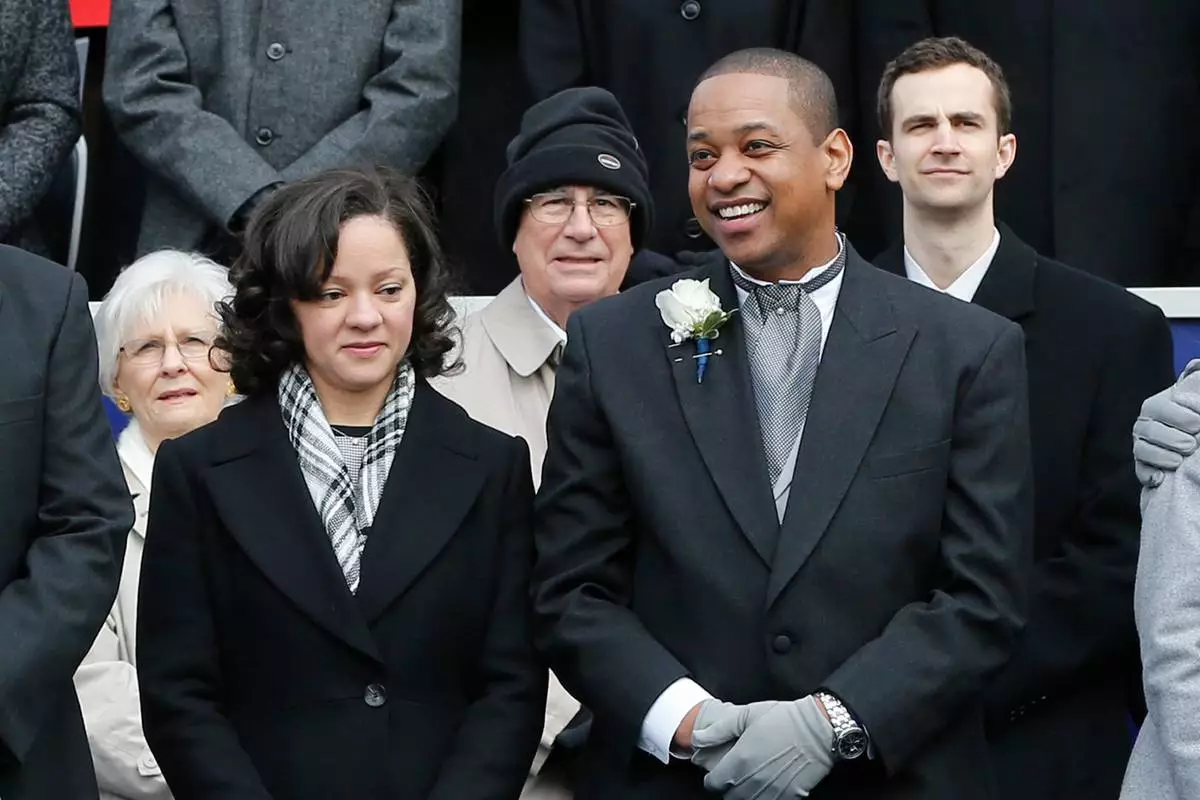
FILE - Lt. Gov. Justin Fairfax, right, and his wife, Cerina, at the inauguration of Gov. Ralph Northam at the Capitol in Richmond, Va., Saturday, Sept. 13, 2018. (AP Photo/Kevin Morley, File)
Farming in America can be a tough business, and for some producers, finding more affordable energy can make the difference between profit and loss. But getting federal support to help them do that with renewables has become much more difficult since Donald Trump's return to the White House.
Trump has been hostile to renewable energy, instead promoting fossil fuels that he says are essential to American energy dominance. The Associated Press and Grist collaborated on a project to analyze how federal policy changes on energy are affecting farmers.
They found that two programs critical for renewable energy growth — a rural-focused initiative called REAP and a clean energy tax credit — have been sharply rolled back. In the fiscal year that started Oct. 1, they found that the U.S. Department of Agriculture hasn’t awarded a single dollar in rural energy grants or loan guarantees.
EDITOR’S NOTE: This story is a collaboration between Grist and The Associated Press.
Some takeaways from their reporting:
Through the Rural Energy for America Program, or REAP, the USDA issues grants and loans to farmers, ranchers, and rural businesses interested in renewable energy — like installing solar to lower utility costs. REAP has backed tens of thousands of renewable energy and efficiency projects, with grants totaling more than $1.8 billion, since it began nearly two decades ago.
The program was supercharged by funding from the Inflation Reduction Act in 2022, and had bipartisan support up until then.
But the Grist-AP analysis of USDA data found the program hasn't committed a single dollar in renewable energy development since September. It has never reopened REAP’s grant application cycle though it said it would do so last October. Its loan guarantee program — geared toward larger farm and rural business projects — has remained open, but the analysis found that the agency has awarded no new agreements this fiscal year.
And on March 31, the USDA announced a suspension of all REAP grant awards so it could update regulations to comply with a Trump executive order issued in July.
A USDA spokesperson said the suspension was temporary but didn't say for how long.
The Energy Policy Act of 2005, signed by President George W. Bush, enacted a 30% investment tax credit for large-scale clean energy projects, boosting the solar industry. The tax credit was extended for eight years under President Obama and later extended under Trump in 2020.
When President Joe Biden signed the 2022 landmark climate bill, the tax credit was extended again through 2032 or when specific emissions targets were reached. But under Trump’s tax bill passed by Congress last year, the timeline for getting credits was moved up. Now, commercial solar projects have to be under construction by July 2026 or in service by the end of 2027 to be eligible for the credit.
The Grist-AP analysis found at least 126 solar projects proposed since 2024 — all of them on or near farmland — are awaiting regulatory approval. Together the projects would supply about 20 gigawatts of renewable electricity, enough to power about 4.5 million homes.
Some developers are abandoning projects because they say they can't meet the deadlines.
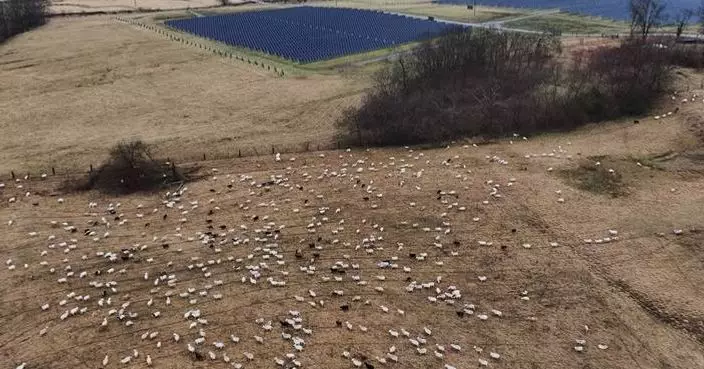
Daniel Bell, a Kentucky sheep farmer, is earning extra money by running his flock on land owned by a commercial solar operation. The sheep keep the grass down beneath solar arrays. With an expanding flock, now he needs a new barn, and he wanted to power it with rooftop solar — only to find that the Trump administration had effectively stopped the grants that would have made it possible on his own property.
Bell said for him it's an issue of the freedom to do what he wants in a way that lowers his bills.
Robert Bonnie, who was undersecretary for farm production and conservation at the USDA under the Biden administration, said the retreat from funding renewables will be felt throughout rural America. Part of the USDA’s role has been to invest in rural areas while making rural prosperity part of the climate agenda.
“In places like Iowa and Texas, renewables matter, not just for additional power, and lower power bills, and clean energy, but also matters for farmers’ pocketbooks,” said Bonnie. “Anything you do to pull back on that is hugely problematic.”
This story has been corrected to show that new commercial solar projects can be eligible for a tax credit if they are under construction by July 2026 or in service by the end of 2027, not necessarily both.
The Associated Press’ climate and environmental coverage receives financial support from multiple private foundations. AP is solely responsible for all content. Find AP’s standards for working with philanthropies, a list of supporters and funded coverage areas at AP.org.
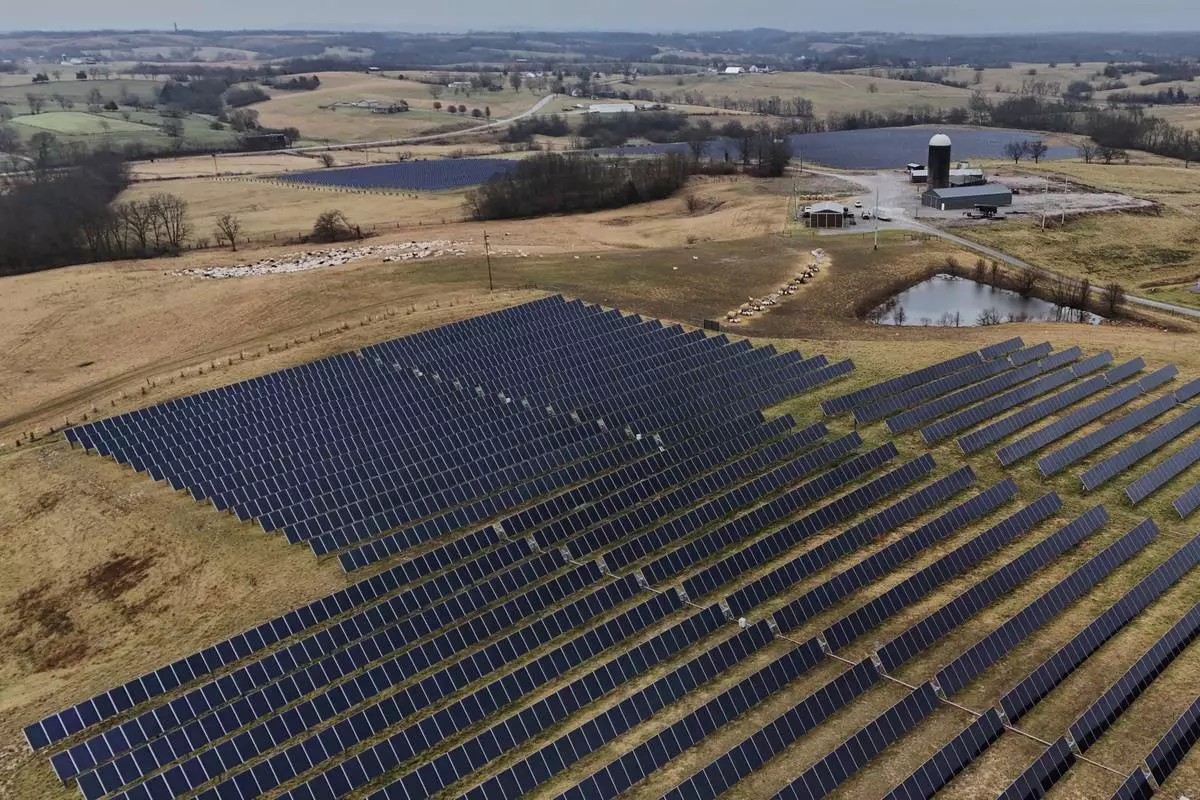
Solar panels operate at a farm Wednesday, Jan. 14, 2026, in Lancaster, Ky. (AP Photo/Joshua A. Bickel)
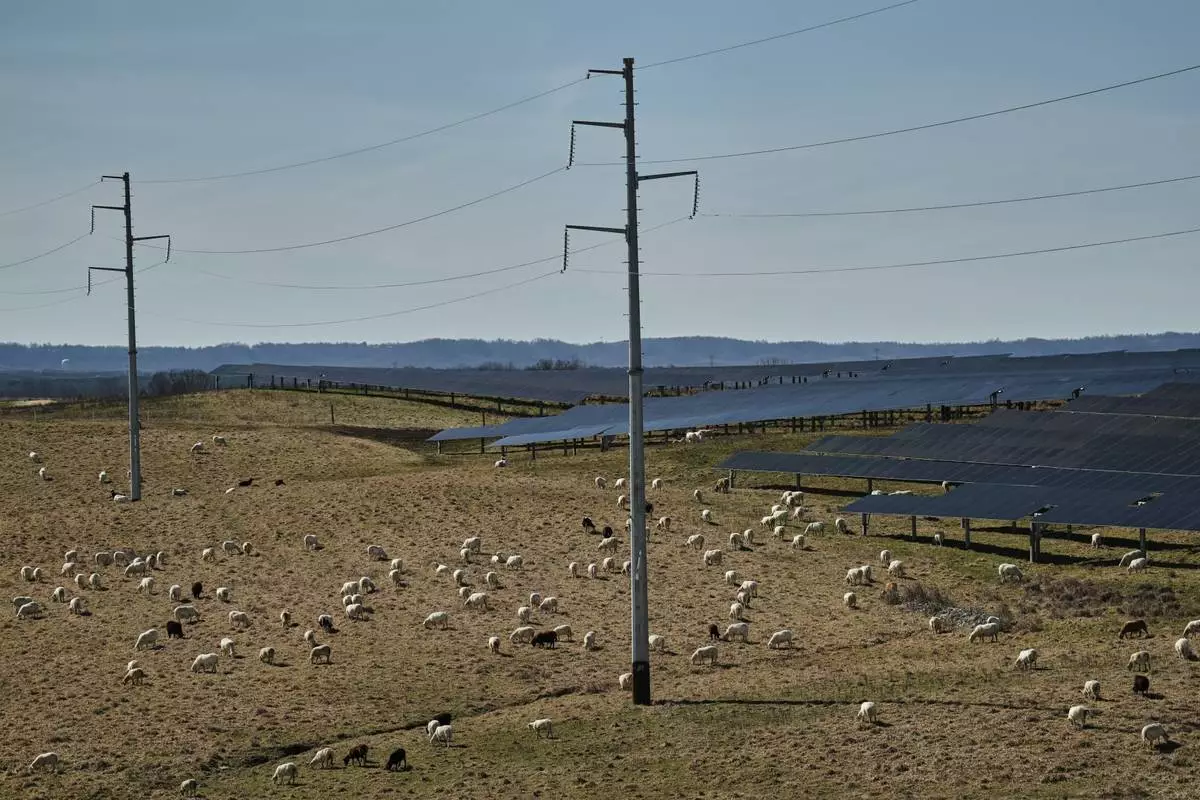
Power lines run through a field where sheep graze near solar panels Friday, Feb. 20, 2026, at a farm in Lancaster, Ky. (AP Photo/Joshua A. Bickel)
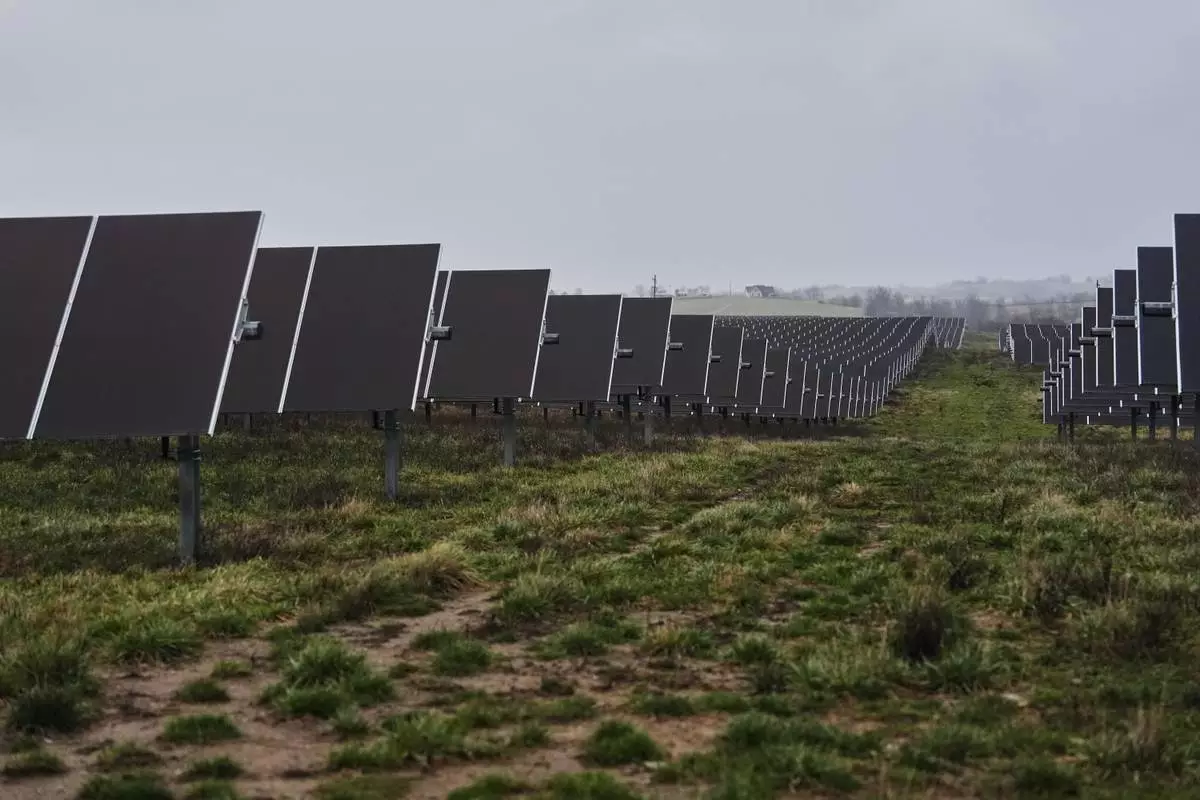
Solar panels operate Wednesday, Jan. 14, 2026, at a farm in Lancaster, Ky. (AP Photo/Joshua A. Bickel)
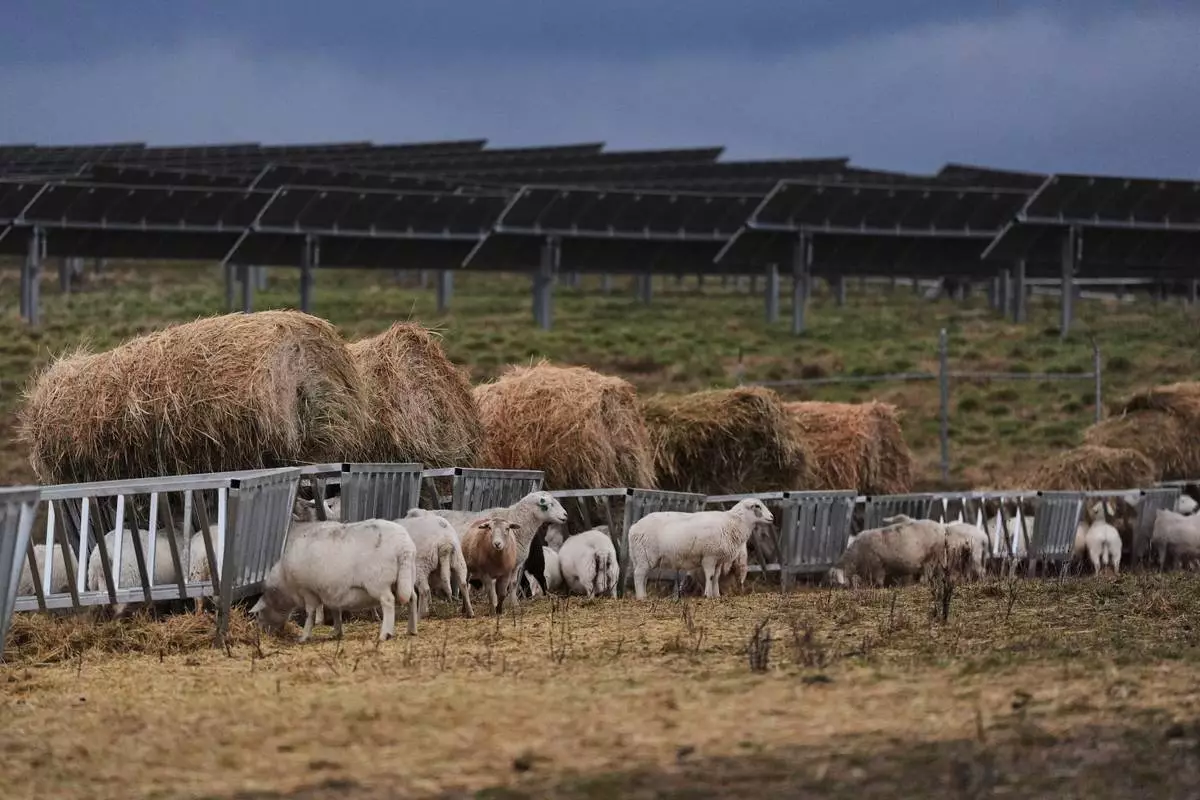
Sheep feed near solar panels at a farm Wednesday, Jan. 14, 2026, in Lancaster, Ky. (AP Photo/Joshua A. Bickel)