Skip to Content Facebook Feature Image

Fernando Mendoza, Diego Pavia, KC Concepcion headline long list of Latino prospects in NFL draft

Sport

Fernando Mendoza, Diego Pavia, KC Concepcion headline long list of Latino prospects in NFL draft
Sport

Sport

Fernando Mendoza, Diego Pavia, KC Concepcion headline long list of Latino prospects in NFL draft

2026-04-22 02:25 Last Updated At:15:18

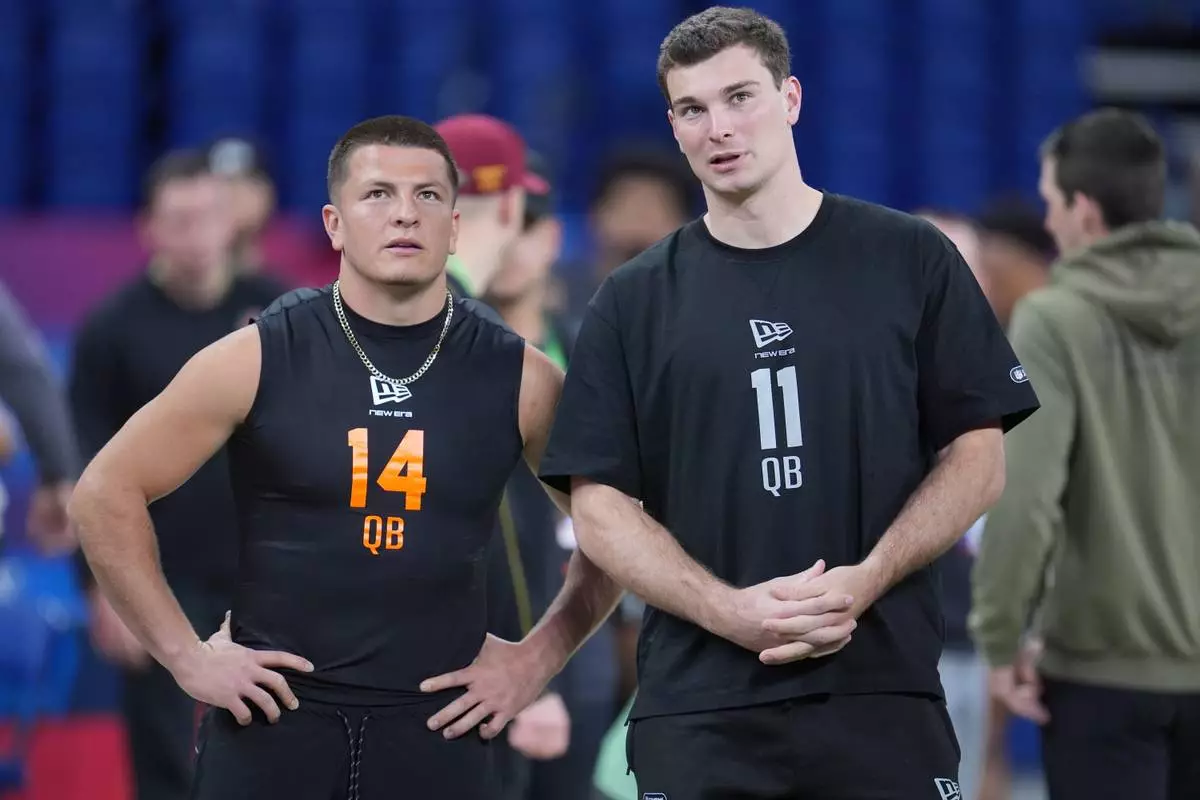
INDIANAPOLIS (AP) — Fernando Mendoza and Diego Pavia pulled off an unprecedented double at the Heisman Trophy ceremony in December. It marked the first time in the award's history that two Latino players were finalists.

Even more notable: Mendoza, of Indiana, joined Jim Plunkett and Bryce Young as just the third Latino to win the trophy while Pavia, from Vanderbilt, was the runner-up.

Now with the NFL draft almost here, Mendoza and Pavia continue to drive conversation about where they will go. Mendoza is projected to be the No. 1 selection Thursday night, likely going to the quarterback-needy Las Vegas Raiders, while Pavia hopes to prove any lingering doubters wrong.

And while the two quarterbacks are the headliners, they are certainly not the only Latino prospects hoping to hear their names called before the draft ends Saturday.

Here's a look at nine players who attended the NFL's annual scouting combine in Indianapolis in February.

The Heisman Trophy winner and national championship-winning quarterback seems a virtual lock to be the No. 1 pick after throwing for 3,535 yards, leading the nation with 41 TD passes and running for seven more scores, including the memorable TD that helped seal Indiana's national title. Mendoza eagerly embraces his Cuban lineage. He has talked often about the role his parents and family played in his growth as a player, and his four grandparents who fled Cuba in 1959.

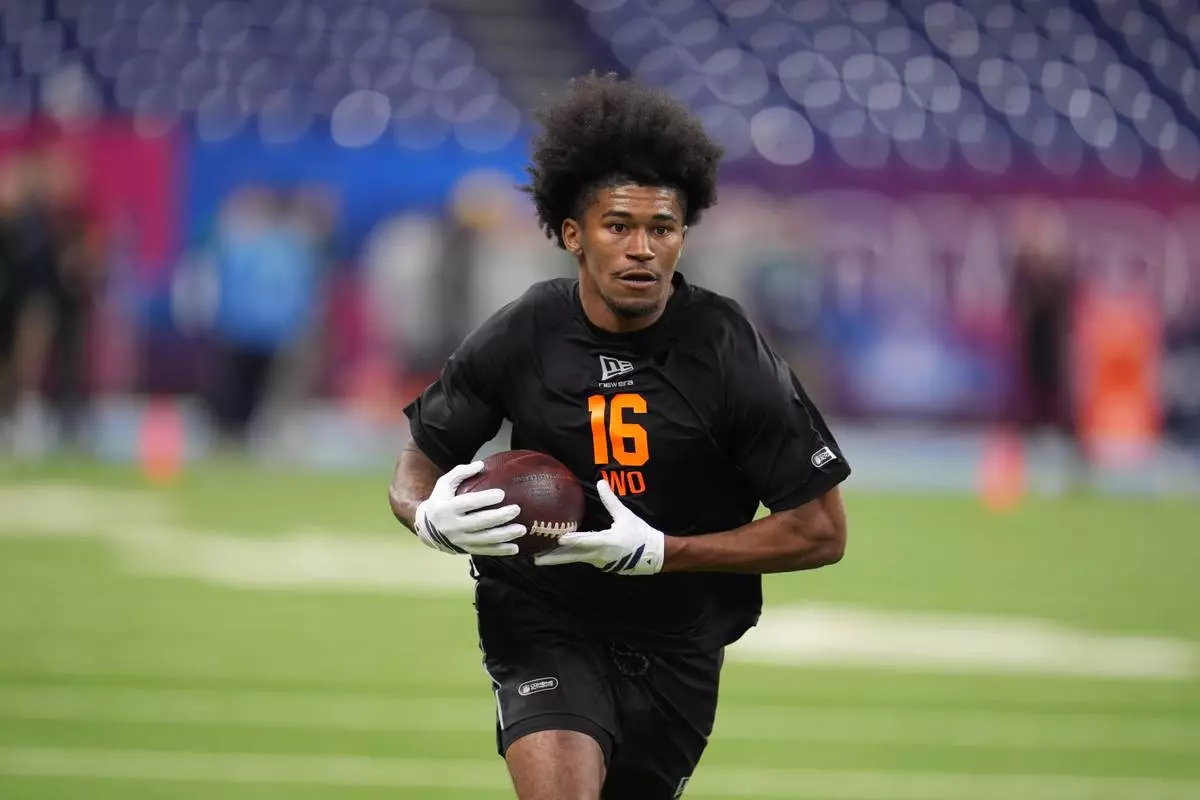
The 5-foot-11 1/2, 196-pound, do-it-all receiver with Puerto Rican connections emerged as one of the nation's top playmakers in 2025. He was a first-team All-America selection as the all-purpose player and though his 40-yard dash time of 4.43 seconds may cause some scouts to question his top-end speed, Concepcion always seems to deliver in clutch moments or when plays appear to be over. He also has written about his speech impediment, indicating he wants to become a role model for those who “may be too scared to speak.” He could be picked on Day 1 or early on Day 2.

The 6-1, 231-pound Rodriguez did a little bit of everything with one of last season's top defenses. He made 128 tackles, broke up seven passes, intercepted four, forced seven fumbles, recovered two and posted one sack. And the unanimous All-American also won the Nagurski Trophy, Butkus Award, Lombardi Award and Bednarik Award on a defense stacked with future NFL players. He seemingly did it all in college, including playing quarterback at Virginia in 2021. The question is where he will land and how all that experience will translate to the pro level.

At 5-11, 186 pounds, York is smaller than prototypical linebackers but could find a home by playing the trendy safety-linebacker hybrid NFL teams seem to increasingly want. He's been productive, too. The second team all-SEC selection started all three seasons with the Aggies, and he finished last season with 72 tackles and three passes defensed. He's one of five players in this draft with family ties to Mexico. Look for York to be chosen on Day 2 or early on Day 3.

He's one of the most polarizing players in this draft class, in part because he's not afraid to express his thoughts and in part because he stands only 5-foot-10, much shorter than most teams prefer in a quarterback. But there are two things on Pavia's resume that can't be ignored — he's routinely defied the odds and he wins. Pavia started his college career at New Mexico Military Institute, played well enough to jump to New Mexico State and then led Vanderbilt to its most successful back-to-back seasons in recent memory. Now the 2025 SEC Offensive Player of the Year and the first Heisman finalist from Vanderbilt will be waiting to find out which NFL team will give him a chance to prove himself all over again.

Cuevas has been a more proficient blocker than pass catcher at his three college stops — Cal Poly, Washington and Alabama. And though his size, 6-3 1/2, 245 pounds, may prompt some teams to project him more as a fullback than a tight end, there's plenty to like. Cuevas produced solid numbers last season with the Tide — 37 receptions, 411 yards, four TDs — and had career bests in 2022 at Cal Poly (58 catches, 678 yards, six TDs). The other thing coaches will appreciate is his accountablilty. He apologized to Alabama fans after the 2025 season-opening loss to Florida State, saying the players failed to meet the expected standard in that game. He also used his Senior Bowl platform to throw his support behind Crimson Tide coach Kalen DeBoer.

Carmona showed his versatility last season by moving to guard after playing left tackle the previous three seasons. That gave NFL teams a potential preview of what he could do next season with his shorter arms and massive size — 6-4 1/2, 316 pounds. He's also improved steadily in college, going from honorable mention all-Western Athletic Conference with San Jose State in 2023 to third-team all-SEC in 2024 and second-team all-SEC last year. While scouts also seem to like his energy and edge, they also realize he'll need better technique to excel at the next level.

Aguilar is one of the rare prospects who didn't want to be on any draft list. Despite throwing for 3,565 yards and 24 touchdowns in his only season with the Volunteers, Aguilar wanted to return to school for one more year. But just days before the NFL's annual scouting combine was set to begin, a Tennessee court denied his preliminary injunction, pushing him into the draft. The decision put Aguilar in an awkward position because most of the other players had spent weeks or months preparing for the draft. That makes his landing spot — or even a selection — anybody's guess.

Cruz has the size teams covet — 6-5 1/2, 313 pounds — and the versatility they like in late-round prospects because he played both left and right tackle in college. He also overcame the adversity of going from starter to backup at Syracuse by reclaiming the starting job last year at Kansas. Will it be enough to entice an NFL team? Perhaps.

AP NFL: https://apnews.com/NFL
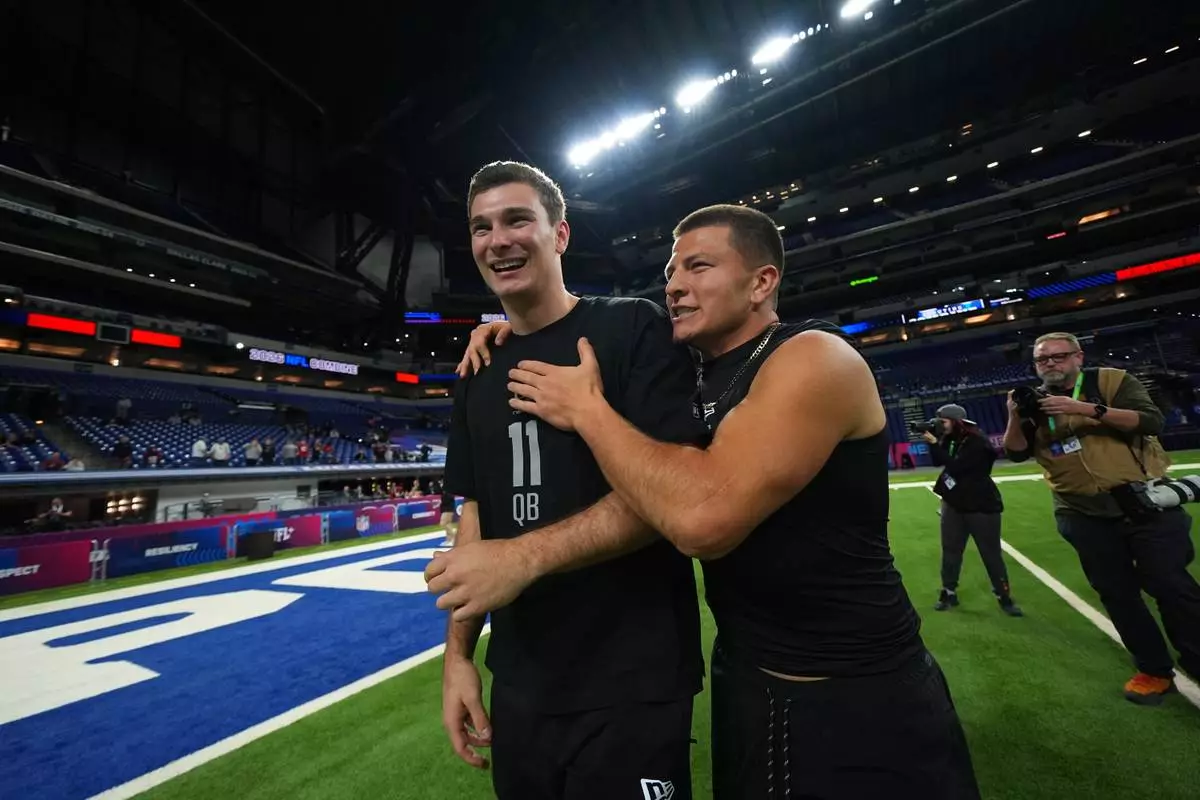
FILE - Vanderbilt quarterback Diego Pavia, right, celebrates with Indiana quarterback Fernando Mendoza after running drills at the NFL football scouting combine in Indianapolis, Saturday, Feb. 28, 2026. (AP Photo/Julio Cortez, File)
FILE - Vanderbilt quarterback Diego Pavia, right, celebrates with Indiana quarterback Fernando Mendoza after running drills at the NFL football scouting combine in Indianapolis, Saturday, Feb. 28, 2026. (AP Photo/Julio Cortez, File)

FILE - Texas A&M wide receiver KC Concepcion (16) runs a drill at the NFL football scouting combine in Indianapolis, Saturday, Feb. 28, 2026. (AP Photo/Michael Conroy, File)
FILE - Texas A&M wide receiver KC Concepcion (16) runs a drill at the NFL football scouting combine in Indianapolis, Saturday, Feb. 28, 2026. (AP Photo/Michael Conroy, File)
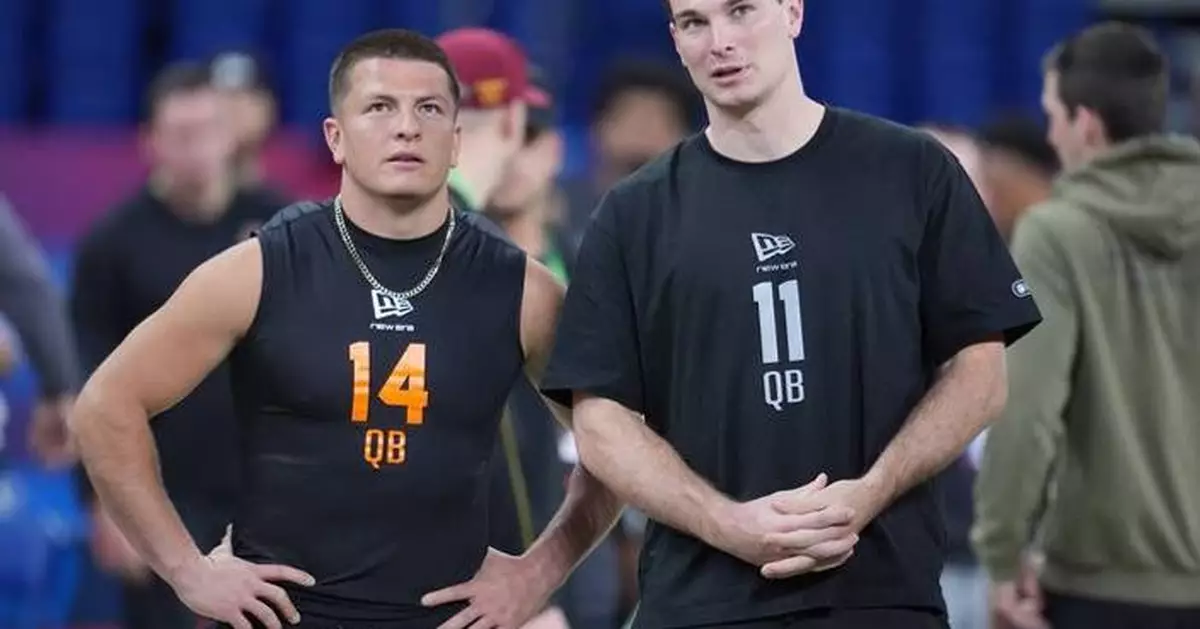
FILE - Vanderbilt quarterback Diego Pavia (14) talks to Indiana quarterback Fernando Mendoza (11) as quarterbacks run a drill at the NFL football scouting combine in Indianapolis, Saturday, Feb. 28, 2026. (AP Photo/Michael Conroy, File)
FILE - Vanderbilt quarterback Diego Pavia (14) talks to Indiana quarterback Fernando Mendoza (11) as quarterbacks run a drill at the NFL football scouting combine in Indianapolis, Saturday, Feb. 28, 2026. (AP Photo/Michael Conroy, File)
NEW YORK (AP) — A House committee on Wednesday expressed bipartisan support for ensuring Transportation Security Administration officers get paid during future government shutdowns and are equipped with the latest technology, discussing the agency's future as the Trump administration lobbies to make airport screening a job for private contractors.

Members of the House Committee on Homeland Security held a hearing on ways to modernize the TSA nearly 25 years after it was created in the wake of the Sept. 11 attacks. But the morale of TSA officers who went without pay during three funding lapses since Oct. 1, and whom the administration wants to replace at small U.S. airports, overshadowed the talk about better machines and reliable funding.

“Between the 2025 and 2026 shutdowns, transportation security officers endured a total of 119 days impacted by shutdown conditions," Republican Andrew Garbarino of New York, the committee’s chairman, said in his opening remarks. "That means TSA officers spent roughly 40% of this fiscal year reporting to work without a paycheck while continuing to carry out one of the most important security missions in the federal government.”

Several other committee members noted that Congress has failed to pass any of the pending bills seeking to guarantee continued pay for TSA workers. Rep. Lou Correa, a California Democrat, said if TSA workers don't get paid during shutdowns, neither should lawmakers.

Correa also took aim at President Donald Trump's proposed budget, which in addition to spending $477.3 million to have private companies take over airport screening at about 250 smaller airports would cut more than 4,500 TSA positions to save $529.3 million in compensation and benefits. The TSA this week also authorized contractors in its airport staffing program to acquire and maintain screening equipment, which previously was strictly a government function.

“Technology alone can’t replace the experienced people who make the security checkpoints work as they have for the past 25 years,” Correa said. “It's about pushing an antigovernment privatization ideology.”

About 20 U.S. airports already staff their checkpoints through the Screening Partnership Program. Currently airports choose whether or not to opt in. Under Trump's proposed budget, smaller airports would be required to participate.

The TSA has proposed letting private screeners handle security at airports with scheduled flights of passenger planes with 10-30 seats and ones that accomodate charter flights and private planes without fixed schedules. Examples include Oxnard Airport in California, Ocala International Airport in Florida, Alabama's Tuscaloosa International Airport and Gary-Chicago International Airport in Indiana, according to a spreadsheet maintained by the Federal Aviation Administration.

The witnesses at the hearing included Christopher Sununu, president and CEO of the airline trade group Airlines for America; Dallas Fort Worth International Airport CEO Chris McLaughlin; American Federation of Government Employees President Everett Kelley, whose union represents TSA workers. All three said they thoughts airports should get to decide whether to employ private screeners.

“Ensuring SPP remains an option for airports and does not become a mandatory program is paramount to the U.S. aviation industry,” Sununu said.

Kelley took a strong stand against the plans in Trump's budget.

“I'm totally against the privatization of any airport,” he said. “You don't contract out the CIA, do you?”

After several more Democrats on the committee said they thought that handing off airport security to businesses would leave U.S. airspace more vulnerable, Garbarino interjected to point out that “the very conservative cities of San Francisco, Seattle and Atlanta” all use private screeners at their airports, “so yeah, maybe it's not a Republican thing.”

Garbarino and Rep. Tim Kennedy, a New York Democrat, championed legislation he and three other committee members introduced earlier this month that would double, from $250 million to $500 million, the amount of money the TSA administrator is required to set aside to reimburse airports for capital costs associated with security. The bill also would establish an annual TSA fund of $250 million for airport screening technology.

Revenue for both would come from a $5.60 fee that airline customers pay for each one-way trip they take on U.S. flights. The 9/11 Passenger Security Fee has existed since 2002, but Congress decided in 2013 that a certain amount had to be used each year to reduce the federal deficit. Since then, an estimated $15 billion went to the U.S. Treasury for that purpose, according to the bill's co-sponsors,.

“Americans and Congress expected this fee to directly fund our aviation security system, but that is not the case. Nearly half the fee's revenue goes to something else,” Garbarino said. “Congress must restore the passenger security fee to its original intent, to fund the next generation of screening technology that protects our people in the skies.”

Trump's fiscal 2027 budget proposal would end the practice of diverting passenger fees and fund the TSA partly with the $1.68 billion that was expected to go to deficit-reduction.

FILE -The badge and TSA logo patch are seen on the uniform of a Transportation Security Administration employee at one of the security checkpoints inside Lambert- St. Louis International Airport Oct. 7, 2010, in St. Louis. (AP Photo/Jeff Roberson, File)

FILE -The badge and TSA logo patch are seen on the uniform of a Transportation Security Administration employee at one of the security checkpoints inside Lambert- St. Louis International Airport Oct. 7, 2010, in St. Louis. (AP Photo/Jeff Roberson, File)

FILE - People wait in line at a Transportation Security Administration (TSA) security checkpoint at LaGuardia Airport in the Queens borough of New York, Nov. 9, 2025. (AP Photo/Adam Gray, File)

FILE - People wait in line at a Transportation Security Administration (TSA) security checkpoint at LaGuardia Airport in the Queens borough of New York, Nov. 9, 2025. (AP Photo/Adam Gray, File)

FILE - Travelers walk with their luggage past TSA agents at Fort Lauderdale-Hollywood International Airport, Nov. 13, 2025, in Fort Lauderdale, Fla. (AP Photo/Lynne Sladky, File)

FILE - Travelers walk with their luggage past TSA agents at Fort Lauderdale-Hollywood International Airport, Nov. 13, 2025, in Fort Lauderdale, Fla. (AP Photo/Lynne Sladky, File)

Recommended Articles