WASHINGTON (AP) — Senate Republicans are moving this week to try and reopen the Department of Homeland Security and end the longest partial government shutdown in history.
Senate Majority Leader John Thune said the Senate will hold the first votes Tuesday to move forward with a new workaround to unlock the funding for Immigration and Customs Enforcement and Border Patrol. Democrats have blocked money for those agencies since mid-February, demanding policy changes after the fatal shootings of two protesters by federal agents.
Republicans are trying to fund the two agencies through a complicated, time-consuming process called budget reconciliation, a maneuver that they also used to pass President Donald Trump’s package of tax and spending cuts last year with no Democratic votes. With months of DHS negotiations stalled and temporary stopgap funding nearly exhausted, Thune said that Republicans “have run out of time to play the Democrats’ games.”
The budget process only requires a simple majority in the Senate, bypassing filibuster rules that require Republicans to find 60 votes on most bills when they only hold 53 seats. But it also comes with increased scrutiny from the Senate parliamentarian and an open-ended series of amendment votes that could potentially alter the bill.
“It’s not my preference, but it is reality,” Thune said.
Senate Minority Leader Chuck Schumer, D-N.Y., called the budget workaround a “partisan sideshow” and said the resolution will pour money into immigration enforcement “without putting any restraints on these rogue agencies’ rampant violence in our streets.”
The Senate Budget Committee on Tuesday released the estimated $70 billion resolution to fund ICE and Border Patrol for three years, through the rest of Trump’s term. Thune and other GOP leaders say they hope to keep the bill narrowly focused and pass it by the end of the month.
But that could prove difficult as many in the party see it as the last real chance this year to enact their priorities. Republicans in both the Senate and House have pushed to add other items, including money for farmers and Trump’s proof of citizenship voting bill, called the SAVE America Act.
Republican leaders say they would do a second partisan budget reconciliation bill to deal with some of those issues. But many of their colleagues are skeptical, especially with thin GOP margins in both chambers of Congress and an election approaching.
Senators who have been pushing for more to be included in the original resolution say they are preparing amendments to try and add them on the Senate floor. Sen. John Kennedy, R-La., said he’ll try to add parts of the SAVE America Act and proposals related to the economy.
“A lot of Americans are very worried about the cost of living and we need to address it,” Kennedy said Monday.
But at a lunch meeting on Tuesday, Republican senators were mostly united around Thune's plan.
“I think people recognize that we have to act quickly,” said Sen. Ron Johnson, R-Wisc. “The more you add the more that slows the process down.”
Democrats say any funding bill should place restraints on federal immigration authorities, including better identification for federal officers and more use of judicial warrants, among other asks.
“After the killings of Renee Good and Alex Pretti, people across the country demanded ICE be reined in," said Washington Sen. Patty Murray, the top Democrat on the Senate Appropriations Committee. “But instead of working with Democrats to enact real reform, Republicans rejected the most basic accountability measures, and now they’re rushing to give ICE billions of dollars more.”
After federal agents shot Renee Good and Alex Pretti in Minneapolis in January, Trump agreed to a Democratic request that the Homeland Security bill be separated from a larger spending measure that became law. But the DHS funding lapsed with no agreement on changes to his administration’s immigration enforcement tactics.
In March, the Senate passed legislation by voice vote that would separate out ICE and Customs and Border Protection and fund the rest of the department, including the Transportation Security Administration as security lines grew long at some airports. But Republicans in the House refused to vote for it, saying they wouldn’t support any bill that didn’t include money for immigration enforcement.
Congress then left town for a two-week recess, leaving the issue unresolved. Trump has used executive orders to pay some department salaries in the meantime, but some of those will soon run out.
During the recess, Thune and House Speaker Mike Johnson announced that they would pursue a two-track approach — pass the Senate bill that includes most of the department’s funding through regular order and use the party-line bill to pass ICE and CBP funding.
Johnson has said the House will move on the rest of the funding once the Senate has made progress on the budget resolution. But he has not announced next steps, and it is unclear if members of his GOP conference will unite behind the narrowed bill.
“We’ll figure this out,” Johnson said. “We’ve got lots of discussion today and in the coming days to make sure we can get that through and I think we will.”
Associated Press writer Steven Sloan contributed to this report.
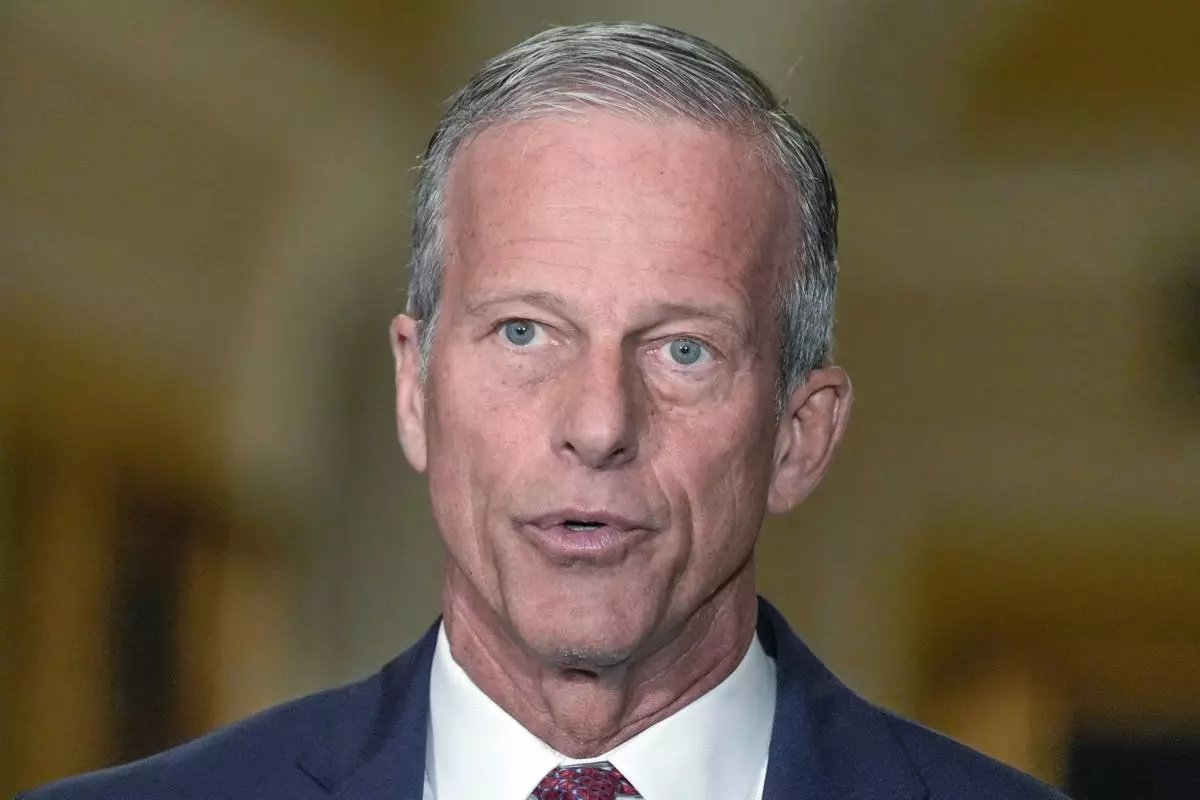
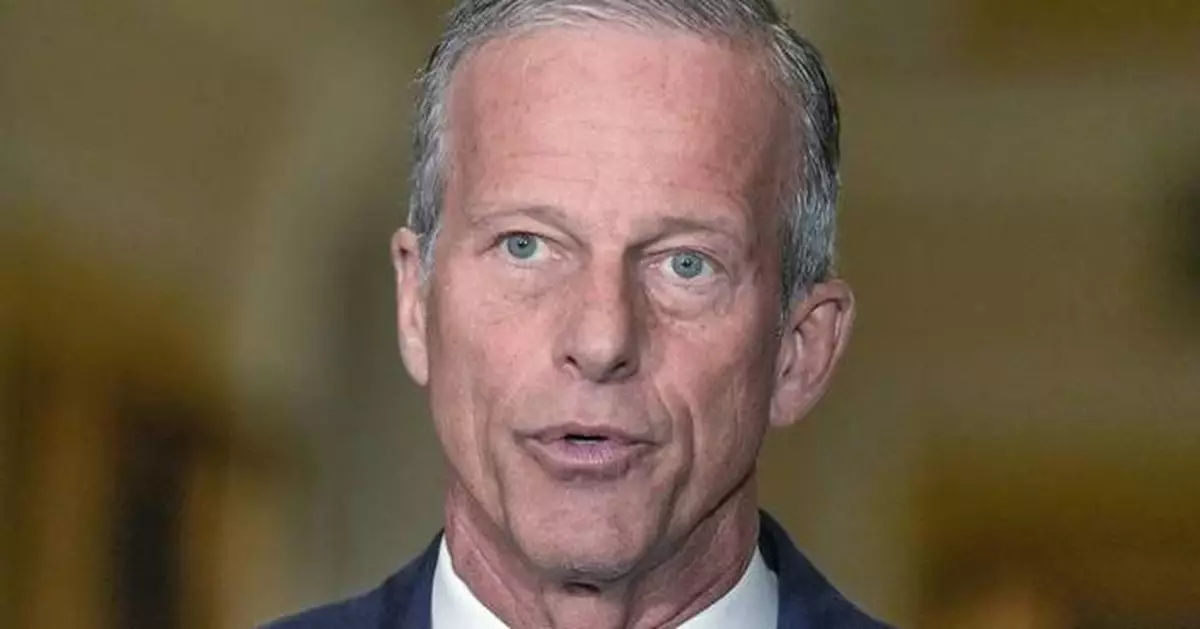
Sen. Majority Leader John Thune, R-S.D., speaks during a news conference after a policy luncheon on Capitol Hill, Tuesday, April 14, 2026, in Washington. (AP Photo/Mariam Zuhaib)
MEXICO CITY (AP) — The gunman who opened fire on tourists at Mexico’s iconic Teotihuacan pyramids carried materials that were apparently related to the 1999 shooting at Columbine High School, authorities said Tuesday, a day after the attack that killed a Canadian woman and left at least 13 people injured.
Although officials did not mention Columbine by name, they referred to several books and handwritten notes that belonged to the gunman and referenced attacks in the United States in April 1999. Monday marked the 27th anniversary of the massacre in Colorado.
Among the gunman's belongings was a photo modified by artificial intelligence showing him alongside the Columbine attackers, according to a state official who spoke to The Associated Press on the condition of anonymity because the official was not authorized to address the media.
Seven people were wounded by gunshots at the archaeological site north of the Mexican capital, the local government said. The nature of the other injuries was not disclosed, but some people fell when the shooting started, including some who were climbing on the pyramids.
The assailant, who acted alone, shot and killed himself, authorities said, and security officials found a gun, a knife and ammunition at the scene.
The attack happened less than two months before Mexico co-hosts the 2026 FIFA World Cup soccer tournament. Mexico's security secretary, Omar García Harfuch, said major tourist destinations would see a heightened presence of both ground forces and digital “cyber patrols” to prevent threats.
“Yesterday’s attack highlights the urgent need to strengthen our security protocols,” Mexican President Claudia Sheinbaum said. She also noted the importance of analyzing “external influences” that may provoke such violence within the country.
While such attacks are uncommon in Latin America, they are not unheard of. Earlier this month, Argentine authorities linked a teenager to the “true crime community” after the teen killed one student and injured eight others at a school in Santa Fe. The community is an online subculture that emerged from forums established after the Columbine massacre to discuss and, in some cases, glorify such violence.
Taken to hospitals were six people from the U.S., three from Colombia, one from Russia, one from Brazil, one from the Netherlands and one from Canada, the local government said. The youngest person who was hurt was 6; the oldest was 61, Mexican authorities said.
Authorities identified the attacker as 27-year-old Julio César Jasso Ramírez, a native of Guerrero, Mexico, who, they said, had carefully scouted the pyramids before opening fire.
The assailant carried a tactical-style backpack containing an analog cellphone and bus tickets, said José Luis Cervantes Martinez, the attorney general of the state of Mexico, which includes Teotihuacan.
Cervantes Martinez also noted the presence of “literature, images and manuscripts" that related to "violent incidents known to have occurred in the United States in April 1999,” a likely reference to the Columbine attack in which 12 students and a teacher were killed.
Investigators built "a psychopathic profile" of the suspect that was "characterized by a tendency to copy situations that occurred in other places, at other times and involving other figures,’” the prosecutor added.
Greg Magadini, of Boise, Idaho, was with a tour group on top of the pyramid when he heard a loud crack followed by screaming. The gunman was about 40 feet (12 meters) away on the same platform with roughly 60 tourists, he said.
Magadini jumped down a ledge and scrambled for cover while two of his friends stayed on the platform above trying to hide.
Shots seemed to ring out every five seconds, Magadini said, as he and the others jumped down more ledges to reach the ground. Then they ran through a field behind the pyramid, carrying one of his friends who badly injured her ankle on one of the jumps.
Magadini, who came away with scrapes and cuts, said he did not see the shooter, but his friends said the gunman seemed to fire randomly in all directions. “Everyone was a target,” he said.
Later at the hospital, they talked with other tourists, who said the shooter at one point played strange music and taunted them, saying he hated tourists, Magadini said.
The Teotihuacan pyramids, a UNESCO World Heritage Site, are a series of ancient structures on the outskirts of Mexico City. As one of Mexico’s most popular tourist destinations, the site drew more than 1.8 million international visitors last year, according to government figures.
The shooting took place shortly after 11:30 a.m. Monday, when dozens of tourists were at the top of the Pyramid of the Moon. The gunman fired upward, according to a tour guide who was at the scene and spoke to The Associated Press on condition of anonymity for safety reasons.
“Some people, because they were scared ... threw themselves face-down on the ground, and the rest of us started to go down,” the guide said, recounting how the shooter began firing as tourists descended the pyramid’s steps.
Another group of visitors lay motionless on the pyramid to avoid being targeted.
Canadian Prime Minister Mark Carney offered condolences to the family and friends of the Canadian tourist who was killed. He said Canadian authorities were working with those in Mexico.
“It’s a terrible circumstance,” Carney said.
Associated Press writers Megan Janetsky and and Fabiola Sánchez in Mexico City and John Seewer in Toledo, Ohio, contributed to this report.
Follow AP’s coverage of Latin America and the Caribbean at https://apnews.com/hub/latin-america
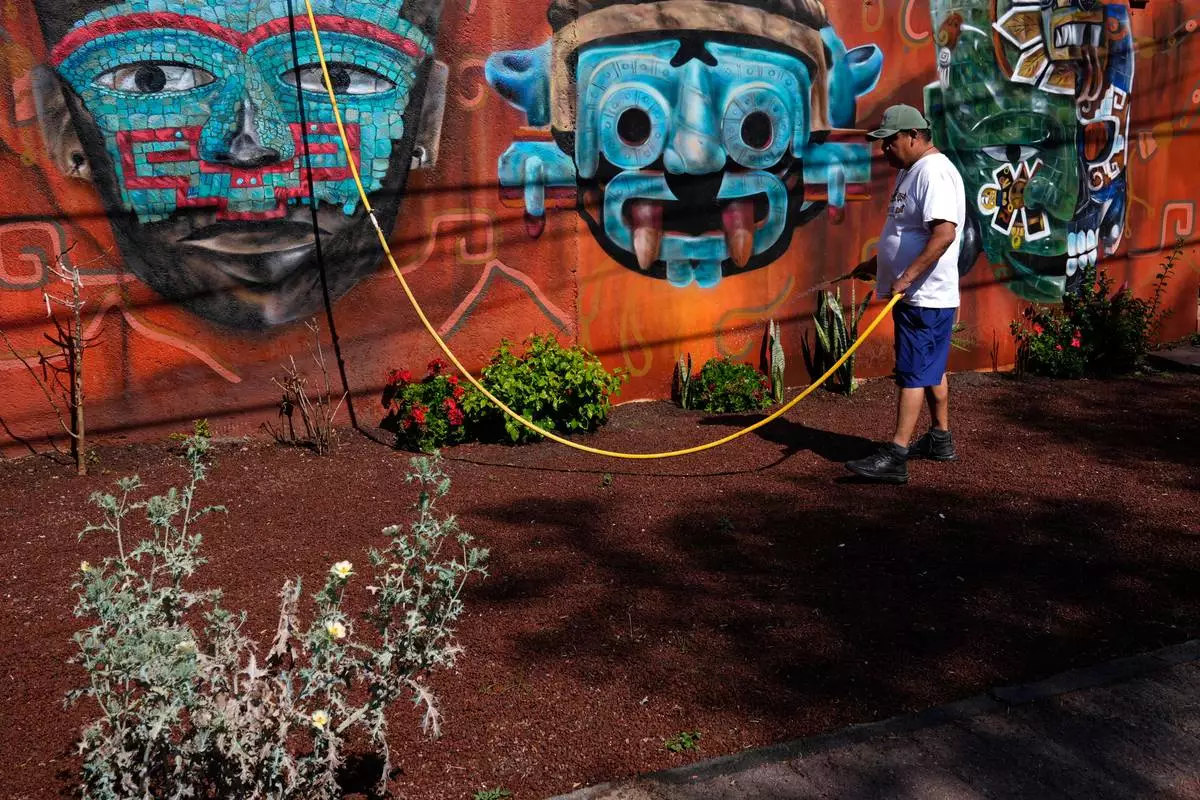
A man waters plants outside a handicrafts shop near the Teotihuacan pyramids, which remained closed a day after a gunman opened fire on tourists at the archaeological site outside Mexico City, Tuesday, April 21, 2026. (AP Photo/Marco Ugarte)
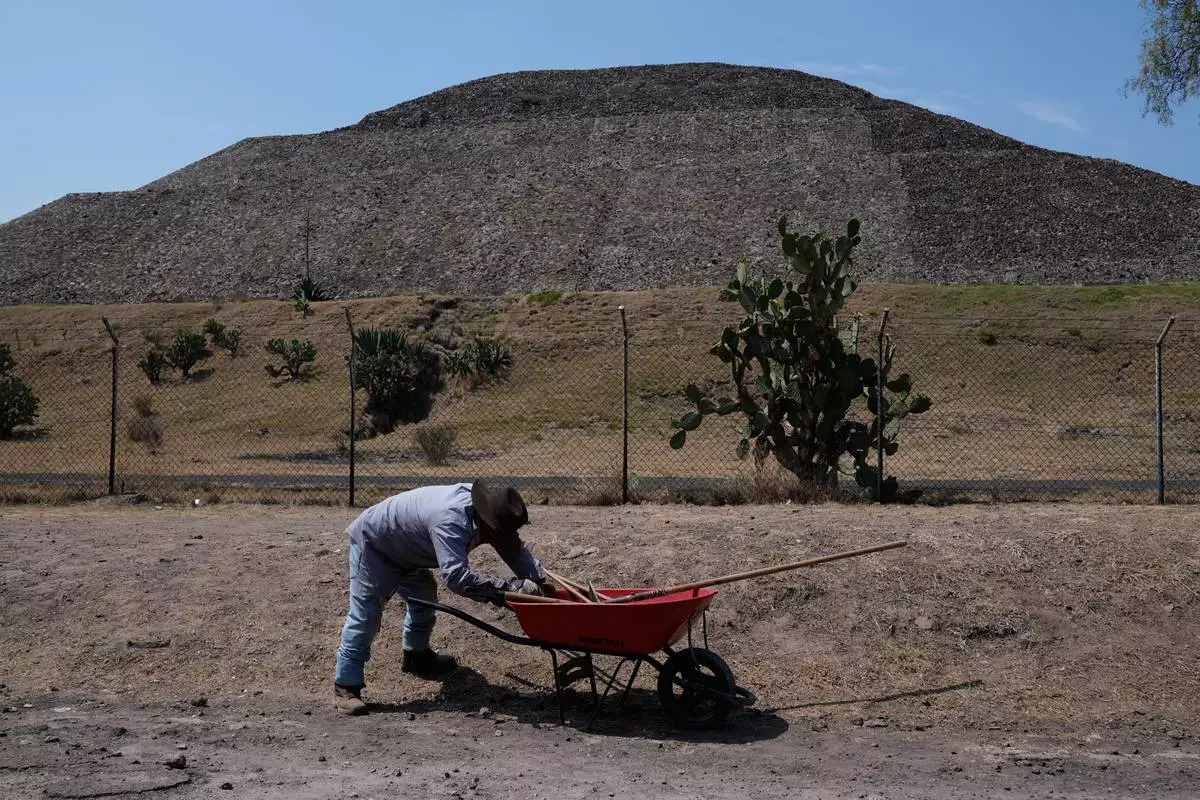
A worker pushes a wheelbarrow at the Teotihuacan pyramids, which remained closed a day after a gunman opened fire on tourists at the archaeological site on the outskirts of Mexico City, Tuesday, April 21, 2026. (AP Photo/Marco Ugarte)
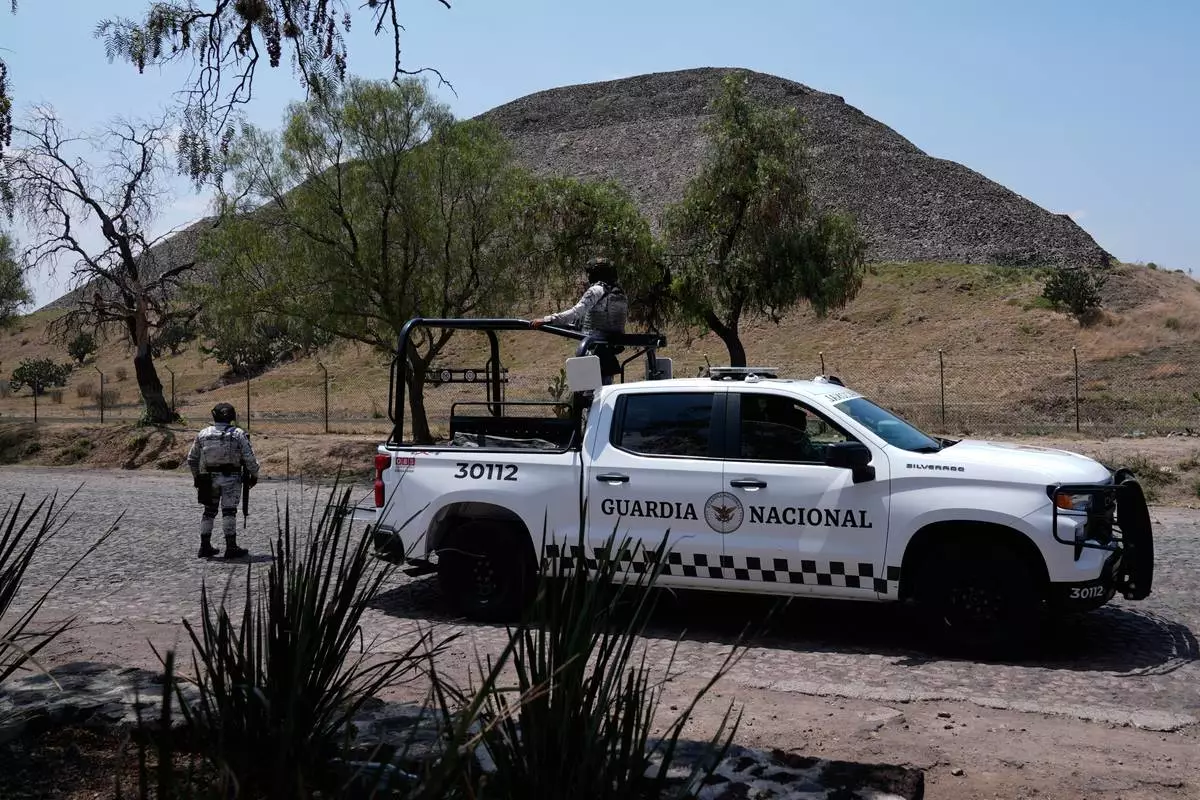
National Guard troops patrol the Teotihuacan pyramids, which remained closed a day after a gunman opened fire on tourists at the archaeological site outside Mexico City, Tuesday, April 21, 2026. (AP Photo/Marco Ugarte)
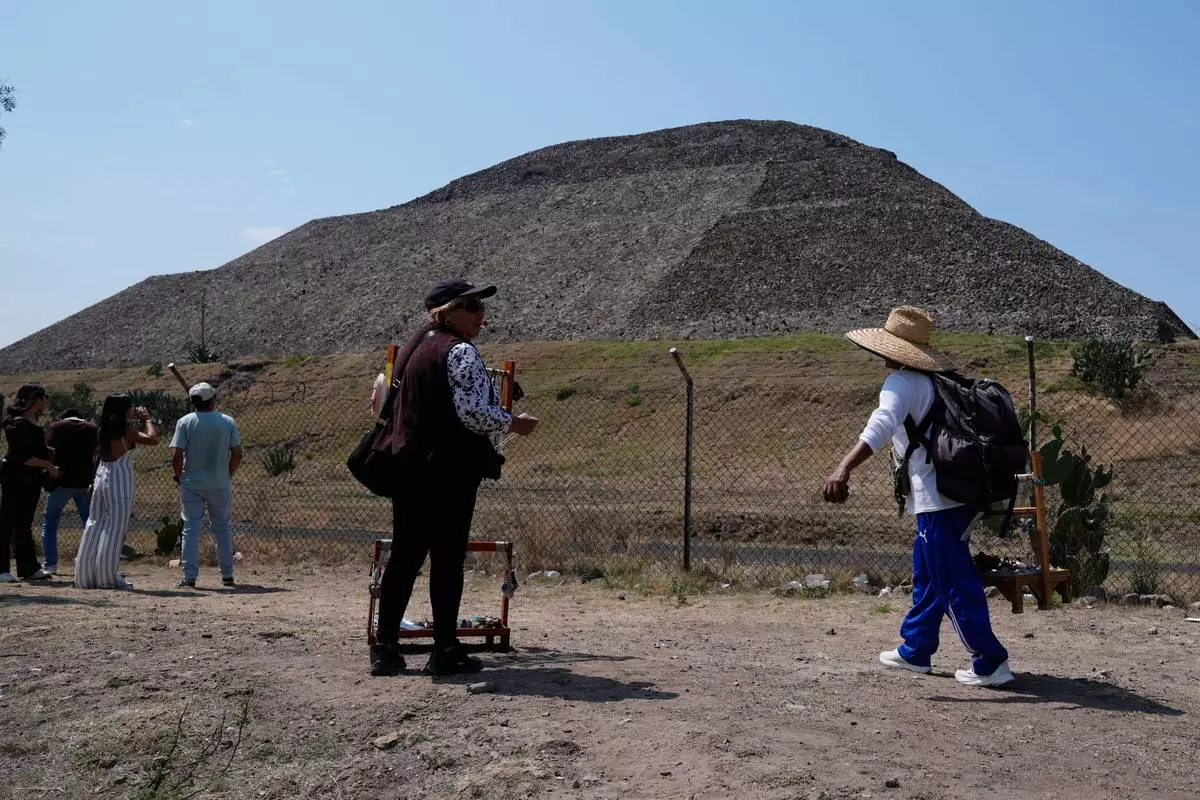
Handicraft vendors and tourists stand outside the Teotihuacan pyramids, which remained closed a day after a gunman opened fire on tourists at the archaeological site on the outskirts of Mexico City, Tuesday, April 21, 2026. (AP Photo/Marco Ugarte)
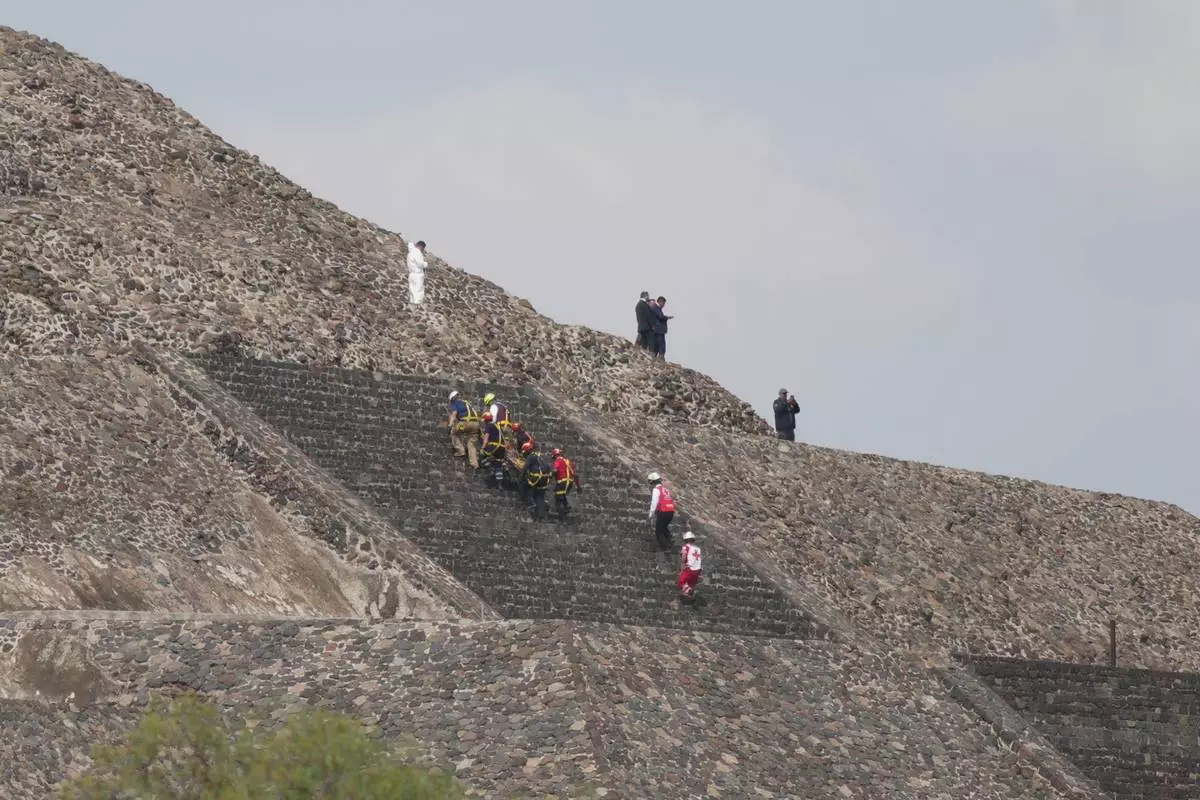
Forensic workers remove a victim's body from a pyramid after authorities said a gunman opened fire in Teotihuacan, Mexico, Monday, April 20, 2026. (AP Photo/Eduardo Verdugo)
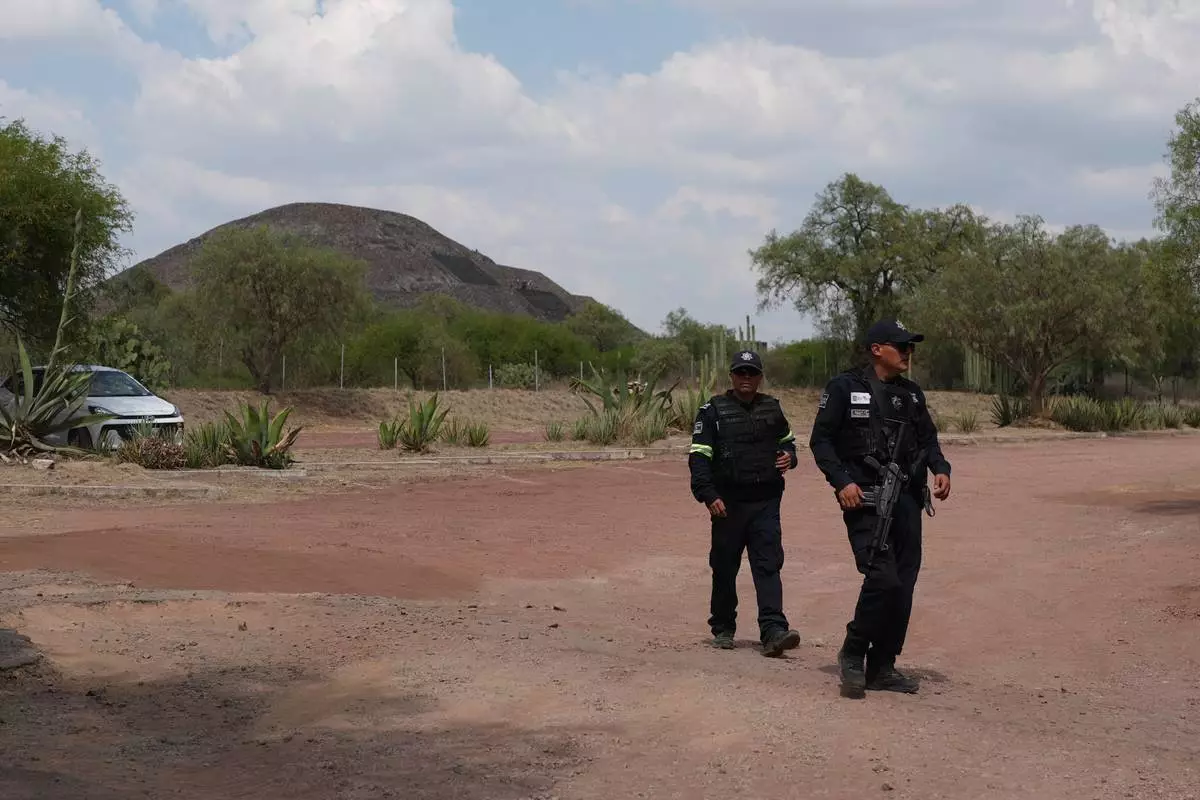
Police patrol the pyramids after authorities said a gunman opened fire in Teotihuacan, Mexico, Monday, April 20, 2026. (AP Photo/Eduardo Verdugo)
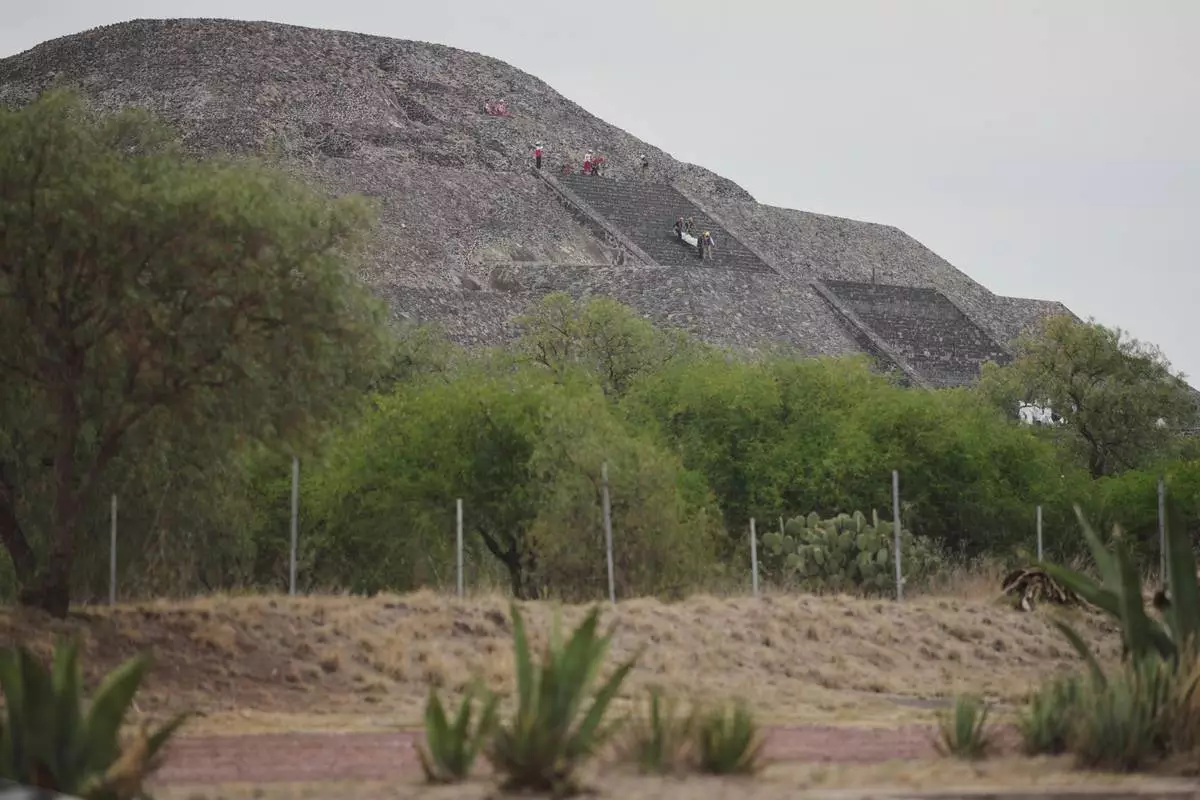
Forensic experts carry the body of a victim down a pyramid after authorities said a gunman opened fire, in Teotihuacan, Mexico, Monday, April 20, 2026. (AP Photo/Eduardo Verdugo)
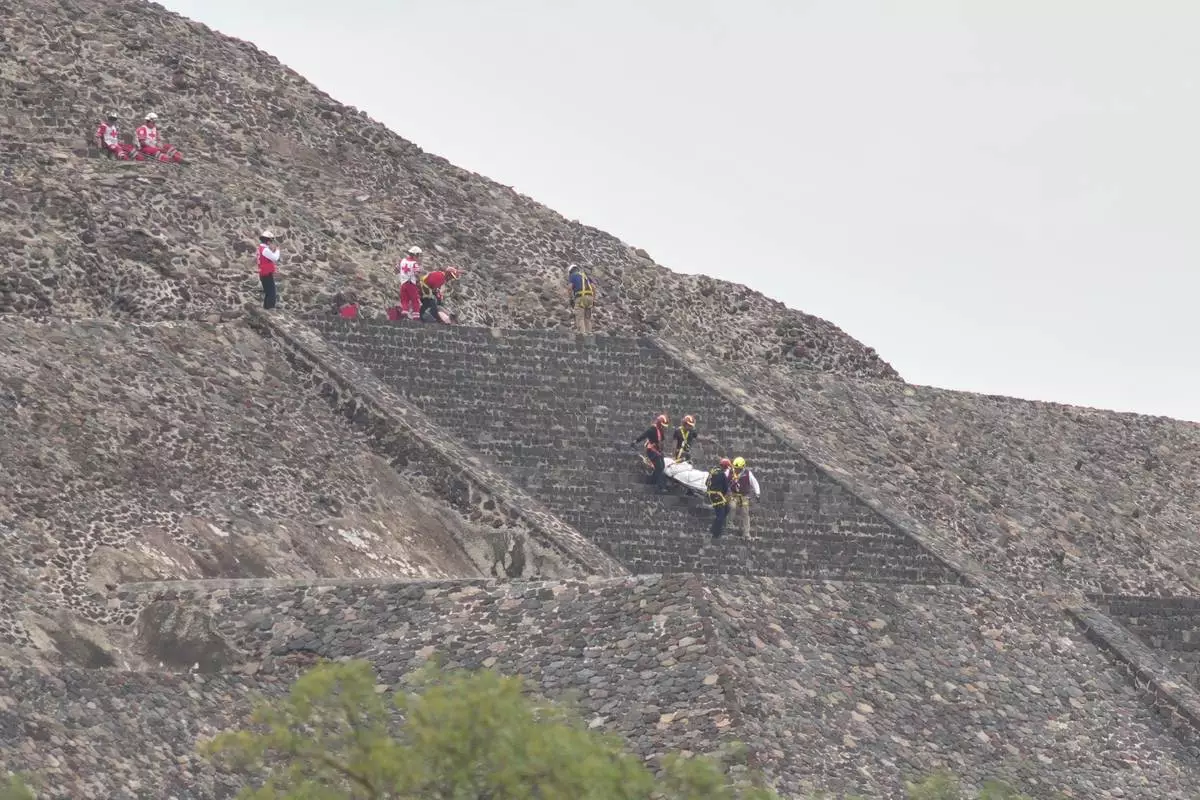
Forensic experts carry the body of a victim down a pyramid after authorities said a gunman opened fire in Teotihuacan, Mexico, Monday, April 20, 2026. (AP Photo/Eduardo Verdugo)
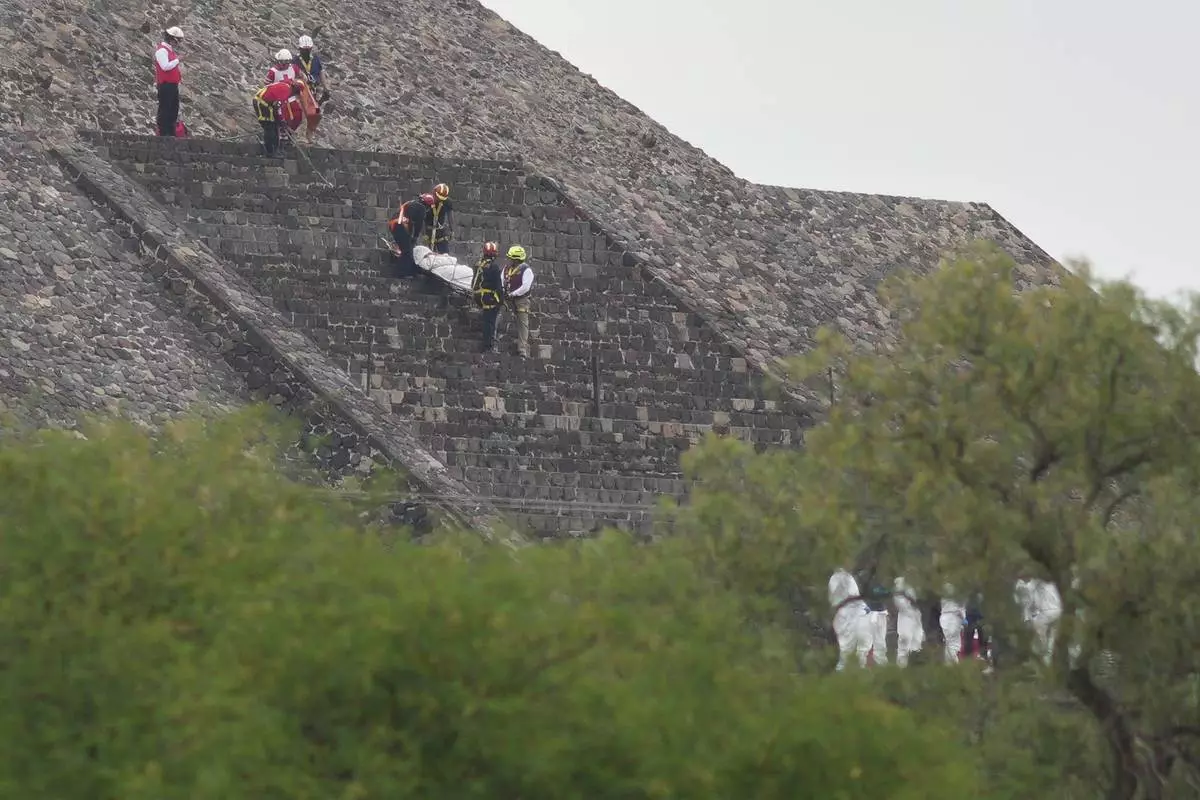
Forensic workers carry the body of a victim down a pyramid after authorities said a gunman opened fire, in Teotihuacan, Mexico, Monday, April 20, 2026. (AP Photo/Eduardo Verdugo)