WASHINGTON (AP) — The Justice Department has withdrawn subpoenas issued in the investigation of former CIA Director John Brennan, with officials asking for voluntary interviews instead of testimony before a grand jury, two people familiar with the matter said Tuesday.
A small handful of subpoenas were known to have been issued over the weekend for witnesses to appear before a grand jury in Washington. But investigators on Monday evening informed lawyers that the subpoenas were being withdrawn in favor of requests for voluntary interviews, said the people, who spoke on condition of anonymity to The Associated Press to discuss developments in an ongoing investigation.
The reason for the reversal in course was not immediately known.
The months-old Brennan investigation is one of several criminal probes the Justice Department has opened over the last year against President Donald Trump’s perceived adversaries. It centers on one of the Republican president’s chief grievances — a U.S. intelligence community finding that Russia interfered on his behalf during his successful 2016 presidential campaign.
The subpoenas were issued after a shakeup in the Justice Department team leading the investigation. A career national security prosecutor in Florida who’d been handling the inquiry left the case after expressing doubt about the legal viability of a potential criminal case, according to a person familiar with the matter. The Justice Department on Monday installed a Trump loyalist, Joe diGenova, who served as U.S. attorney in Washington during the Reagan administration, as a counselor to the attorney general who will now work on the Brennan investigation.
“Welcome to the fight, Joe!” acting Attorney General Todd Blanche posted on X on Monday, alongside a photograph of the two of them and other prosecutors in Florida.
Brennan served as CIA director under President Barack Obama and was in that role when the intelligence community in January 2017 published an assessment detailing Russian interference aimed at helping Trump defeat Democratic nominee Hillary Clinton in 2016. An investigation led by special counsel Robert Mueller concluded that Russia meddled on Trump’s behalf and that his campaign welcomed the assistance, but it did not find sufficient evidence to prove a criminal conspiracy.
The Justice Department last year received a criminal referral from Rep. Jim Jordan, the Republican chairman of the House Judiciary Committee, alleging that Brennan made false statements in 2023 about the preparation of the intelligence community assessment. Brennan and his lawyers have vigorously denied any wrongdoing and have called the investigation politically motivated.
The investigation has been led by prosecutors in Florida, with investigators lining up interviews and issuing subpoenas for records. The latest subpoenas seek grand jury testimony in Washington, an indication that prosecutors expect they would have to bring any criminal case in Washington since that is where Brennan’s testimony took place.
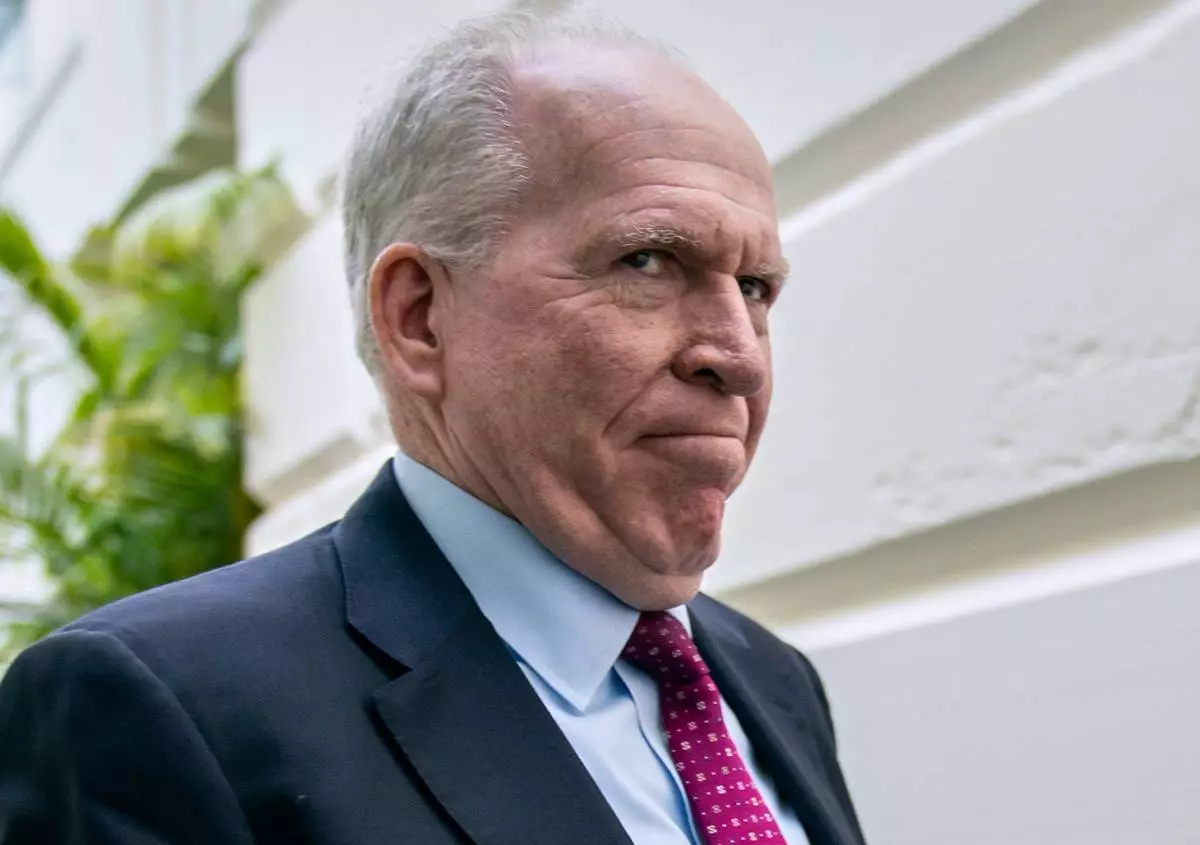
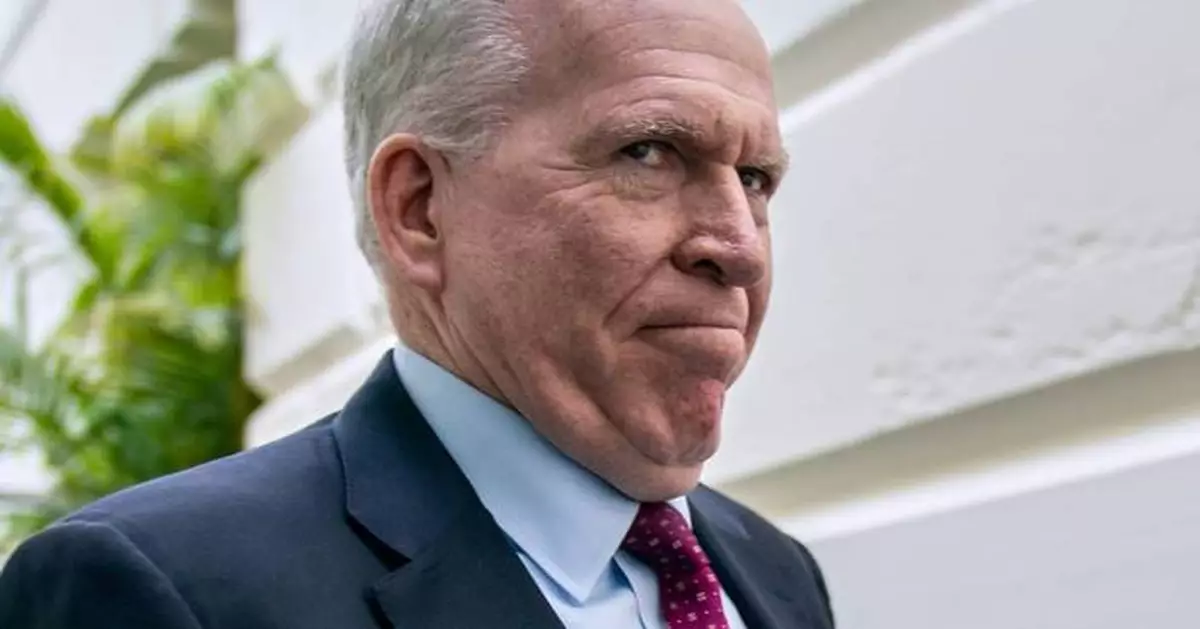
FILE - Former CIA Director John Brennan arrives for a meeting at the Capitol in Washington, May 21, 2019. (AP Photo/J. Scott Applewhite, File)
WASHINGTON (AP) — U.S. forces have boarded an oil tanker previously sanctioned for smuggling Iranian crude oil in Asia, the Pentagon said Tuesday, as it puts into place a global warning to track down vessels tied to Tehran.
U.S. forces “conducted a right-of-visit maritime interdiction” of the M/T Tifani “without incident,” the Pentagon said on social media.
The tanker was captured in the Bay of Bengal — between India and Southeast Asia — and it was carrying Iranian oil, according to a U.S. defense official who spoke on condition of anonymity to discuss an ongoing military operation. The military will decide in the next four days what to do with the vessel, such as tow it back to the U.S. or turn it over to another country, the official said.
It's the latest move by the U.S. to stop any ship tied to Iran or those suspected of carrying supplies that could help its government, from weapons and oil to metals and electronics. The tanker was seized before President Donald Trump announced that the U.S. was extending a tenuous ceasefire in the Iran war at mediator Pakistan’s request but was keeping the blockade in place.
The tanker is the second vessel linked to Iran that has been interdicted by the U.S. military. The U.S. Navy attacked and seized an Iranian-flagged cargo ship on Sunday that it said had tried to evade its blockade of Iranian ports, with Trump saying an American destroyer blew a hole in the ship’s engine room.
The Pentagon on social media described the Tifani as “stateless” despite it being a Botswana-flagged vessel.
“As we have made clear, we will pursue global maritime enforcement efforts to disrupt illicit networks and interdict sanctioned vessels providing material support to Iran — anywhere they operate,” the Pentagon announcement said, echoing previous statements from Trump administration officials. “International waters are not a refuge for sanctioned vessels.”
Gen. Dan Caine, chairman of the Joint Chiefs of Staff, said last week that the enforcement actions would extend beyond Iranian waters and the area under control of U.S. Central Command.
U.S. forces in other areas of responsibility, he told reporters at the Pentagon, “will actively pursue any Iranian-flagged vessel or any vessel attempting to provide material support to Iran.” He specifically pointed to operations in the Pacific and said the U.S. would target vessels that left before the blockade began outside the Strait of Hormuz, a crucial waterway for energy and other shipments.
The military also detailed an expansive list of goods that it considers contraband, declaring that it will board, search and seize them from merchant vessels “regardless of location.” A notice published Thursday says any “goods that are destined for an enemy and that may be susceptible to use in armed conflict” are “subject to capture at any place beyond neutral territory.”
The U.S. military’s actions against Iranian-linked vessels, namely the attack over the weekend on the cargo ship named the Touska, have raised questions about the two-week ceasefire.
The U.S. and Iran are operating in “an awkward space where the law doesn’t give you a clean yes-or-no answer” on whether the ceasefire was violated, said Jason Chuah, a law professor at the City University of London and the Maritime Institute of Malaysia.
“The United States seems to take the line that the conflict never fully switched off — that is there is still a state of armed conflict,” Chuah said. “By saying that, it can keep doing things like enforcing a blockade and even using limited force at sea.”
Iran is treating the ceasefire as a pause on all hostile acts, Chuah said.
Iranian Foreign Minister Abbas Araghchi on Tuesday called the U.S. blockade a breach of the ceasefire and said “striking a commercial vessel and taking its crew hostage is an even greater violation.” In a letter, Iran's U.N. Mission asked the U.N. Security Council and U.N. chief António Guterres to condemn the U.S. for seizing the Touska and its crew.
The U.S. earlier had instituted a blockade against sanctioned oil tankers linked to Venezuela but had never fired on those vessels.
Blockades and even limited attacks on vessels can be lawful in wartime, with merchant vessels becoming legitimate targets if they contribute to military actions, carry contraband or are incorporated into enemy logistics, Chuah said.
It's harder to prove that a ship such as the Touska is realistically contributing to military action against the U.S., Chuah said.
“The whole dispute really turns on a deceptively simple question: Did the ceasefire actually suspend the right to use force?” Chuah said. “If it did, then firing on vessels or seizing them is very hard to square with the United Nations Charter.”
Mark Cancian, a retired Marine colonel and a senior defense adviser with the Center for Strategic and International Studies, said a violation of the ceasefire is up for interpretation because there were no defined terms.
“Trump announced it. The Iranians agreed. But there’s no formal agreement,” Cancian said. “So whether it broke the ceasefire or not depends on your perspective. ... Nothing was written down.”
Michael O’Hanlon, a defense and foreign policy analyst at the Brookings Institution, said the U.S. did not violate the ceasefire because it was limited to bombing Iran, not the blockade.
“We agreed to stop dropping bombs on them, and that’s the basic thing they wanted,” O’Hanlon said, adding that the U.S. still had to enforce the blockade “if you’re going to make it mean anything.”
AP writer Farnoush Amiri at the United Nations contributed to this report.
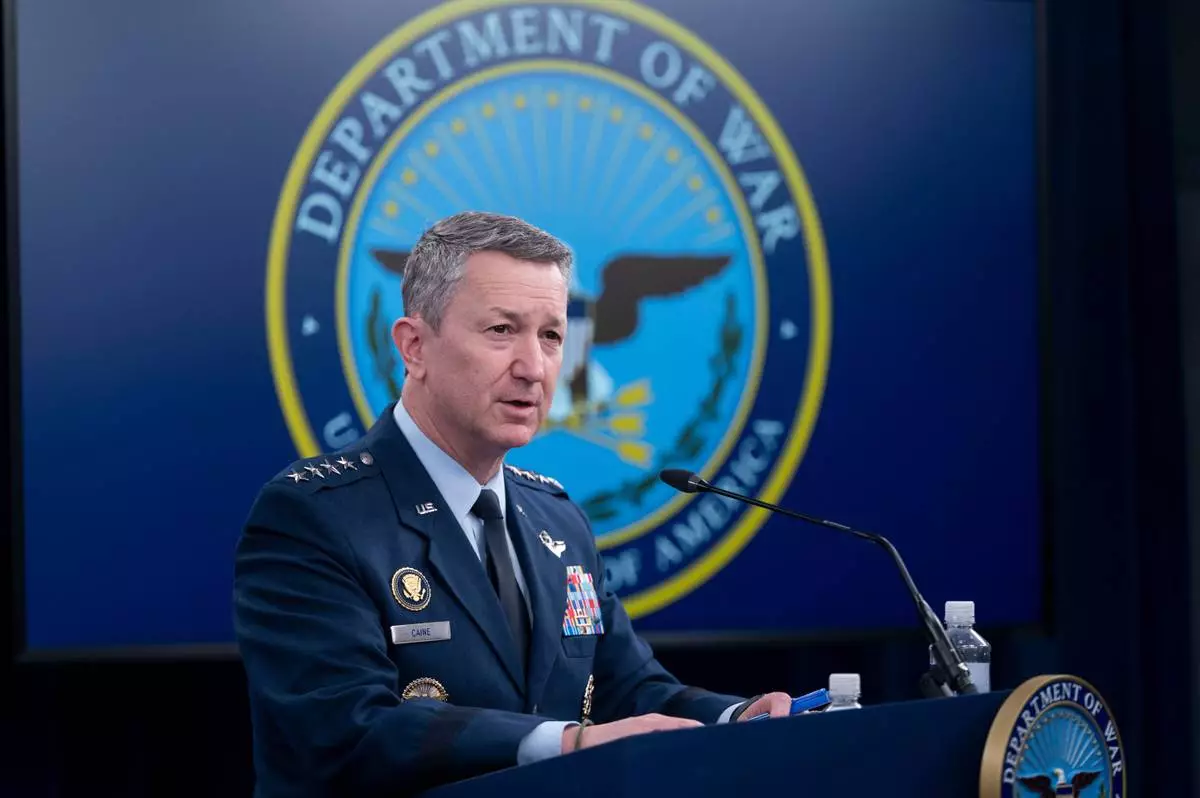
Chairman of the Joint Chiefs of Staff Gen. Dan Caine speaks to members of the media during a press briefing at the Pentagon, Thursday, April 16, 2026 in Washington. (AP Photo/Kevin Wolf)
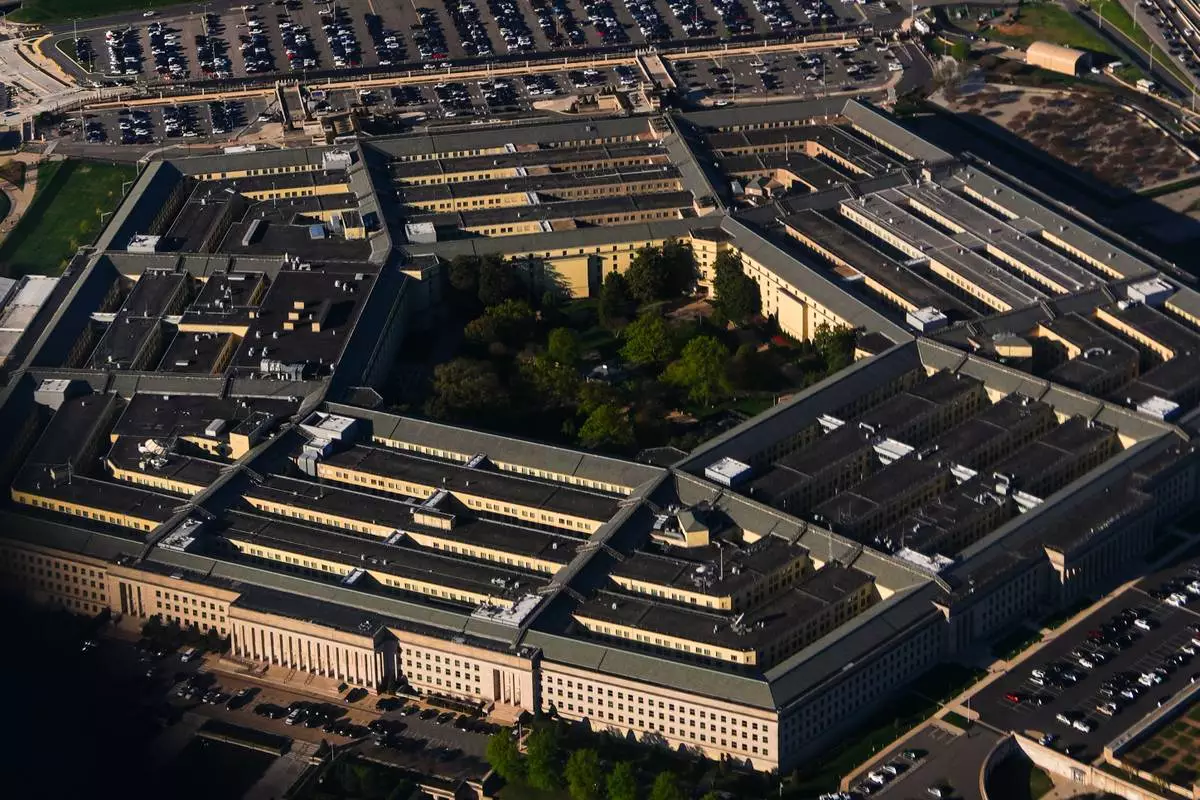
The Pentagon is seen from an airplane, Tuesday, April 7, 2026, in Washington. (AP Photo/Julia Demaree Nikhinson)