NEW YORK (AP) — Shoppers accelerated their spending in March from February, but they spent a good chunk of their money at the gas pump.
A spike in gas prices due to the Iran war, now in its eighth week, resulted in a hefty 1.7% gain in retail sales in March after a revised 0.7% increase in February, according to the Commerce Department’s report on Tuesday. The figure marked the fastest one-month increase in retail sales in more than three years.
The report marks the first read on spending to capture the effects of the Iran war.
Excluding gas prices, retail sales were up 0.6%, helped in part by government tax refunds and warm weather.
Business at gas stations rose 15.5% percent.
Elsewhere, shoppers were still willing to spend. Sales at department stores rose 4.2%, while sales at furniture and home furnishings stores were up 2.2%. Online retailers saw a 1% gain. Consumer electronics and appliance stores posted a 0.9% increase. The only area that saw a decline for March was miscellaneous retailers, according to the Commerce report.
The snapshot offers only a partial look at consumer spending and doesn’t include things like travel and hotel stays. The lone services category – restaurants – registered a more modest gain of 0.1%.
The so-called control group—which excludes food services, autos, building materials and gas station sales and is used to calculate economic growth—rose 0.7%. That offered a good sign of broad spending by consumers, economists said.
“It’s a blowout retail sales figure for March,“ Heather Long, chief economist at Navy Federal Credit Union, wrote in a report.
She noted that the impact of tariffs is visible in the high spending on electronics and appliances due to higher prices. A small increase at restaurants may indicate some early signs of pullback as consumers have to spend more at the pump, she said.
“Overall, the American consumer is still healthy,” she added. "Extra income from tax refunds is helping many households weather this oil shock, but that extra money won’t last forever.”
The Iran war began Feb. 28 and has shut down the Strait of Hormuz, cutting off one-fifth of the world’s oil supply.
Late last month, U.S. gas prices jumped past an average of $4 a gallon for the first time since 2022.
Economists had believed that an unusually large jump in tax refunds would kick start spending at the start of the year. But spiking gas prices are taking a bite out of that money. And the Iran war is also further dampening shoppers' mood. Consumer sentiment plunged to a record low in April, according to a survey released earlier this month by the University of Michigan, largely because of the Iran war and concerns over higher gas prices.
Shoppers aren’t just feeling it at the gas pump, but are also starting to see unforeseen costs everywhere, including when they travel such as higher baggage fees. They will also likely see higher prices on different products ripple through the supply chain as companies start to pass on higher transportation costs to shoppers, analysts said.
The jump in gas prices caused a sharp spike in inflation last month, creating major challenges for the inflation-fighters at the Federal Reserve and increasing already significant political hurdles for the White House.
Consumer prices rose 3.3% in March from a year earlier. On a monthly basis, prices rose 0.9% in March from February, the largest such gain in nearly four years.
Heading into the war, shoppers were already cautious. But Bryan Eshelman, Americas leader of retail and a partner and managing director at consultancy AlixPartners, noted his retail clients see their customers pulling back even more now.
“Particularly in the low-end economy, people are shifting from wants to needs,” he said.
R.J. Hottovy, head of analytical research at Placer.ai, noted that for seven straight weeks, traffic at nondiscretionary retailers like grocers outpaced that of discretionary merchants. That trend was reversed the week of April 6, helped by the distribution of tax refunds and spending tied to spring break and Easter.
But after the data goes past Easter trends, future visits will largely depend on consumer sentiment regarding broader macroeconomic conditions and gas prices, Hottovy said. The firm tracks people’s movements based on cellphone usage.
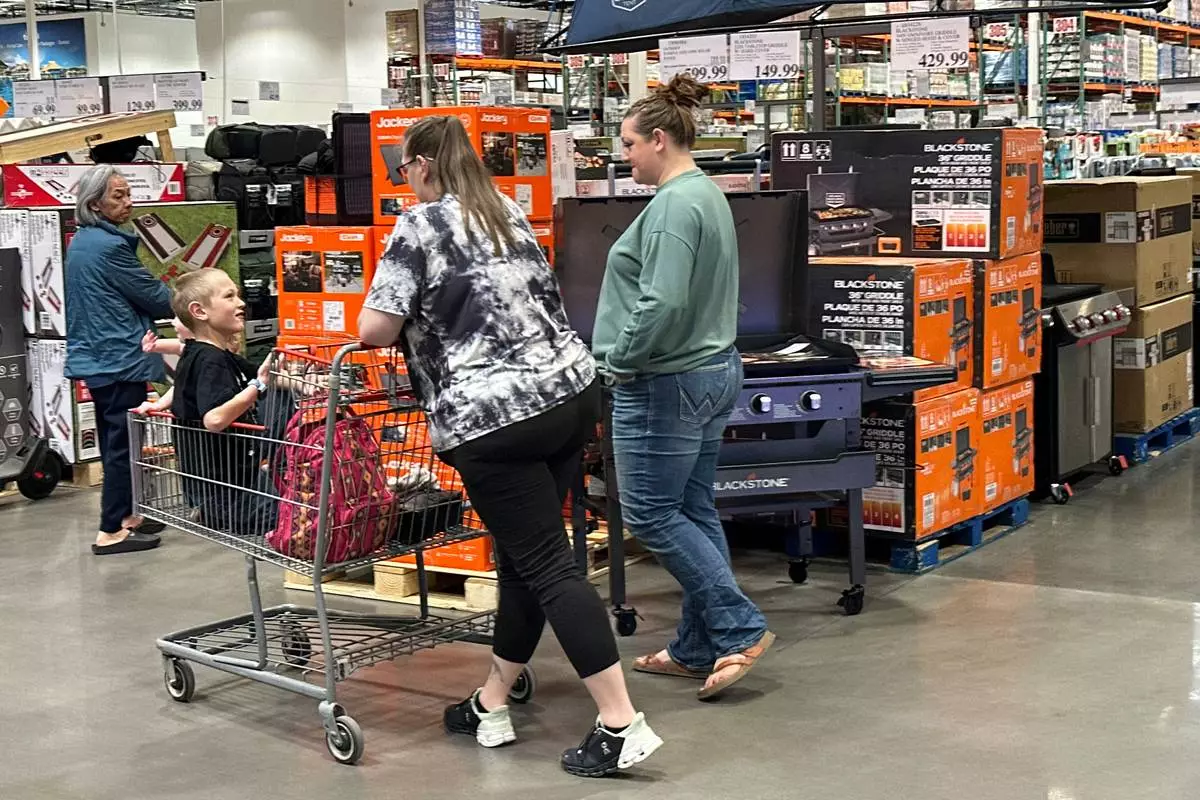
FILE - Shoppers move amid items for outdoor cooking on display in a Costco warehouse Thursday, March 12, 2026, in east Denver. (AP Photo/David Zalubowski, File)
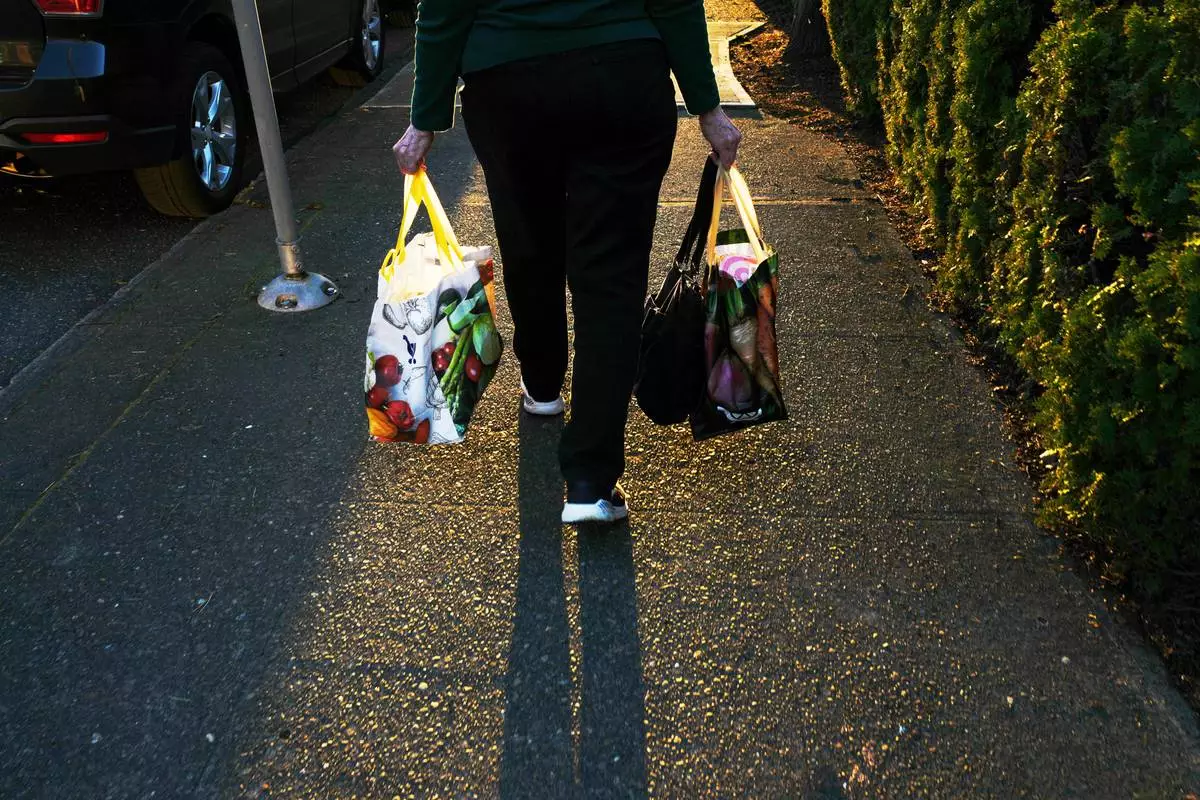
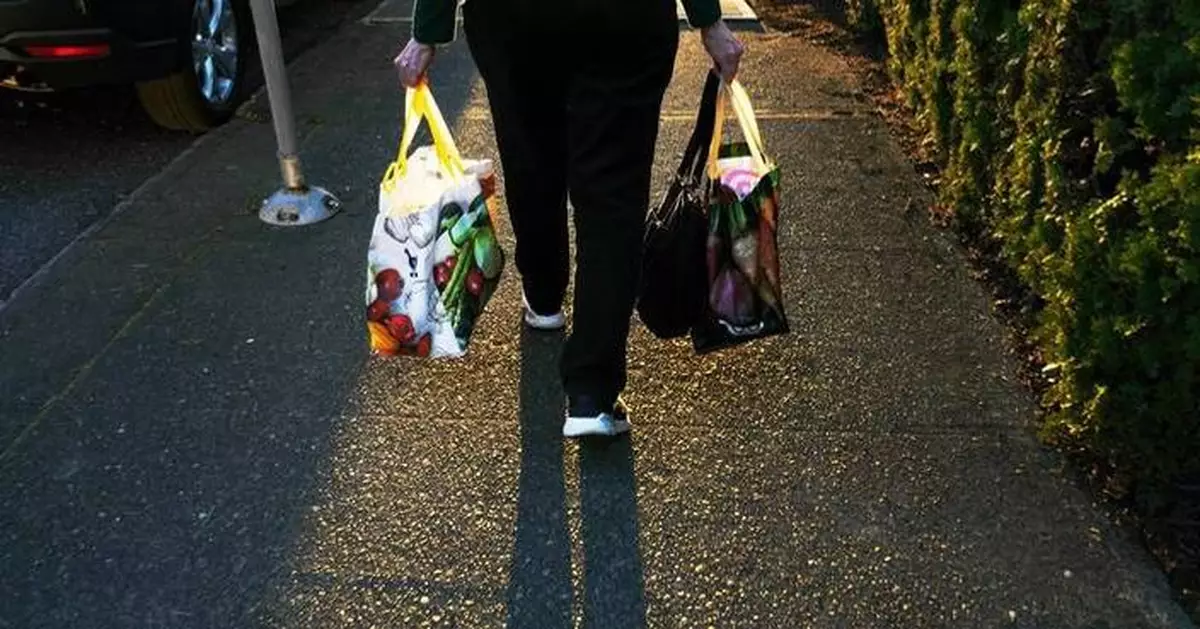
FILE - A woman carries reuable shopping bags to her car on Monday, March 16, 2026, in Portland, Ore. (AP Photo/Jenny Kane, File)

NEW YORK (AP) — U.S. stocks are ticking higher Tuesday after UnitedHealth Group and other big companies showed they’re making even bigger profits than analysts expected. Oil prices, meanwhile, remained relatively stable as optimism seems to be sticking in financial markets that the United States and Iran will avoid a worst-case scenario for the economy, even with their war ongoing.
The S&P 500 added 0.3%, coming off just its second drop in 14 days, and is close to another all-time high. The Dow Jones Industrial Average was up 309 points, or 0.6%, as of 10:10 a.m. Eastern time, and the Nasdaq composite was 0.4% higher.
UnitedHealth helped lead the market with a jump of 9.4% after reporting stronger profit and revenue for the beginning of the year than analysts expected. It also raised its forecast for profit over the full year of 2026.
That’s big because stock prices tend to follow the path of corporate profits over the long term. It’s a double-plus for investors when companies not only top earnings estimates but also forecast even better growth ahead.
Quest Diagnostics rose 5.9% after it likewise joined the fattening list of companies topping expectations for profit and revenue during the latest quarter. It also raised its forecast for profit for the full year.
They helped offset an 8.7% drop for Tractor Supply, whose profit and revenue for the latest quarter fell short of expectations.
Other signals are also indicating the U.S. economy may be doing OK despite sharp up-and-down swings for oil prices because of the war with Iran. A report on Tuesday morning showed that U.S. retailers made more money in March, the first full month of the war, than analysts expected.
Growth was even relatively stable for retail sales when not including those from gasoline stations.
“It’s become cliched to say that the economic hit will depend on the duration of the Middle East conflict, but that cliché does ring true,” according to Brian Jacobsen, chief economic strategist at Annex Wealth Management.
The price for a barrel of Brent crude oil, the international standard, dipped 0.5% to $95.05 ahead of Wednesday's scheduled expiration for a U.S.-Iran ceasefire agreement. Both sides are continuing to talk tough, but hope remains after both have signaled they will hold a new round of ceasefire talks in Pakistan.
Much of the tension in financial markets has focused on what will happen to the Strait of Hormuz, a narrow waterway off Iran’s coast that oil tankers use to exit the Persian Gulf. A long-term closure would keep crude oil pent up in the gulf and away from customers worldwide.
The price for a barrel of Brent oil has gone from roughly $70 before the war to $119 at times as worries have risen and fallen about a long-term closure for the strait.
On Wall Street, Apple slipped 0.8% after Tim Cook said he’ll step down as CEO on Sept. 1 and become the iPhone maker’s executive chairman. He’s handing control over to John Ternus, a company veteran who rose through Apple's hardware engineering ranks.
Amazon rose 1.9% after Anthropic said it signed a new agreement and is committing more than $100 billion over the next 10 years to AWS technologies to train and run its Claude chatbot.
In stock markets abroad, indexes were mixed in Europe following a stronger finish in Asia. South Korea’s Kospi rose 2.7% for one of the world’s biggest moves.
In the bond market, Treasury yields edged higher. The yield on the 10-year Treasury rose to 4.27% from 4.26% late Monday.
Kevin Warsh, President Donald Trump's nominee to chair the Federal Reserve, will be speaking on Capitol Hill later Tuesday. He'll face a tightrope walk, as investors want to see if he would maintain the Fed's independence from political meddling even though Trump has been pushing hard for lower interest rates.
AP Business Writers Matt Ott and Elaine Kurtenbach contributed to this report.
Specialist James Denaro works at his post on the floor of the New York Stock Exchange, Monday, April 20, 2026. (AP Photo/Richard Drew)
A dealer walks past the screen showing the foreign exchange rate between U.S. dollar and South Korean won at a dealing room of Hana Bank in Seoul, South Korea, Tuesday, April 21, 2026. (AP Photo/Lee Jin-man)
A dealer walks past the screens showing the Korea Composite Stock Price Index (KOSPI) and the foreign exchange rate between U.S. dollar and South Korean won at a dealing room of Hana Bank in Seoul, South Korea, Tuesday, April 21, 2026. (AP Photo/Lee Jin-man)
A dealer watches computer monitors at a dealing room of Hana Bank in Seoul, South Korea, Tuesday, April 21, 2026. (AP Photo/Lee Jin-man)
A dealer stands near the screens showing the foreign exchange rates at a dealing room of Hana Bank in Seoul, South Korea, Tuesday, April 21, 2026. (AP Photo/Lee Jin-man)
A dealer walks past the screens showing the foreign exchange rate between U.S. dollar and South Korean won at a dealing room of Hana Bank in Seoul, South Korea, Tuesday, April 21, 2026. (AP Photo/Lee Jin-man)
Trader Michael Milano, left, works on the floor of the New York Stock Exchange, Monday, April 20, 2026. (AP Photo/Richard Drew)