COLUMBUS, Ohio & SARASOTA, Fla.--(BUSINESS WIRE)--Apr 21, 2026--
White Castle ®, the beloved fast-food hamburger chain and the first to sell its Sliders in freezer aisles nationwide, today announced an exclusive alliance with Automated Retail Technologies, LLC (ART) to expand access to its iconic Sliders through hot-food automated kiosks, marking a significant step in the brand’s growth beyond traditional grocery and restaurant locations.
This press release features multimedia. View the full release here: https://www.businesswire.com/news/home/20260421612297/en/
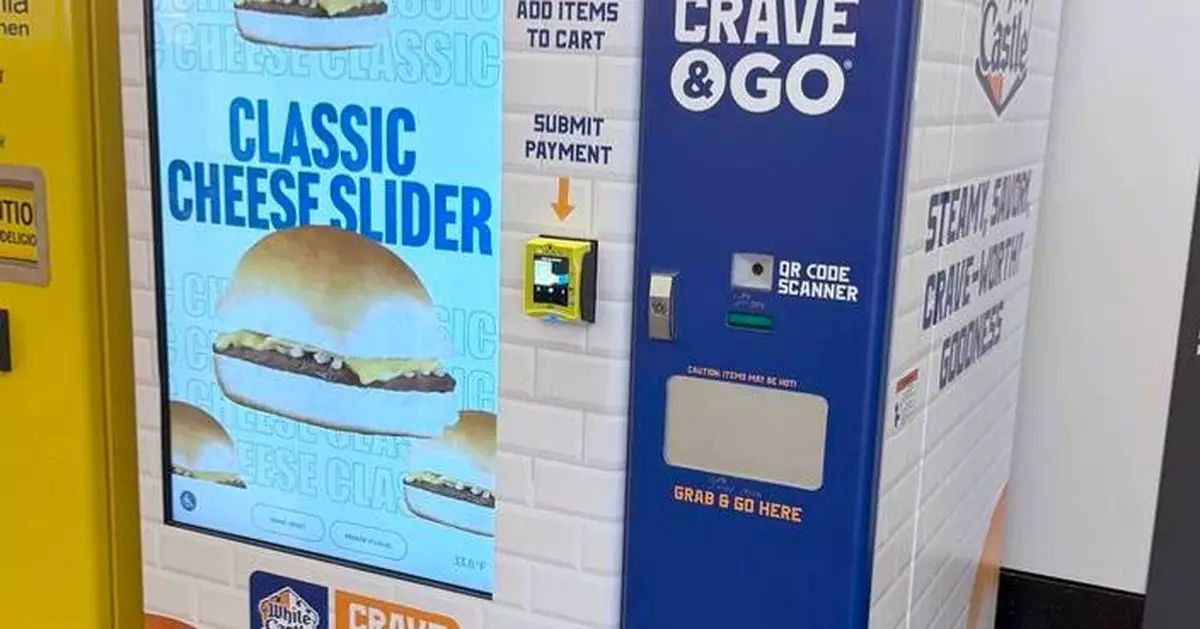
The collaboration supports the national deployment of White Castle Crave & Go kiosks, extending the brand’s reach across a wide range of commercial and institutional environments. Starting with 1,000 locations, the companies are excited to grow their presence, delivering White Castle to consumers whenever the Crave strikes.
The White Castle Crave & Go orders are prepared for guests on demand, giving on-the-go consumers fast, convenient access to a variety of Sliders through a technology-enabled platform, often in locations where a traditional White Castle restaurant is not available.
“This partnership provides a fun new way for consumers to experience White Castle,” said White Castle chief marketing officer, Jamie Richardson. “Automated retail allows us to meet consumers when cravings strike—on campuses, in hospitals and at workplaces—while delivering the hot and tasty quality, that has defined our brand for more than 100 years.”
ART’s Just Baked ® platform is already deployed in a broad range of high-traffic environments, including colleges, healthcare systems, corporate campuses, and transportation hubs, making it an ideal channel to extend White Castle’s reach beyond traditional restaurants and frozen food aisles.
“We’re proud to partner with an American icon like White Castle,” said David Chessler, founder of Automated Retail Technologies. “Together, we’re making it easier for consumers to access authentic White Castle favorites in locations where traditional restaurants may not be available.”
White Castle and ART will also collaborate to test future product innovation and menu expansion specifically designed for automated retail environments.
Crave & Go kiosk deployment has already begun, with early installations generating strong consumer engagement and highly positive feedback. White Castle and ART expect expansion to accelerate throughout 2026 as additional sites come online.
About White Castle
White Castle, America’s first fast-food hamburger chain, has been making hot and tasty Sliders since 1921. Based in Columbus, Ohio, the family-owned business owns and operates about 340 restaurants as well as a retail division providing its famous fare in freezer aisles of retail stores nationwide. As part of its commitment to offering the highest quality products, White Castle owns and operates its own Slider Provider meat plants, bakeries and frozen-Slider retail plants. White Castle has earned numerous accolades over the years including “Most Influential Burger of All Time” by Time magazine (2014, The Original Slider ® ) and one of the “10 Most Innovative Dining Companies” by Fast Company (2021).
About Automated Retail Technologies (ART)
ART is a leader in automated retail, offering state-of-the-art, self-service kiosks that deliver fresh, hot, and ready-to-eat meals without the need for on-site staff. Designed for convenience and scalability, ART’s kiosks provide restaurants, brands and many types of locations with new ways to reach customers anywhere, anytime. ART is shaping the future of the hot food kiosk industry, experienced in engineering, manufacturing, distribution, delivering exceptional experiences to consumers, and creating value for our partners and investors. With its small footprint and wide variety of food options, ART is pioneering a new era of convenience and sophistication.
Want to be a kiosk owner / operator? Please call 941-315-8519.
See us in action on the Maria Bartiromo show: Mornings with Maria
Editor’s Note: Download imagehere.
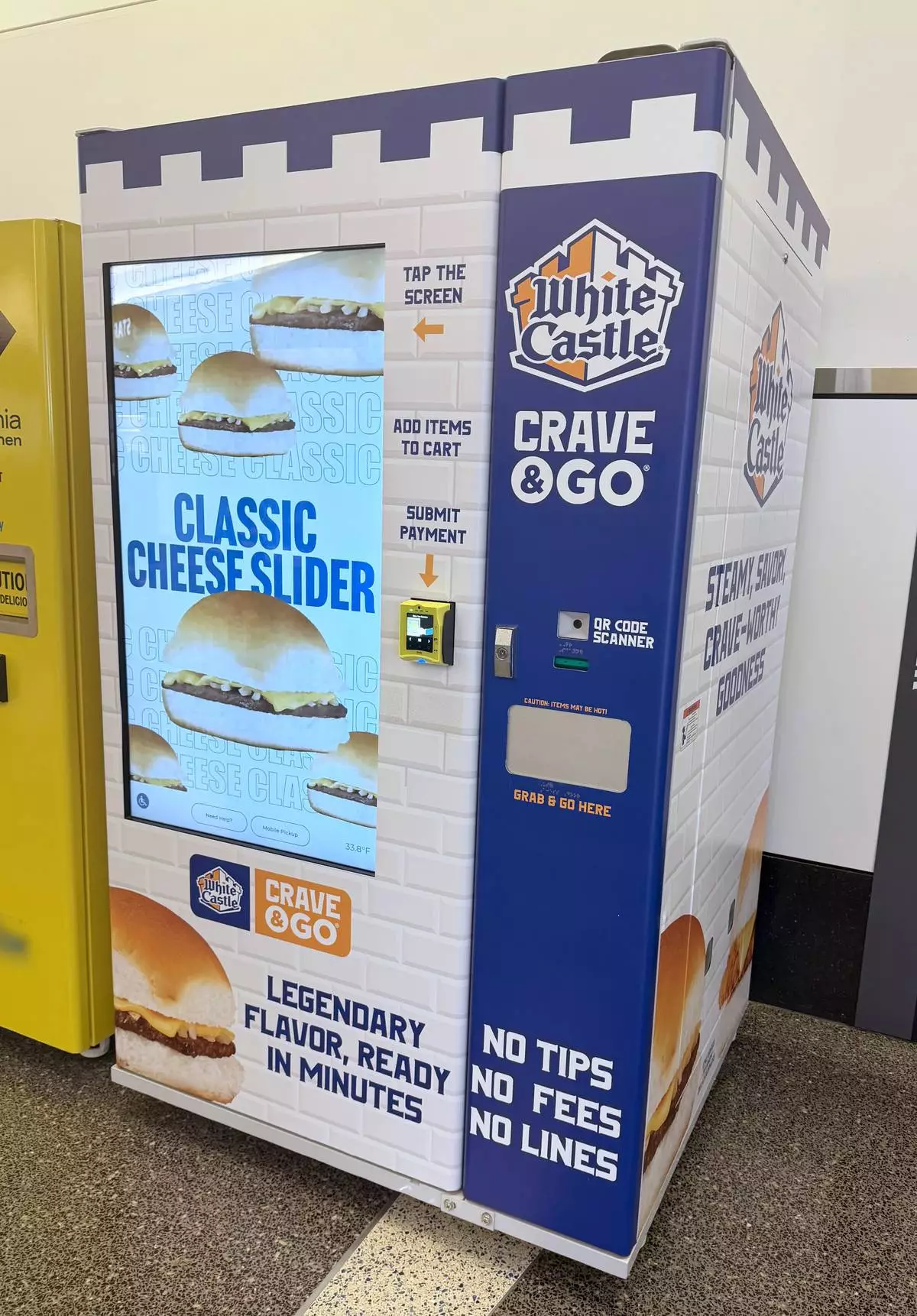
White Castle's Crave & Go automated kiosk, part of the brand's new partnership with Automated Retail Technologies (ART), delivers hot, ready-to-eat Sliders on demand.
NEW YORK (AP) — Shoppers accelerated their spending in March from February, but they spent a good chunk of their money at the gas pump.
A spike in gas prices due to the Iran war, now in its eighth week, resulted in a hefty 1.7% gain in retail sales in March after a revised 0.7% increase in February, according to the Commerce Department’s report on Tuesday. The increase marked the fastest one-month increase in retail sales in more than three years.
The report marks the first read on spending to capture the effects of the Iran war.
Excluding gas prices, retail sales were up 0.6%, helped in part by government tax refunds and warm weather.
Business at gas stations rose 15.5% percent.
Elsewhere, shoppers were still willing to spend. Sales at department stores rose 4.2%, while sales at furniture and home furnishings stores were up 2.2%. Online retailers saw a 1% gain. Consumer electronics and appliance stores posted a 0.9% increase. The only area that saw a decline for March was miscellaneous retailers, according to the Commerce report.
The snapshot offers only a partial look at consumer spending and doesn’t include things like travel and hotel stays. The lone services category – restaurants – registered a more modest gain of 0.1%.
The so-called control group—which excludes food services, autos, building materials and gas station sales and is used to calculate economic growth—rose 0.7%. That offered a good sign of broad spending by consumers, economists said.
“It’s a blowout retail sales figure for March,“ Heather Long, chief economist at Navy Federal Credit Union, wrote in a report.
She noted that the impact of tariffs is visible in the high spending on electronics and appliances due to higher prices. A small increase at restaurants may indicate some early signs of pullback as consumers have to spend more at the pump, she said.
“Overall, the American consumer is still healthy,” she added. "Extra income from tax refunds is helping many households weather this oil shock, but that extra money won’t last forever.”
The Iran war began Feb. 28 and has shut down the Strait of Hormuz, cutting off one-fifth of the world’s oil supply.
Late last month, U.S. gas prices jumped past an average of $4 a gallon for the first time since 2022.
Economists had believed that an unusually large jump in tax refunds would kick start spending at the start of the year. But spiking gas prices are taking a bite out of that money. And the Iran war is also further dampening shoppers' mood. Consumer sentiment plunged to a record low in April, according to a survey released earlier this month by the University of Michigan, largely because of the Iran war and concerns over higher gas prices.
Shoppers aren’t just feeling it at the gas pump, but are also starting to see unforeseen costs everywhere, including when they travel such as higher baggage fees. They will also likely see higher prices on different products ripple through the supply chain as companies start to pass on higher transportation costs to shoppers, analysts said.
The jump in gas prices caused a sharp spike in inflation last month, creating major challenges for the inflation-fighters at the Federal Reserve and increasing already significant political hurdles for the White House.
Consumer prices rose 3.3% in March from a year earlier. On a monthly basis, prices rose 0.9% in March from February, the largest such gain in nearly four years.
Heading into the war, shoppers were already cautious. But Bryan Eshelman, Americas leader of retail and a partner and managing director at consultancy AlixPartners, noted his retail clients see their customers pulling back even more now.
“Particularly in the low-end economy, people are shifting from wants to needs,” he said.
R.J. Hottovy, head of analytical research at Placer.ai, noted that for seven straight weeks, traffic at nondiscretionary retailers like grocers outpaced that of discretionary merchants. That trend was reversed the week of April 6, helped by the distribution of tax refunds and spending tied to spring break and Easter.
But after the data goes past Easter trends, future visits will largely depend on consumer sentiment regarding broader macroeconomic conditions and gas prices, Hottovy said. The firm tracks people’s movements based on cellphone usage.
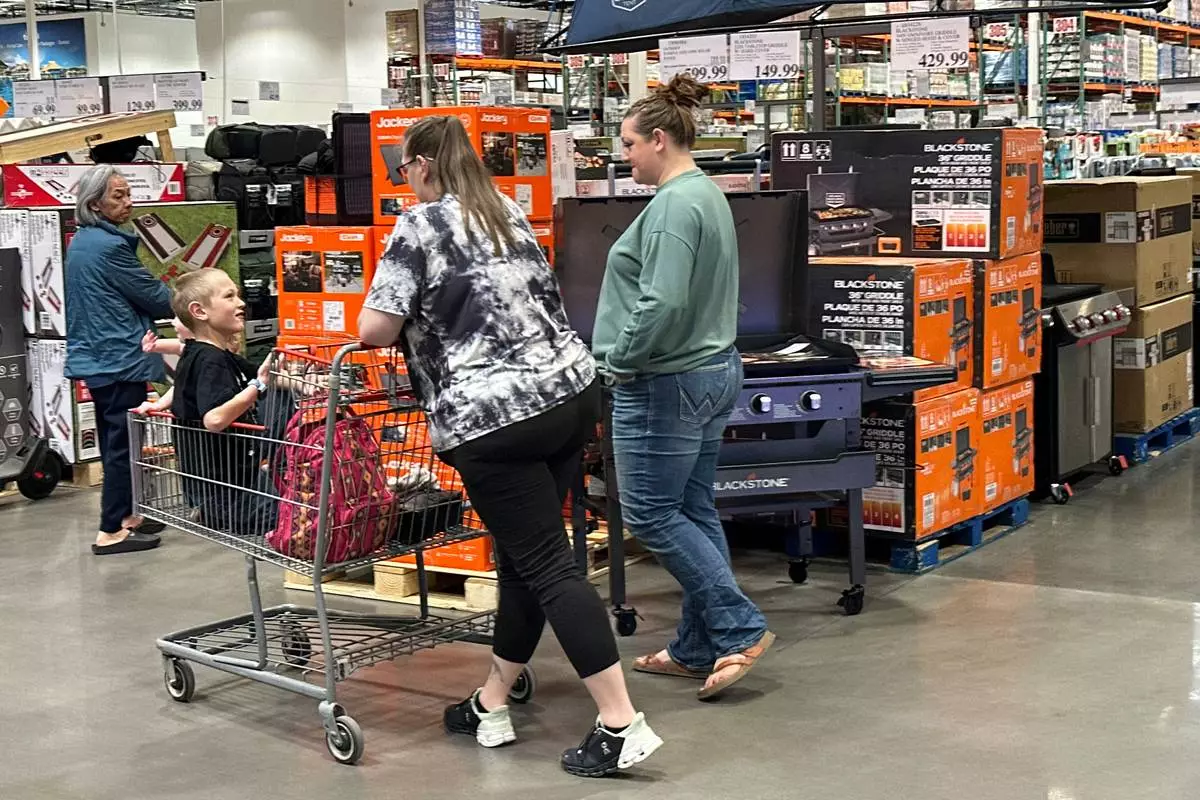
FILE - Shoppers move amid items for outdoor cooking on display in a Costco warehouse Thursday, March 12, 2026, in east Denver. (AP Photo/David Zalubowski, File)
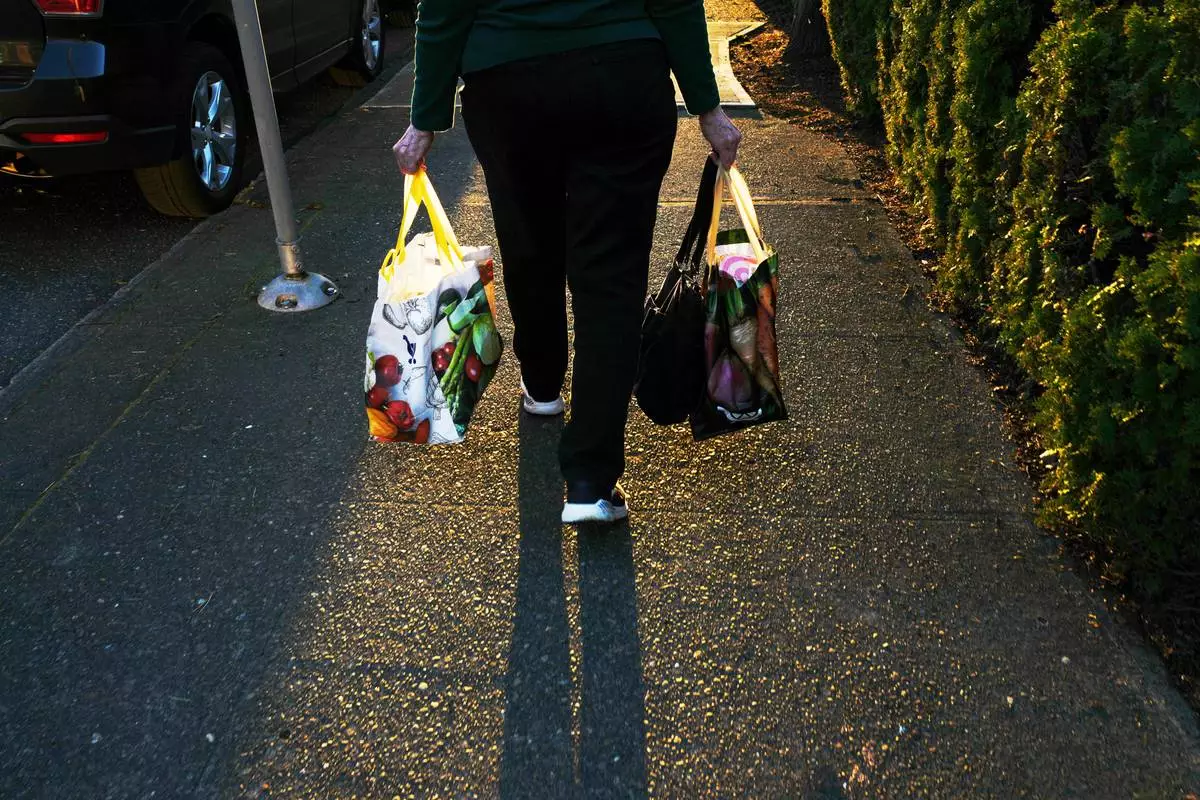
FILE - A woman carries reuable shopping bags to her car on Monday, March 16, 2026, in Portland, Ore. (AP Photo/Jenny Kane, File)