TEL AVIV, Israel (AP) — Israelis marked the country’s annual Memorial Day on Tuesday, a somber day of reflection filled with ceremonies at cemeteries and sirens when the whole country stops for two minutes of silence to remember the fallen.
In downtown Tel Aviv, many people visited an informal memorial that sprouted up around a sunny, circular fountain immediately after the Oct. 7, 2023, Hamas attack that killed more than 1,200 people.
Click to Gallery
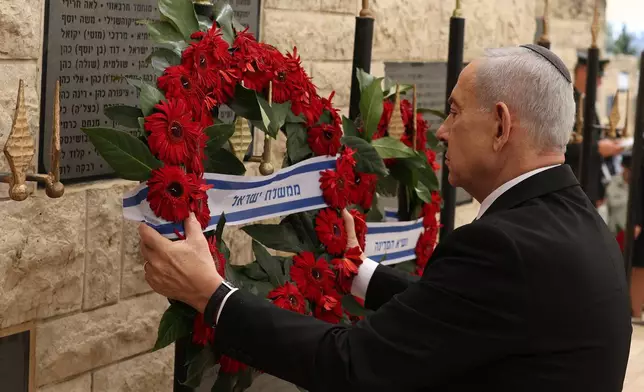
Israel's Prime Minister Benjamin Netanyahu places a wreath during a ceremony commemorating Israel's Remembrance Day for fallen soldiers, or Yom HaZikaron, at the Military Cemetery on Mount Herzl in Jerusalem, Tuesday April 21, 2026. (Ilia Yefimovich/Pool Photo via AP)
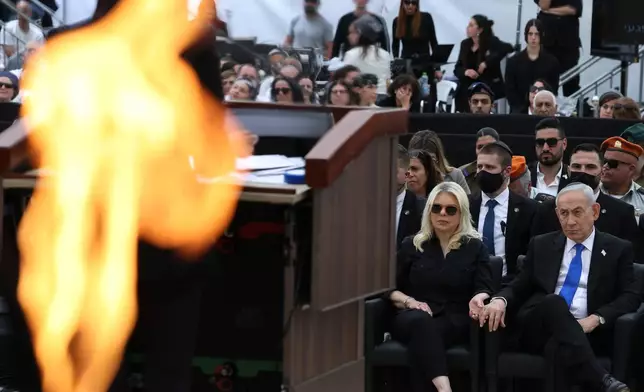
Israel's Prime Minister Benjamin Netanyahu, right, holds the hand of his wife Sara during a ceremony commemorating Israel's Remembrance Day for fallen soldiers, or Yom HaZikaron, at the Military Cemetery on Mount Herzl in Jerusalem, Tuesday April 21, 2026. (Ilia Yefimovich/Pool Photo via AP)
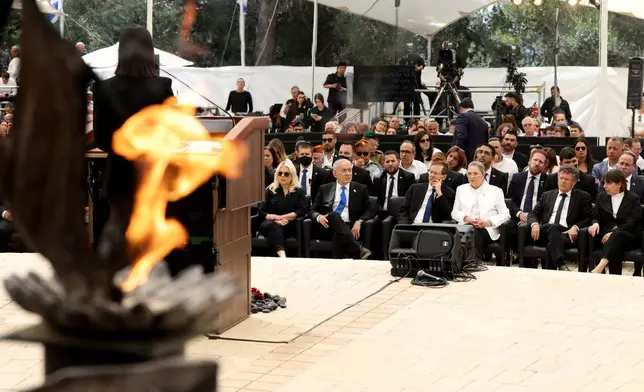
Israel's Prime Minister Benjamin Netanyahu, centre second from left, his wife Sara, centre left, and Israel's President Isaac Herzog, fourth from right, attend a ceremony commemorating Israel's Remembrance Day for fallen soldiers, or Yom HaZikaron, at the Military Cemetery on Mount Herzl in Jerusalem, Tuesday April 21, 2026. (Ilia Yefimovich/Pool Photo via AP)
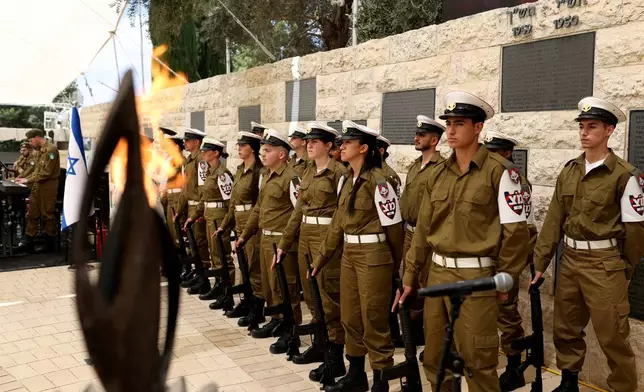
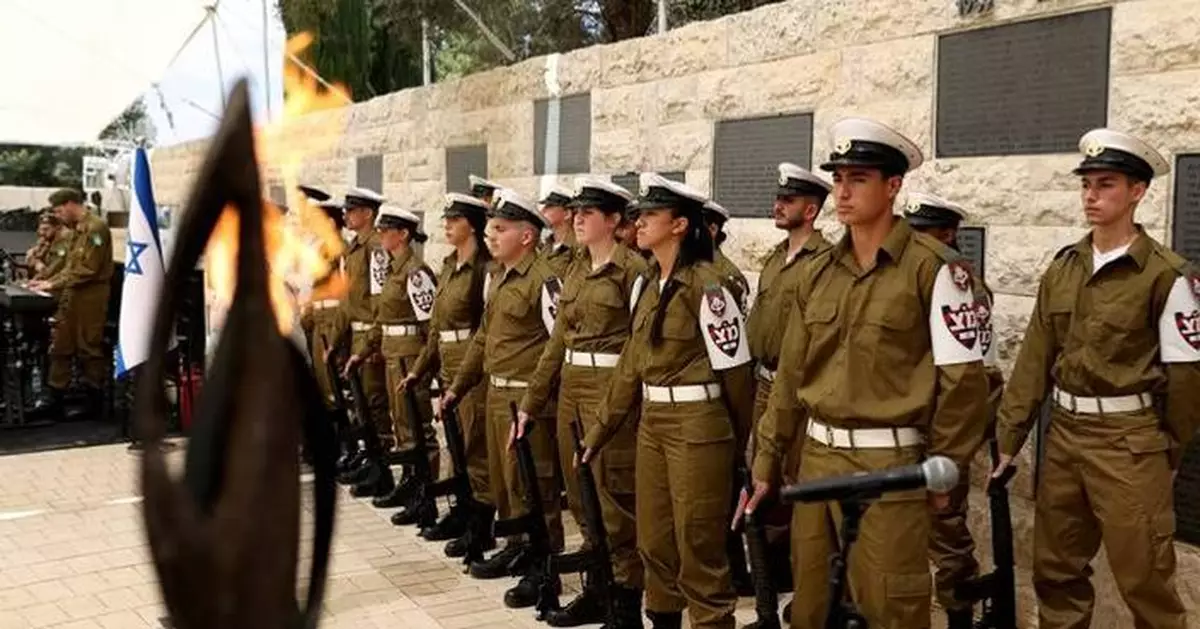
Soldiers attend a ceremony commemorating Israel's Remembrance Day for fallen soldiers, or Yom HaZikaron, at the Military Cemetery on Mount Herzl in Jerusalem, Tuesday, April 21, 2026. (Ilia Yefimovich/Pool Photo via AP)
Surrounding the fountain are photos, artwork, candles, and stickers memorializing the fallen, now faded by the sun and wrinkled by time, surrounded by trendy coffee shops that typically are filled with people chatting and working on laptops.
The dichotomy of so many photos of young people who have been killed next to people bantering with friends and sipping iced coffee is part of what makes Israel what it is, explained Yariv Ben Yehuda, a 52-year-old high-tech worker who lives nearby and frequently detours to the plaza to spend a moment with the photos of the victims.
He said the informal memorial has become so meaningful because it is in a busy location filled with people going about their daily lives, especially after the past two and a half years of wars in Gaza,Lebanon and Iran. The inconclusive conclusions to all three conflicts have left many feeling weary and worried about the country's future.
“Being Israeli is regulating emergencies, memorial days, wars. We keep on living, we can’t pause our lives to wait till the war will end,” he said.
He hopes the photos will also help remind people the price that has been paid, and hopefully, to start working toward ending the wars and building a different future.
The Tel Aviv memorial is considered a “secular gravesite” by Alon Aizer Rosenfeld, who came with his wife, Rinat, to light a candle for his wife’s cousin, a 20-year-old soldier who was killed in the Oct. 7 attack in southern Israel.
Noga Kamhaji, 28, an artist and industrial designer, brought the three blue plastic boxes that families of fallen soldiers receive from the military with their loved ones belongings. It's part of a performance piece to memorialize her brother, Dan, a reserve soldier who was killed in northern Israel two years ago. The boxes still house his belongings, each in a separate plastic bag as her family received them.
“People who know these boxes know their meaning,” Kamhaji explained, that specific blue color forever ingrained in their mind. She wanted to bring the boxes out of the closet to talk about the loss of her brother in public.
After sundown on Tuesday, the country shifts from its melancholic contemplation to exuberant celebration, kicking off Independence Day as trumpets blare and drums roll. The radios stop playing sad songs of loss, the national military cemetery on Mount Herzl empties of mourning families and instead hosts a highly choreographed celebration of Israel’s 78th Independence Day, though it was prerecorded this year out of concern that the war with Iran could resume at any moment.
Israel declared independence on May 14, 1948, but the holiday, like all national holidays, is observed according to the lunar Hebrew calendar. Memorial Day is always observed the day before. Palestinians mark what they call the “nakba,” or the “catastrophe,” of 1948 — in which hundreds of thousands of Palestinians fled or were forced from their homes during the war surrounding Israel’s creation — on May 15.
For many Israelis, the whiplash transition from memorial to celebration is both challenging and uniquely Israeli. “It’s become regular here, that we are both happy and sad, we have gotten used to it, there’s no choice,” said Gal Amar, 31, a talent agent in Tel Aviv, as she sat with a friend in the Tel Aviv plaza.
This year, following weeks of running for the shelter amidst a barrage of Iranian missiles, was among the most difficult Memorial Days that Amar could remember, despite the challenges of the past years. “There are so many victims … Every day is memorial day here,” she said. The constant wars force them to grasp at moments of normalcy and happiness wherever possible, she said.
Across the country, people gathered at gravesites and with families, still reeling from a 40-day war with Iran and years of uncertainty and conflict.
Over 2,000 people in Israel have been killed in wars in the past two and a half years, including the Oct. 7 attacks, about half of them soldiers. Palestinian health officials have reported over 72,000 Palestinians killed during that time in Israel's offensive in Gaza, where Palestinian residents often compare their plight to a modern nakba.
Dafna Rousso, 45, was marking her third Memorial Day without her husband, Uri, who was part of the emergency response team at Kibbutz Kfar Aza. Uri went out on his bicycle to respond to Hamas-led militants that overran the kibbutz on Oct. 7 and was killed. On Tuesday, she gathered with friends and family at Uri’s grave in southern Israel. Often, they have a barbecue, one of Uri’s favorite activities.
Whenever she sees a notice in the news of a fallen soldier or someone who has been killed, it sharpens her grief anew, she said. “Every time I see another name, I think, there’s another family that is collapsing, that is being devastated,” she said.
The loss is even harder since, like many people, she feels like Israel’s government has lost sight of the purpose of the war and is dragging it out for its own benefit and to avoid a public reckoning.
“The sadness is in every place, the missing is in every place. Why do so many people need to go through this?”
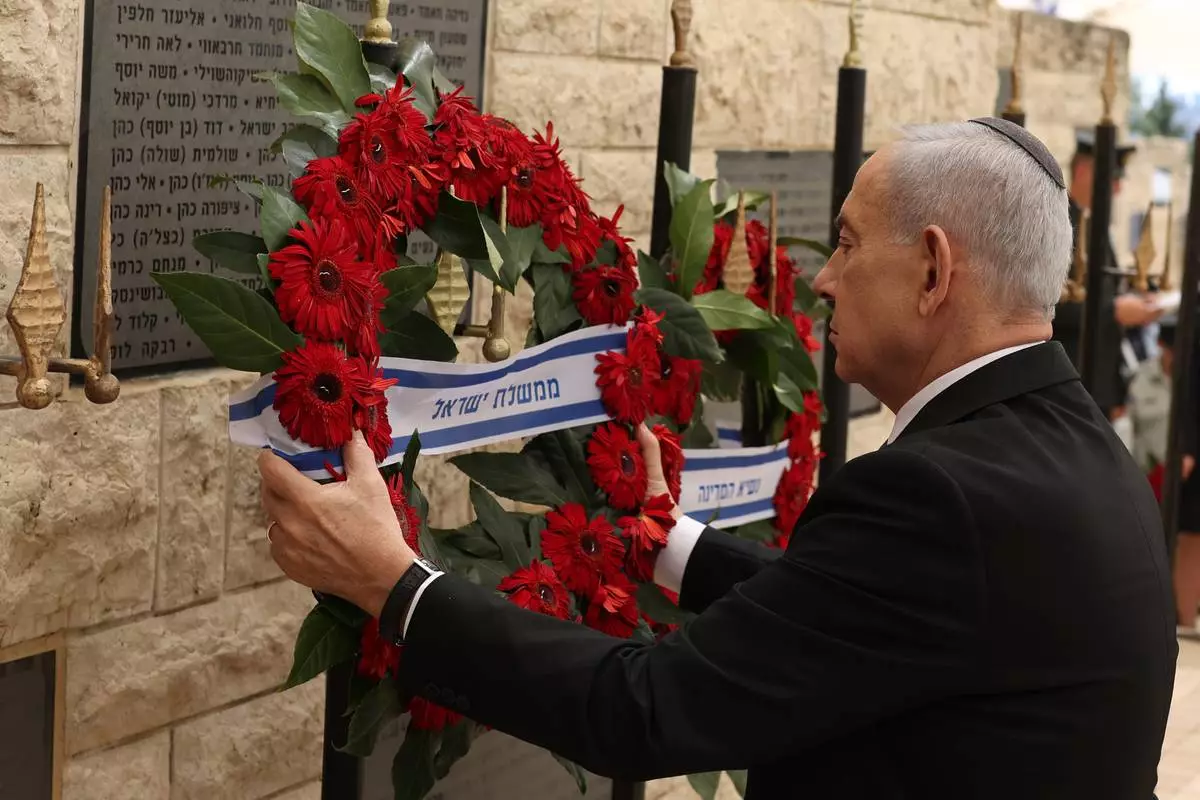
Israel's Prime Minister Benjamin Netanyahu places a wreath during a ceremony commemorating Israel's Remembrance Day for fallen soldiers, or Yom HaZikaron, at the Military Cemetery on Mount Herzl in Jerusalem, Tuesday April 21, 2026. (Ilia Yefimovich/Pool Photo via AP)
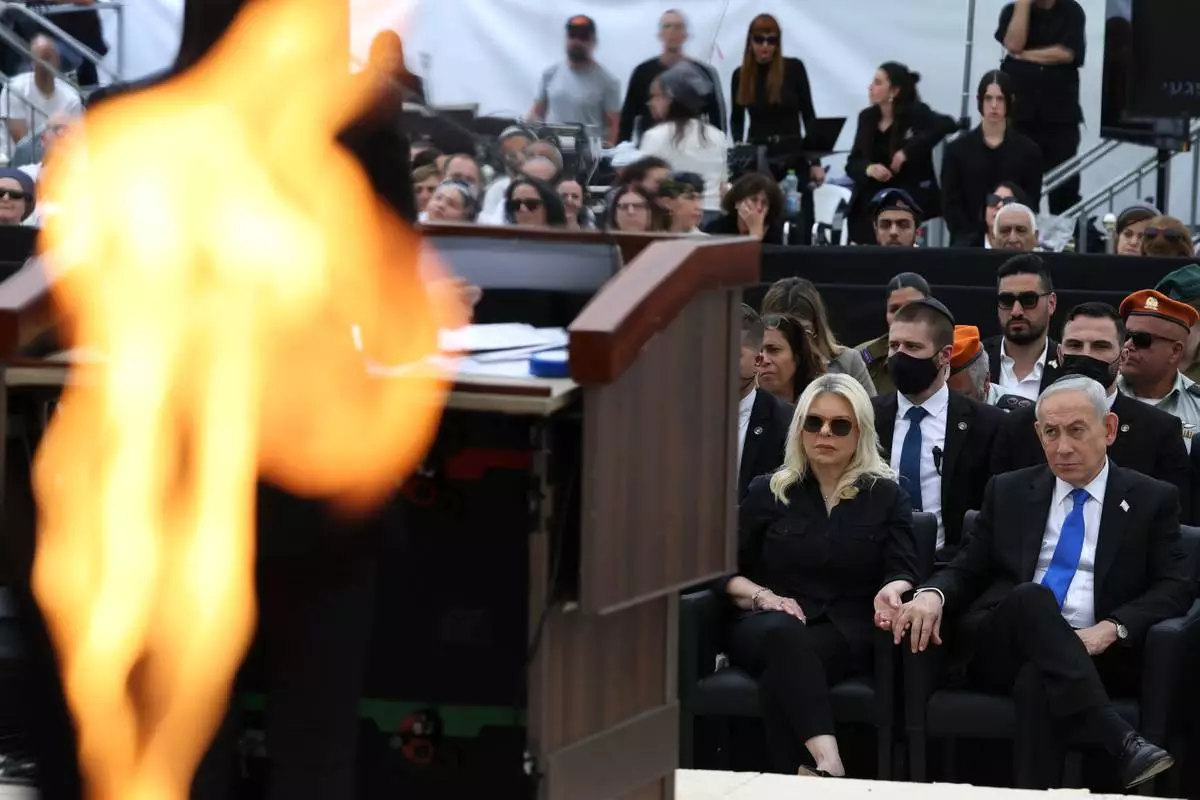
Israel's Prime Minister Benjamin Netanyahu, right, holds the hand of his wife Sara during a ceremony commemorating Israel's Remembrance Day for fallen soldiers, or Yom HaZikaron, at the Military Cemetery on Mount Herzl in Jerusalem, Tuesday April 21, 2026. (Ilia Yefimovich/Pool Photo via AP)
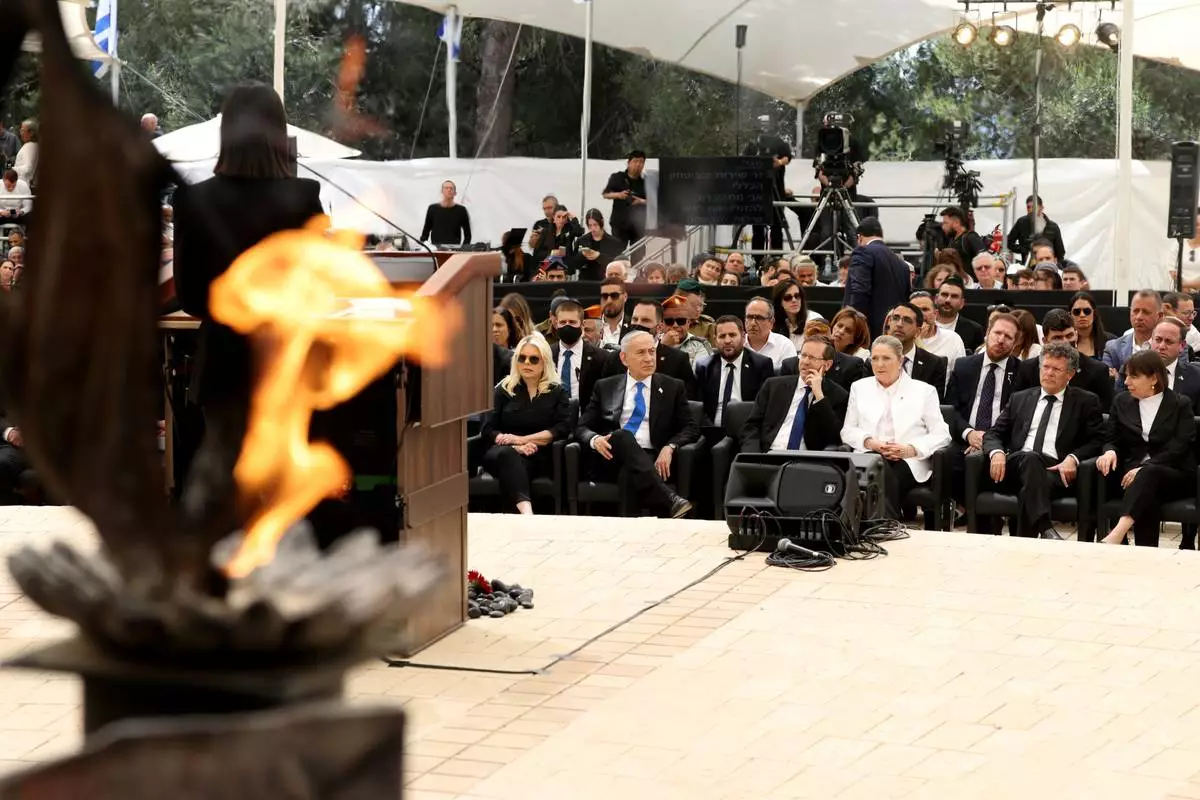
Israel's Prime Minister Benjamin Netanyahu, centre second from left, his wife Sara, centre left, and Israel's President Isaac Herzog, fourth from right, attend a ceremony commemorating Israel's Remembrance Day for fallen soldiers, or Yom HaZikaron, at the Military Cemetery on Mount Herzl in Jerusalem, Tuesday April 21, 2026. (Ilia Yefimovich/Pool Photo via AP)
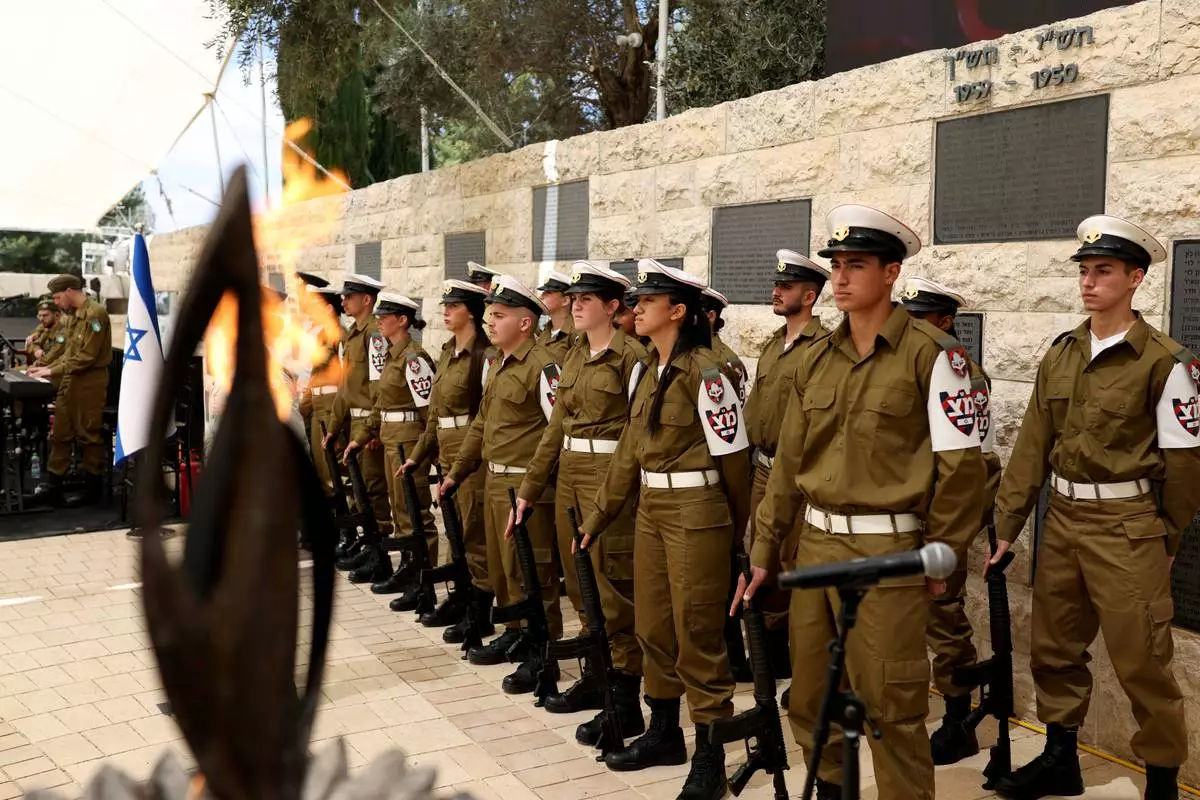
Soldiers attend a ceremony commemorating Israel's Remembrance Day for fallen soldiers, or Yom HaZikaron, at the Military Cemetery on Mount Herzl in Jerusalem, Tuesday, April 21, 2026. (Ilia Yefimovich/Pool Photo via AP)