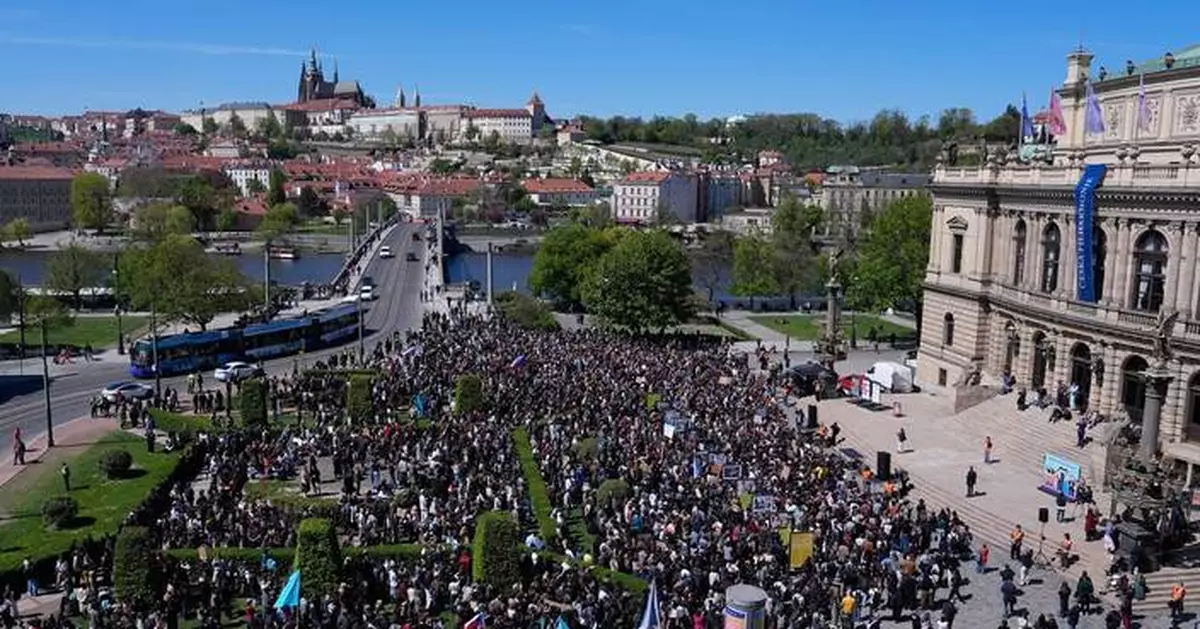
PRAGUE (AP) — Thousands of high school and university students marched through the Czech capital on Wednesday to protest against a government plan to overhaul and reduce funding for public radio and television.
“We won’t let you take the media,” protesters chanted. Smaller protests were organized across the country.
The new coalition government led by populist Prime Minister Andrej Babiš drafted the plan to scrap the fees that individuals, households and businesses pay to access the outlets.
Instead, the public media would be fully dependent on the state budget. Critics say that would compromise their independence.
The draft of the plan would significantly reduce public media's current budgets. It still needs approval from the government and Parliament.
The media's labor unions said they were ready to go on strike if the government goes ahead with the legislation, which could take effect next year.
The Vienna-based International Press Institute said it fears that the motivation behind the proposed changes is to "weaken the broadcasters’ financial and editorial independence and compromise their ability to fulfill their public service remit.”
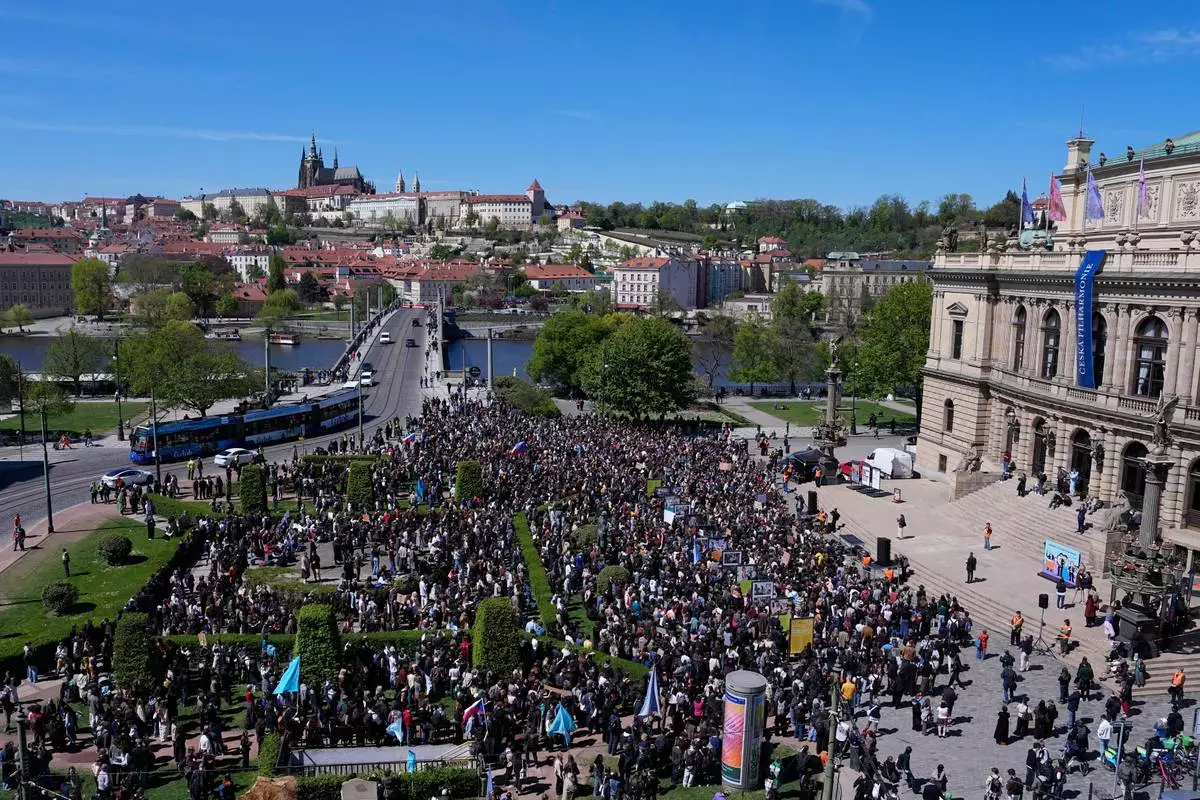
Thousands of students attend a demonstration in support of public media in Prague, Czech Republic, Wednesday, April 22, 2026. (AP Photo/Petr David Josek)
Joey Logano has three championships in the NASCAR Cup Series but none in the Chase system that has returned this season.
The Team Penske driver is embracing the challenge of proving he can win a title in the format that puts a greater emphasis on banking consistently strong finishes.
“Do I have a little chip on my shoulder? That’s a clear yes,” Logano said with a chuckle after his victory Saturday at Richmond Raceway. “So much so that our team slogan is ‘4 the haters.’ That’s where we’re at. That’s good extra motivation.”
With an impressive surge from 20th to ninth in the standings over the past six races, Logano has flipped the narrative on the elimination playoffs that were in place for 12 years.
From 2014-25, the waning races of NASCAR’s regular season typically were a scramble to make the championship field as a win earned a berth.
But that safety valve has disappeared in the Chase, which will rely entirely on points to set the 16-driver field.
The top 16 in the provisional Chase have been unchanged for the past four races, and the grid for the 10-race title run likely will remain the same at New Hampshire Motor Speedway this weekend.
Shane van Gisbergen holds the 16th and final spot by 50 points over Ryan Preece, who dropped 21 points further below the Chase cutline with a 17th-place finish at Richmond.
The next three drivers ranked outside the Chase — Ross Chastain (12th at Richmond), Brad Keselowski (26th) and Erik Jones (27th) — also lost ground, diluting the potential drama of a surprise qualifier.
“The number of guys that feel the pressure of making the Chase is probably less,” said Christopher Bell, who is among seven drivers who have clinched Chase spots. “In years past, everybody on the outside still had an opportunity to get in, and now it’s kind of dwindled to a couple guys fighting for the spots.”
There’s been more intrigue toward the top half of the standings — particularly the progress of the Team Penske trio.
As Logano continued his push up the points ladder, teammate Ryan Blaney moved past Ty Gibbs into second in the standings at Richmond. Austin Cindric, Penske’s third driver, shored up his title eligibility with a career-best third on a short track to move up a spot to 15th in the points.
Denny Hamlin has a 115-point lead on Blaney and likely will clinch the Chase’s top seed Sunday at New Hampshire, which will be followed by the Aug. 29 regular-season finale at Daytona International Speedway.
The standings then will be reset for the Chase, which begins Sept. 6 at Darlington Raceway with the championship leader ahead by 25 points. Second will start 10 points ahead of third, and the remaining 14 spots will be separated by five-point increments.
“Getting to second is top of mind because every point is going to matter,” Blaney said.
There also is an emphasis on finishing the regular season in the top half of the points standings.
Racing Insights, a NASCAR analytics firm, ran more than 25,000 computer simulations of Chase outcomes, and the champion started in the top six 85% of the time.
Logano, who made the Chase only once while racing under the system in his first five Cup seasons from 2009-13, is 36 points from sixth-ranked Chase Elliott.
“We’ve been able to switch our goals from making the Chase to winning the championship,” said Logano, whose No. 22 Ford was ranked 17th before winning two of the past four races. “It’s quite the turnaround. I look at the last month and a half, we’ve been capable of winning all of them.”
Logano could be among several more drivers who lock into the championship Sunday with a solid result at New Hampshire.
Crew chief Paul Wolfe credited Logano with buoying morale when the team notched only two top-five finishes in the first half of the season.
“I’m proud of everyone sticking together,” Logano said. “There are times you see teams break, and it doesn’t take much longer running the way we were until something probably was going to break. We’ve been able to make quite the recovery to have a legit shot at the championship.”
After finishing sixth at Richmond, Kyle Larson immediately flew to Iowa and scored his fourth victory in the Knoxville Nationals, a prestigious sprint car event. Larson qualified on the pole position last week by winning a preliminary race at the renowned dirt track in Knoxville, Iowa.
He had expected to miss Saturday's main event because of the schedule conflict with Richmond, but a rain delay at Knoxville Raceway allowed the two-time Cup Series champion to arrive in time to lead all 50 laps. “It’s extremely surreal just to talk about the day and the range of emotions,” Larson said.
See AP’s full auto racing coverage here
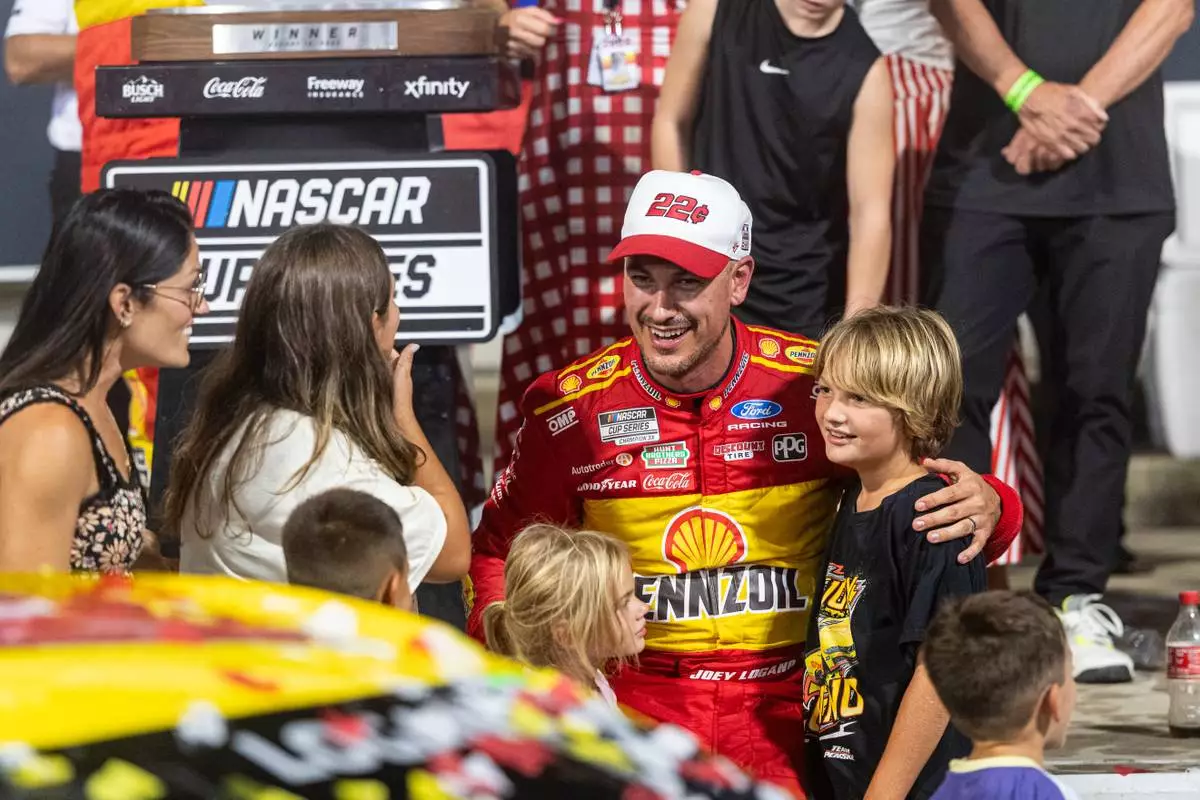
Team Penske driver Joey Logano (22) celebrates with family in victory lane after winning the Cook Out 400 at Richmond Raceway, Saturday, Aug. 15, 2026, in Richmond Va. (AP Photo/Robert Simmons)
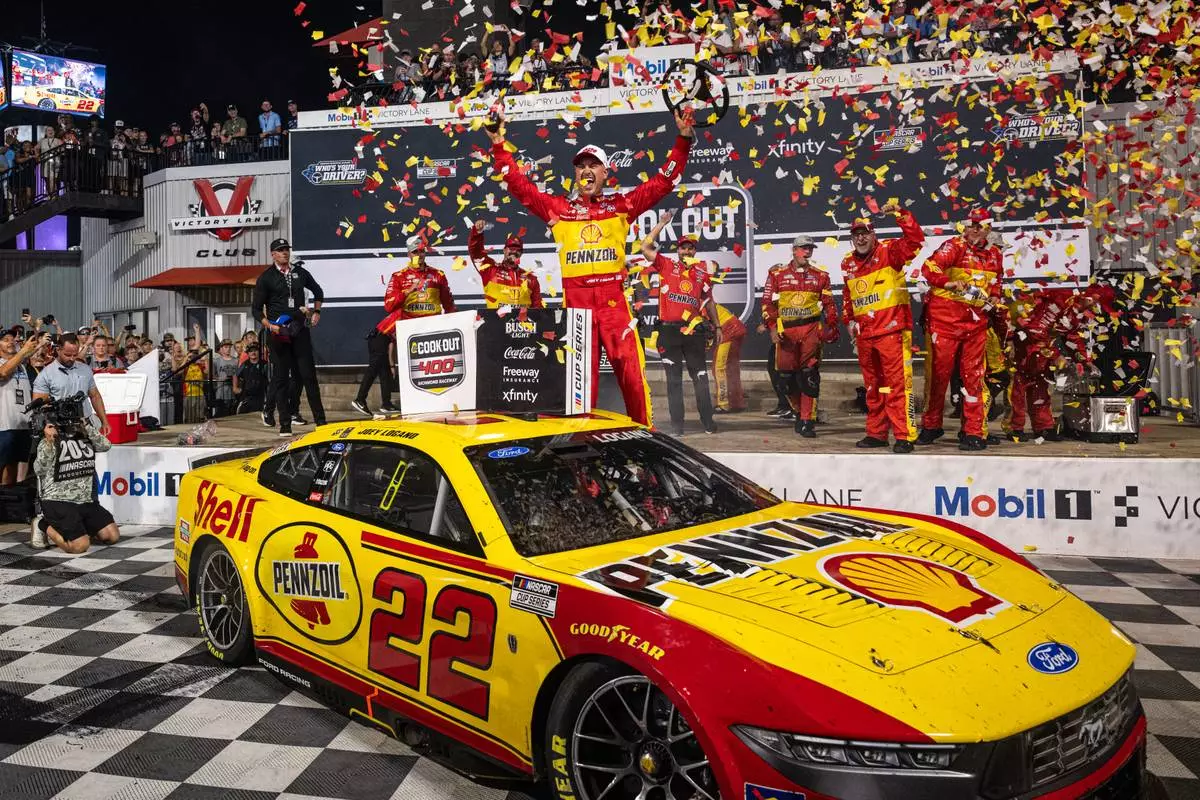
Team Penske driver Joey Logano (22) celebrates in victory lane after winning the Cook Out 400 at Richmond Raceway, Saturday, Aug. 15, 2026, in Richmond Va. (AP Photo/Robert Simmons)