HOUSTON (AP) — A Houston city ordinance that limited police officers’ cooperation with federal immigration agents was amended on Wednesday after Texas’ governor threatened to take away millions of dollars in public safety grants.
Houston, as well as Austin and Dallas — three of the state's biggest cities and Democratic strongholds — are being confronted by GOP Gov. Greg Abbott with threats of losing public safety dollars over policies that dictate how law enforcement interacts with federal immigration authorities. The three cities are being threatened with the loss of about $200 million in public safety funding, including tens of millions expected to cover security at World Cup matches this summer in Dallas and Houston.
Click to Gallery
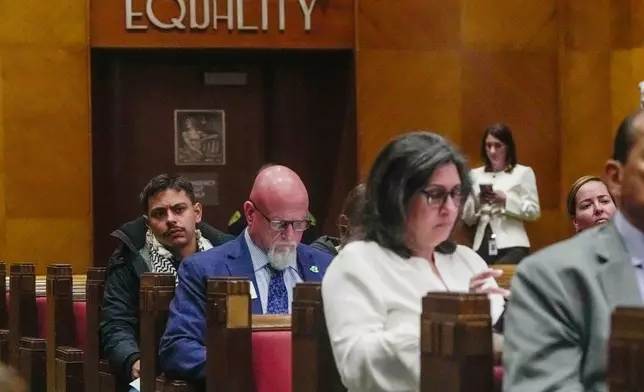
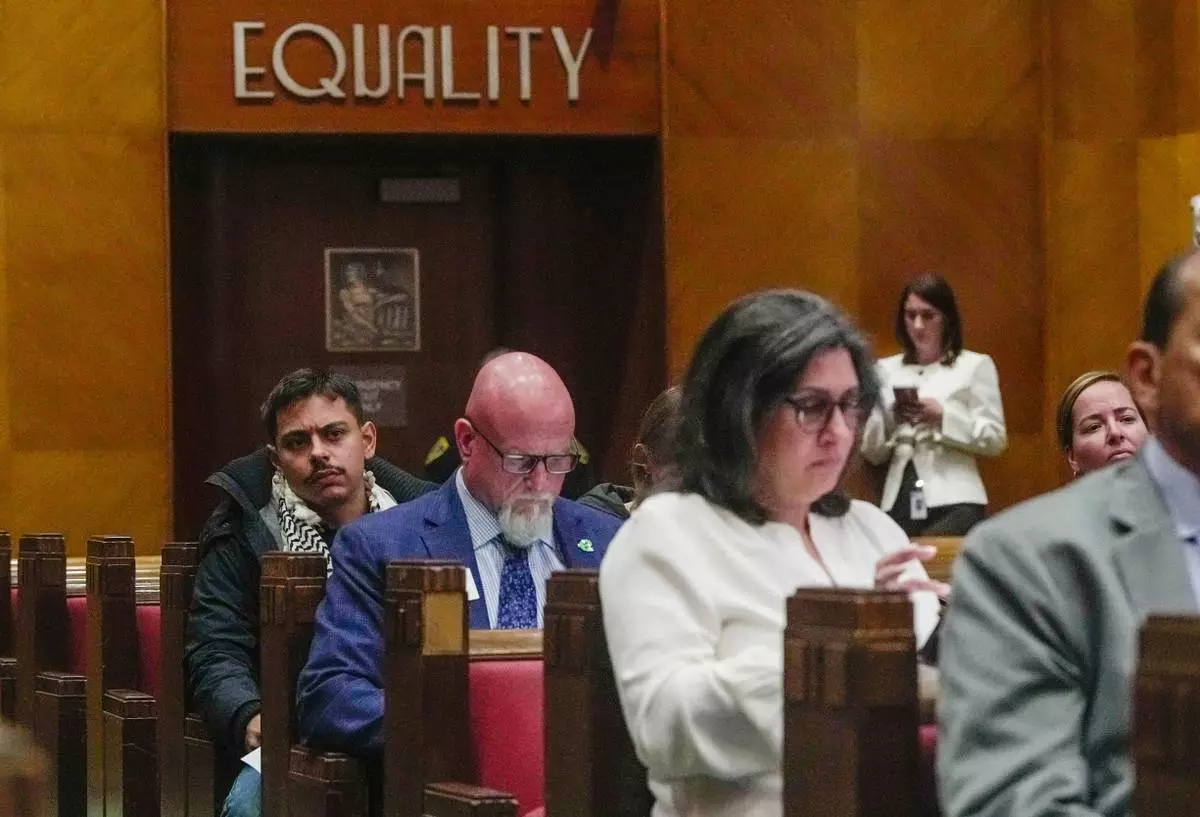
Members of the public listen during a City Council meeting considering whether to repeal a newly approved proposal limiting cooperation with U.S. Immigration and Customs Enforcement at City Hall, in Houston, Wednesday, April 22, 2026. (Raquel Natalicchio/Houston Chronicle via AP)
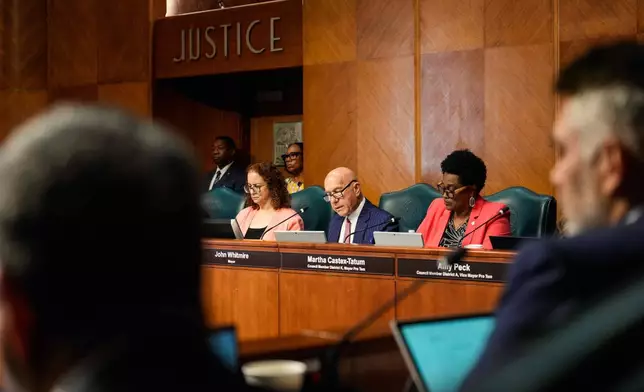
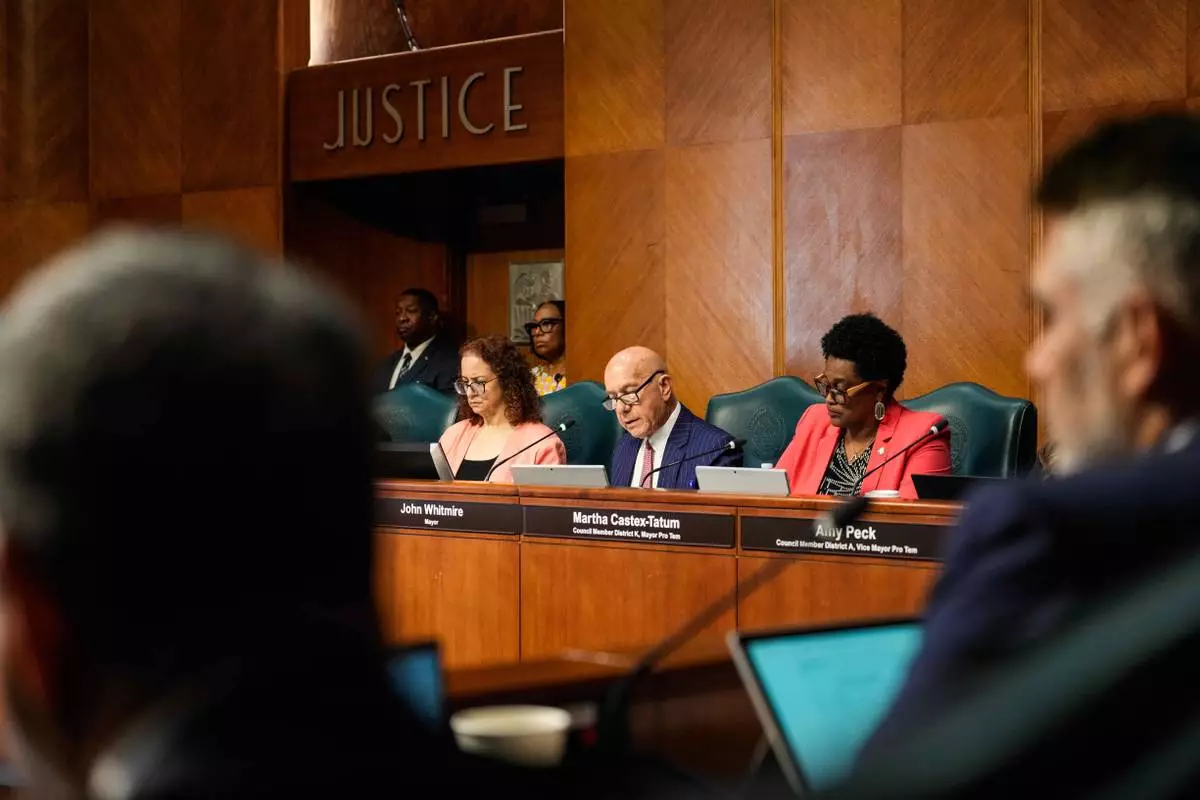
Houston Mayor John Whitmire speaks during a City Council meeting considering whether to repeal a newly approved proposal limiting cooperation with U.S. Immigration and Customs Enforcement at City Hall, in Houston, Wednesday, April 22, 2026. (Raquel Natalicchio/Houston Chronicle via AP)
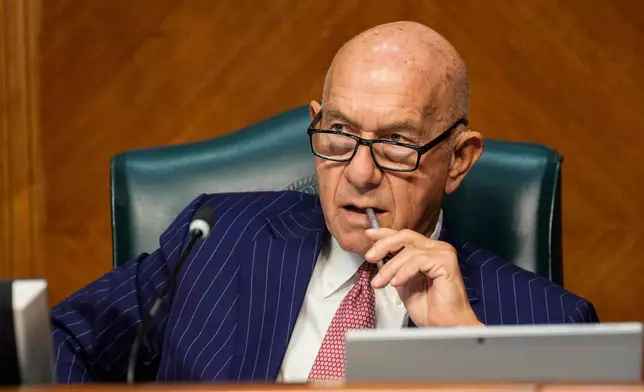
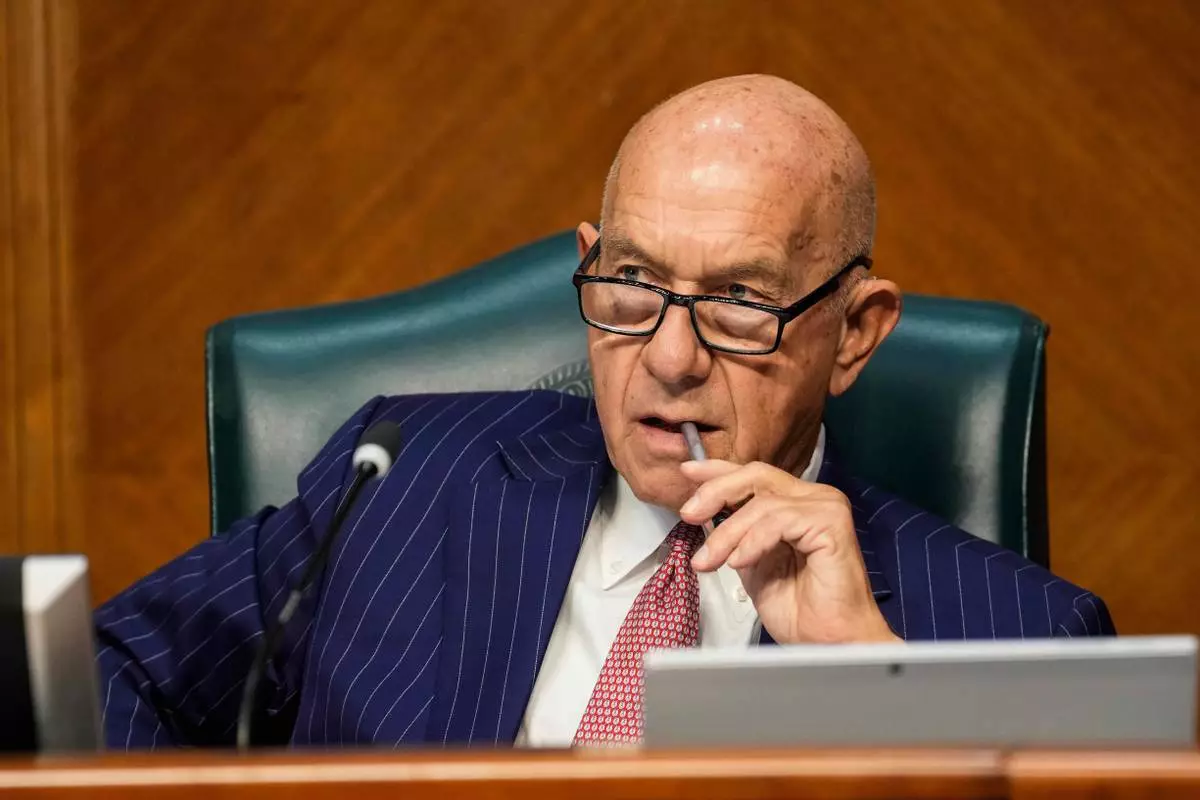
Houston Mayor John Whitmire listens to a speaker during a City Council meeting considering whether to repeal a newly approved proposal limiting cooperation with U.S. Immigration and Customs Enforcement at City Hall, in Houston, Wednesday, April 22, 2026. (Raquel Natalicchio/Houston Chronicle via AP)
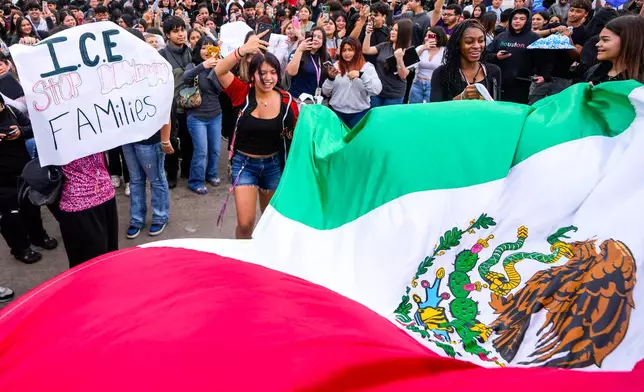
FILE - Students stage a walkout in protest against U.S. Immigration and Customs Enforcement (ICE) in schools and mass deportations, Feb. 6, 2025, at Sam Houston Math, Science, and Technology Center High School in Houston. (Brett Coomer/Houston Chronicle via AP, File)
Two weeks ago, Houston City Council passed the ordinance, which eliminated a requirement that Houston police officers wait 30 minutes for agents with the U.S. Immigration and Customs Enforcement to pick up someone with a nonjudicial administrative warrant. If ICE agents didn't show up in time, police officers took a detained person's information and then released them.
But Abbott warned city officials that the new ordinance and its limitation on cooperating with ICE agents violated the terms of $110 million in state grants Houston had received for police and security during the World Cup games the city is hosting in June.
Texas Attorney General Ken Paxton had also filed a lawsuit against Mayor John Whitmire and members of the city council over the ordinance, accusing them of violating a 2017 state law that prevents cities from adopting policies that limit the enforcement of immigration laws and which also banned “sanctuary city” policies in the state. There is no strict definition for sanctuary policies or sanctuary cities, but the terms generally describe limited cooperation with ICE.
After more than two hours of discussion during its weekly meeting, Houston City Council voted 13-4 to make changes to the ordinance. Whitmire said he had consulted with Abbott’s office about making changes that would prevent Houston from losing its funding.
The amended ordinance deletes language that highlighted that administrative warrants — versus warrants signed by a judge — that ICE agents use to take individuals into custody are not enough for officers to arrest or detain an individual.
“We have no alternative for Houston to survive, prepare for (the World Cup), patrol these neighborhoods,” Whitmire said. “We’ve got to have today the restoration of the $114 million.”
Andrew Mahaleris, a spokesperson for Abbott, said the governor expects any policy Houston police adopt has to comply with the city's certification that it will fully cooperate with the Department of Homeland Security.
“This vote is a step in the right direction after Houston leaders put public safety at risk with reckless policies that undermined law enforcement,” Mahaleris said in a statement.
Council member Abbie Kamin, one of three members who had pushed for the ordinance, voted against amending it, saying that doing so was giving in to bullying tactics from state leaders.
“If we rollover now to a bully, what will he come for next?” Kamin said.
Council members Edward Pollard and Alejandra Salinas, who also pushed for the ordinance, said they remained hopeful the changes approved Wednesday would not violate individuals' constitutional rights and wouldn't result in people being held on nonjudicial warrants.
Nikki Luellen, an advocate for criminal justice reform for the ACLU of Texas, called the amended ordinance “a greenlight for deeper collaboration between ICE and the Houston Police Department.”
Martha Castex-Tatum was one of several council members who had supported the ordinance but voted in favor of amending it in order to protect the city's finances.
“For some people, this may feel like surrender. It’s not. It’s real stewardship,” Castex-Tatum said.
Dallas officials have said they are committed to ensuring public safety and would respond to Abbott’s threat by Thursday.
Austin Mayor Kirk Watson, a moderate Democrat, said the local policy complies with state law. He said Abbott’s threat to cut nearly $3 million in Austin would cut trauma aid for police officers and sexual assault victims.
“We don’t have the time and will not play into this political theater,” said Watson.
Austin officials have since indicated they could try to negotiate with Abbott.
The debate in Houston and other Texas cities comes amid the federal government’s aggressive enforcement of immigration laws. Whitmire and other local leaders in many of Texas’ left-leaning urban areas have tried to not get the federal government’s attention amid the aggressive immigration crackdown by President Donald Trump’s administration.
__
Associated Press writer Jim Vertuno in Austin contributed to this report.
__
Follow Juan A. Lozano: https://x.com/juanlozano70
Members of the public listen during a City Council meeting considering whether to repeal a newly approved proposal limiting cooperation with U.S. Immigration and Customs Enforcement at City Hall, in Houston, Wednesday, April 22, 2026. (Raquel Natalicchio/Houston Chronicle via AP)
Houston Mayor John Whitmire speaks during a City Council meeting considering whether to repeal a newly approved proposal limiting cooperation with U.S. Immigration and Customs Enforcement at City Hall, in Houston, Wednesday, April 22, 2026. (Raquel Natalicchio/Houston Chronicle via AP)
Houston Mayor John Whitmire listens to a speaker during a City Council meeting considering whether to repeal a newly approved proposal limiting cooperation with U.S. Immigration and Customs Enforcement at City Hall, in Houston, Wednesday, April 22, 2026. (Raquel Natalicchio/Houston Chronicle via AP)

FILE - Students stage a walkout in protest against U.S. Immigration and Customs Enforcement (ICE) in schools and mass deportations, Feb. 6, 2025, at Sam Houston Math, Science, and Technology Center High School in Houston. (Brett Coomer/Houston Chronicle via AP, File)