Skip to Content Facebook Feature Image

European Union ramps up crisis testing, convinced that Trump's security priorities lie elsewhere

News

European Union ramps up crisis testing, convinced that Trump's security priorities lie elsewhere
News

News

European Union ramps up crisis testing, convinced that Trump's security priorities lie elsewhere

2026-04-23 13:02 Last Updated At:13:31

BRUSSELS (AP) — The European Union is set to ramp up tests on rules that oblige the bloc's 27 member countries to help each other in times of crisis, as the reality sinks in that Washington's commitment to NATO and security in Europe under U.S. President Donald Trump is evaporating.

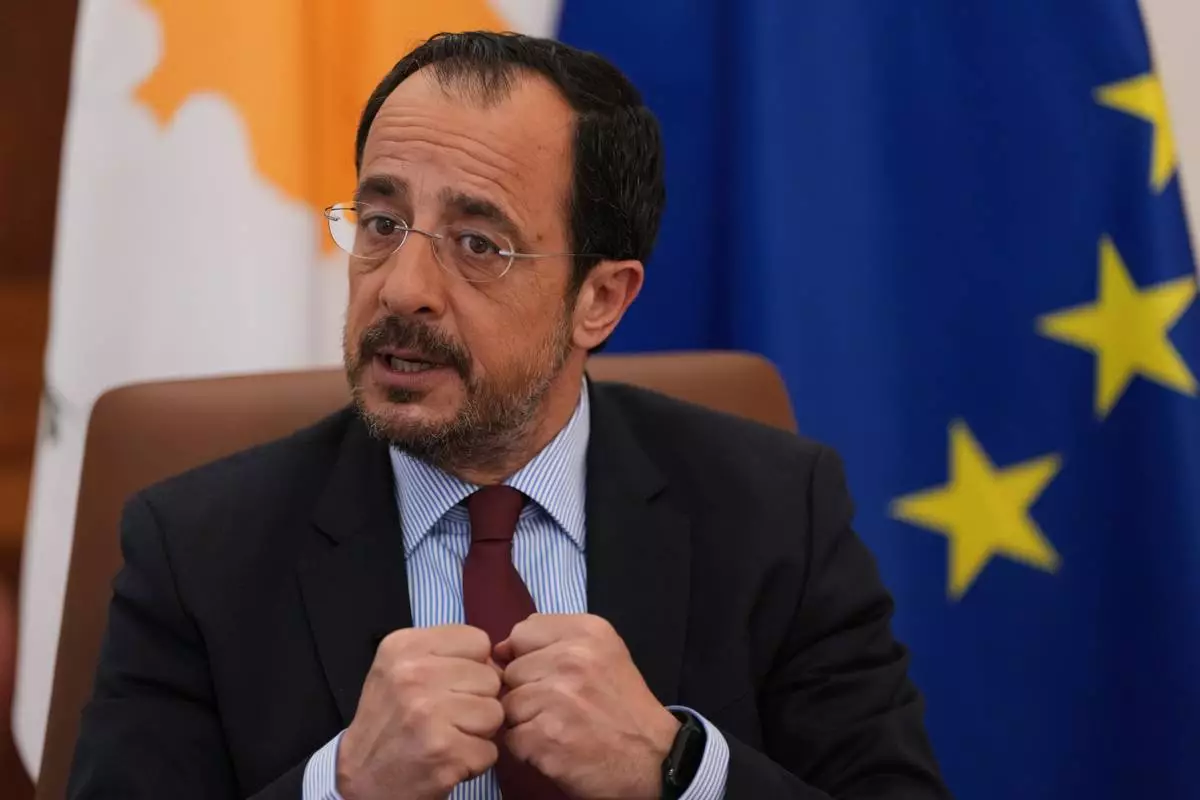
At a summit in Cyprus starting later Thursday, leaders will work on “an operational plan” to make best use of the EU’s military, security, trade policy and other assets in times of need, Cypriot President Nikos Christodoulides told The Associated Press.

In mid-May, EU envoys will take part in “table-top exercises” to game out how Article 42.7 of the bloc’s treaties could be used to provide collective assistance to a nation in the event of an attack or an invasion by a country like Russia.

EU defense ministers are expected to carry out similar tests a few weeks later. The exercises are focused on political decision-making and don't involve armed forces, government agencies or other assets in the field.

Under NATO’s Article 5 security guarantee, an attack on one ally is deemed an attack on them all and one that requires a collective response, often, though not exclusively, by military means.

It’s only ever been activated once, in support of the United States following the Sept. 11 attacks and led to NATO’s failed 18-year security effort in Afghanistan.

The EU’s Article 42.7, which was drafted to avoid conflict with Article 5, has also only been used once, at the request of France following terror attacks in Paris in 2015 that left more than 130 people dead and more than 400 others wounded.

The EU article states that if a nation “is the victim of armed aggression on its territory,” its partners should provide “aid and assistance by all the means in their power.”

It provides that such help should be in accordance with the U.N. charter and not conflict with NATO commitments, and the clause makes allowances for the neutrality of member countries like Austria and Ireland.

In the case of France, EU nations expressed solidarity and offered support. France appealed to its partners to step up their efforts against international terrorism, which freed up French forces for a major security operation at home.

Similar exercises to test the use of Article 42.7 have been held over the past decade. But growing doubts about the U.S. commitment to NATO and the future EU membership of war-ravaged Ukraine have brought new urgency to the preparations.

Recent reflection about how the Europeans might defend themselves gathered pace after Trump threatened to annex Greenland, which is a semiautonomous part of the kingdom of Denmark, a NATO ally.

Several European countries sent just a few soldiers each to the massive island off the coast of Canada in a highly symbolic display of solidarity with Denmark. Trump railed that he would impose tariffs on countries that took part, but he eventually backed down.

Trump’s decision to launch a war against Iran, alongside Israel, seemed to justify the planning. A revenge attack by Iran in March targeted a U.K. military base on the Mediterranean island of Cyprus, which currently holds the EU’s rotating presidency.

Unlike NATO, which is purely a security organization, the EU has many more diverse weapons at its disposal. They range from military might to the use of sanctions, border controls, or trade and visa policies.

The extent to which they and other measures might be used in times of crisis are set to be put to the test again in coming weeks as wars fester in the Middle East, absorbing U.S. attention, and in Ukraine.

“We don’t know what is going to happen if a member state triggers this article,” Christodoulides told the AP. “There are a number of issues.”

Menelaos Hadjicostis contributed to this report from Nicosia, Cyprus.
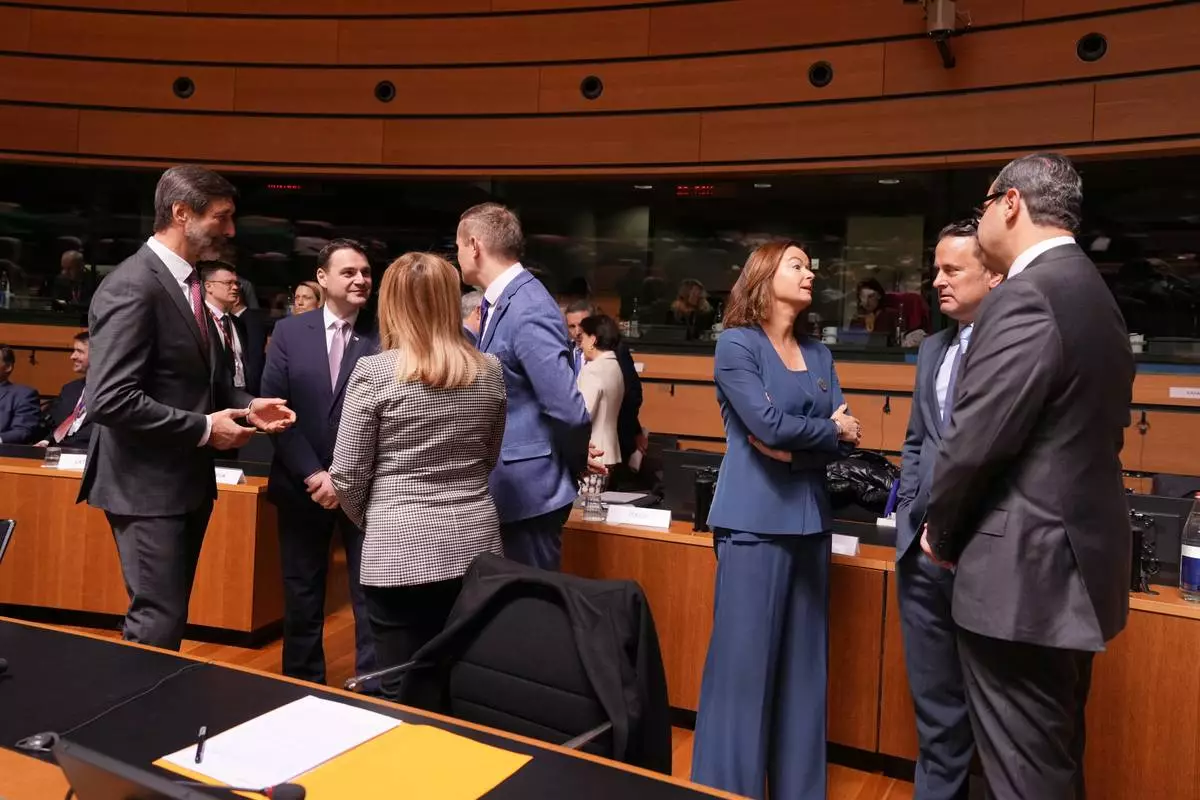
Slovenia's Foreign Minister Tanja Fajon, third right, speaks with Cypriot Foreign Minister Constantinos Kombos, right, and Luxembourg's Foreign Minister Xavier Bettel, second right, during a meeting of EU foreign ministers at the European Council building in Luxembourg, Tuesday, April 21, 2026. (AP Photo/Virginia Mayo)
Slovenia's Foreign Minister Tanja Fajon, third right, speaks with Cypriot Foreign Minister Constantinos Kombos, right, and Luxembourg's Foreign Minister Xavier Bettel, second right, during a meeting of EU foreign ministers at the European Council building in Luxembourg, Tuesday, April 21, 2026. (AP Photo/Virginia Mayo)

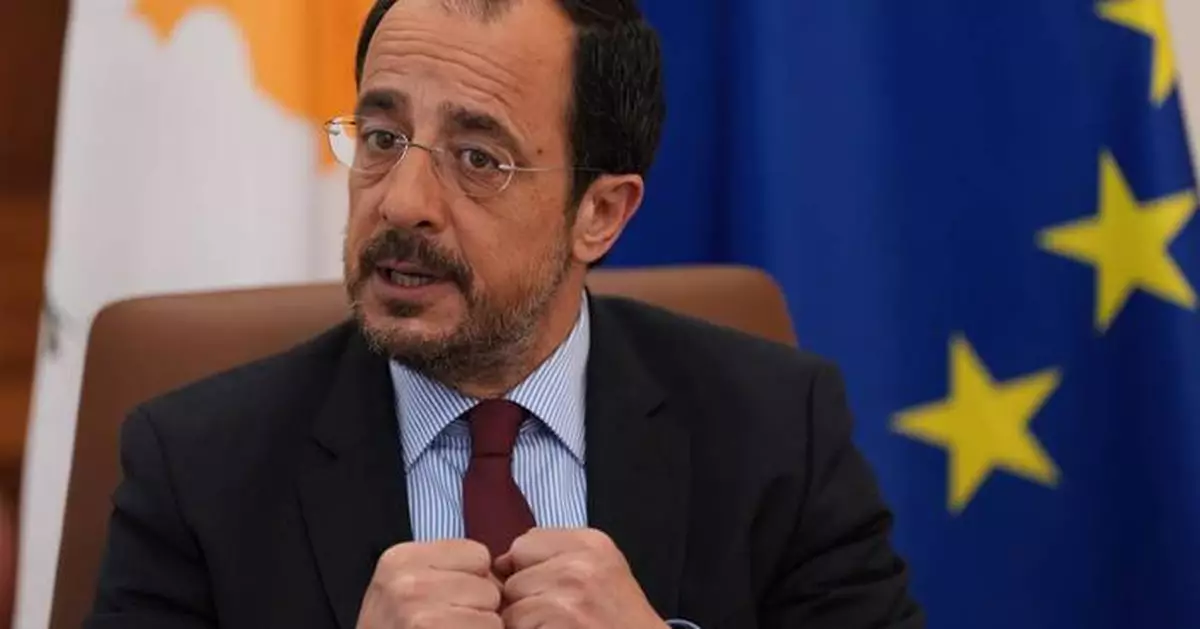
Cypriot President Nikos Christodoulides gestures as he speaks during an Associated Press interview ahead of this week's major EU-Middle East summit, at the presidential palace in the capital Nicosia, Cyprus, Tuesday, April 21, 2026. (AP Photo/Petros Karadjias)

Cypriot President Nikos Christodoulides gestures as he speaks during an Associated Press interview ahead of this week's major EU-Middle East summit, at the presidential palace in the capital Nicosia, Cyprus, Tuesday, April 21, 2026. (AP Photo/Petros Karadjias)
BRATISLAVA, Slovakia (AP) — The flow of Russian oil to Slovakia through the Druzhba pipeline that crosses Ukraine has resumed, Slovak Economy Minister Denisa Saková said Thursday, a breakthrough in an issue that has caused a major diplomatic spat in Europe.

The development is expected to unblock a large financial assistance package for war-ravaged Ukraine.

Populist Slovak Prime Minister Robert Fico welcomed the development, calling it “good news.”

“Let’s hope a serious relation between Ukraine and the European Union has been established,” Fico said. He thanked all those involved in solving the issue, including the European Commission and Hungary.

Hungary and Slovakia were locked in a feud with Ukraine since Russian oil deliveries to Hungary and Slovakia through the pipeline were halted in January after the pipeline was damaged.

Ukrainian officials blamed the damage on Russian drone attacks.

Hungary’s nationalist Prime Minister Viktor Orbán, who was recently defeated in an election, accused Ukraine of deliberately delaying repairs — an allegation that Ukrainian President Volodymyr Zelenskyy denied.

Fico said Thursday he still didn’t believe the pipeline was damaged at all and alleged that the pipeline and oil “were used in the current geopolitical battle.”

Ukraine and most of its European backers oppose imports of Russian oil which have helped to fund Russian President Vladimir Putin’s war against Ukraine, now in its fifth year. But unlike the rest of the European Union, Hungary and Slovakia still depend on Russia for their energy needs.

For two months, the two countries have accused Ukraine of failing to repair the damaged pipeline. Citing the issue, Hungary blocked a massive EU loan to Ukraine while Slovakia refused to endorse new sanctions against Russia until the supplies resumed.

The flow resumed after three months at 2 a.m. Thursday, the Slovak economy ministry said, lifting a major obstacle to approving the EU funds for Ukraine later Thursday, just as EU leaders gather for a summit in Cyprus.

Ukraine desperately needs the 90 billion euro ($106 billion) loan package, originally agreed in December, to prop up its war-ravaged economy and help keep Russian forces at bay for the next two years.

The 27-nation EU had originally intended to use frozen Russian assets as collateral for the loan. But that option was blocked by Belgium, where the bulk of the frozen assets are held.

In December, the Czech Republic, Hungary and Slovakia agreed not to stop their EU partners from borrowing the money on international markets as long as the three countries did not have to take part in the scheme.

But Orbán, who has repeatedly blocked EU aid to Ukraine, angered the other 24 countries by later reneging on that deal over the pipeline dispute and as campaigning heated up ahead of the April 12 election that he lost in a landslide.

The EU has also been trying since February to push through a new raft of sanctions against Russia, which Hungary and Slovakia have blocked due to the oil feud.

Fico said he expected both issues to be solved on Thursday.

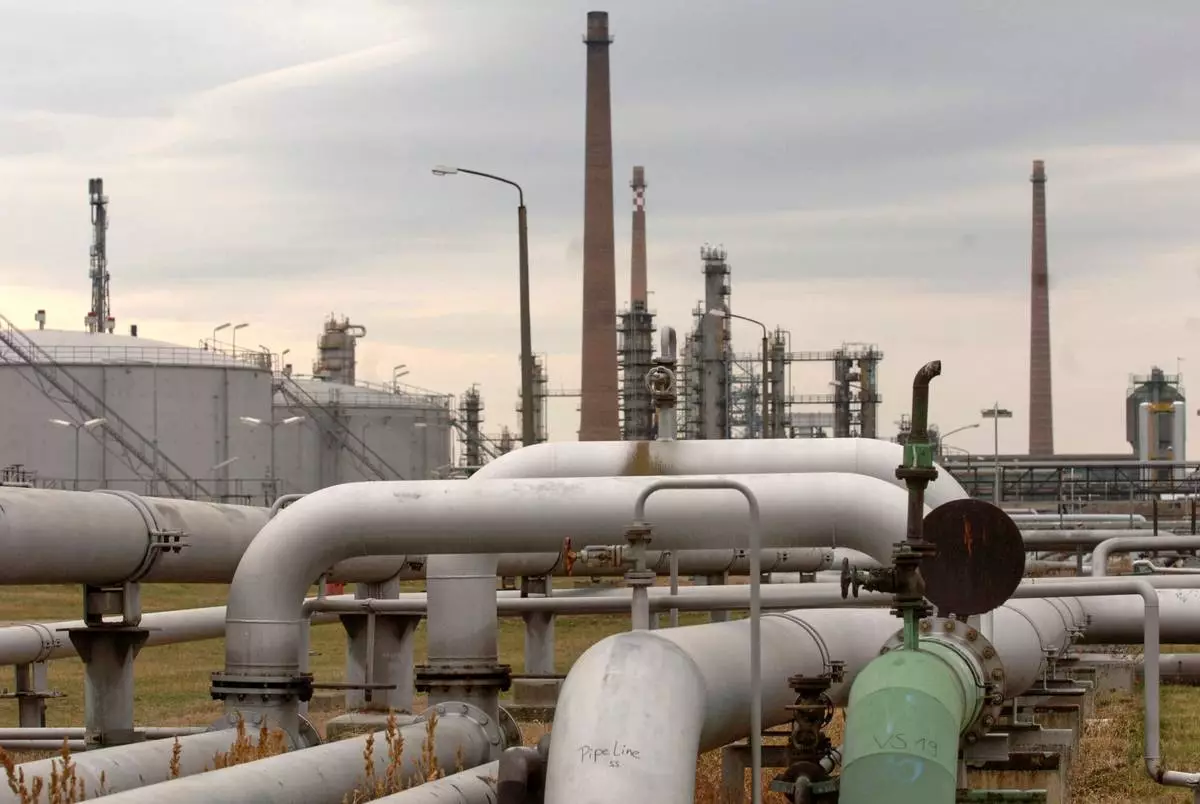
FILE - A general view of a pumping station at the end of the Druzhba oil pipeline in the east German refinery PCK in Schwedt, Jan. 10, 2007. (AP Photo/Sven Kaestner, File)

FILE - A general view of a pumping station at the end of the Druzhba oil pipeline in the east German refinery PCK in Schwedt, Jan. 10, 2007. (AP Photo/Sven Kaestner, File)

Recommended Articles