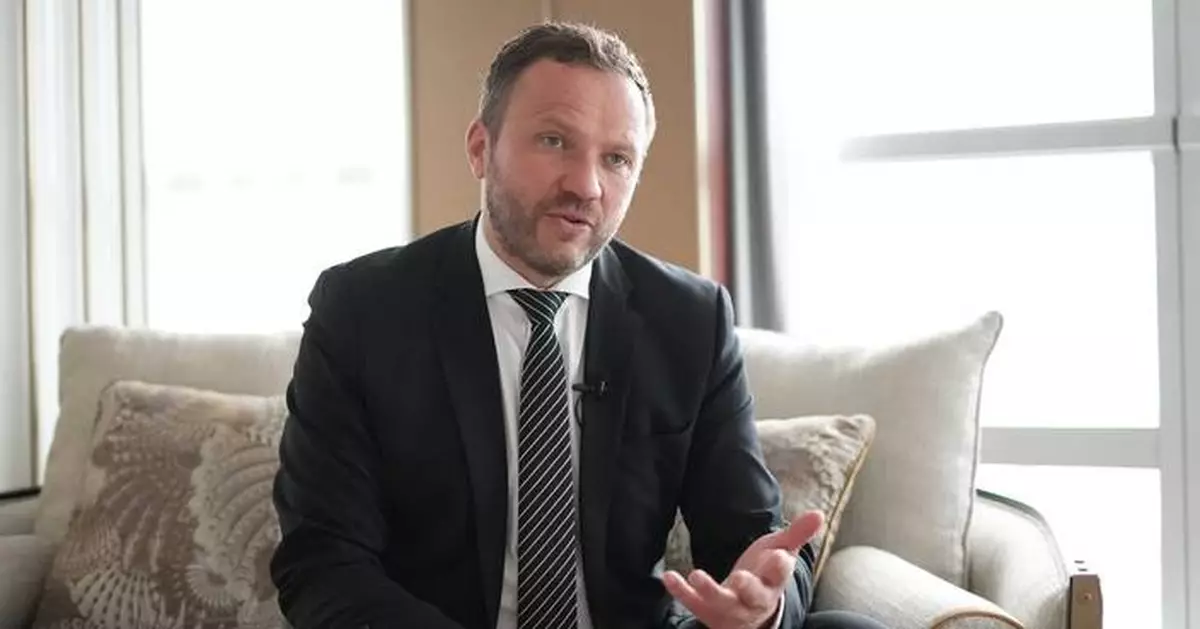
HANOI, Vietnam (AP) — Estonia’s Foreign Minister Margus Tsahkna met Vietnamese Prime Minister Le Minh Hung on Wednesday and said his country aims to deepen cooperation with Vietnam in trade, technology and digital transformation.
Relations between Vietnam and Estonia have accelerated in recent years and the two countries signed agreements on digital cooperation in 2025.
Estonia’s GDP accounts for just 0.2% of the European Union’s total, but it punches above its weight in digital expertise and e-governance innovation. It is offering that expertise to Vietnam as the Southeast Asian export powerhouse pursues reforms aimed at making it a high-income economy by 2045.
Cooperation on digitalization of services could help Vietnam reduce bureaucracy, improve transparency and lower costs, Tashkna said.
“It is much more quicker for citizens to be part of public sector services,” he told The Associated Press in Hanoi, adding that Vietnam had proposed an education cooperation agreement.
Hung, the prime minister, asked Estonia to urge the European Union to ratify an Investment Protection Agreement and support efforts to lift the European Commission’s “yellow card” that restricts imports of Vietnamese seafood exports for illegal fishing, said state media.
Tsahkna said Estonia could serve as a gateway for Vietnamese businesses to Europe, while Vietnam offers Estonia a larger market and a foothold in Southeast Asia.
“For us, Vietnam is one of the priority countries in the region,” he said.
He said the meetings in Vietnam were also an opportunity to convey Europe’s view of why it sees Russia as an “existential threat.”
Hanoi and Moscow have had diplomatic relations since 1950 and Vietnam has maintained a neutral stance regarding the war in Ukraine, advocating peace but avoiding direct criticism of Russia.
Tashkna said Estonia's outreach to Vietnam and Southeast Asia is driven by geopolitical pressures and economic opportunity, as U.S. President Donald Trump’s criticism of European defense spending and tariff tensions compel Europe to look outward.
__
The Associated Press’ climate and environmental coverage receives financial support from multiple private foundations. AP is solely responsible for all content. Find AP’s standards for working with philanthropies, a list of supporters and funded coverage areas at AP.org.
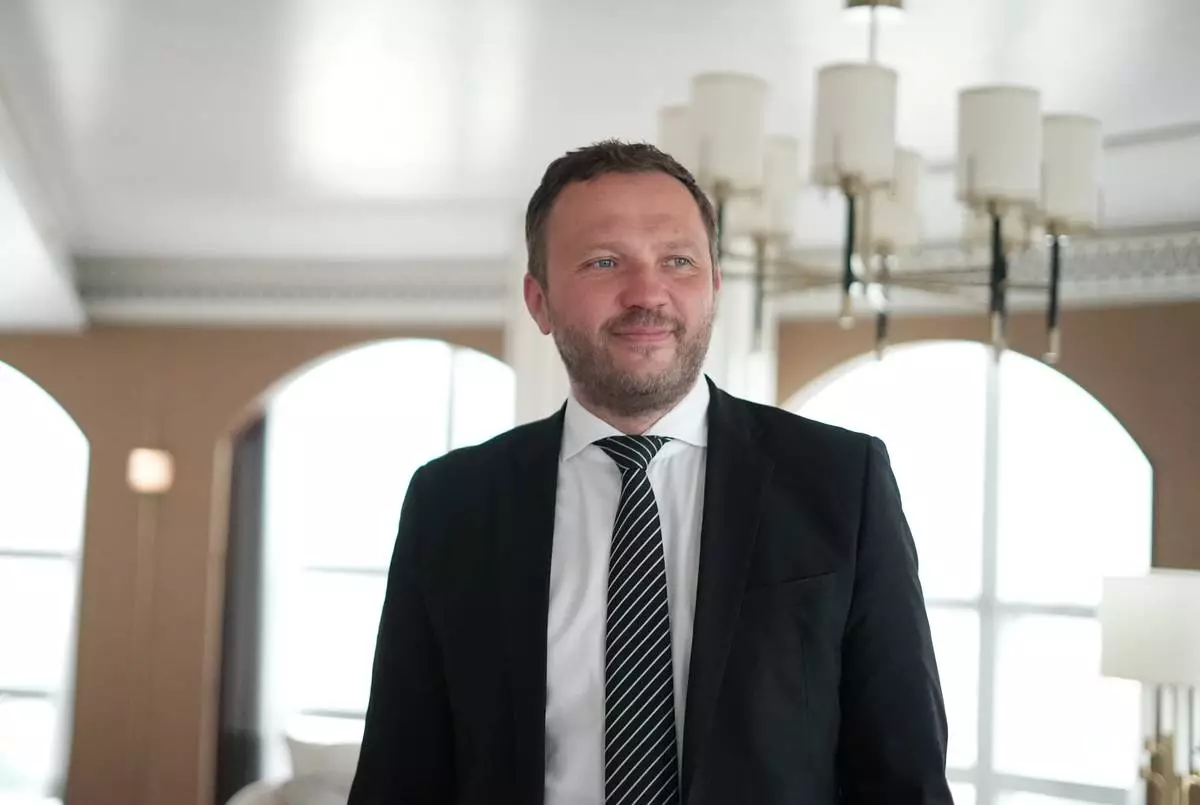
Estonian Foreign Minister Margus Tsahkna during an interview with The Associated Press in Hanoi, Vietnam, Thursday, April 23, 2026. (AP Photo/Hau Dinh)
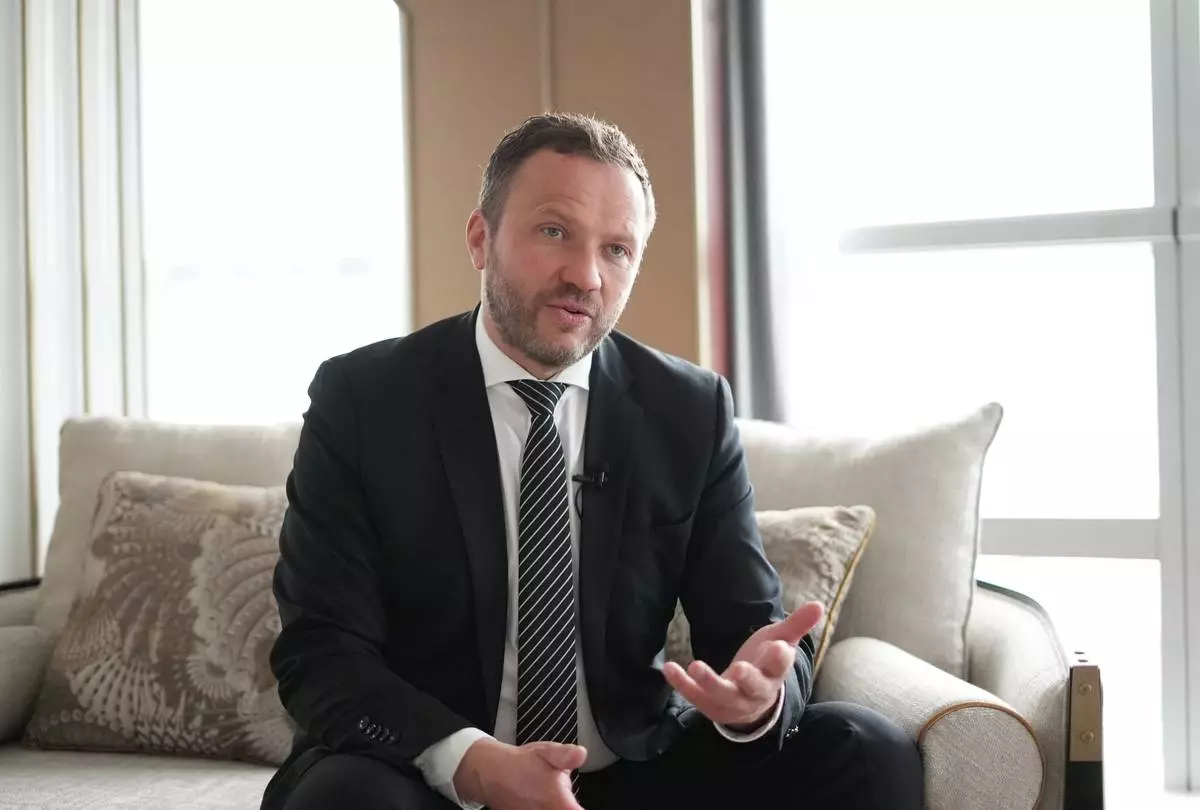
Estonian Foreign Minister Margus Tsahkna speaks during an interview with The Associated Press in Hanoi, Vietnam, Thursday, April 23, 2026. (AP Photo/Hau Dinh)
BRATISLAVA, Slovakia (AP) — The flow of Russian oil to Slovakia through the Druzhba pipeline that crosses Ukraine has resumed, Slovak Economy Minister Denisa Saková said Thursday, a breakthrough in an issue that has caused a major diplomatic spat in Europe.
The development is expected to unblock a large financial assistance package for war-ravaged Ukraine.
Populist Slovak Prime Minister Robert Fico welcomed the development, calling it “good news.”
“Let’s hope a serious relation between Ukraine and the European Union has been established,” Fico said. He thanked all those involved in solving the issue, including the European Commission and Hungary.
Hungary and Slovakia were locked in a feud with Ukraine since Russian oil deliveries to Hungary and Slovakia through the pipeline were halted in January after the pipeline was damaged.
Ukrainian officials blamed the damage on Russian drone attacks.
Hungary’s nationalist Prime Minister Viktor Orbán, who was recently defeated in an election, accused Ukraine of deliberately delaying repairs — an allegation that Ukrainian President Volodymyr Zelenskyy denied.
Fico said Thursday he still didn’t believe the pipeline was damaged at all and alleged that the pipeline and oil “were used in the current geopolitical battle.”
Ukraine and most of its European backers oppose imports of Russian oil which have helped to fund Russian President Vladimir Putin’s war against Ukraine, now in its fifth year. But unlike the rest of the European Union, Hungary and Slovakia still depend on Russia for their energy needs.
For two months, the two countries have accused Ukraine of failing to repair the damaged pipeline. Citing the issue, Hungary blocked a massive EU loan to Ukraine while Slovakia refused to endorse new sanctions against Russia until the supplies resumed.
The flow resumed after three months at 2 a.m. Thursday, the Slovak economy ministry said, lifting a major obstacle to approving the EU funds for Ukraine later Thursday, just as EU leaders gather for a summit in Cyprus.
Ukraine desperately needs the 90 billion euro ($106 billion) loan package, originally agreed in December, to prop up its war-ravaged economy and help keep Russian forces at bay for the next two years.
The 27-nation EU had originally intended to use frozen Russian assets as collateral for the loan. But that option was blocked by Belgium, where the bulk of the frozen assets are held.
In December, the Czech Republic, Hungary and Slovakia agreed not to stop their EU partners from borrowing the money on international markets as long as the three countries did not have to take part in the scheme.
But Orbán, who has repeatedly blocked EU aid to Ukraine, angered the other 24 countries by later reneging on that deal over the pipeline dispute and as campaigning heated up ahead of the April 12 election that he lost in a landslide.
The EU has also been trying since February to push through a new raft of sanctions against Russia, which Hungary and Slovakia have blocked due to the oil feud.
Fico said he expected both issues to be solved on Thursday.
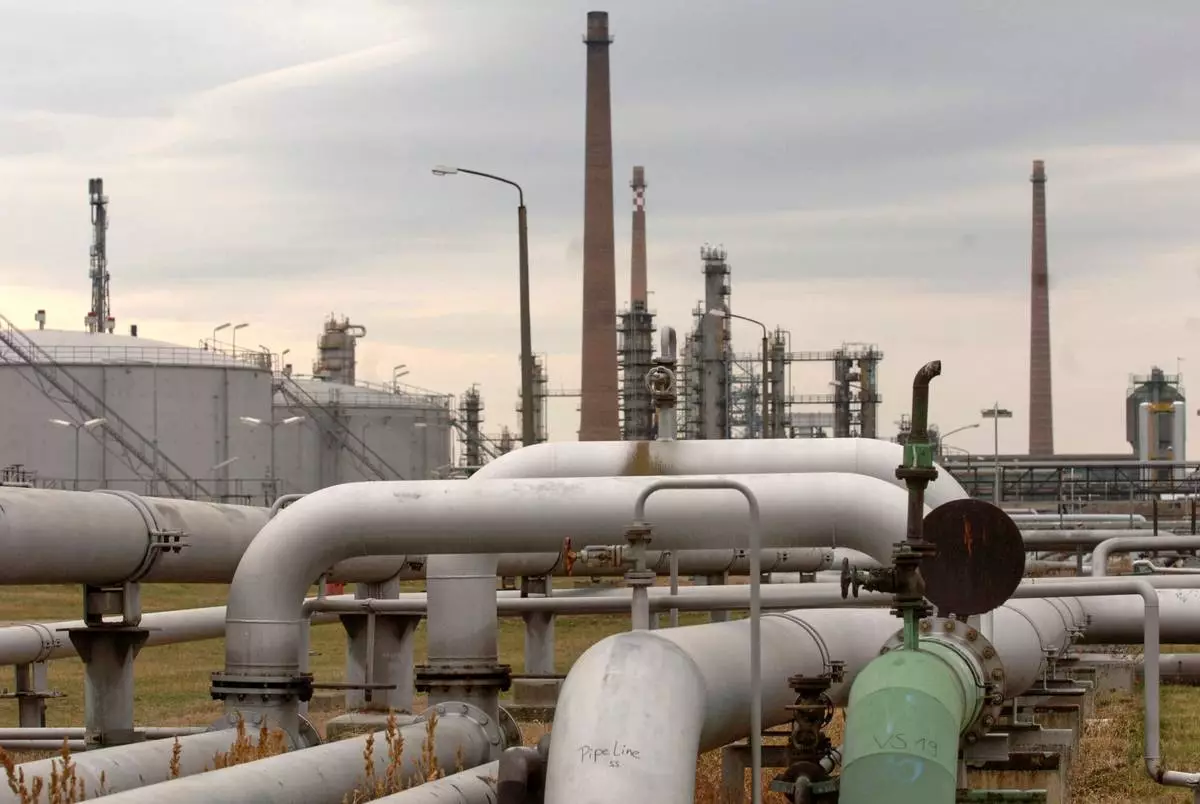
FILE - A general view of a pumping station at the end of the Druzhba oil pipeline in the east German refinery PCK in Schwedt, Jan. 10, 2007. (AP Photo/Sven Kaestner, File)