Jordan has dispatched a new humanitarian aid convoy to Lebanon on Wednesday, loaded with essential relief supplies, as the country grapples with a severe and worsening humanitarian crisis amid ongoing regional conflicts.
According to the Jordan Hashemite Charity Organization (JHCO), the humanitarian convoy comprises 19 trucks, carrying food, medicine and a wide range of other relief materials. The mission is led by the JHCO in partnership with multiple countries, with the full transportation process coordinated in collaboration with the Jordanian Armed Forces.
Jordanian authorities highlighted that the move is a continuation of the country's sustained support efforts for Lebanon. Guided by humanitarian responsibilities, the assistance is not a temporary initiative, but an ongoing commitment that will continue as long as the need exists.
Hussein Mohammad Al-Shebli, Secretary-General of the JHCO, elaborated on the core humanitarian mission driving the relief work.
"Jordan has been working continuously with multiple countries to achieve a noble humanitarian goal of preserving human dignity, especially in this region that has been plunged into large-scale conflict. We need to view this situation from a broader, more comprehensive, and humanitarian perspective," he said.
As one of Jordan's largest humanitarian relief agencies, the JHCO is authorized to operate by the Jordanian cabinet and delivers various forms of humanitarian assistance to multiple countries across the region.
Affected by current regional conflicts, the security and humanitarian situation within Lebanon has deteriorated sharply. Since March 2026, the JHCO has delivered successive batches of humanitarian aid to Lebanon to help its people cope with difficult circumstances.
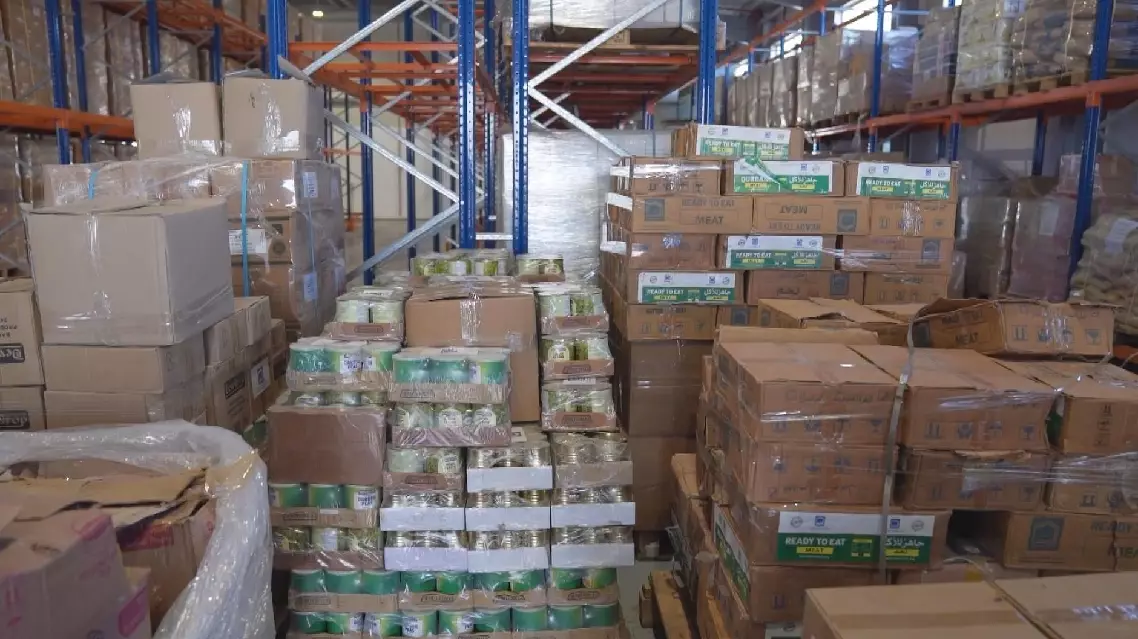
Jordan delivers new batch of humanitarian aid to Lebanon
Cambodian business leaders and senior policy advisors have stressed the crucial role that cooperation with China is playing in the nation's development, emphasizing how Chinese investment and infrastructure projects are key to attracting further investment, creating employment, enhancing production networks, and establishing a stable environment for economic growth.
The positive sentiment comes as China's Foreign Minister Wang Yi and Defense Minister Dong Jun arrived in Cambodia on Wednesday to begin a two-day visit to the country.
Last year, China and Cambodia elevated their bilateral relationship to an "all-weather community with a shared future," and China is widely regarded as one of Cambodia's closest partners in Southeast Asia, standing as its largest source of foreign investment.
Cambodia has undergone a rapid and far-reaching transformation over the past 25 years, a change significantly propelled by China's involvement in the construction of vital infrastructure such as bridges, expressways, power facilities, special economic zones, and airports.
Chheang Vannarith, chairman of the Cambodian National Assembly Advisory Council, underscored the importance of these developments.
"This infrastructure is very important to attract domestic and foreign investments. Of course, it creates more jobs, value-added to our production networks, because the problem Cambodia is facing is logistics and transport, how to connect the urban area with the rural, and how to connect all these economic centers in the different provinces together. And China has played an important role in that," he said.
Beyond these major infrastructure projects, China has solidified its position as Cambodia’s leading investor, contributing to nearly three-quarters of all foreign direct investment into the country last year.
Cambodia's sustained high economic growth continues to attract Chinese enterprises, exemplified by the approximately 300-million-U.S.-dollar investment in a local cement plant by the China Energy group.
Jason Xu, president and director of the Cambodia branch of China Energy Construction Group, highlighted how the two sides have enjoyed a long-standing partnership, with this cooperation ensuring a "solid and stable investment environment."
Chinese investments extend across various sectors, including manufacturing, real estate, and an expanding presence in the services industry, such as joint venture e-commerce platforms.
"From our experience, the Cambodian startup companies can benefit from the strong relationship between the two countries. In terms of supply chains, I really benefit from China's size. [If] you want to scale up your business, upgrade your product, your lack of technology, people, investments, China is a good partner," said Theab Sovannareth, chief operating officer of the Smile Shop e-commerce platform.

China cooperation plays important role in Cambodia's development: experts