Skip to Content Facebook Feature Image

UK and French governments sign a 3-year deal to curb migrant crossings in English Channel

News

UK and French governments sign a 3-year deal to curb migrant crossings in English Channel
News

News

UK and French governments sign a 3-year deal to curb migrant crossings in English Channel

2026-04-23 23:51 Last Updated At:04-24 00:00

ZUYDCOOTE, France (AP) — The U.K. and French governments signed a new multimillion-euro deal on Thursday aimed at reducing the number of migrants crossing the English Channel in small boats, with increased police patrols and enhanced surveillance in northern France.

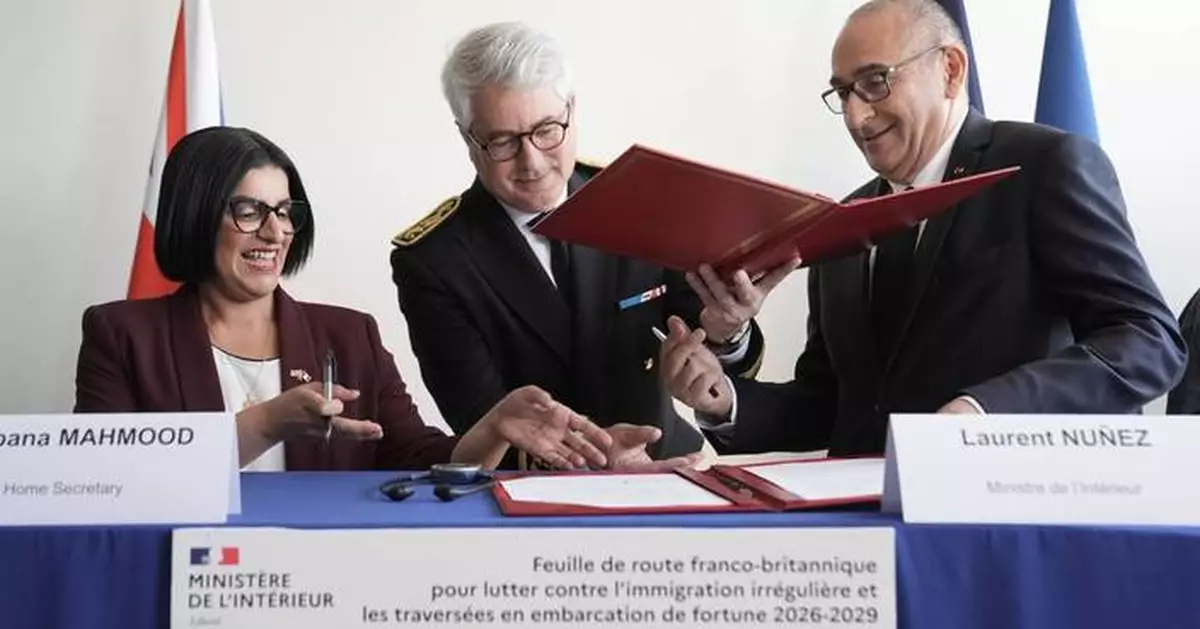
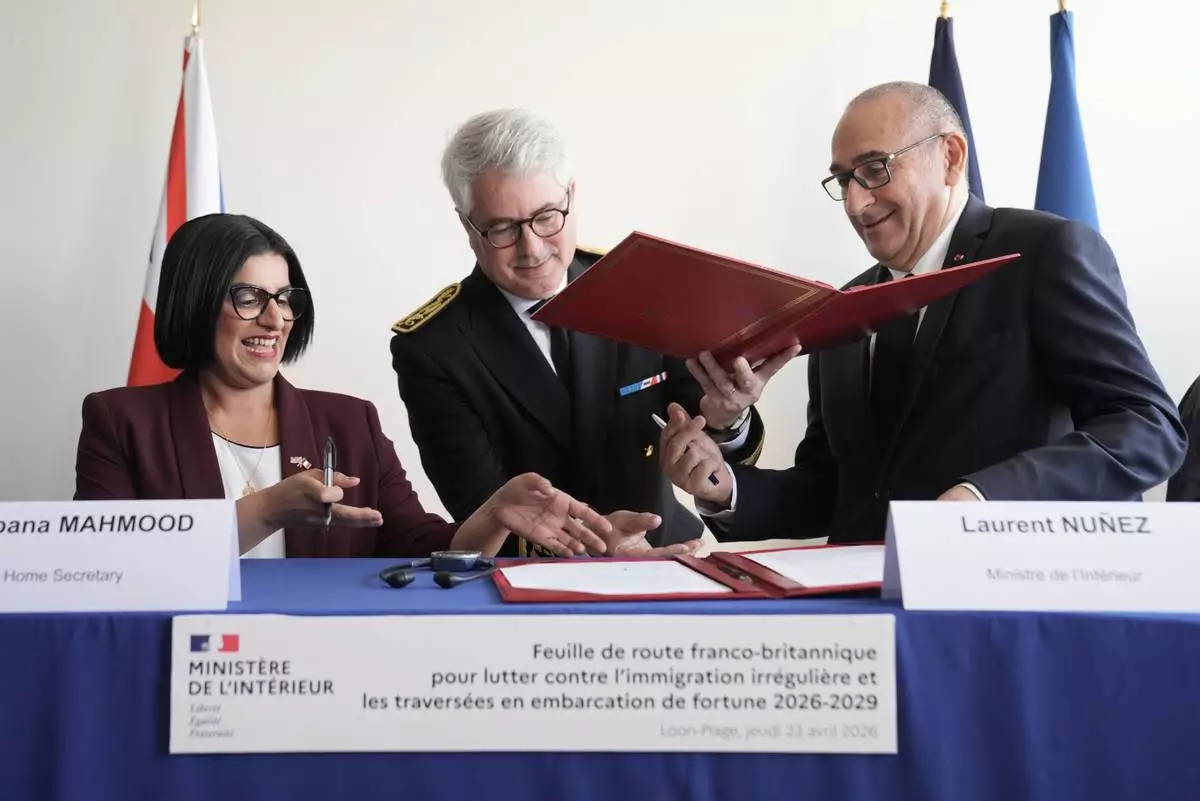
U.K. Home Secretary Shabana Mahmood and French Interior Minister Laurent Nuñez formally endorsed the three-year agreement during a joint visit to the Dunkirk region.

More Images
Britain's Home Secretary Shabana Mahmood, left, signs an agreement with France's Interior Minister Laurent Nunez during her visit in Dunkirk, France, Thursday April 23, 2026. (Stefan Rousseau/Pool Photo via AP)
Britain's Home Secretary Shabana Mahmood, left, signs an agreement with France's Interior Minister Laurent Nunez during her visit in Dunkirk, France, Thursday April 23, 2026. (Stefan Rousseau/Pool Photo via AP)

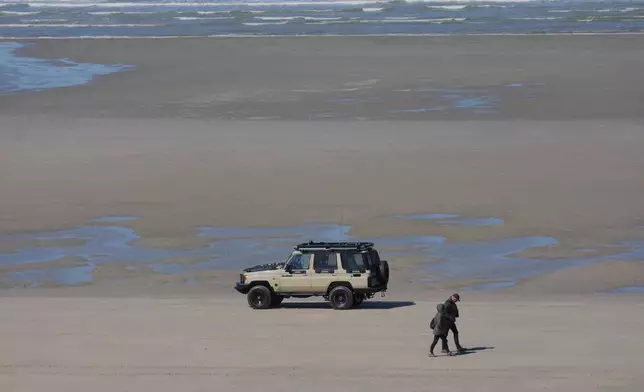
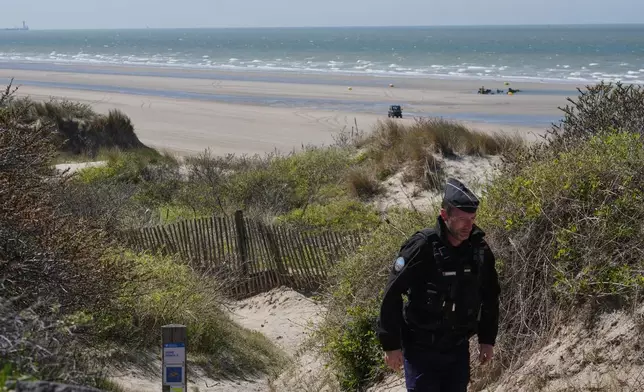
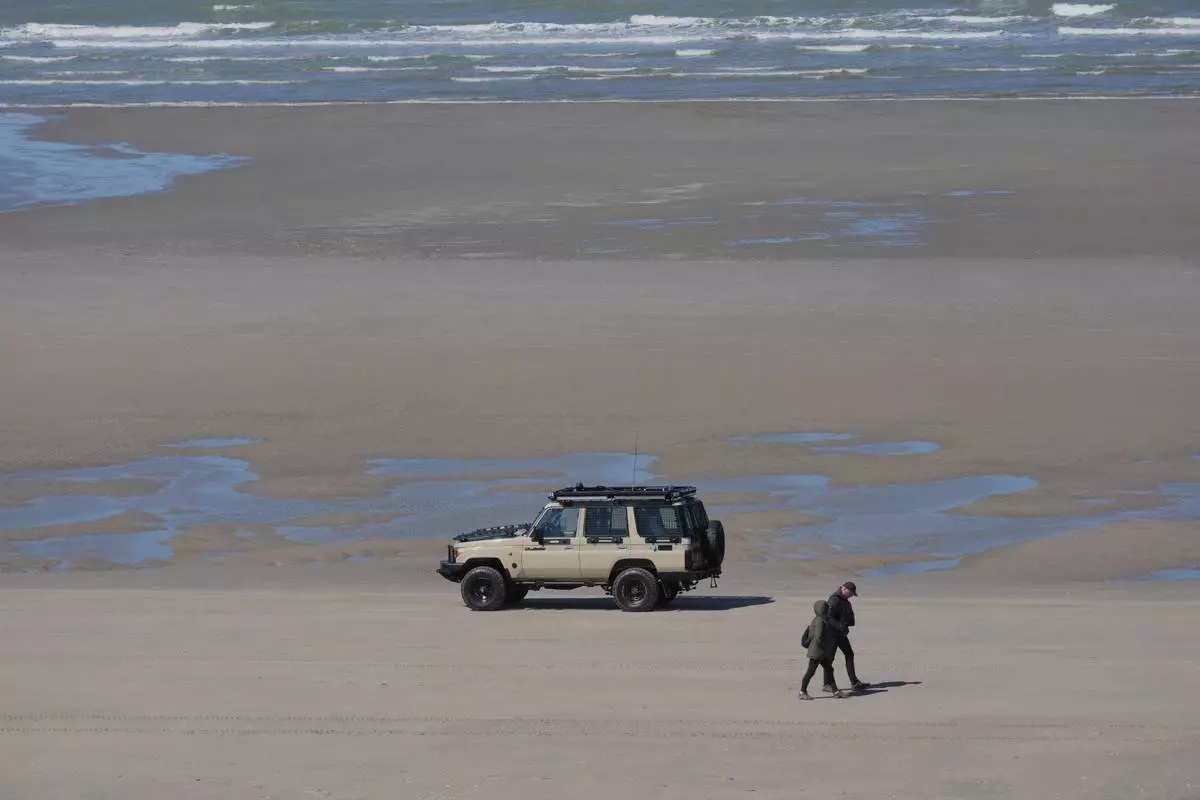
A French police car patrols on the beach of Zuydcoote, near Dunkirk, northern France, Thursday, April 23, 2026. (AP Photo/Michel Euler)
A French police car patrols on the beach of Zuydcoote, near Dunkirk, northern France, Thursday, April 23, 2026. (AP Photo/Michel Euler)

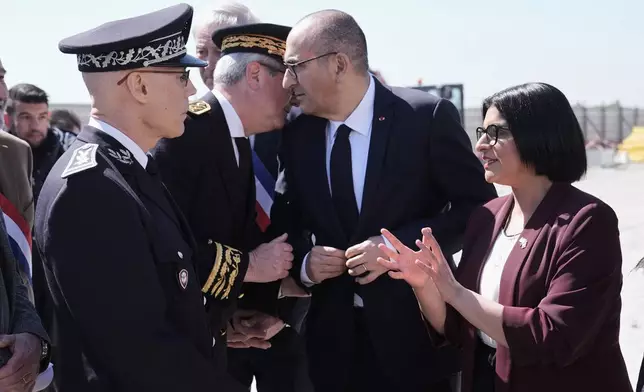
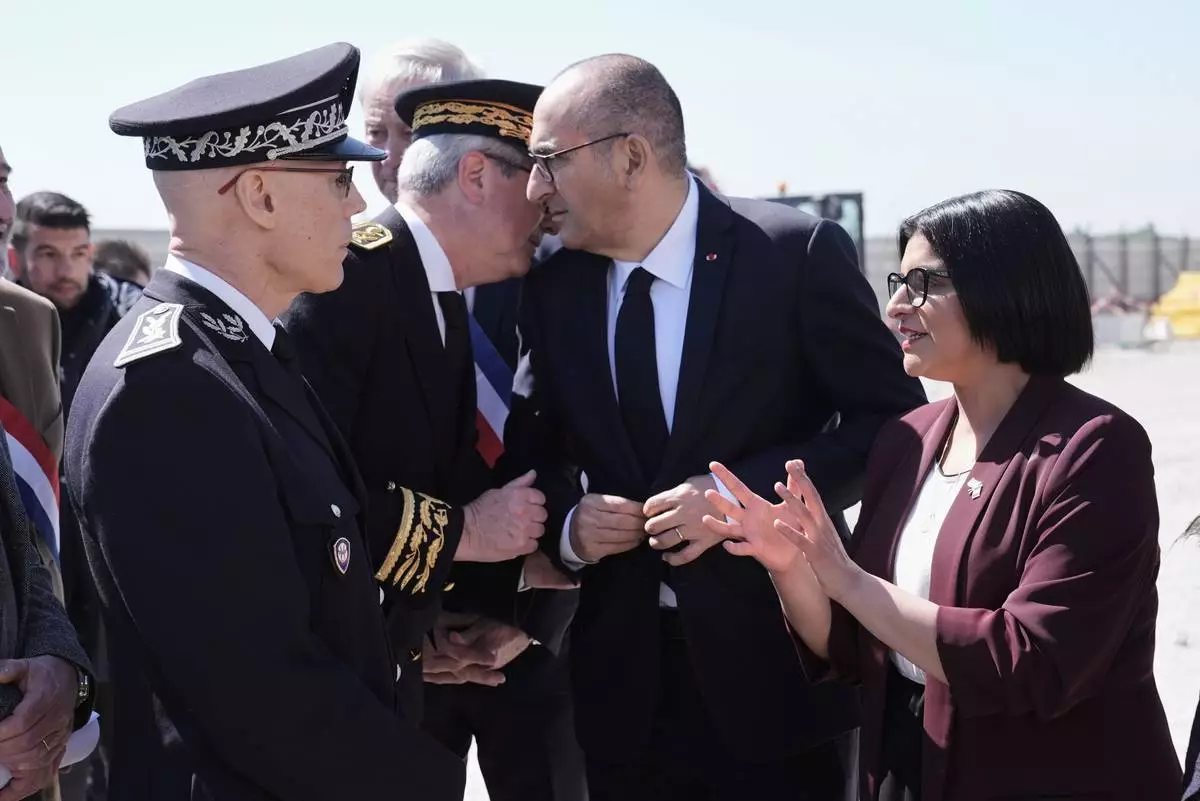
Britain's Home Secretary Shabana Mahmood, right, meets French police officers with France's Interior Minister Laurent Nunez on the site of a new detention centre that is being built in Dunkirk, France, Thursday April 23, 2026. (Stefan Rousseau/Pool Photo via AP)
Britain's Home Secretary Shabana Mahmood, right, meets French police officers with France's Interior Minister Laurent Nunez on the site of a new detention centre that is being built in Dunkirk, France, Thursday April 23, 2026. (Stefan Rousseau/Pool Photo via AP)

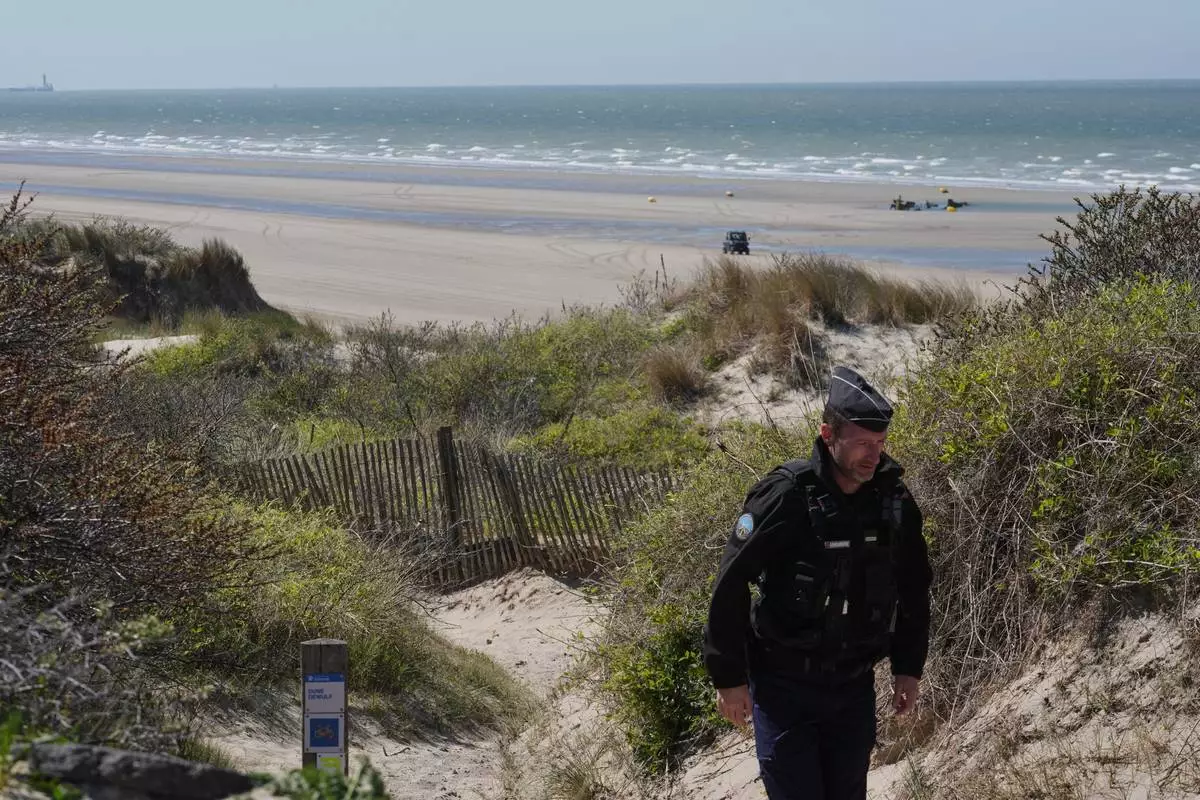
A French police officer walks on the beach of Zuydcoote, near Dunkirk, northern France, Thursday, April 23, 2026. (AP Photo/Michel Euler)

A French police officer walks on the beach of Zuydcoote, near Dunkirk, northern France, Thursday, April 23, 2026. (AP Photo/Michel Euler)

Britain's Home Secretary Shabana Mahmood, left, signs an agreement with France's Interior Minister Laurent Nunez during her visit in Dunkirk, France, Thursday April 23, 2026. (Stefan Rousseau/Pool Photo via AP)

Britain's Home Secretary Shabana Mahmood, left, signs an agreement with France's Interior Minister Laurent Nunez during her visit in Dunkirk, France, Thursday April 23, 2026. (Stefan Rousseau/Pool Photo via AP)

Mahmood praised the new deal as providing “the right mix of skills and capabilities that we know will work on the beaches in order to reduce the crossings.”

Nuñez said that it will help in “combating illegal immigration networks, human trafficking networks, which are obviously extremely harmful.”

Under the agreement, the U.K. will provide 500 million pounds ($675 million) to strengthen measures in northern France, with an additional 160 million pounds ($216 million) depending on the success of new tactics to curb Channel crossings. If those efforts fail, the additional funding will be halted after one year, the U.K. Home Office said.

The plan aims at increasing the number of officers deployed on the ground from 907 now to 1,392 for the 2026—2029 period, along with the creation of an additional police unit dedicated to combating irregular migration, funded by France, the French Interior Ministry said.

It will also include the deployment of new technologies aimed at reducing departures of “taxi boats,” the term authorities use for small motorized vessels that are typically inflatable and used by smugglers to pick up migrants along long stretches of the northern French coast.

Unlike boats that migrants carry into the water themselves, “taxi boats” typically set off largely empty from secluded coastal areas and pick up migrants at prearranged meeting points on beaches.

The deal also expands surveillance capabilities through drones, helicopters and electronic monitoring, to better prevent crossing attempts.

“Our work with the French has already stopped tens of thousands of crossings and this government has deported or returned nearly 60,000 people with no right to be here,” U.K. Prime Minister Keir Starmer said.

Since taking office nearly two years ago, Starmer’s center-left Labour government has pushed through a series of policies that it hopes will sharply reduce immigration.

Small boat crossings have become a potent political issue in the U.K. over recent years. Anger at the seeming inability of successive governments to get a handle on the issue has been behind a series of demonstrations and riots over the past few years and fueled the rise of the hard-right Reform UK party, which has been leading in opinion polls for more than a year and is predicted to make sweeping gains in a raft of elections on May 7.

Under the measures adopted, the government now has powers to seize the assets of people smugglers, beefed up U.K. border surveillance and increased law enforcement cooperation with France and other countries to disrupt the journey.

It’s unclear whether the policies are working.

So far this year, more than 6,000 migrants have reached the U.K. after crossing the Channel, down 36% from the same period last year, a drop that may partly reflect more unsettled weather.

The real evidence will emerge over the coming months as the weather turns warmer and the Channel turns less choppy. In 2025, a total of 41,472 people made the crossing that way — the second-highest annual figure since records began in 2018, after a peak of 45,755 in 2022.

Police operations led to the arrest of 480 smugglers last year, the French Interior Ministry said.

A large share of the resources provided under the new deal will be deployed from the early summer.

Nicolas Laroye, representative of the police union UNSA in the Dunkirk region, said that additional staffing and increased capabilities will support police efforts in their complex mission to monitor more than 200 kilometers (around 125 miles) of coast along the Channel.

British-financed measures in recent years had a major impact on the ground, Laroye said.

“We’re intercepting many people before they go on the beaches to prevent them to get on boats,” he said.

Drones especially have become a key tool to monitor the vast stretches of sand dunes where migrants hide overnight before crossing attempts, he said.

Earlier this month, two men and two women died as they were trying to board an inflatable boat off the coast of northern France. British authorities arrested a man from Sudan on Friday on suspicion of endangering life in that case.

The week before, two other people died in similar circumstances off the coast north of Calais.

Critics say that the new deal, which builds on the Sandhurst Treaty, first signed in 2018 and renewed in 2023, isn't addressing the underlying issue.

“Policing alone will not prevent desperate people from turning to dangerous small boats in the first place,” said Imran Hussain from the Refugee Council, a U.K. charity that aims to promote the rights of refugees.

Campaign groups for migrant rights have long warned that increasingly vigorous efforts by French police to prevent boat departures from beaches, including using knives to hack and puncture inflatable boats to render them unusable, are encouraging the use of “taxi boats,” which increases the risks of drownings, injuries and the need for rescues.

Before this month's deaths, migrant aid group Utopia 56 said that at least 162 people have died at the French-U.K. border over the past three years.

Pan Pylas contributed to this report from London.

Britain's Home Secretary Shabana Mahmood, left, signs an agreement with France's Interior Minister Laurent Nunez during her visit in Dunkirk, France, Thursday April 23, 2026. (Stefan Rousseau/Pool Photo via AP)
Britain's Home Secretary Shabana Mahmood, left, signs an agreement with France's Interior Minister Laurent Nunez during her visit in Dunkirk, France, Thursday April 23, 2026. (Stefan Rousseau/Pool Photo via AP)

A French police car patrols on the beach of Zuydcoote, near Dunkirk, northern France, Thursday, April 23, 2026. (AP Photo/Michel Euler)
A French police car patrols on the beach of Zuydcoote, near Dunkirk, northern France, Thursday, April 23, 2026. (AP Photo/Michel Euler)

Britain's Home Secretary Shabana Mahmood, right, meets French police officers with France's Interior Minister Laurent Nunez on the site of a new detention centre that is being built in Dunkirk, France, Thursday April 23, 2026. (Stefan Rousseau/Pool Photo via AP)
Britain's Home Secretary Shabana Mahmood, right, meets French police officers with France's Interior Minister Laurent Nunez on the site of a new detention centre that is being built in Dunkirk, France, Thursday April 23, 2026. (Stefan Rousseau/Pool Photo via AP)

A French police officer walks on the beach of Zuydcoote, near Dunkirk, northern France, Thursday, April 23, 2026. (AP Photo/Michel Euler)
A French police officer walks on the beach of Zuydcoote, near Dunkirk, northern France, Thursday, April 23, 2026. (AP Photo/Michel Euler)

Britain's Home Secretary Shabana Mahmood, left, signs an agreement with France's Interior Minister Laurent Nunez during her visit in Dunkirk, France, Thursday April 23, 2026. (Stefan Rousseau/Pool Photo via AP)

Britain's Home Secretary Shabana Mahmood, left, signs an agreement with France's Interior Minister Laurent Nunez during her visit in Dunkirk, France, Thursday April 23, 2026. (Stefan Rousseau/Pool Photo via AP)
DUBAI, United Arab Emirates (AP) — President Donald Trump has ordered the U.S. military to “shoot and kill” small Iranian boats that deploy mines in the Strait of Hormuz, he said Thursday, a day after Iran again displayed its ability to thwart traffic through the channel.

Trump’s post on social media came shortly after the U.S. military seized another tanker associated with the smuggling of Iranian oil, ratcheting up a standoff with Tehran over the strait through which 20% of all crude oil and natural gas traded passes.

“I have ordered the United States Navy to shoot and kill any boat, small boats though they may be ... that is putting mines in the waters of the Strait of Hormuz,” Trump posted, adding that U.S. minesweepers "are clearing the Strait right now.”

“I am hereby ordering that activity to continue, but at a tripled up level!” he added.

The Defense Department released video footage earlier Thursday of U.S. forces on the deck of the Guinea-flagged oil tanker Majestic X, which was seized in the Indian Ocean.

The move unfolded a day after Iran’s paramilitary Revolutionary Guards attacked three cargo ships in the strait, capturing two of them, in an assault that raised new concerns about the safety of shipping through the waterway.

The powerful head of Iran’s judiciary, Gholam Hossein Mohseni Ejei, said three “violating ships” in the strait were “subject to enforcement” on Wednesday.

“The show of strength by the armed forces of Islamic Iran in the Strait of Hormuz is a source of pride,” he wrote Thursday on X, claiming that the Americans “lack the courage” to approach the strait.

Ship-tracking data showed the Majestic X in the Indian Ocean between Sri Lanka and Indonesia, roughly the same location as the oil tanker Tifani, which was seized earlier by American forces. It had been bound for Zhoushan, China.

The vessel previously had been named Phonix and had been sanctioned by the U.S. Treasury Department in 2024 for smuggling Iranian crude oil in contravention of U.S. sanctions against the Islamic Republic.

There was no immediate response from Iran about the seizure.

Trump this week extended a ceasefire to give the battered Iranian leadership more time to come up with a “unified proposal” on ending the war, while maintaining an American blockade of Iranian ports.

In a separate post Thursday, Trump claimed a leadership rift between moderates and hardliners was confounding Iran.

“Iran is having a very hard time figuring out who their leader is! They just don’t know!” Trump said.

The president has repeatedly said over the course of the ceasefire that began on April 8 that his team is dealing with Iranian officials who want to make a deal, while acknowledging that his decision to kill several top leaders has come with complications.

Elsewhere on the diplomatic track, Lebanon and Israel were set to hold a second round of talks in Washington to discuss the possibility of extending a truce between Israel and the Hezbollah militant group.

The latest war between Israel and Hezbollah started two days after Israel and the U.S. launched attacks on Iran, after the Tehran-backed militants fired rockets into northern Israel.

In a new show of the fragility of the ceasefire that went into effect Friday in Lebanon, Hezbollah said it attacked Israeli positions in southern Lebanon, targeting Israeli soldiers in the village of Taybeh.

Each side has accused the other of breaching the 10-day truce.

The standoff between the U.S. and Iran has choked off nearly all exports through the strait with no end in sight.

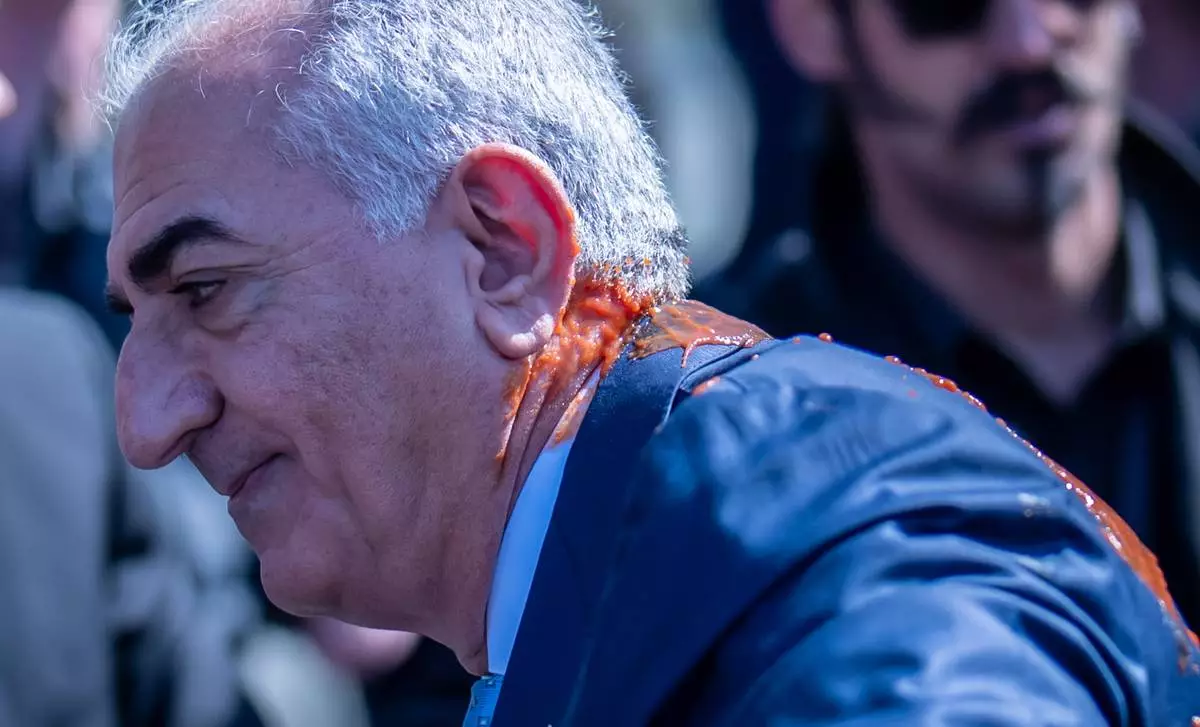
On Thursday, Iran’s exiled Crown Prince Reza Pahlavi was splattered with red liquid as he left a building after a news conference in Berlin. The person believed responsible was immediately detained by police.

During the event, Pahlavi criticized the ceasefire between the U.S. and Iran, arguing that the agreement assumes the Iranian government’s behavior will change and “you’re going to deal with people who all of a sudden have become pragmatists.”

Pahlavi, 65, has been in exile for nearly 50 years. His father, Iran’s shah, was so widely hated that millions took to the streets in 1979, forcing him from power. Nevertheless, Pahlavi is trying to position himself as a player in his country’s future.

Since the Feb. 28 start of the war between Iran, Israel and the United States, over 30 ships have come under attack in the waters of the Persian Gulf, the Strait of Hormuz and the Gulf of Oman.

The threat of attack, rising insurance premiums and other fears have stopped traffic from moving through the strait. Iran’s ability to restrict traffic through the strait, which leads from the Persian Gulf to the open ocean, has proved a major strategic advantage.

Jakob Larsen, the head of maritime security for BIMCO, the largest international association representing shipowners, said in a note Thursday that most shipping companies need a stable ceasefire and assurances from both sides of the conflict that the strait is safe for transit.

The threat of mines, he wrote, was a “particular concern” if traffic might return to normal levels one day.

The ceasefire has been strained by the dueling U.S. attacks on Iranian ships and those by Iran on commercial vessels. It also remains unclear when, or if, the two sides will meet again in the Pakistani capital, Islamabad, where officials say they are still trying to bring the countries together to reach a diplomatic deal.

The conflict already has sent gas prices skyrocketing far beyond the region and raised the cost of food and a wide array of other products. Officials around the world have warned that the effects on businesses, consumers and economies could be long-lasting.

Madhani reported from Washington and Keaten reported from Geneva.

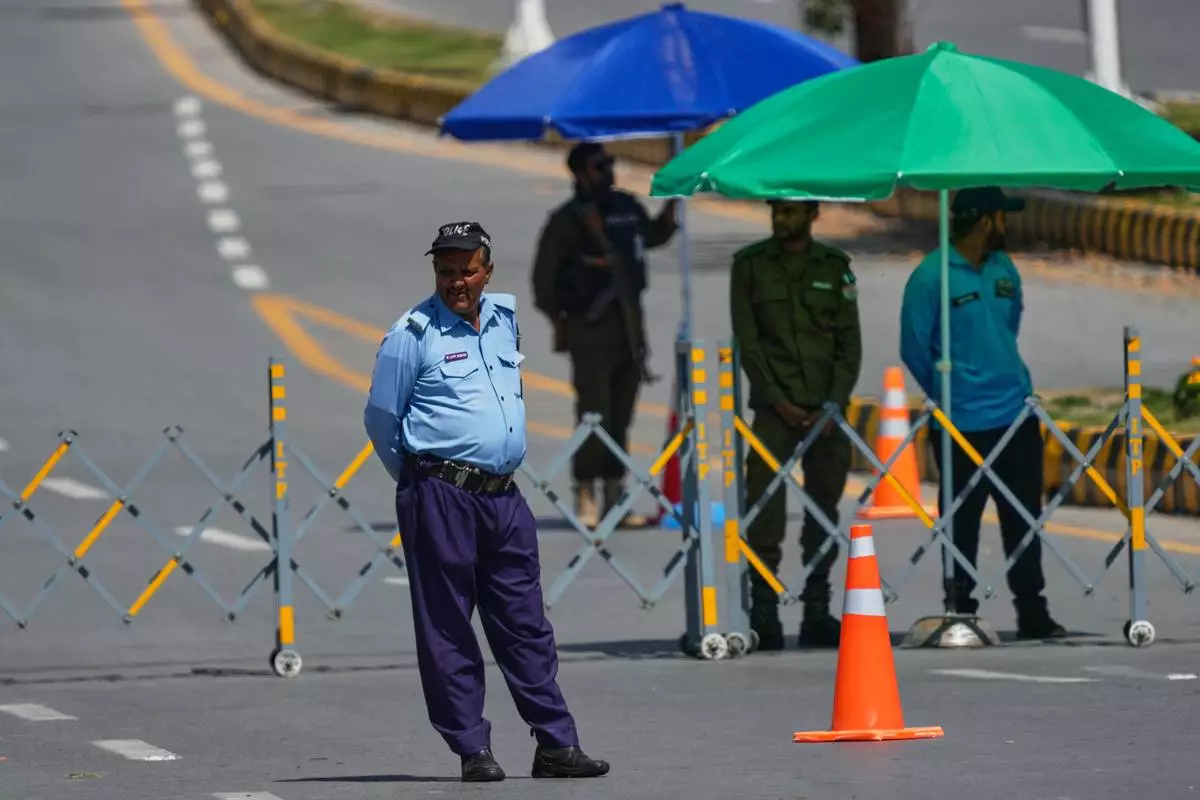
Police officers stand guard at a checkpoint to ensure security in Islamabad, Pakistan, Wednesday, April 22, 2026. (AP Photo/Anjum Naveed)

Police officers stand guard at a checkpoint to ensure security in Islamabad, Pakistan, Wednesday, April 22, 2026. (AP Photo/Anjum Naveed)

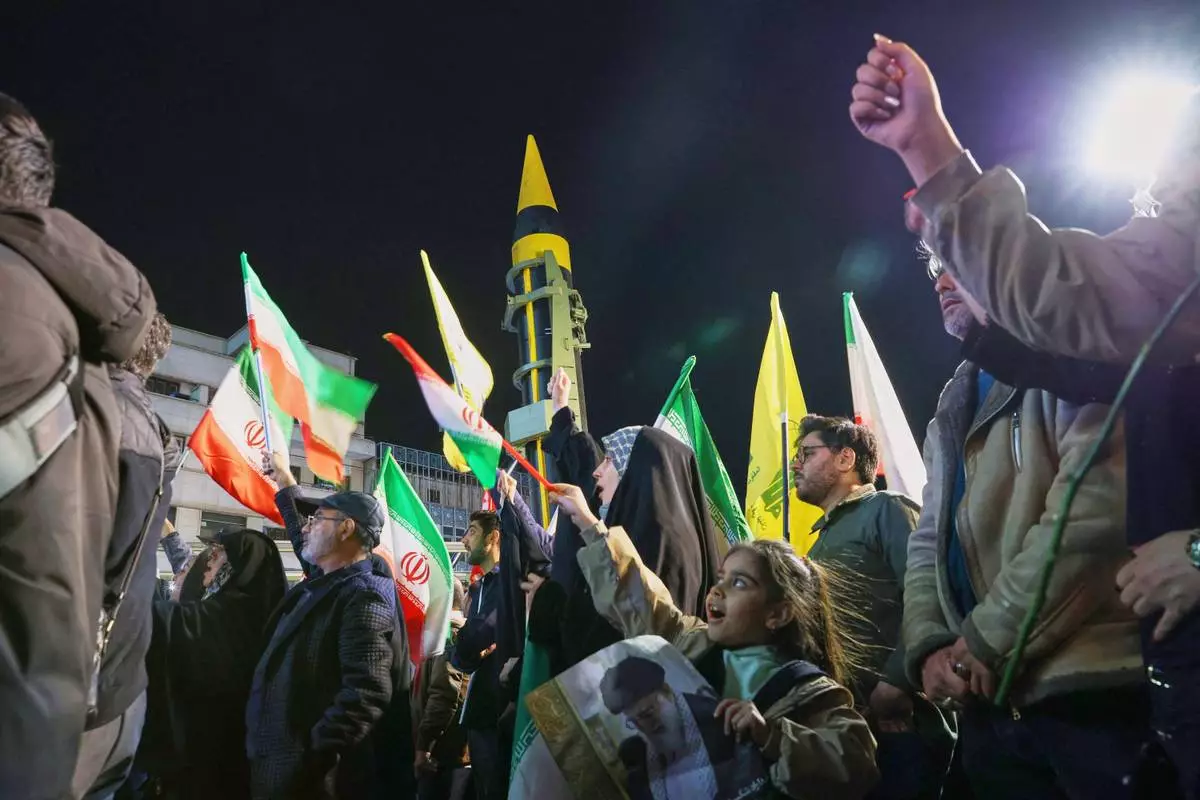
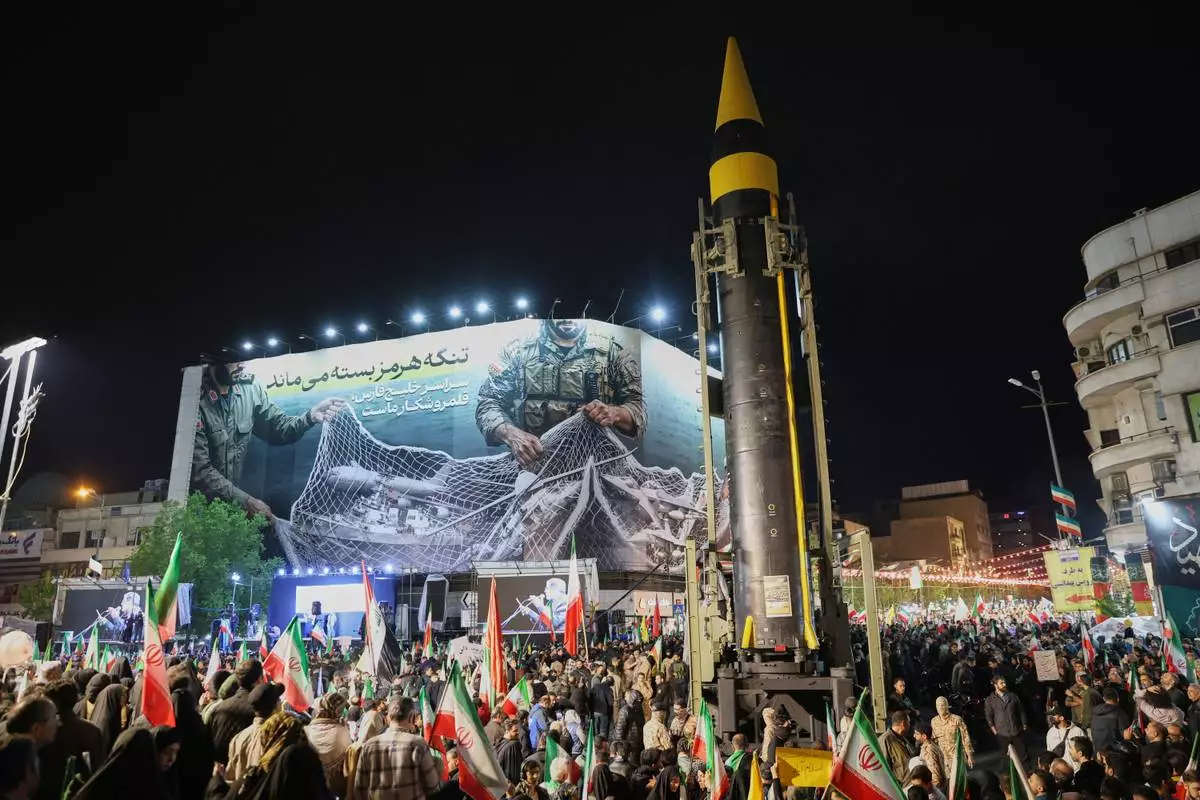
A ballistic missile is displayed by Iran's Revolutionary Guard during a pro-government demonstration at Enqelab-e-Eslami (Islamic Revolution) Square in downtown Tehran, Iran, Tuesday, April 21, 2026. (Alireza Masoumi/ISNA via AP)

A ballistic missile is displayed by Iran's Revolutionary Guard during a pro-government demonstration at Enqelab-e-Eslami (Islamic Revolution) Square in downtown Tehran, Iran, Tuesday, April 21, 2026. (Alireza Masoumi/ISNA via AP)

Iran's Reza Pahlavi, exiled son of Shah Reza Pahlavi, reacts after he was attacked with a red fluid following a news conference in Berlin, Germany, Thursday, April 23, 2026. (Michael Kappeler/dpa via AP)

Iran's Reza Pahlavi, exiled son of Shah Reza Pahlavi, reacts after he was attacked with a red fluid following a news conference in Berlin, Germany, Thursday, April 23, 2026. (Michael Kappeler/dpa via AP)

A ballistic missile is displayed by Iran's Revolutionary Guard during a pro-government demonstration at Enqelab-e-Eslami (Islamic Revolution) Square in downtown Tehran, Iran, Tuesday, April 21, 2026. (Alireza Masoumi/ISNA via AP)

A ballistic missile is displayed by Iran's Revolutionary Guard during a pro-government demonstration at Enqelab-e-Eslami (Islamic Revolution) Square in downtown Tehran, Iran, Tuesday, April 21, 2026. (Alireza Masoumi/ISNA via AP)

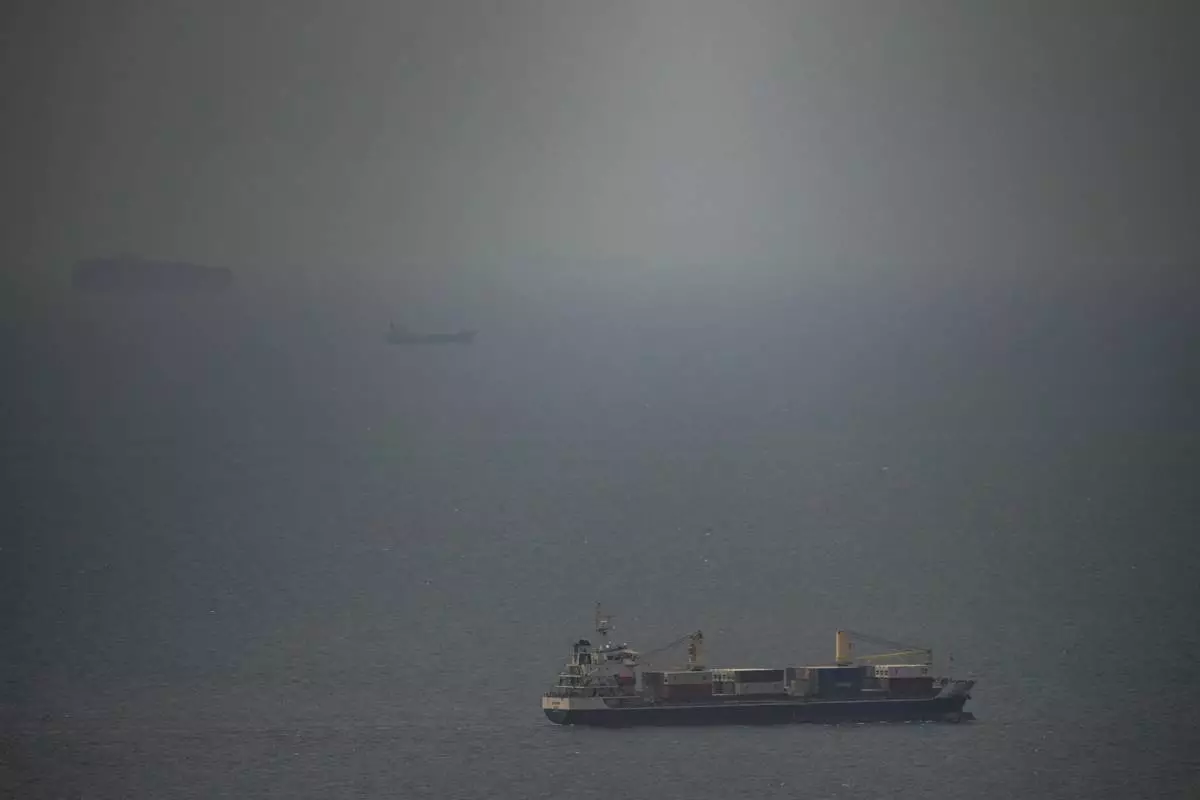
The Jordan flagged cargo ship "Baghdad" sails in Persian Gulf towards Strait of Hormuz in United Arab Emirates, Wednesday, April 22, 2026. (AP Photo)

The Jordan flagged cargo ship "Baghdad" sails in Persian Gulf towards Strait of Hormuz in United Arab Emirates, Wednesday, April 22, 2026. (AP Photo)

Recommended Articles