MALABO, Equatorial Guinea (AP) — Pope Leo XIV wrapped up his African odyssey on Thursday with a final Mass in Equatorial Guinea, bringing to an end one of the newsiest papal trips in the history of popes on the road, thanks to his extraordinary back-and-forth with President Donald Trump.
A powerful rainstorm drenched the Malabo sports stadium and the estimated 30,000 people who gathered before dawn for Leo’s farewell liturgy. But the deluge let up before Leo arrived in his covered popemobile for a romp through the deafening crowd.
Click to Gallery
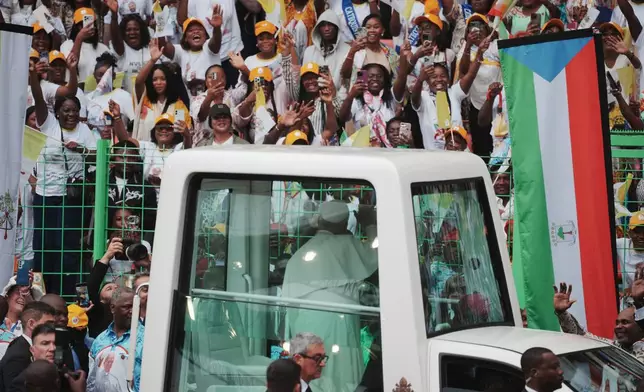
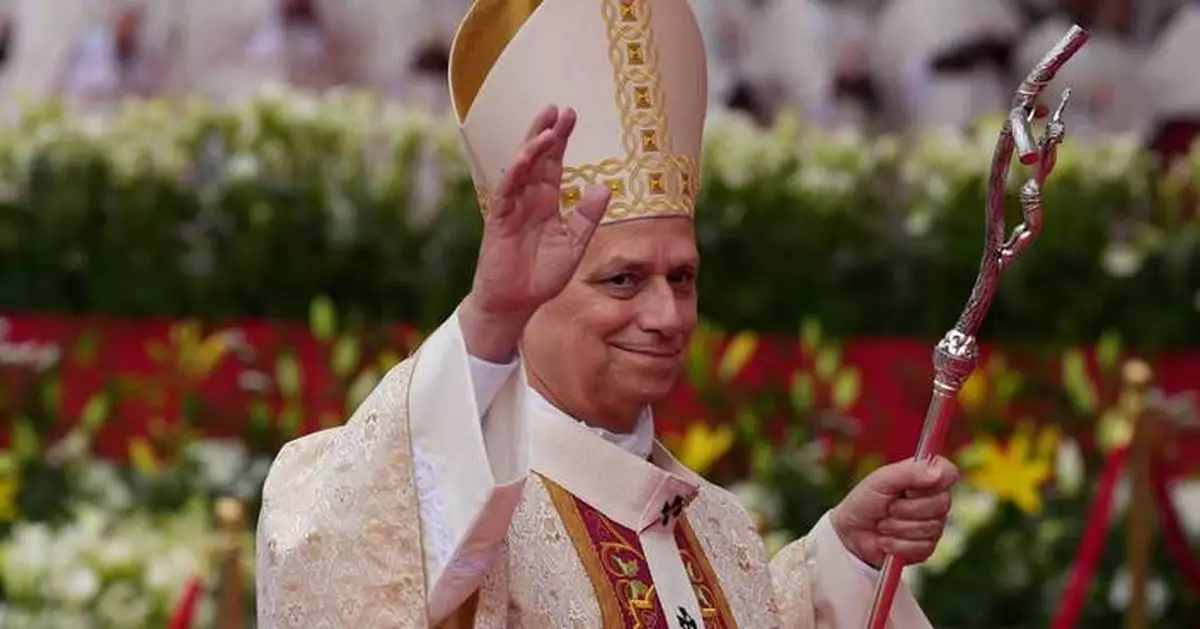
Pope Leo XIV arrives to celebrate the Holy mass at the Malabo stadium, in Malabo, Equatorial Guinea, Thursday, April 23, 2026, on the last day of his 11-day pastoral visit to Africa. (AP Photo/Andrew Medichini)
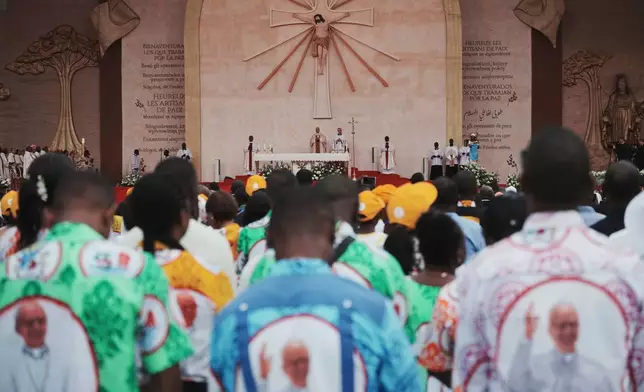
Pope Leo XIV arrives to celebrate the Holy mass at the Malabo stadium, in Malabo, Equatorial Guinea, Thursday, April 23, 2026, on the last day of his 11-day pastoral visit to Africa. (AP Photo/Andrew Medichini)
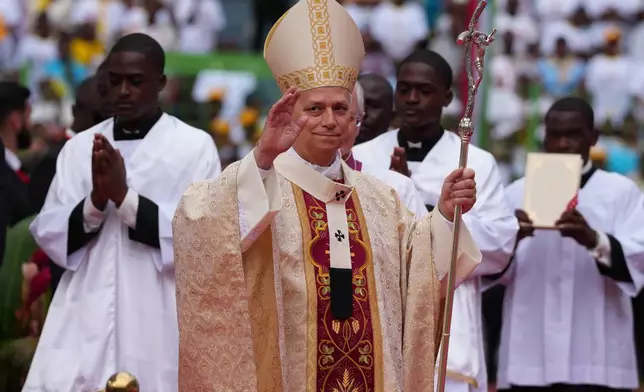
Pope Leo XIV arrives to celebrate the Holy mass at the Malabo stadium, in Malabo, Equatorial Guinea, Thursday, April 23, 2026, on the last day of his 11-day pastoral visit to Africa. (AP Photo/Misper Apawu)
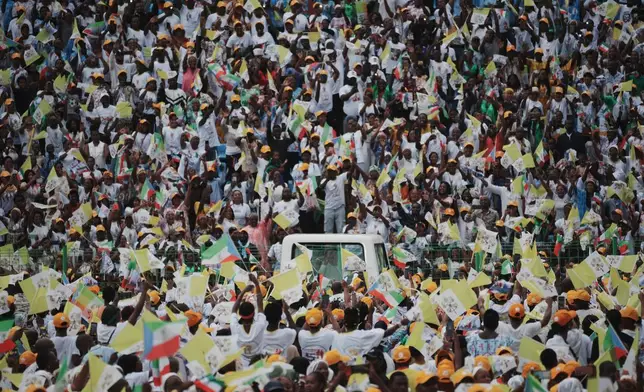
Pope Leo XIV arrives to celebrate the Holy mass at the Malabo stadium, in Malabo, Equatorial Guinea, Thursday, April 23, 2026, on the last day of his 11-day pastoral visit to Africa. (AP Photo/Andrew Medichini)
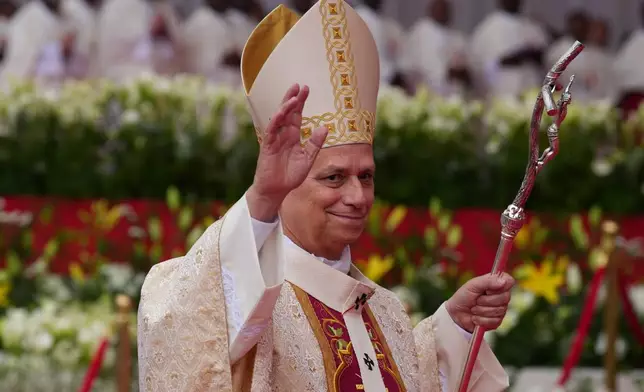
Pope Leo XIV arrives to celebrate the Holy mass at the Malabo stadium, in Malabo, Equatorial Guinea, Thursday, April 23, 2026, on the last day of his 11-day pastoral visit to Africa. (AP Photo/Misper Apawu)
Leo departed for Rome after a farewell ceremony at the Malabo airport, ending an 11-day, four-nation voyage that took him from Algeria in the north of Africa to Angola in the south and Cameroon in between.
Over that time, Leo covered more than 17,700 kilometers (about 11,000 miles) on 18 flights, including three on Wednesday alone that saw him crisscross Equatorial Guinea from the west coast to the far east border with Gabon and back again.
Nearly everywhere Leo went, history’s first U.S. pope received a raucous welcome, especially in the farther away places that had never had a pope visit.
Popes have been traveling the world since Pope Paul VI made the first modern foreign visit in 1964 to Jordan and Israel. But it was St. John Paul II who revolutionized the papacy with his globe-trotting papacy that took him on 104 foreign trips over a quarter century, many with the multination itinerary on which Leo’s trip seemed modeled.
At Leo’s final Mass on Thursday, Michaela Mecha and her sister, Encarnacion, arrived at the Malabo stadium in the downpour at 4 a.m. They were dressed from head to toe in pope-themed attire, complete with yellow umbrellas decorated with Leo’s face.
“We feel very special and blessed that the pope has chosen our country,” said Michaela, who works as a nurse and brought her two young daughters with her. “This visit is bringing young people closer to God.”
In his homily, Leo referred to the April 17 death of the Rev. Fr. Fortunato Nsue Esono Ayíambeng, a member of the committee that organized the trip and the vicar general of Malabo.
“May full light be shed on the circumstances of his death,” Leo said, in apparent reference to rumors that foul play might have been involved.
Few people could have expected that Leo’s trip, his first to Africa as pope, would have played out against Trump’s unprecedented attacks over the Iran war. But the timing was such that Leo was already in the media crosshairs when it began, and the exchange didn’t let up for days.
On Day 1, Leo insisted he was just preaching the Gospel of peace and wasn’t afraid of the Trump administration after Trump accused him of being soft on crime and cozy with the left. As the attacks continued and Vice President JD Vance joined the fray, telling Leo he should “be careful” when speaking about theology, Leo tried to de-escalate by blaming the media for taking his words out of context.
The initiative seem to have worked, as both Leo and the Trump administration moved on and the pope could concentrate on his Africa agenda. It was focused on rallying Catholics with a message of hope while also blasting what he called the “colonization” of the continent's natural resources by foreign interests.
The trip had its high-emotion moments, such as when Leo broke away from a choreographed visit to a psychiatric hospital in Sampaka, Equatorial Guinea, to greet the patients, one by one, and pose for selfies.
Another powerful moment came when Leo, whose ancestors include enslaved persons and slave owners, prayed the rosary in Muxima, Angola. The site of a onetime hub of the African slave trade is now Angola's most popular pilgrimage site after a reported vision of the Virgin Mary around 1833.
There were personal stops, too, such as when Leo visited with nuns of his Augustinian religious order in Bab El Oued, Algeria, and stopped at a table of jewelry made by local women. He picked out a necklace featuring a tree of life design and assured the superior, “It’s not for me, it’s for my niece.”
In Bamenda, Cameroon, he traveled to the epicenter of a nearly decade-long separatist conflict and begged for peace while lashing out at the “handful of tyrants” who were ravaging the Earth. It was that day’s news headlines that prompted Leo to come to the back of the plane a few days later and insist he wasn’t talking about Trump.
One of the most troubling events came in Bata, Equatorial Guinea, when Leo visited a prison. All the inmates, their heads shaved, were dressed in new neon orange or beige uniforms and new Croc-like rubber shoes. The facility had been recently painted salmon pink with fresh saplings planted around the perimeter.
The inmates stood silently in seemingly assigned spots in the open courtyard waiting for Leo. When he arrived, they sang for him a song about their sins. As Leo told them God loves them and spoke of their dignity, they danced for him and waved their Holy See flags in choreographed unison, as the heavens opened and a downpour drenched them.
As soon as Leo left, with the country’s justice minister still in the courtyard, the inmates broke away from their places into a raucous, dancing chant of “Libertad! Libertad! Libertad!” (Freedom! Freedom! Freedom!)
The trip was so long that several milestones were crossed: Leo marked the first anniversary of Pope Francis’ death with an off-the-cuff tribute from the papal plane remembering Francis’ mercy and gestures.
Leo also offered best wishes to the handful of reporters who celebrated birthdays over the course of the trip, which were marked each time with the ITA Airways flight crew passing around birthday cake.
Leo’s mid-trip remarks to the press, as he traveled from country to country, gave the local media in the Vatican pool a chance to ask questions of interest back home. One nugget that certainly gave joy to Angolans was Leo’s revelation that Angola might have its first cardinal, not in the near future but “a bit further on.”
Associated Press writer Monika Pronczuk contributed to this report.
Associated Press religion coverage receives support through the AP’s collaboration with The Conversation US, with funding from Lilly Endowment Inc. The AP is solely responsible for this content.
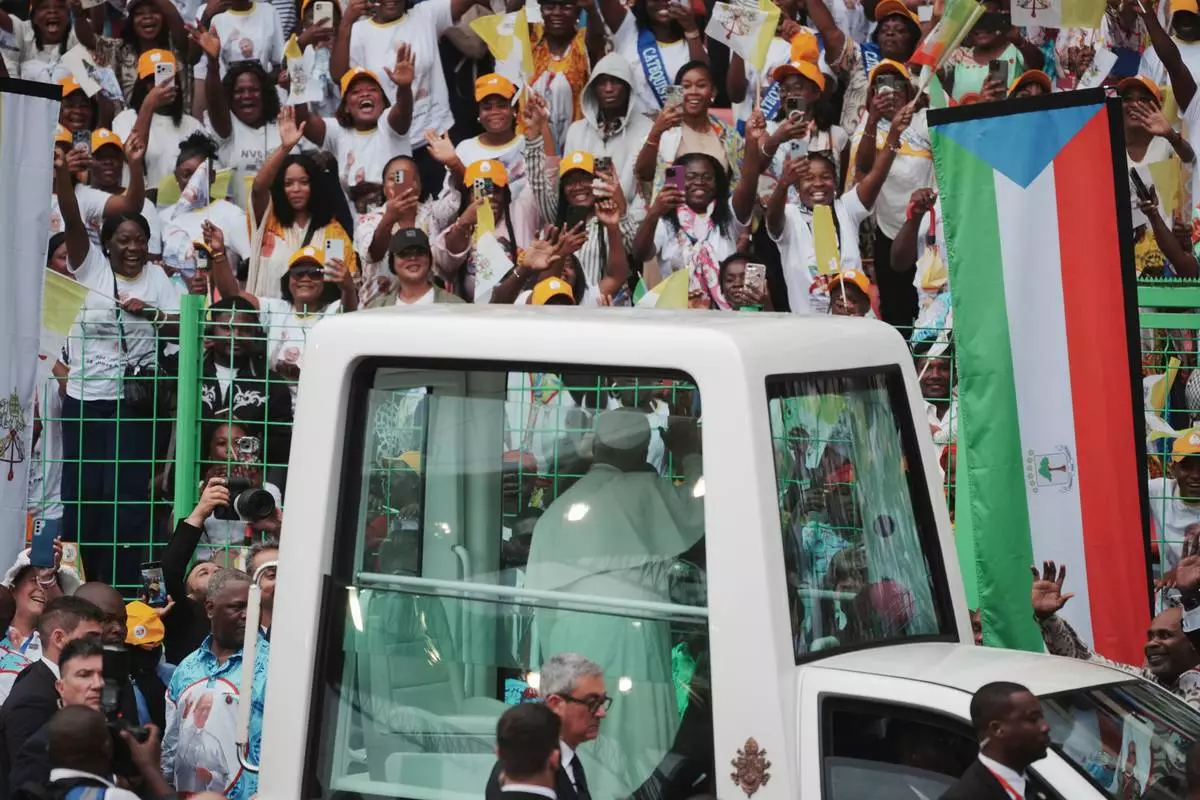
Pope Leo XIV arrives to celebrate the Holy mass at the Malabo stadium, in Malabo, Equatorial Guinea, Thursday, April 23, 2026, on the last day of his 11-day pastoral visit to Africa. (AP Photo/Andrew Medichini)
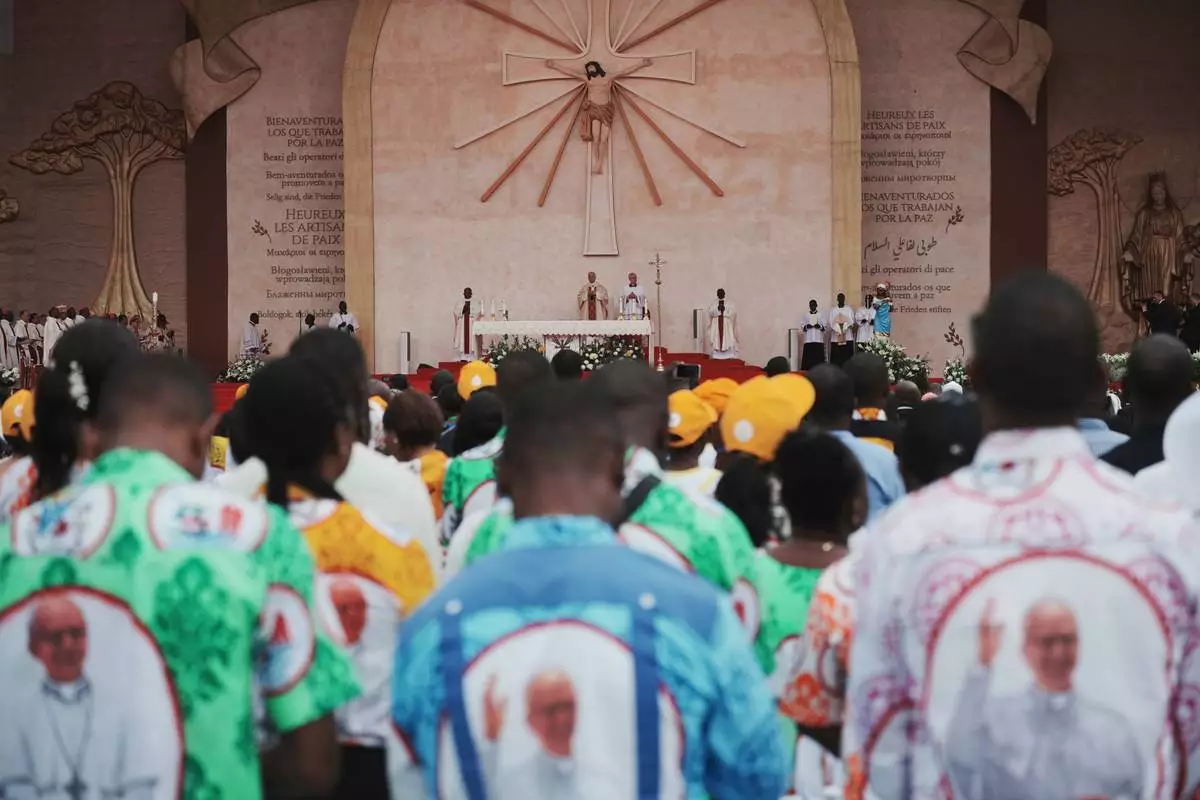
Pope Leo XIV arrives to celebrate the Holy mass at the Malabo stadium, in Malabo, Equatorial Guinea, Thursday, April 23, 2026, on the last day of his 11-day pastoral visit to Africa. (AP Photo/Andrew Medichini)
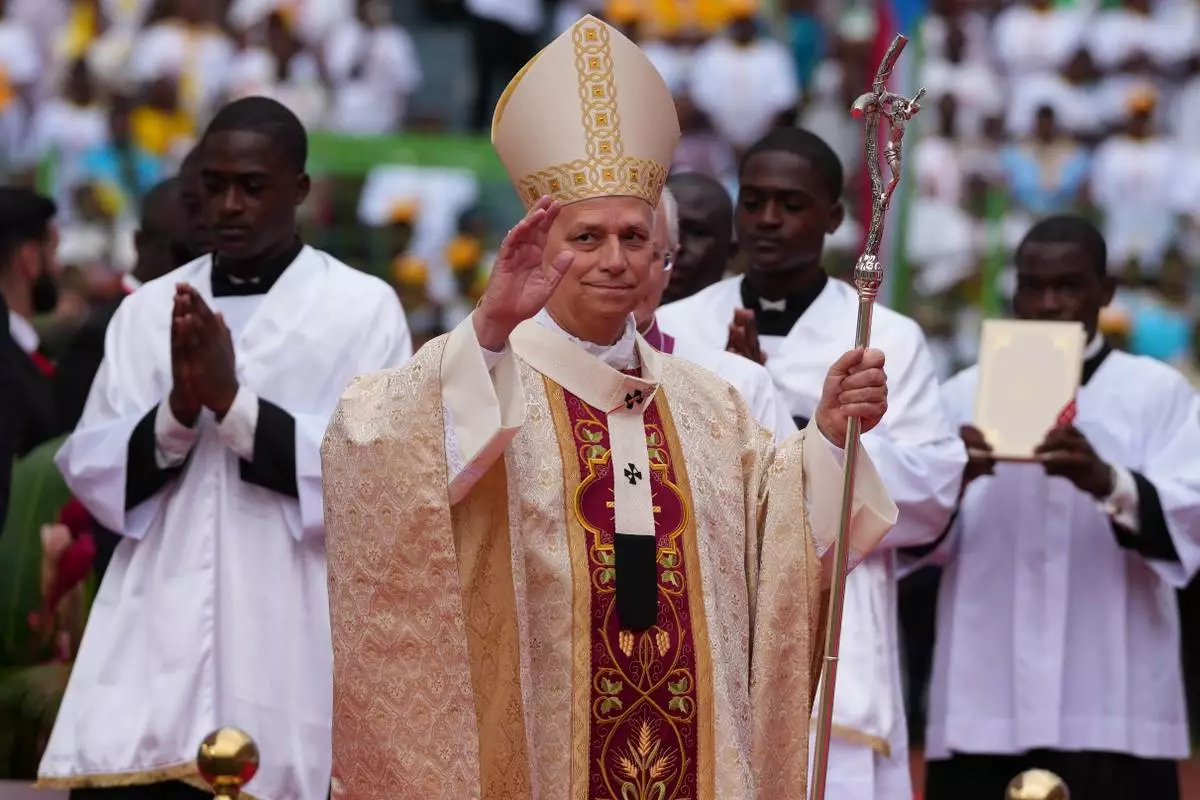
Pope Leo XIV arrives to celebrate the Holy mass at the Malabo stadium, in Malabo, Equatorial Guinea, Thursday, April 23, 2026, on the last day of his 11-day pastoral visit to Africa. (AP Photo/Misper Apawu)
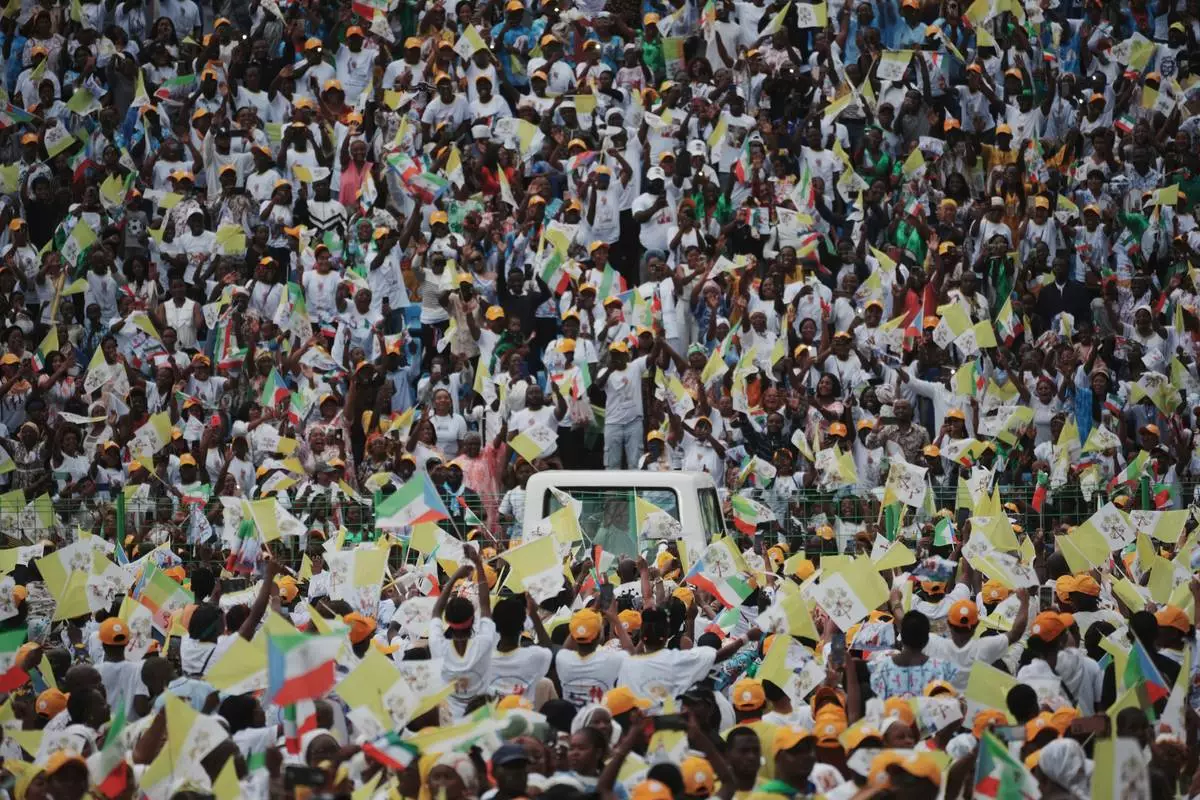
Pope Leo XIV arrives to celebrate the Holy mass at the Malabo stadium, in Malabo, Equatorial Guinea, Thursday, April 23, 2026, on the last day of his 11-day pastoral visit to Africa. (AP Photo/Andrew Medichini)
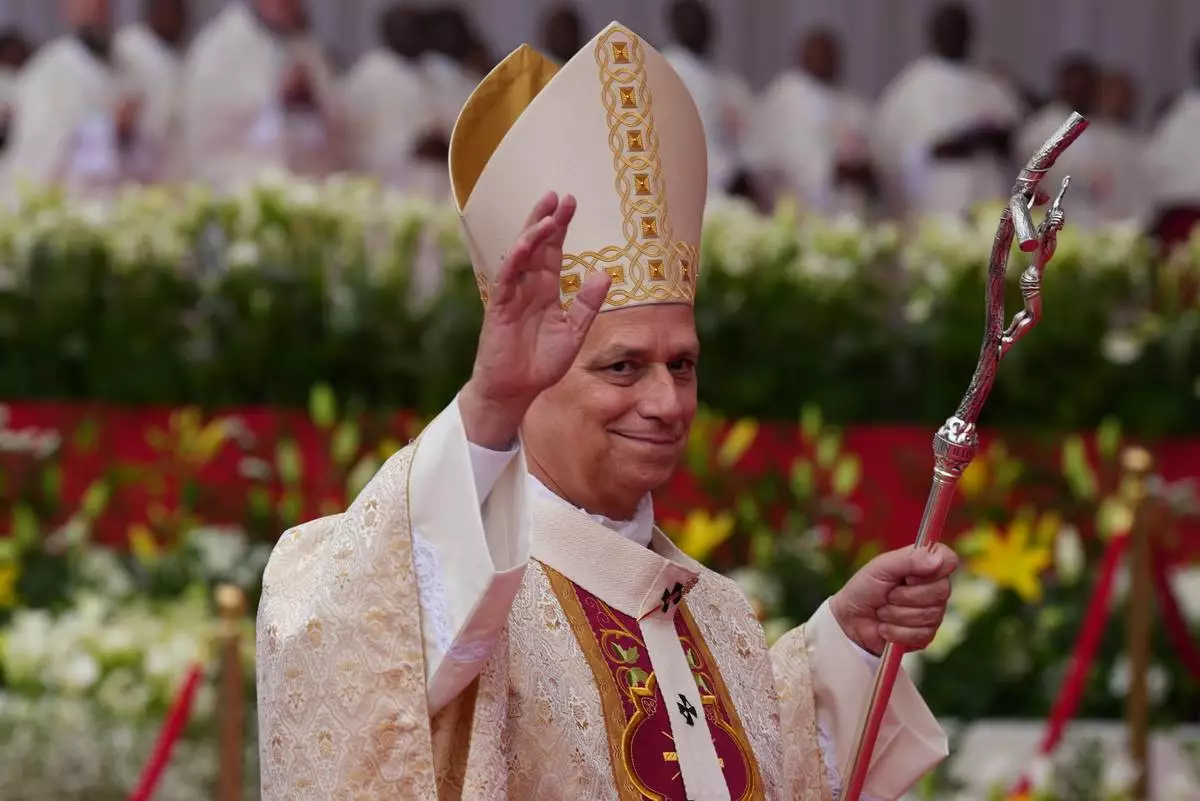
Pope Leo XIV arrives to celebrate the Holy mass at the Malabo stadium, in Malabo, Equatorial Guinea, Thursday, April 23, 2026, on the last day of his 11-day pastoral visit to Africa. (AP Photo/Misper Apawu)