OMAHA, Neb. (AP) — Union Pacific delivered 5% higher earnings in the first quarter as the railroad worked to prepare its case to convince regulators that its $85 billion acquisition of eastern rival Norfolk Southern is a good idea.
The Omaha, Nebraska-based railroad said Thursday that it earned $1.7 billion, or $2.87 per share, but it estimated that merger-related costs weighed down the results by 6 cents per share. That's still up from last year's $1.63 billion, or $2.70 per share. And the results topped the $2.86 per share that the analysts surveyed by FactSet Research expected.
Union Pacific CEO Jim Vena said the railroad continued to get more efficient during the quarter as it benefited higher rates even as it prepared its case for the merger. Vena said he's even more convinced now that creating the nation's first transcontinental railroad would be good for customers and the country because Union Pacific will be able to deliver goods more quickly at a lower cost.
“Service is going to be better. We provide more opportunity. We take trucks off of the highway and our employees are guaranteed jobs,” Vena said. “I think we’re more convicted now that this is good for country and good for Union Pacific. And financially, it is good for our shareholders.”
The railroad’s revenue grew 3% to $6.22 billion even though it hauled about 1% fewer shipments. That’s because the rates it charges continued to increase and the railroad benefited from fuel surcharge fees.
Union Pacific’s expenses also grew 3% to $3.76 billion.
The railroad affirmed its outlook for midsingle digit growth in its earnings per share this year in line with its long-term plan. It plans to invest $3.3 billion in its operation.
Union Pacific plans to resubmit its application to acquire Norfolk Southern next week. The U.S. Surface Transportation Board rejected the railroad's first request to approve the $85 billion merger because the regulators wanted more information. The STB hasn't yet decided whether the deal that would cut the number of major freight railroads down to five will enhance competition.
The deal has divided labor and the shippers who rely on both railroads. UP is already one of the biggest railroads and it serves the western United States. The nation's largest rail union and a number of the smaller ones supported the merger after Union Pacific promised that their workers would have jobs for life, but two of the other largest unions that represent engineers and track maintenance workers oppose it.
The railroads' customers are also split with trade groups representing chemical makers and agricultural businesses expressing concerns, but hundreds of other businesses lining up behind it. President Donald Trump has also said the deal sounds good to him.
Vena has argued that creating a railroad that stretches from coast to coast would be good for the economy because without the need for a hand-off between railroads in the middle of the country rail shipments would move faster, meaning it could better compete against trucking.
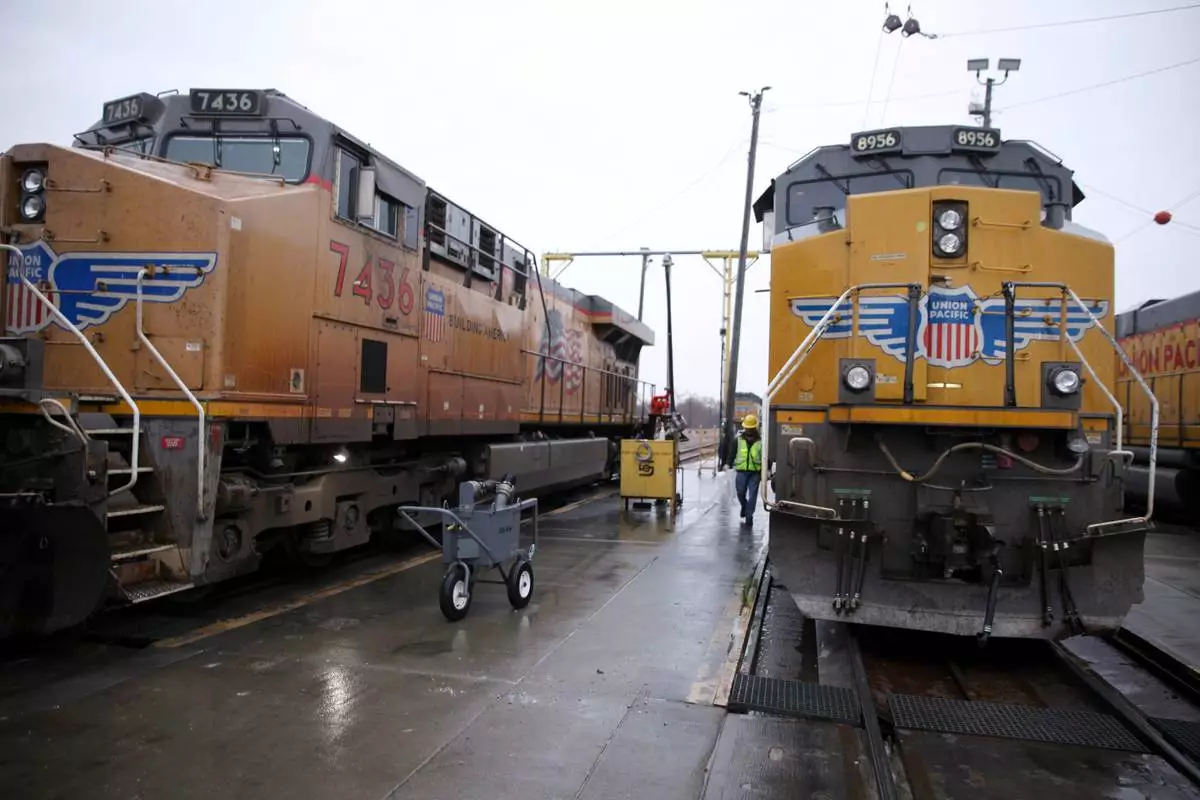
FILE - A Union Pacific worker walks between two locomotives that are being serviced in a railyard in Council Bluffs, Iowa, on Dec. 15, 2023. (AP Photo/Josh Funk, File)
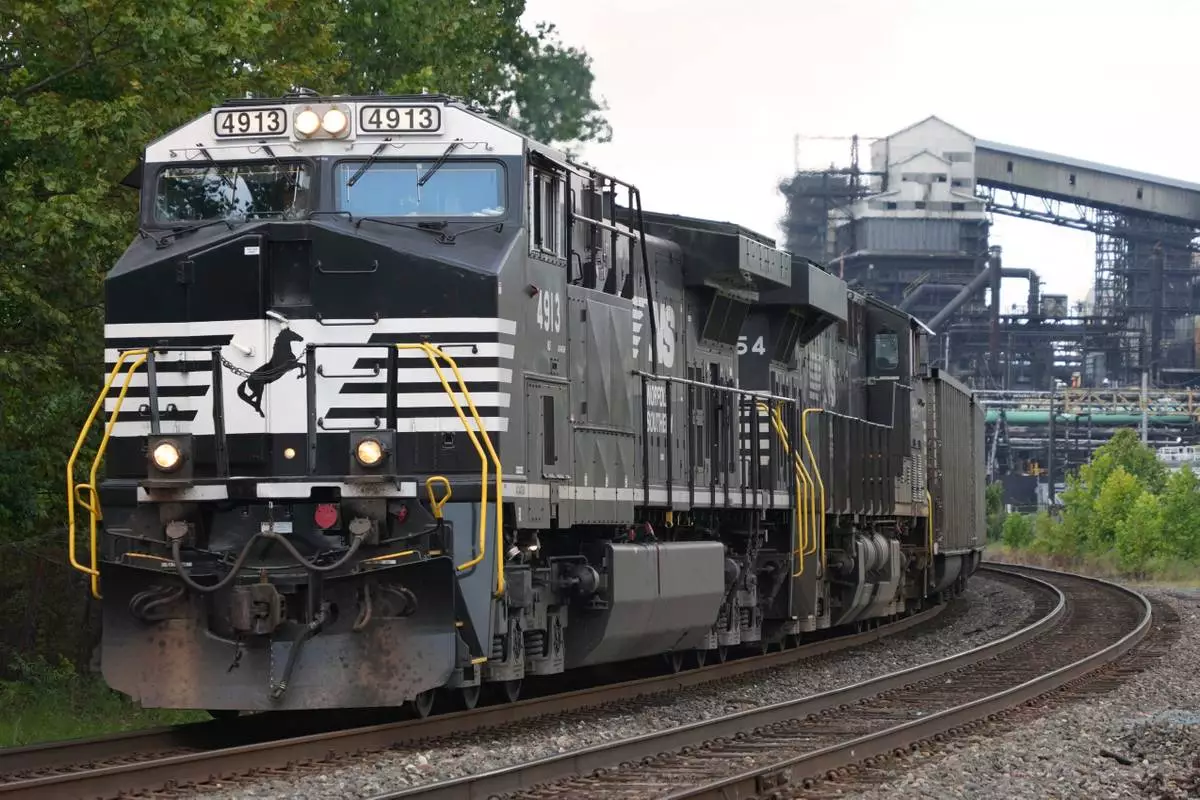
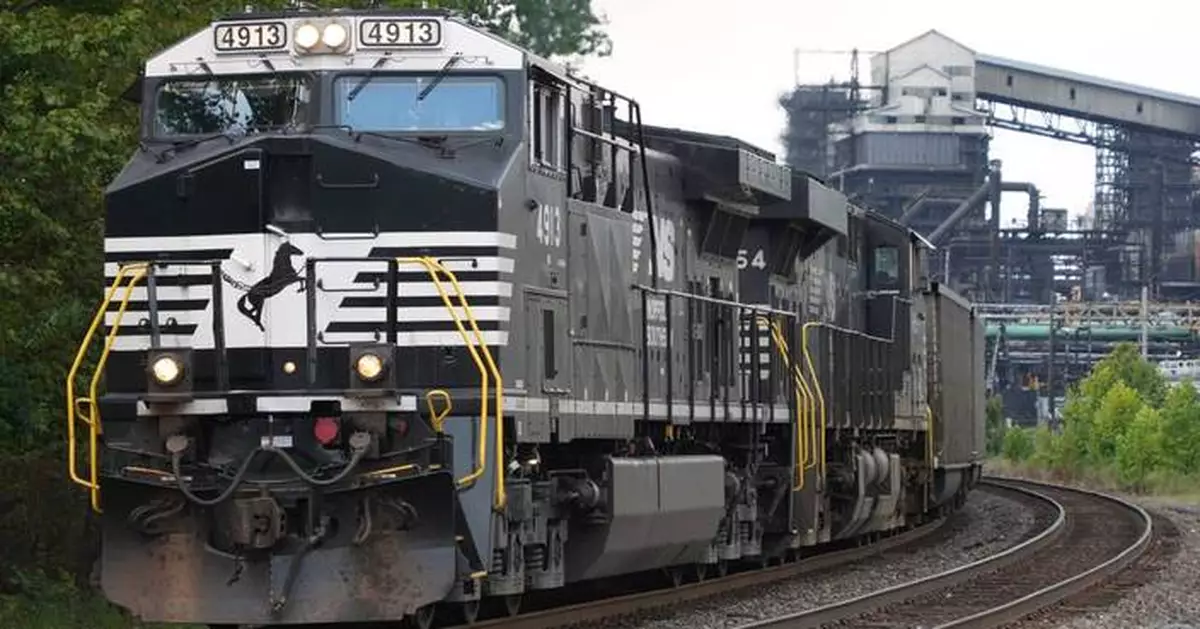
FILE - A Norfolk Southern freight train rolls past the U.S. Steel's Clairton Coke Works, in Clairton, Pa., Tuesday, Aug. 12, 2025. (AP Photo/Gene J. Puskar, File)
MACAPA, Brazil (AP) — Paving roads in the Amazon rainforest has long brought deforestation that threatens the people who live there. The roadwork has also shown glimpses of the region's past long before Europeans arrived to reshape it.
The construction often requires archaeological surveys before the paving starts, and some of the latest discoveries have emerged along the BR-156 highway in Brazil's northern state of Amapa. Among the findings so far from nine dig sites: pottery vases that may be funerary urns, as well as small artifacts that resemble human faces.
“What we now about the region’s past is also tied to the opening created by these projects, which gives our relationship with them a somewhat ambivalent character,” said Lúcio Flávio Costa Leite, who manages the Archaeological Research Center at Amapa’s Institute for Scientific and Technological Research. “At the same time, the knowledge we gain about these sites leads us to pay closer attention to these regions, including by adopting permanent protection measures.”
Scientists say recent research has reinforced understanding of the region's past not as a human desert, but rather as a landscape shaped by interconnected societies long before Columbus arrived. The material found along BR-156, for example, included pottery in multiple styles and techniques that reflected influences from communities ranging from Brazil’s Para state to the Caribbean.
It's been cleaned and analyzed by a team working for the National Department of Transport Infrastructure. One of the archaeologists, Manoel Fabiano da Silva Santos, said the layers of the Amazon soil he excavated are a historic timeline.
In the upper layers, he found items such as Portuguese porcelain and nails linked to European occupation.
“Digging deeper, we uncovered pottery and ceramics associated with earlier Indigenous presence, marking the site’s transition before and after the arrival of colonizers,” Santos said.
The artifacts will eventually go to Amapa's state collection, overseen by Costa Leite, which includes about 530,000 pieces. The oldest piece is around 6,140 years old, confirming a long human presence across Amapa, he said.
The artifacts offer insight into how ancient Indigenous societies lived, died and interacted with the rainforest.
“Here is something I often debate with my students -- we usually think of technology as computers and microchips,” Costa Leite said, walking through shelves of ancient pottery. “But all of this required careful reading of the landscape and deliberate choices of materials.”
One of the most impressive historic areas in Amapa is in the city of Calcoene, where a 1,000‑year‑old stone monument made up of 127 carved monoliths arranged in a circle about 30 meters (98 feet) in diameter, set in open grassland amid the rainforest and bordered by a slow river.
Some have dubbed the Archaeological Park of the Solstice the “Stonehenge of the Amazon” for its resemblance to the British monument. Researchers found that the stones were positioned so that during the winter solstice in the Northern Hemisphere they marked the exact point where the sun rises, said archaeologist Mariana Petry Cabral, a professor at the Federal University of Minas Gerais who was part of the team that began digging at the site some two decades ago.
“It’s hard to say exactly what all the stones mean, but what we do know is that they are not from the site itself. They were brought from other nearby locations,” she said.
Subsequent research and excavations found the site also served as a burial ground. Radiocarbon dating showed it was occupied for hundreds of years, beginning around 1,100 years ago, she said.
The site, discovered by scientists in 2005, can be visited with prior approval from Amapa’s Institute for Scientific and Technological Research. At the same time, the site is going through the process to become a national park, which will allow more people to visit.
Such archaeological sites are protected by Brazilian law, which prohibits them being altered. That adds a layer of protection for surrounding rainforest.
Modern archaeological and historical ecology research shows that Indigenous peoples not only lived in the Amazon for centuries but also shaped it. They managed and cultivated the landscape through long‑term, sustainable practices, said Eduardo Neves, an archaeologist professor at the University of Sao Paulo.
Neves has studied the Amazon rainforest for more than 30 years and, since 2023, has led the Amazon Revealed project, which uses satellite scans to identify archaeological sites hidden beneath the forest canopy.
Scans have revealed roads linking archaeological sites and buried patterns in the rainforest that point to repeated occupation and deliberate landscape modification. Together, Neves said, the features suggest large settlements.
Archaeologists had long suspected such connections, Neves added, but technology has made it possible to see their broader geographic reach. The scans show networks of roads connecting clusters of settlements across the forest, most clearly in southern Amazonas state and Acre.
“When people think of an Indigenous tribe, they often imagine a small village isolated in the middle of the forest. But evidence shows a high degree of interconnectivity linking different settlements,” Neves said.
“Amapa is a key piece that helps us see how dynamic and active these populations were, and how they maintained networks of exchange that have been in place for millennia,” Cabral said.
Felipe Campos Mello contributed reporting.
The Associated Press’ climate and environmental coverage receives financial support from multiple private foundations. AP is solely responsible for all content. Find AP’s standards for working with philanthropies, a list of supporters and funded coverage areas at AP.org.
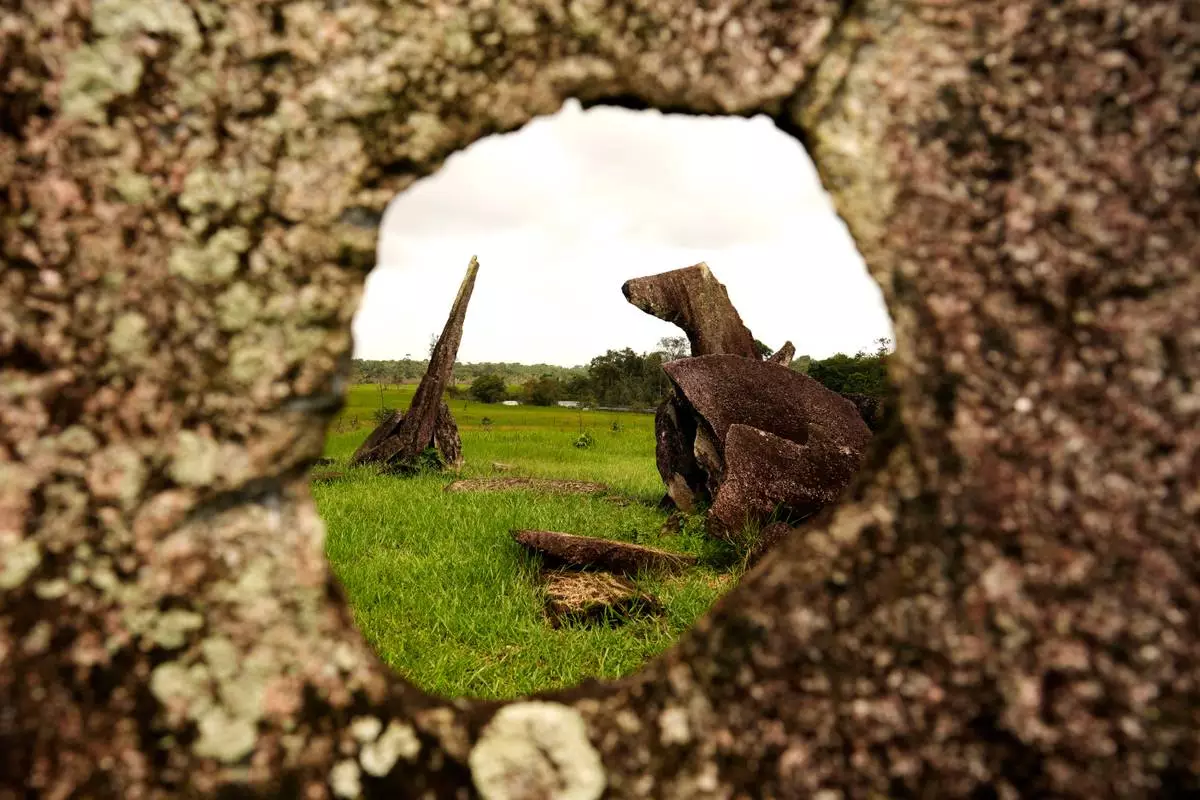
The Archaeological Park of the Solstice, which some call the "Stonehenge of the Amazon" is visible in Calcoene, Amapa state, Brazil, Friday, March 13, 2026. (AP Photo/Eraldo Peres)
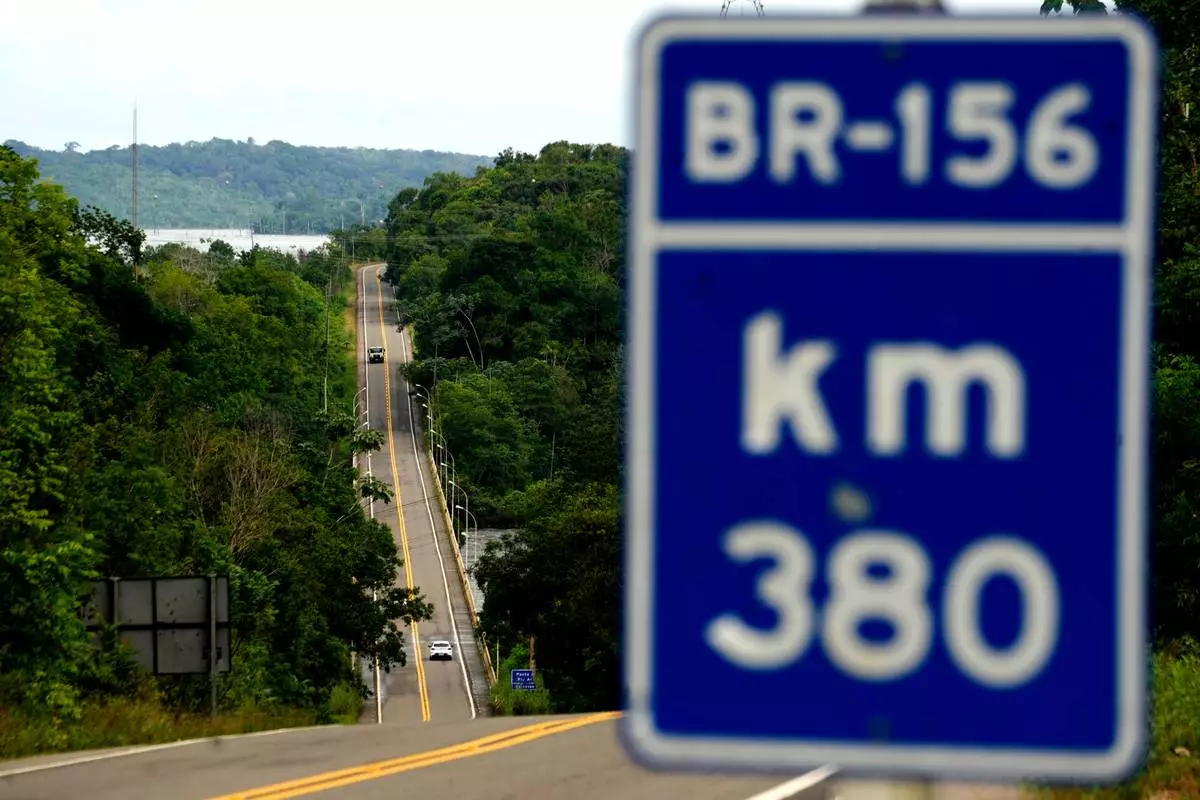
Vehicles drive on a fully paved section of BR-156 highway that connects the state capital Macapa with the city of Oiapoque, Amapa state, Brazil, Monday, March 9, 2026. (AP Photo/Eraldo Peres)
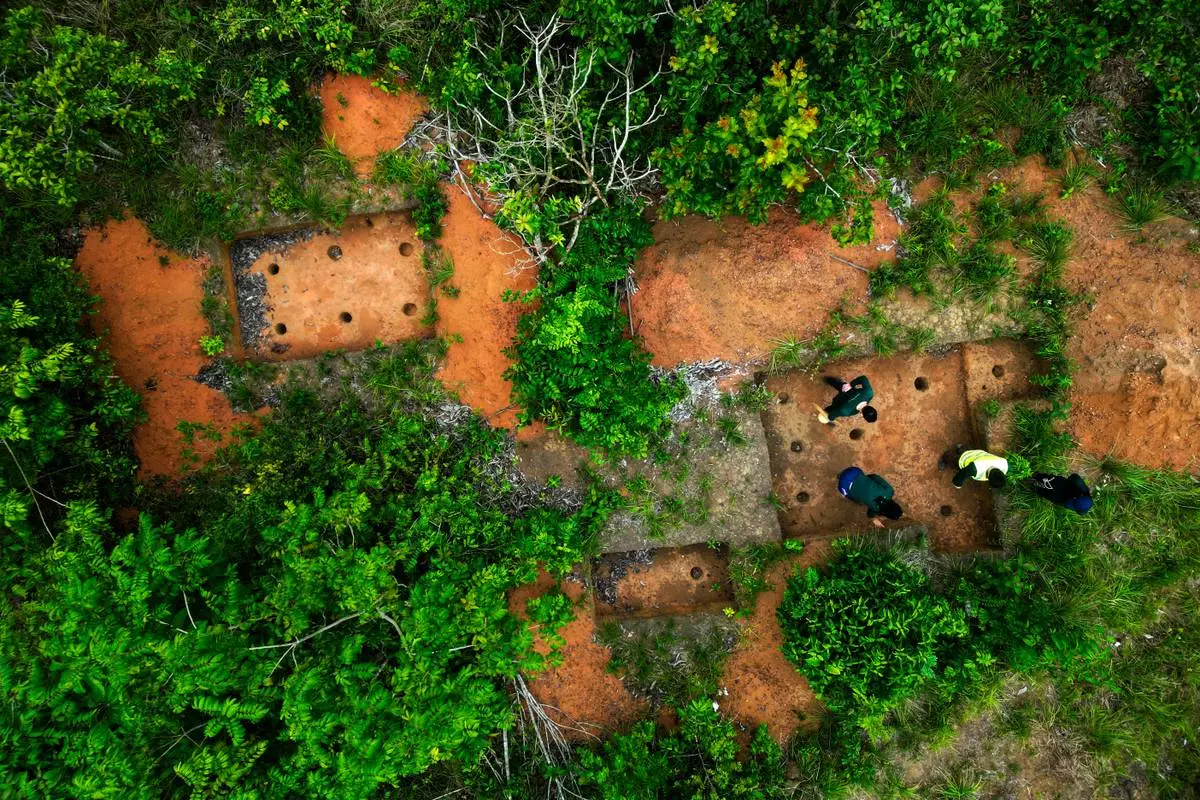
Archaeologists conduct a technical visit at the Quintela site in the Vila Nova community along the BR-156 highway in Santana, Amapa state, Brazil, Saturday, March 14, 2026. (AP Photo/Eraldo Peres)
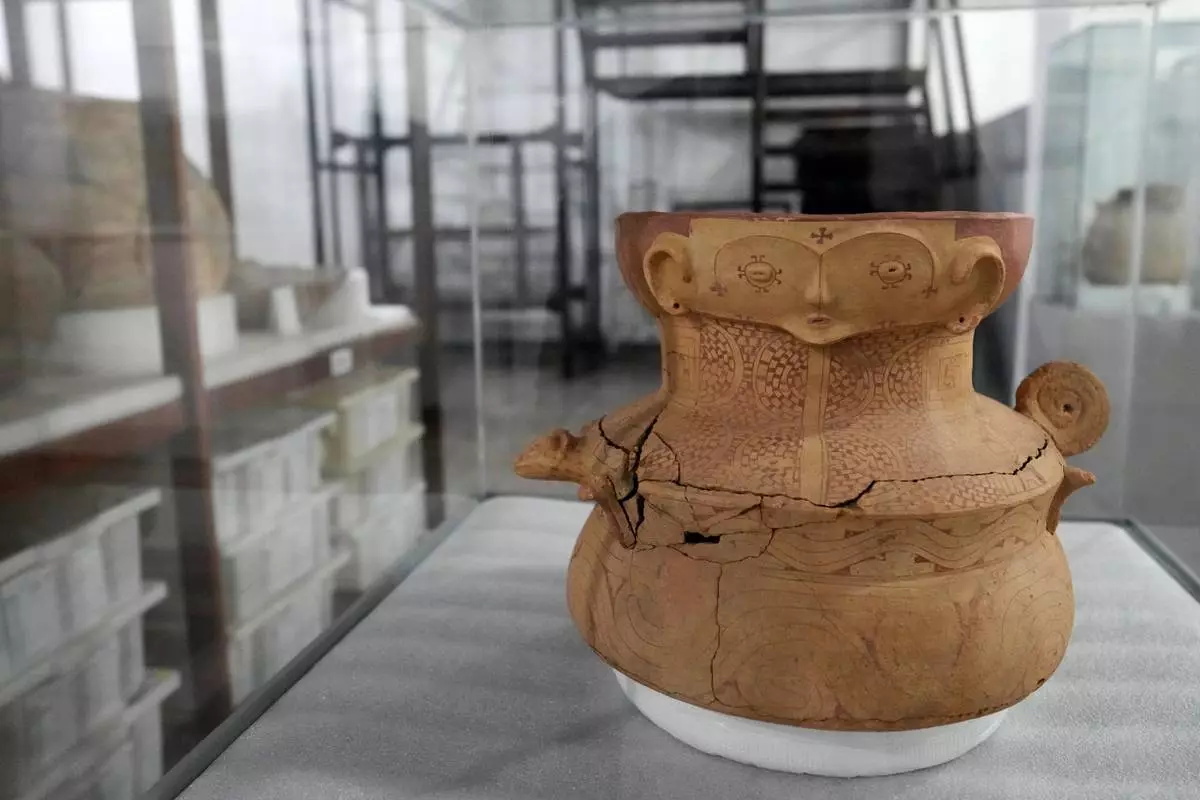
A pottery vessel with anthropomorphic features believed to be an urn is displayed at the Institute for Scientific and Technological Research in Macapa, Amapa state, Brazil, Sunday, March 8, 2026. (AP Photo/Eraldo Peres)
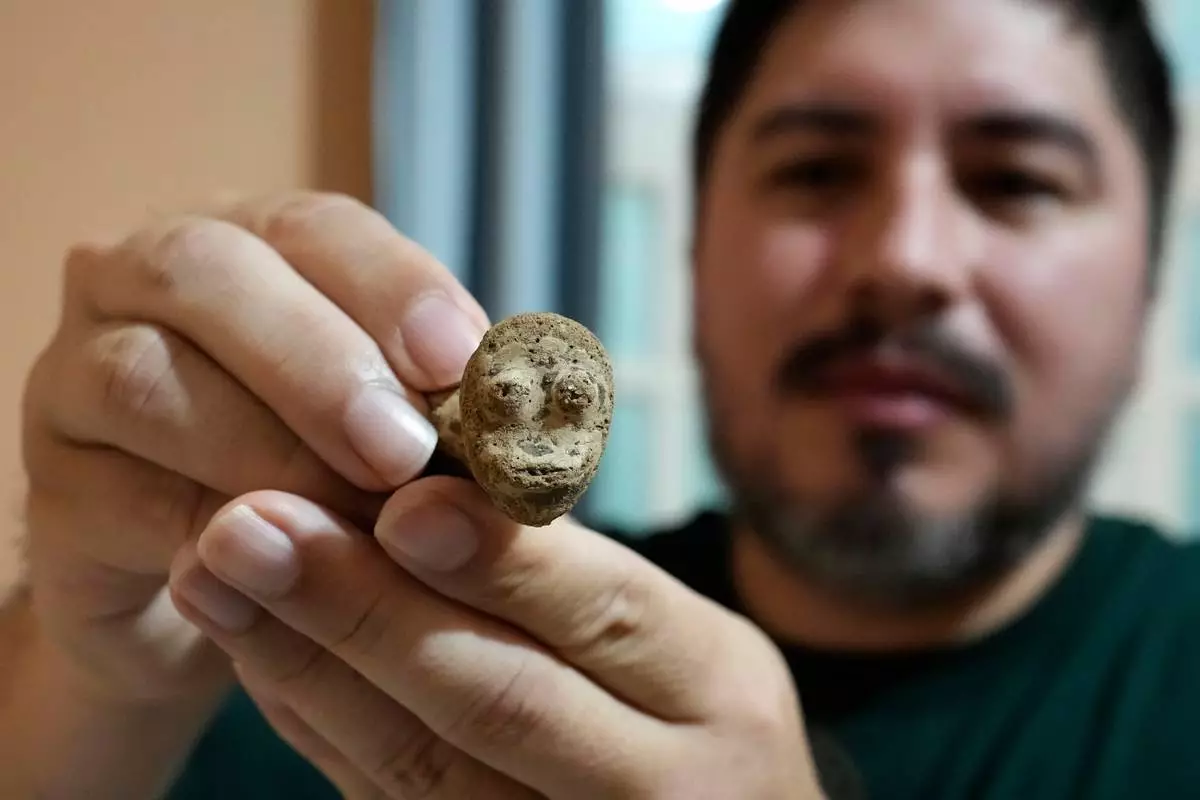
Archaeologist Manoel Fabiano da Silva Santos shows an anthropomorphic artifact found at the Quintela archaeological site at the National Department of Transport Infrastructure in Macapa, Amapa state, Brazil, Saturday, March 14, 2026. (AP Photo/Eraldo Peres)
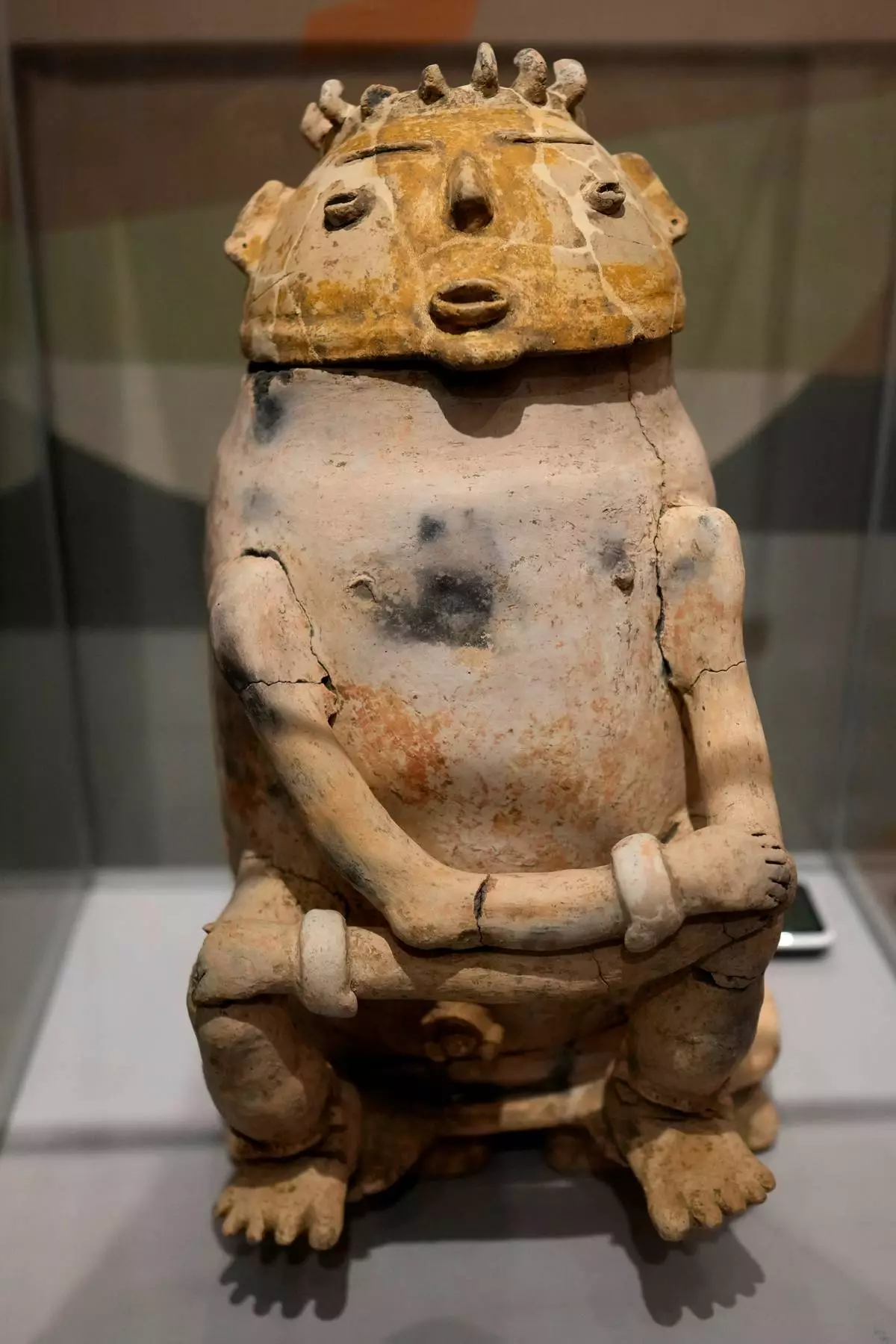
An anthropomorphic ceramic figurine found during archaeological work in a state is displayed at the Institute for Scientific and Technological Research in Macapa, Amapa state, Brazil, Sunday, March 8, 2026. (AP Photo/Eraldo Peres)
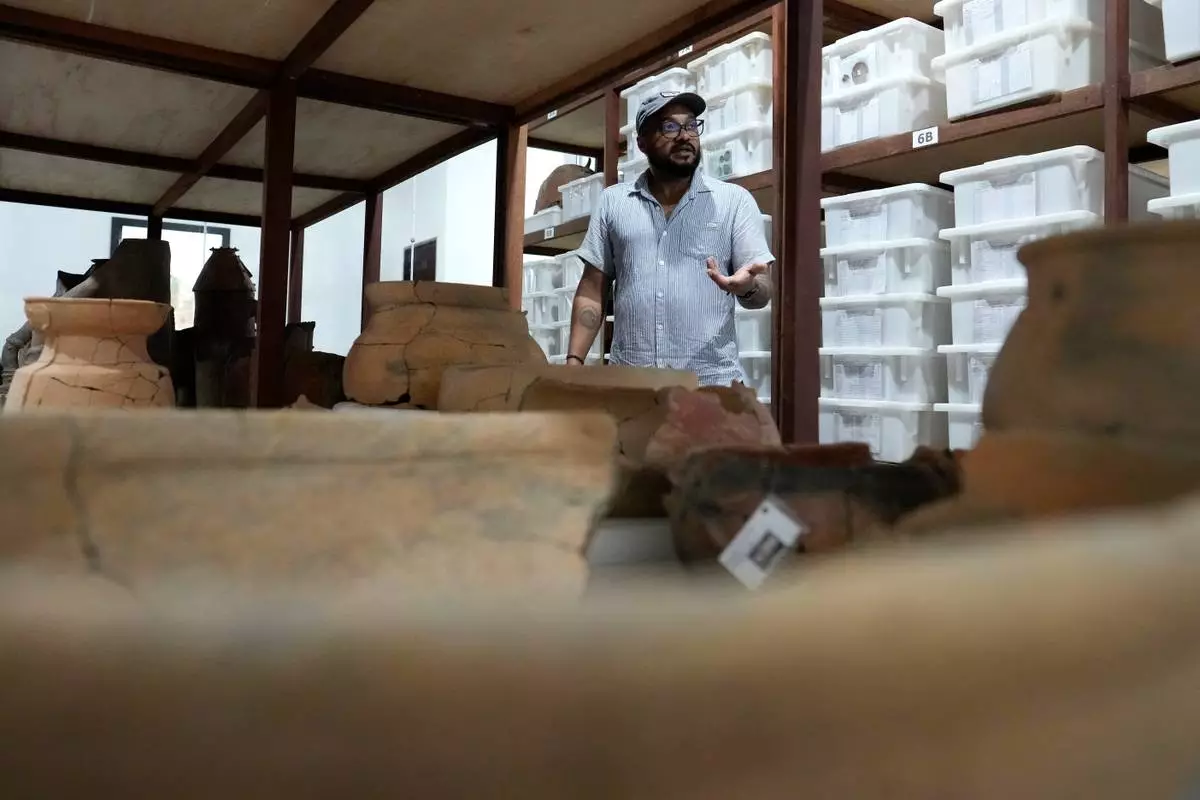
Archaeologist Lucio Flavio Costa Leite speaks about the collection of cataloged archaeological artifacts at the Institute for Scientific and Technological Research in Macapa, Amapa state, Brazil, Sunday, March 8, 2026. (AP Photo/Eraldo Peres)
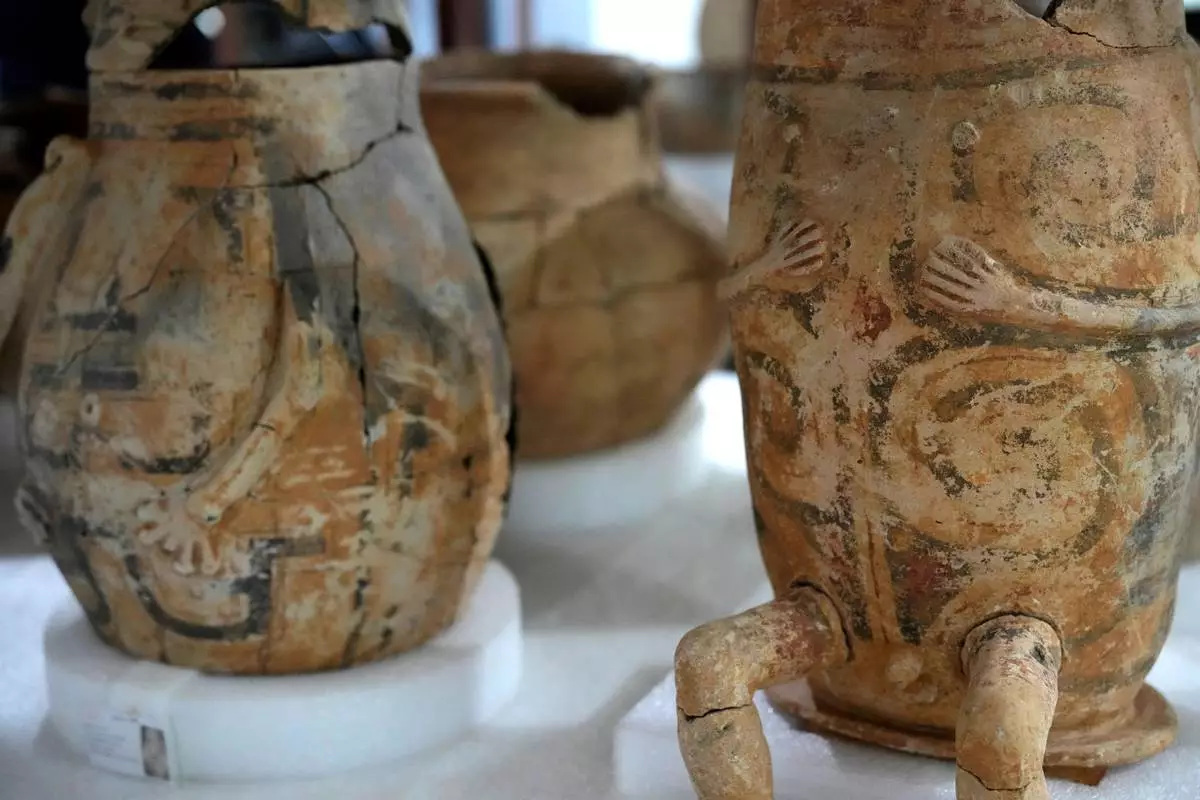
Pottery vessels with anthropomorphic features believed to be urns are displayed at the Institute for Scientific and Technological Research in Macapa, Amapa state, Brazil, Sunday, March 8, 2026. (AP Photo/Eraldo Peres)
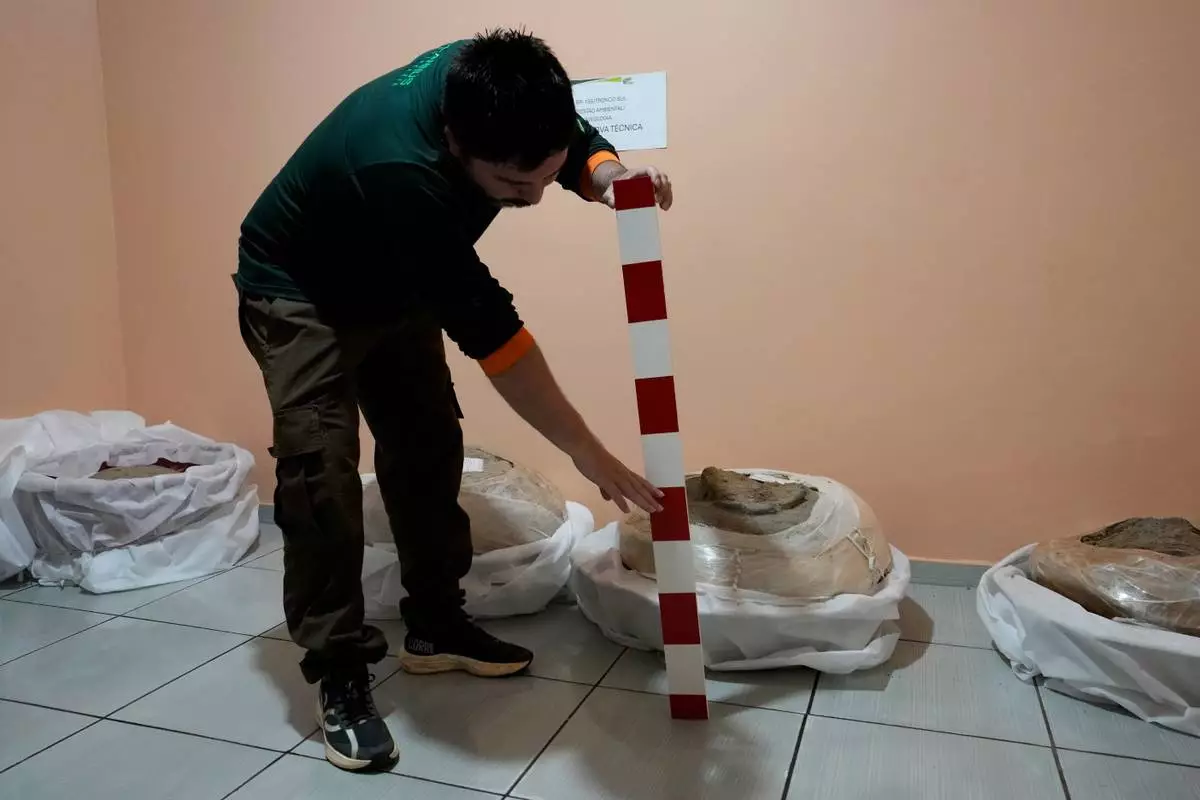
Archaeologist Manoel Fabiano da Silva Santos shows a soil layer scale while explaining the historical timeline at National Department of Transport Infrastructure in Macapa, Amapa state, Brazil, Saturday, March 14, 2026. (AP Photo/Eraldo Peres)
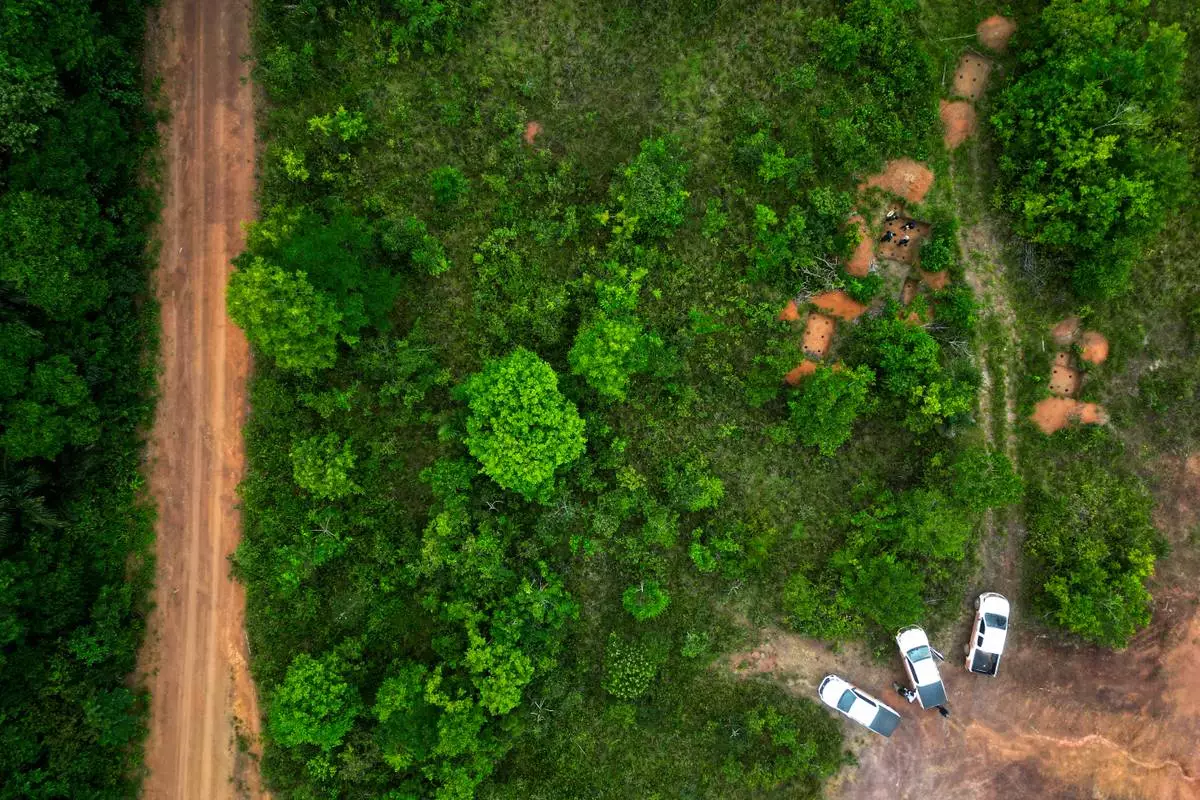
Archaeologists conduct a technical visit at Quintela archaeological site in the Vila Nova community along the BR-156 highway in Santana, Amapa state, Brazil, Saturday, March 14, 2026. (AP Photo/Eraldo Peres)
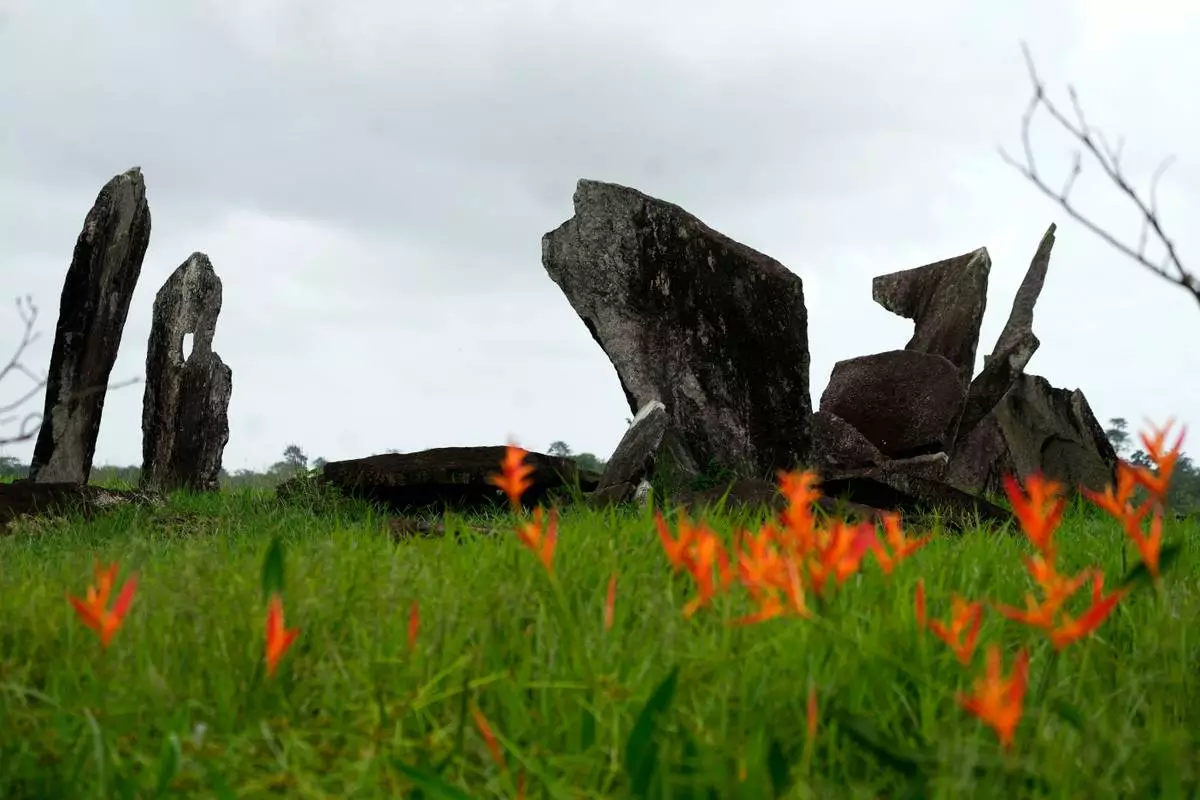
Grass and flowers surround the Archaeological Park of the Solstice, which some call the "Stonehenge of the Amazon" in Calcoene, Amapa state, Brazil, Friday, March 13, 2026. (AP Photo/Eraldo Peres)