DALLAS--(BUSINESS WIRE)--Apr 23, 2026--
Weathermatic has named Lex Mason Chief Executive Officer, effective April 1, succeeding Mike Mason, who transitions to Chairman of the Board. Lex Mason previously served as President, where he played a central role in reshaping the company from an irrigation equipment manufacturer into a technology partner for the commercial landscape and property management industries.
This press release features multimedia. View the full release here: https://www.businesswire.com/news/home/20260422952597/en/
Weathermatic, a Telsco Industries company, has operated for more than 80 years as a provider of water management solutions for the commercial landscaping and property management industries. The transition reflects the company's confidence in the direction Lex Mason has helped set and its commitment to the contractor partnerships and technology investments that define its next chapter.
Among Lex Mason's most significant contributions as President was his role in building Weathermatic's Landscaper Partner Program from the ground up. The program now supports hundreds of landscape contractors across the country, giving irrigation departments the technology, training, and support infrastructure to run more profitable, efficient operations. For contractors, that has meant measurable improvements in how they sell, manage, and grow their irrigation services. For Weathermatic, it redefined what the company is. Weathermatic is no longer just a manufacturer selling product through the channel, it’s a technology partner focused on long-term relationships with the contractors who install and service its systems.
"I’ve grown up in this business. The decisions landscape contractors and real estate professionals make today about irrigation and labor automation technology will define what their businesses look like for the next decade. Weathermatic exists to make sure our partners are on the right side of this radical market correction," said Lex Mason.
"What Lex has built during his time as EVP of Sales and President is unprecedented in Weathermatic's 80-year history. He has transformed how this company operates, how it scales, and how it serves its partners. As his father, watching him earn this role through integrity, hard work, and a level of drive that most people never find, there are no words adequate to express how proud I am," said Mike Mason, Chairman of the Board.
"Lex is stepping into the CEO role at a critical juncture in our company’s history with our recent infusion of growth capital from new minority equity partners. Lex’s proven visionary leadership in guiding the evolution of Weathermatic into a technology company combined with the addition of growth capital has enabled a step-up in the acceleration of our growth. Additionally, his ability to attract and inspire an executive team of experienced executives has been critical to elevating our people and processes to support our customers and company vision,” said Darryl Halbert, Chief Financial Officer.
The SmartLink platform sits at the center of that evolution. Designed for commercial-scale irrigation management, SmartLink gives contractors and property managers remote monitoring, real-time water use data, and system control across multiple sites. It is the product foundation of Weathermatic's partner model and a core reason contractors choose to build their irrigation departments around the company's ecosystem rather than simply purchasing equipment.
About Weathermatic Weathermatic is a leading provider of smart irrigation technology for commercial and residential applications, with more than 80 years of experience serving the landscape industry. The company's SmartLink platform delivers remote monitoring, water management, and efficiency solutions for landscape contractors and property managers nationwide. Weathermatic is a Telsco Industries company. Learn more at weathermatic.com.

Weathermatic Names Lex Mason Chief Executive Officer
PHOENIX (AP) — Hurricane Polo smashed into the western coast of Mexico on Tuesday, swamping coastal areas and toppling trees before the storm’s remnants headed toward the U.S. Southwest, where heavy rains soaked the region and residents in small New Mexico towns were evacuated over concerns about a dam failing.
Polo struck the Mexican state of Baja California Sur in the morning with maximum sustained winds of 110 mph (175 kph). It crossed the Gulf of California and weakened to become a tropical storm as it moved inland to the northeast, and its remnants were expected to reach the U.S. by Tuesday night.
North-central New Mexico, including Albuquerque and Santa Fe, could feel the brunt of the severe weather, with as much as 3 to 4 inches (about 8 to 10 centimeters) of rain through Wednesday and possibly more, forecasters said.
That is after storms rolled through parts of the U.S. Southwest overnight Monday, saturating the ground, which can make flooding worse.
Bands of rain continued to sweep across the U.S. Southwest, causing desert rivers to surge and usually dry arroyos to rage with floodwater.
The potential failure of the dam in south central New Mexico prompted evacuations in three small communities with hundreds of residents along the Rio Grande. People in Rincon, Salem and Garfield were told to seek higher ground immediately “before conditions worsen.”
Nearly all of the region was under flood watches as the complex system of tropical weather — with Polo the main event — spread northeast from Mexico.
“Definitely looking at the chances for urban flooding,” said National Weather Service meteorologist Carter Greulich in Albuquerque. “Don’t drive through flooded roadways. Remain out of the arroyos, especially in our urban areas.”
A person stranded on top of a vehicle in floodwaters west of Phoenix was rescued Tuesday morning. Video taken by Arizona Fire and Medical Services showed a helicopter lowering a rescuer to a person clinging to their overturned car. And in Zion National Park, a helicopter was used to rescue three people who had been in Heaps Canyon and went to high ground when it began to flash flood.
North of Phoenix, a truck was swept away in a wash in the New River area. The driver got out safely, Maricopa County sheriff’s officials said.
The rocky, desert area typically gets less than 10 inches (25 centimeters) of rain annually with little vegetation to soak it up, making flash flooding a perpetual risk.
Near Zion National Park in Utah, the East Fork of the Virgin River raged with chocolate floodwater seen carrying a shipping container downstream.
In the small town of Orderville, Utah, where flooding began Monday night, Sabrina Dubay was driving home when her partner called and told her to stay away.
“The river came in and swept around the entirety of our house,” Dubay said.
A camper, snowmobile trailer, and other items from Dubay’s yard were swept away by the river. Neighbors and friends arrived to dig a trench around the house as the water rose around their home.
“It was coming in through our front doors,” she said.
Flooding also was reported in southern New Mexico. An unusually soggy September across the region set the stage: When the ground is saturated, rainfall has nowhere to go but run off.
“Runoff is likely going to start much quicker and lead to those flooding impacts quicker,” Greulich said.
Forecasters said the flood risk would move into parts of the central U.S. beginning late Tuesday and into Wednesday. Starting late Wednesday, widespread heavy rain was expected to hit the Dallas-Fort Worth, Austin and San Antonio areas. Life-threatening flash flooding was possible, with low-lying areas especially vulnerable.
Parts of west Texas, Oklahoma, Kansas, Nebraska and Iowa were under flood watch through Thursday, with some areas expecting up to 5 inches (13 centimeters) of rain.
Hurricane Polo pummeled Baja California Sur with powerful winds and rain as it made landfall.
After Polo passed over the small fishing town of Puerto San Carlos on the Baja California peninsula, residents waded among downed trees through ankle-high water that flooded some homes. Seeing their roughened community largely intact brought relief to those who had prepared for the worst.
Shopkeeper Elbia María Bachomo, 40, picked through furniture strewn through her home. She and her three children had gathered their clothes quickly and left for a shelter Monday as water began flooding into their home.
Her husband was out on the water fishing for sardines when Polo hit. Bachomo said he was fortunate to escape alive.
“I thought, ‘Oh no, what are we going to come back to? We will be left with nothing.’ But we were lucky,” she said.
Polo was expected to produce 6 to 12 inches (about 15 to 30 centimeters) of rain across parts of Baja California Sur.
About 700 people remained in shelters Tuesday. But they were expected to return to their homes, and no serious damage or deaths were immediately reported, according to authorities.
Meanwhile, the hurricane center reported Tropical Storm Rachel was moving parallel to Mexico’s coast early Tuesday. The storm was about 265 miles (425 kilometers) southwest of Lazaro Cardenos with maximum sustained winds of 65 mph (105 kph). It was moving west-northwest at 13 mph (20 kph).
In the central Pacific Ocean, Hurricane Nolo remained a dangerous Category 3 hurricane on Tuesday as it edged away from Hawaii after drenching parts of the Big Island over the weekend. The hurricane was approaching Papahanaumokuakea Marine National Monument, a marine conservation area.
Pacific storm activity has been above average this year. That's consistent with El Niño years.
Hill reported from Las Vegas, and Brown reported from Billings, Montana. Martin Silva Rey and Eduardo Verdugo in Puerto San Carlos, Mexico, Megan Janetsky in Mexico City, Julie Walker in New York, Mead Gruver in Fort Collins, Colorado, Mikella Schuettler in Phoenix, Sarah Raza in Sioux Falls, South Dakota, and Eugene Garcia and Gregory Bull in Hilo, Hawaii, contributed to this report.
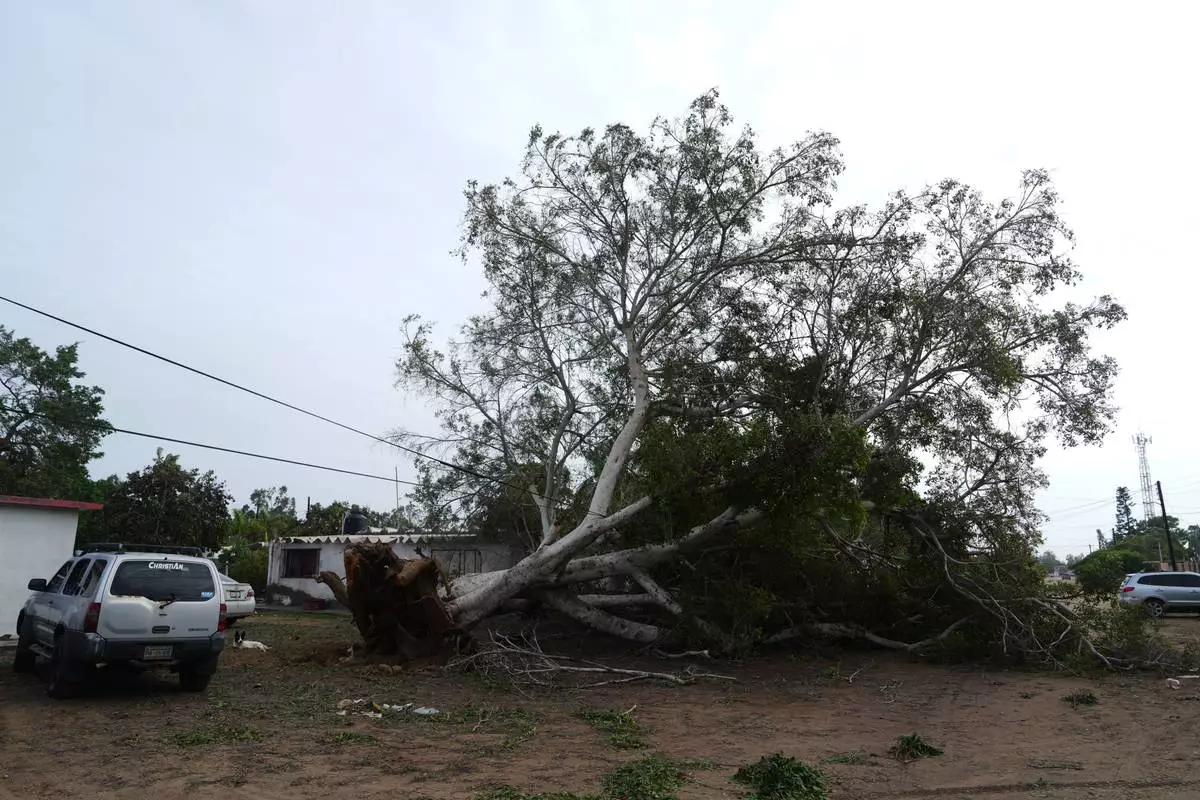
An uprooted tree lies on the ground after the passing of Hurricane Polo in Puerto San Carlos, Baja California Sur state, Mexico, Tuesday, Sept. 29, 2026. (AP Photo/Eduardo Verdugo)

A resident retrieves belongings from their home that was damaged by Hurricane Polo in Puerto San Carlos, Baja California Sur state, Mexico, Tuesday, Sept. 29, 2026. (AP Photo/Eduardo Verdugo)
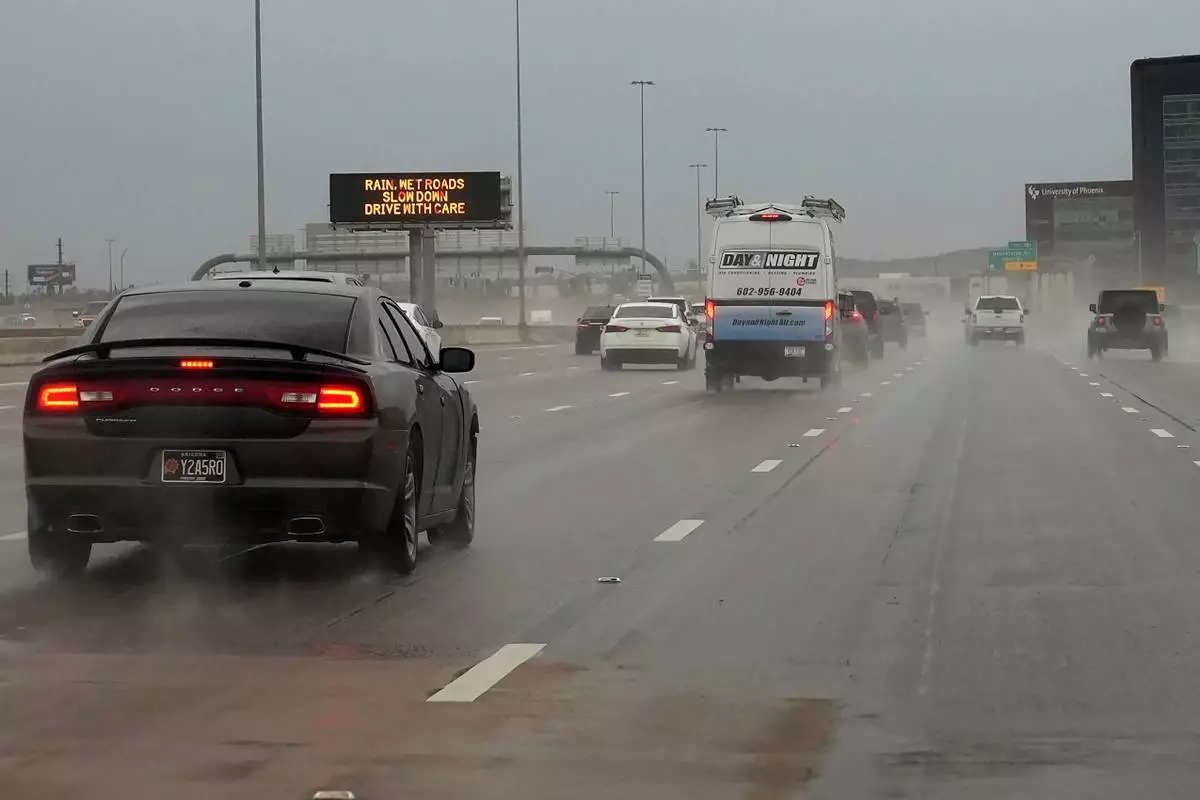
Vehicles drive in the rain on the I-10 with Arizona Department of Transportation (ADOT) warning signs displayed along the route, Monday, Sept. 28, 2026, in Phoenix. (AP Photo/Ross D. Franklin)
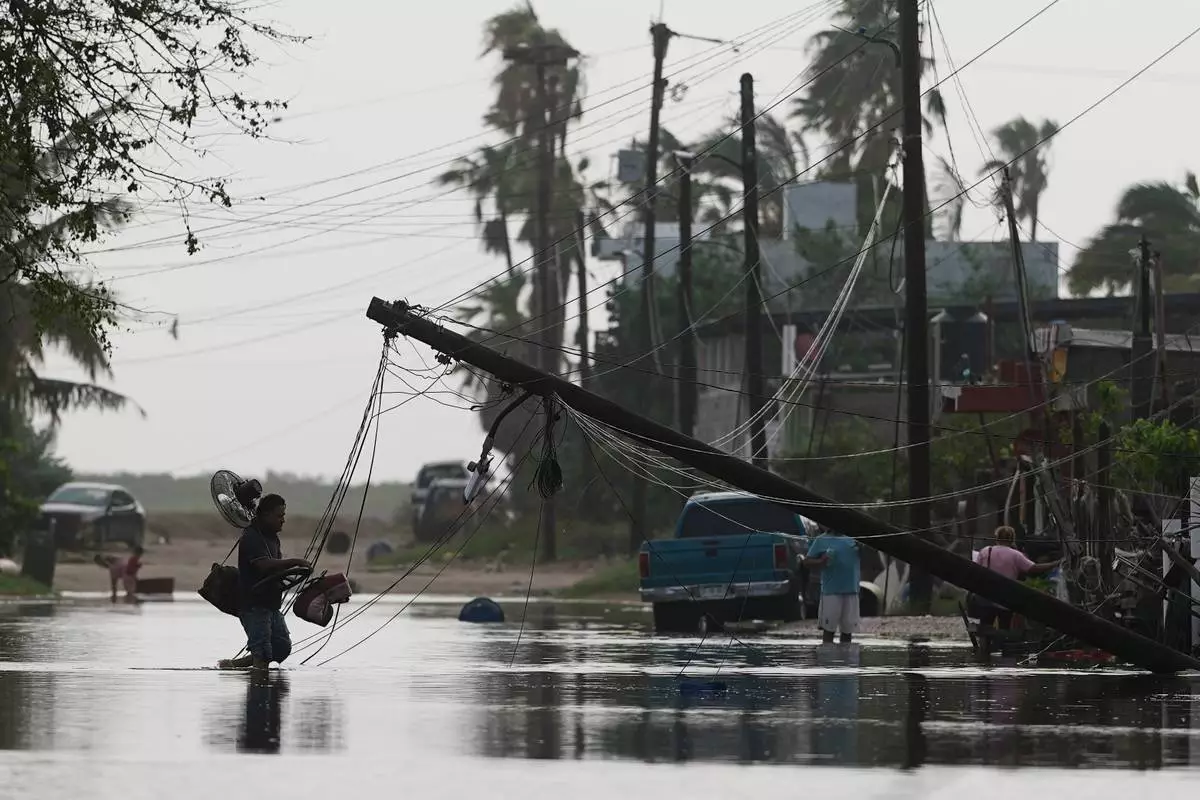
A man carries items through floodwater past downed electric lines after the passing of Hurricane Polo in Puerto San Carlos, Baja California Sur state, Mexico, Tuesday, Sept. 29, 2026. (AP Photo/Eduardo Verdugo)
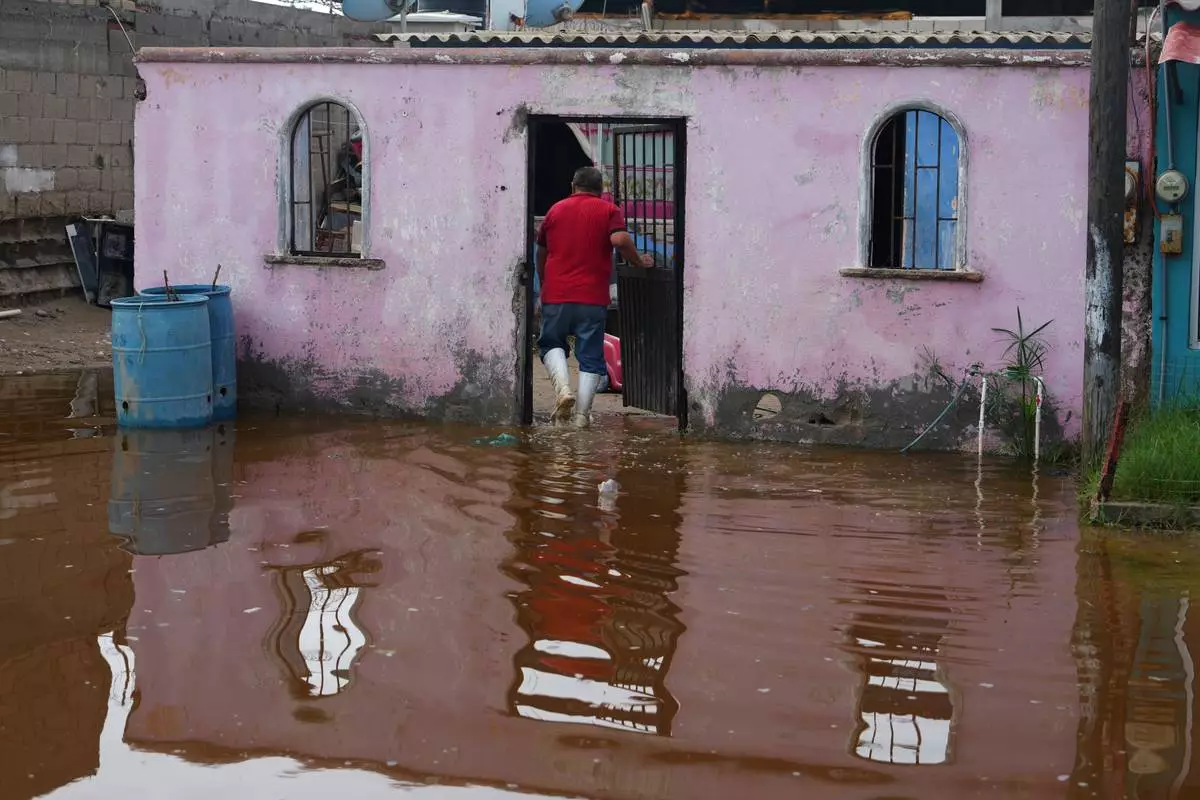
A resident enters his home surrounded by water brought by Hurricane Polo in Puerto San Carlos, Baja California Sur state, Mexico, Tuesday, Sept. 29, 2026. (AP Photo/Eduardo Verdugo)
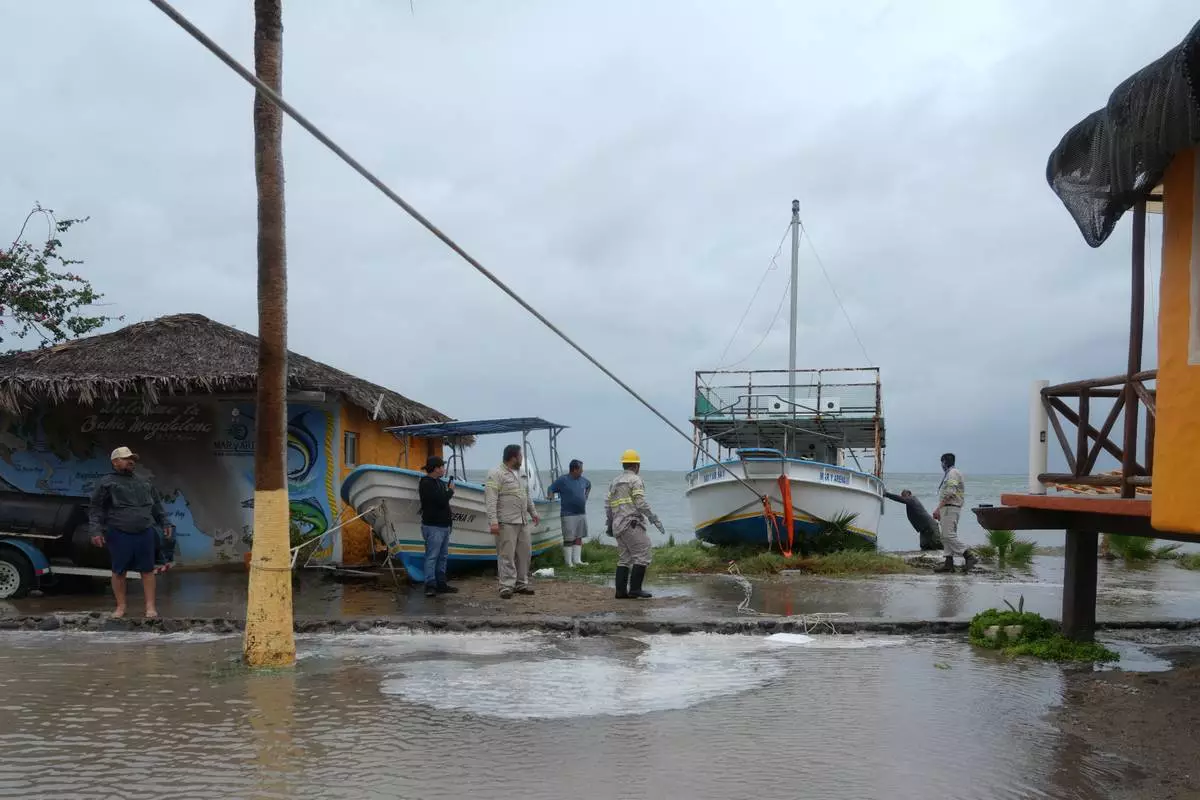
Workers pull a boat to shore as Hurricane Polo approaches Puerto San Carlos, Baja California Sur state, Mexico, Monday, Sept. 28, 2026. (AP Photo/Eduardo Verdugo)
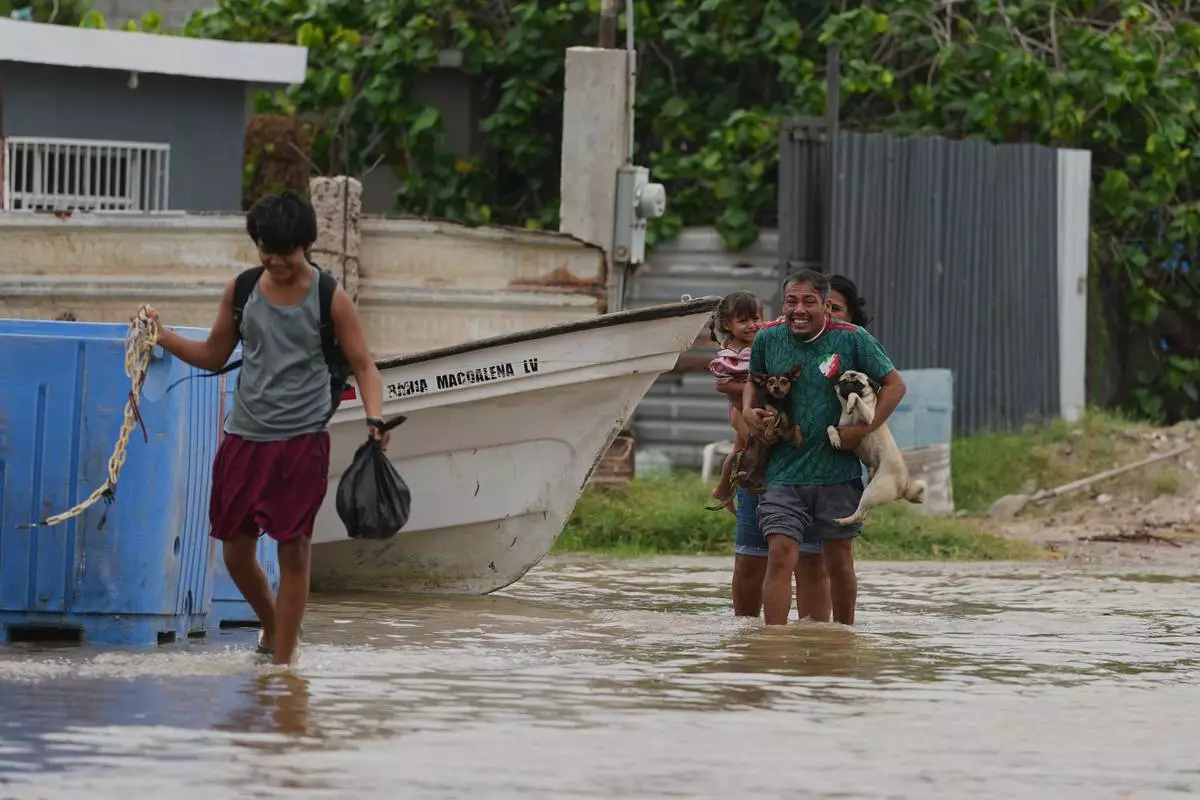
People evacuate their homes as Hurricane Polo approaches Puerto San Carlos, Baja California Sur state, Mexico, Monday, Sept. 28, 2026. (AP Photo/Eduardo Verdugo)
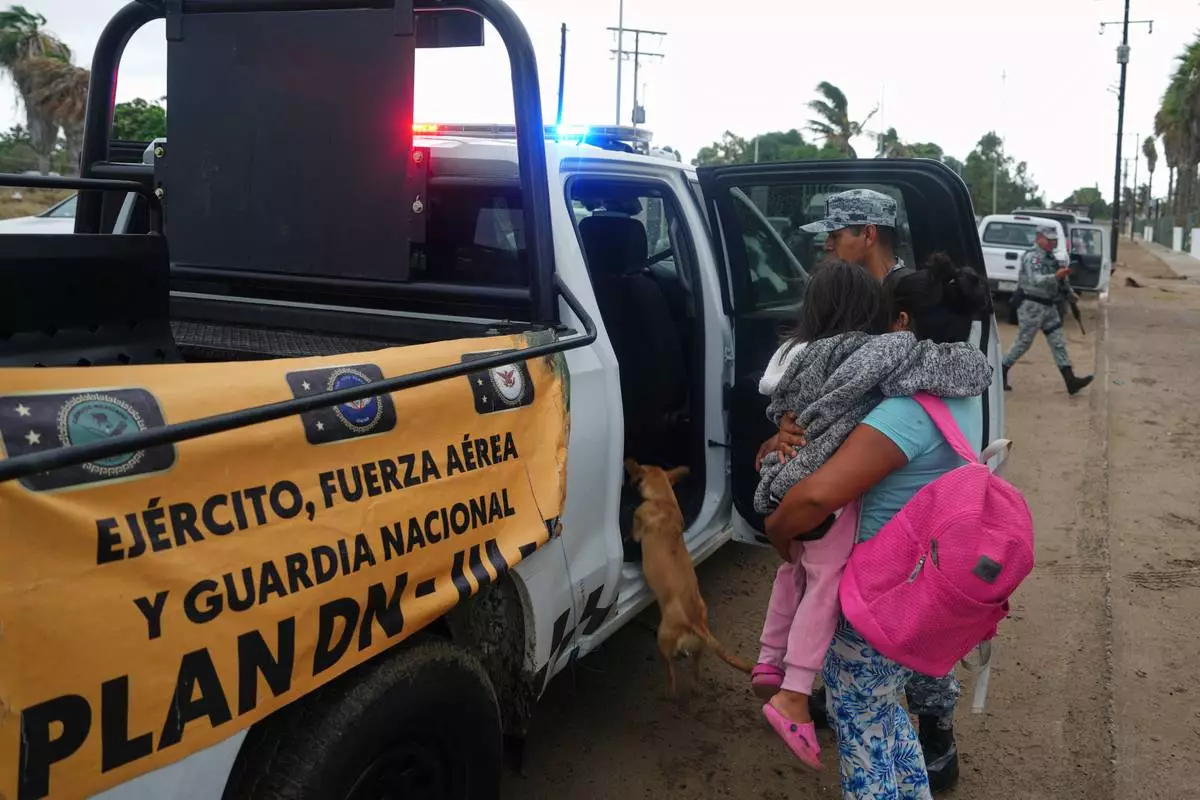
Residents are evacuated by the Army as Hurricane Polo approaches Puerto San Carlos, Baja California Sur state, Mexico, Monday, Sept. 28, 2026. (AP Photo/Eduardo Verdugo)
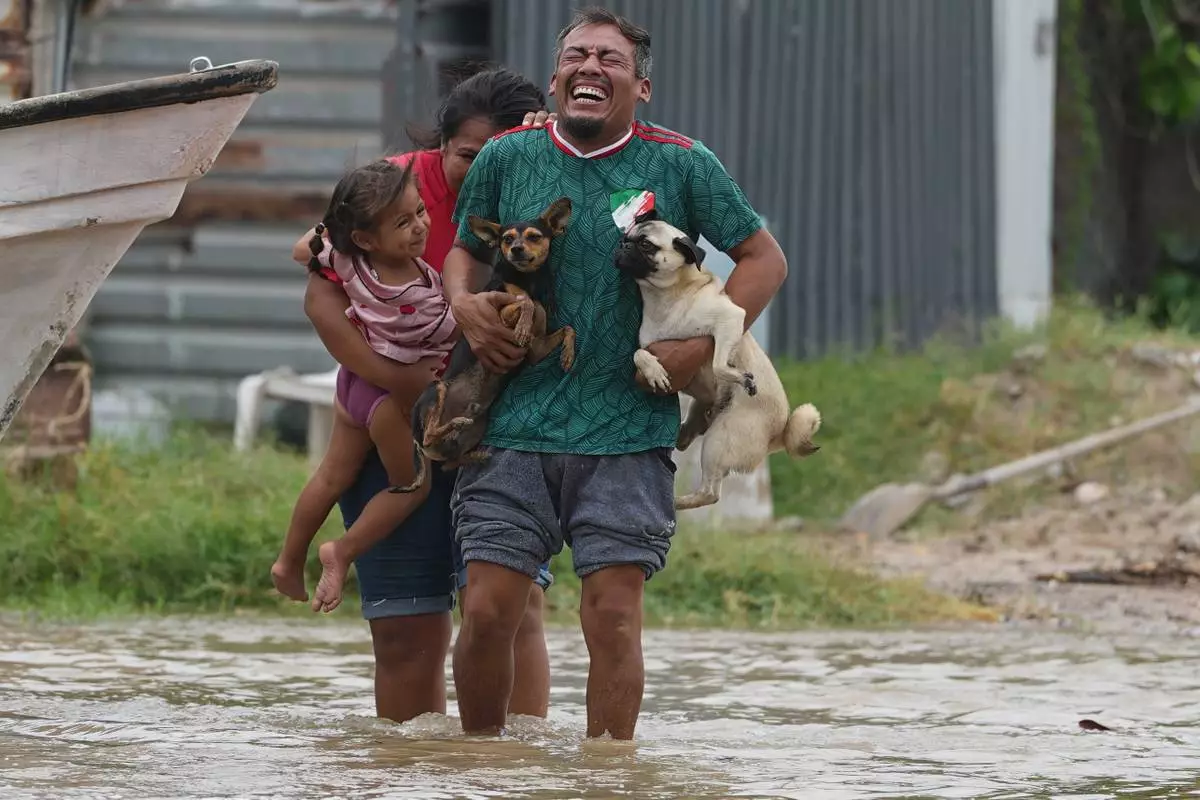
People evacuate their homes as Hurricane Polo approaches Puerto San Carlos, Baja California Sur state, Mexico, Monday, Sept. 28, 2026. (AP Photo/Eduardo Verdugo)
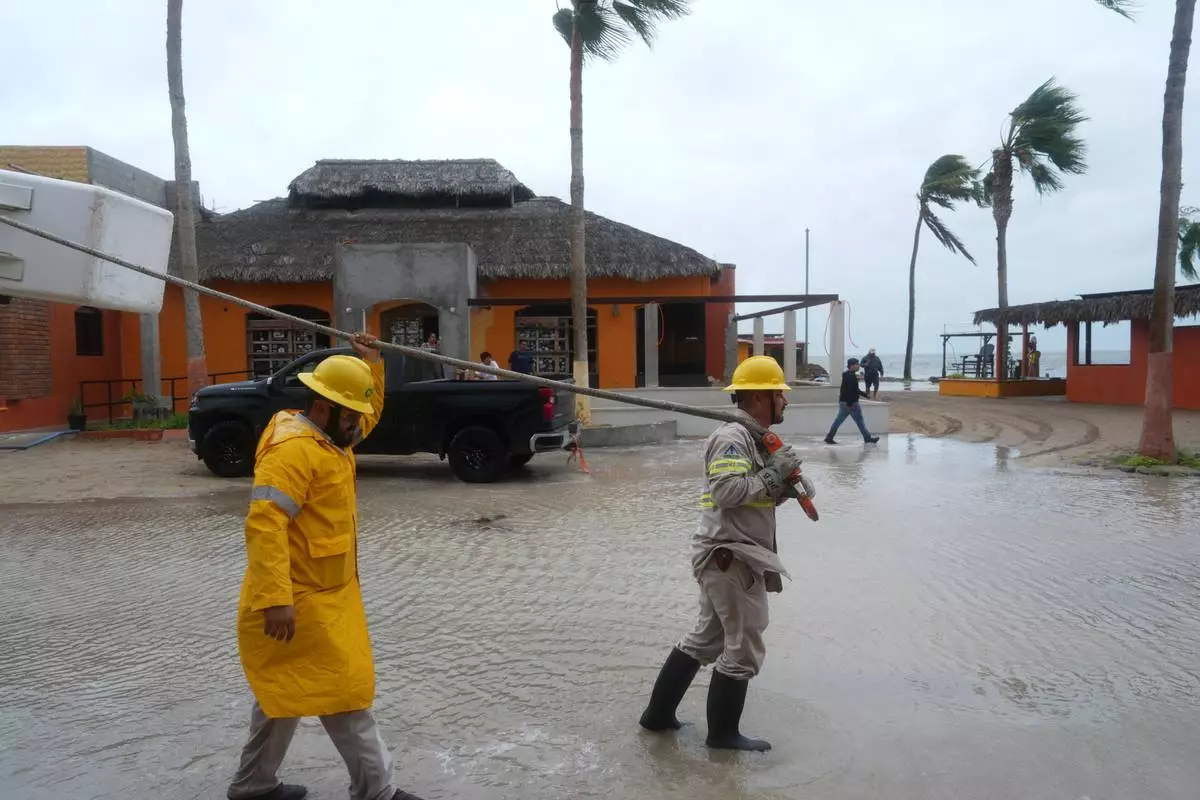
Workers pull a boat to shore as Hurricane Polo approaches Puerto San Carlos, Baja California Sur state, Mexico, Monday, Sept. 28, 2026. (AP Photo/Eduardo Verdugo)