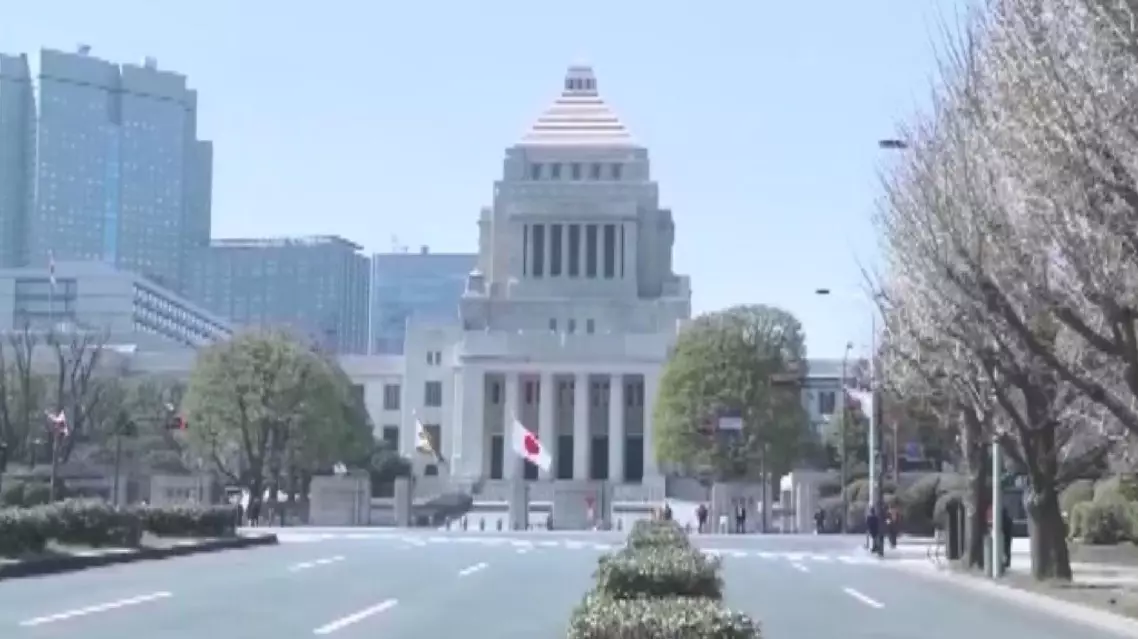
The Japanese government's decision of scrapping restrictions on the export of lethal weapons have drawn sharp criticism from international observers who say the latest move runs counter to its pacifist constitution and undermines peace and stability in the region.
Criticism intensified after the Japanese government on Tuesday officially revised "the three principles on transfer of defense equipment and technology" and their implementation guidelines, a move which allows the overseas sales of weapons, including those with lethal capabilities.
The revision scraps rules that limit Japan's defense equipment exports to five non-combat categories, marking a shift in defense policy for a country that has touted itself as a "peace-loving nation" under its war-renouncing Constitution since its defeat in World War II.
Observers have expressed strong opposition, worrying this will further escalate the tensions in the region and bring new threats to the world. They stressed that the international community needs to be vigilant against Japan's neo-militarist tendencies and work together to keep the region and the world peaceful and stable.
"There is currently no threat serious enough to justify Japan taking such drastic measures. I hope that Japan will not become a source of instability and violence," said Pino Arlacchi, former UN under-secretary-general, who is also a sociologist.
"Such worrying behavior should be condemned and opposed. Given Japan's extremely negative role in World War II, including its aggression against China, attacks on the United States, and wars waged in Asia, Japan should now adhere to pacifist principles," said Fabio Marcelli, an Italian legal expert.
German expert Stefan Loubichi pointed out that Japan's latest moves send a dangerous signal, and urged great vigilance against the rise of its neo-militarism. "Japan's atrocities in World War II are almost unimaginable. Yet what is even more alarming is that Japan has learned nothing from its past. That is a warning for the entire Far East. We must stay vigilant against Japanese militarism," said Loubichi.
"Whenever we're speaking of Japan and their will to make changes in their militarization, it is something that causes concern not only for China, but also for their neighbors. Because we know that Japan was one of the countries that was involved actively in World War II. Actually, they brought a lot of atrocities to the Chinese people and also for the other people from Asia, the international community or the United Nations should also take care about these changes that we can see in the foreign policy of Japan. This is not something that can have benefit for international peace, but can do a lot of harm," Ivona Ladjevac, deputy director at the Institute for International Politics and Economics in Belgrade, said.
Wojciech Nowiak, a professor at Adam Mickiewicz University in Poland, said that the Japanese government's moves pose dangers to the post-WWII peace order.
"Allowing the export of lethal weapons represents a departure from an established policy principle - a principle that itself took shape after World War II. As one of the countries that started the war, Japan bears certain obligations, including refraining from exporting lethal weapons and focusing solely on defense within that framework. The current decision by Japan has now broken the relevant postwar order that was established after World War II," Nowiak said. "I think it's a danger to regional peace, to global peace, especially, as I've said, given Japan's history, it is cause for concern among neighbors in that region and among the rest of the international community," said Euston Chiputa, a Zambian historian.
Int'l observers criticize Japan's move to lift ban on lethal arms exports