KATHMANDU, Nepal (AP) — A massive ice block on the route just above the Mount Everest base camp has forced hundreds of climbers and their local guides to delay their attempt to scale the world's highest peak, officials said Friday.
The serac between base camp and Camp One is unstable and is risky for climbers, said Himal Gautam of Nepal's Department of Mountaineering.
Officials are working with climbers and expedition organizers to assess the situation as hundreds of climbers and their guides wait at base camp unable to move up the mountain.
According to the department, 410 foreign climbers have been issued permits to attempt to reach the Everest summit during the spring climbing season, which ends at the end of May.
The “Icefall Doctors,” the elite guides who lay the yearly climbing route by setting ropes and securing aluminum ladders over crevasses usually finish the task by mid-April.
The Sagarmatha Pollution Control Committee, which would deploy the team to lay the route, plans to assess the serac by aerial survey. The risk of avalanche is high and they are waiting for the serac to melt down on its own to a safe level, committee Chairman Lama Kazi Sherpa said.
The serac is part of the Khumbu Icefall, a constantly shifting glacier with deep crevasses and huge overhanging ice that can be as big as 10-story buildings. It is considered one of the most difficult and trickiest sections of the climb to the peak.
In 2014, a chunk of the glacier sheared away from the mountain, setting off an avalanche of ice that killed 16 Sherpa guides as they carried clients’ equipment up the mountain. It was one of the deadliest disasters in Everest climbing history.
Hundreds of foreign climbers and about the same number of Nepalese guides and helpers are expected to attempt to scale the mountain next month when there are a few brief windows of favorable weather.
Thousands of people have climbed the 8,849-meter (29,032-foot) high peak since it was first climbed on May 29, 1953, by New Zealander Edmund Hillary and Sherpa guide Tenzing Norgay.
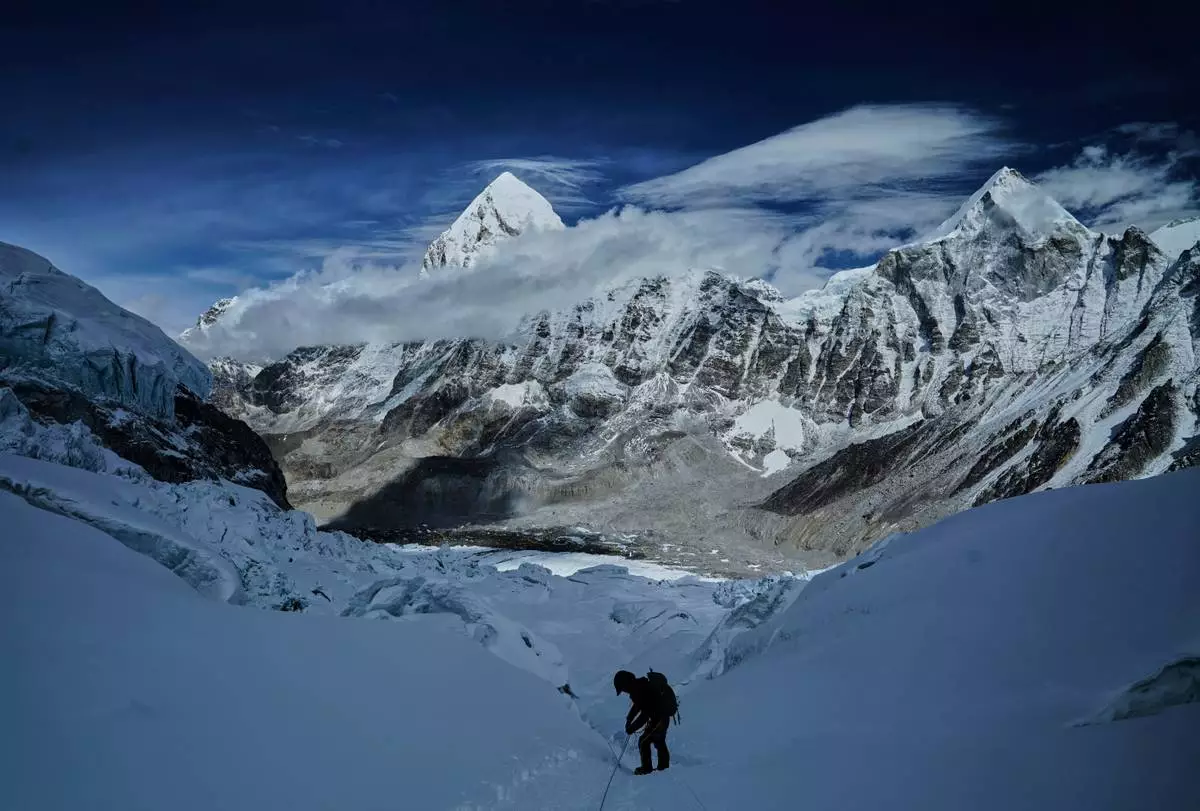
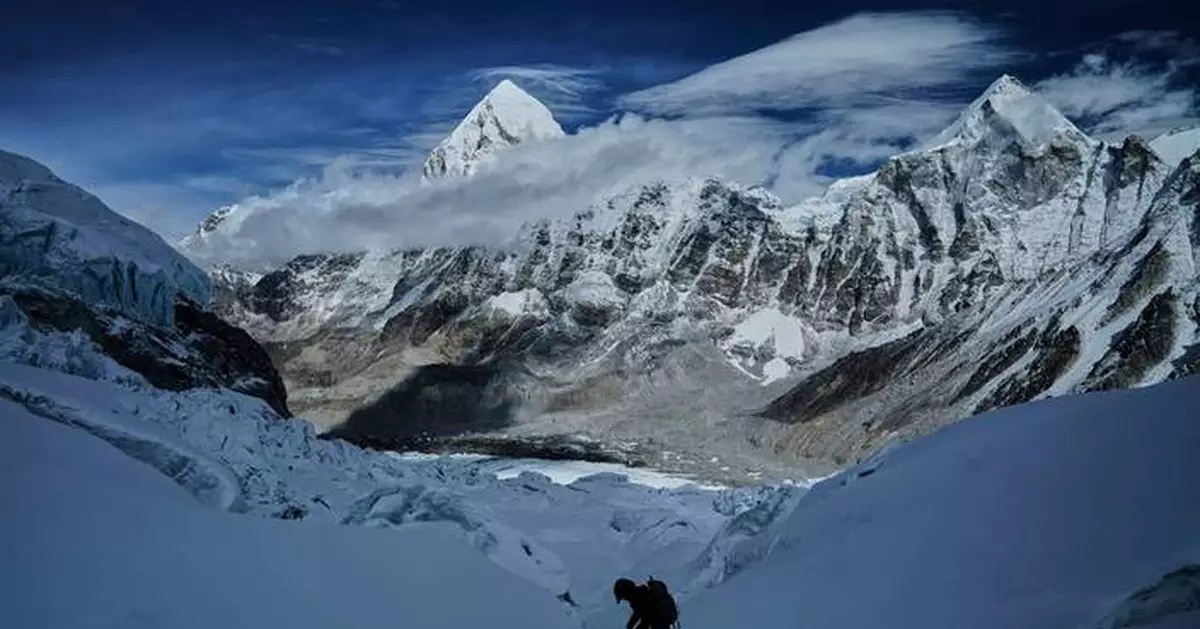
FILE - Mount Pumori, center left, looms in the background as a mountaineer negotiates Khumbu Icefall to descend to Everest Base Camp, in Nepal, May 4, 2025. (AP Photo/Pasang Rinzee Sherpa, File)
ANCHORAGE, Alaska (AP) — Late every summer, hulking white bears gather outside a tiny Alaska Native village on the edge of the continent, far above the Arctic Circle, to feast on whale carcasses left behind by hunters and to wait for the deep cold to freeze the sea.
It’s a spectacle that once brought 1,000 or more tourists each year to Kaktovik, the only settlement in the Arctic National Wildlife Refuge, in a phenomenon sometimes called “last chance tourism” — a chance to see magnificent sights and creatures before climate change renders them extinct.
The COVID-19 pandemic and an order from the federal government halting boat tours to see the bears largely ended Kaktovik's polar bear tourism amid concerns that the tiny village was being overrun by outsiders.
But Kaktovik leaders are now hoping to revive it, saying it could be worth millions to the local economy and give residents another source of income — provided the village can set guidelines that protect its way of life and the bears themselves.
“We definitely see the benefit for tourism,” said Charles Lampe, president of the Kaktovik Inupiat Corp, which owns 144 square miles (373 square kilometers) of land. “The thing is, it can’t be run like it was before.”
As far back as the early 1980s, anyone in Kaktovik with a boat and knowledge of the waters could take a few tourists out to watch the bears as they lumbered across the flat, treeless barrier islands just off the coast or tore into the ribs of a bowhead whale left by subsistence hunters.
Tourism in Kaktovik soared in the years after federal officials declared polar bears a threatened species in 2008. The rapid warming of the Arctic is melting the sea ice that the bears use to hunt seals, and scientists have said that most polar bears could be wiped out by the end of the century.
As visitation boomed, the federal government imposed regulations requiring tour operators to have permits and insurance, and that began to squeeze locals out of the industry, Lampe said. Larger out-of-town operators moved in, and before long, crowds of tourists were coming to Kaktovik — a village of about 250 people — during the six-week viewing season.
The town’s two hotels and restaurants lost out on some business when large operators began flying tourists in from Fairbanks or Anchorage for day trips. Locals complained that tourists gawked at them or traipsed through their yards.
Small plane capacity became an issue, with residents sometimes battling tourists to get on flights to or from larger cities for medical appointments, forcing those left stranded in the cities to get expensive hotel rooms for the night.
When the pandemic struck, Kaktovik paused visitation. Then in 2021, the federal government, which manages polar bears, halted boat tours, mostly over concerns about how tourists were affecting bear behavior and overrunning the town.
Alaska Native leaders are now in talks with the U.S. Fish and Wildlife Service to address those concerns and reignite the industry, perhaps as early as 2027. The agency told The Associated Press in a statement that it’s working with Kaktovik “to ensure that any future opportunities are managed in a way that prioritizes visitor safety, resource protection, and community input.”
Among the changes Kaktovik leaders want to see is a limit on how long a boat can sit in the water near the bears. Too long, Lampe said, and the bears get used to humans — making for a dangerous situation when bears wander into town looking for food.
During the height of the tourism boom, it became tougher to haze bears out of town, even with the town’s bear patrol shooting at them with nonlethal rounds. The patrol had to kill about three or four bears per year, compared with maybe one per year before the boom, Lampe said.
“Our safety was at risk,” Lampe said.
In 2023, a 24-year-old woman and her 1-year-old son were killed in a polar bear attack in Wales, in far western Alaska. It was the first fatal polar bear attack in nearly 30 years in Alaska, the only U.S. state home to the species.
Since the boat tours in Kaktovik were halted, the bears once again seem more fearful of humans, Lampe said.
Polar bear tourism coincides with Kaktovik’s subsistence whaling season. When a crew lands a whale, it's usually butchered on a nearby beach. While the community encourages visitors to watch or even help, some were recording or taking pictures without permission, which is considered disrespectful, Lampe said.
Sherry Rupert, CEO of the American Indigenous Tourism Association, suggested that Kaktovik market itself as a two- or three-day experience.
Native communities that are ready for tourists "want them to come and be educated and walk away with a greater understanding of our people and our way of life and our culture,” she said.
Roger and Sonia MacKertich of Australia were looking for the best spot on the planet to view polar bears in the wild when they came to Kaktovik in September 2019. They spent several days in the village, took a walking tour led by an elder and bought souvenirs made by local artists, including a hoodie featuring a polar bear.
For Roger MacKertich, a professional wildlife photographer based in Sydney, the highlight was the boat tours to see bears roaming on the barrier islands or taking a dip in the water. The bears paid them no attention.
“That’s nearly as good as it gets,” he said.
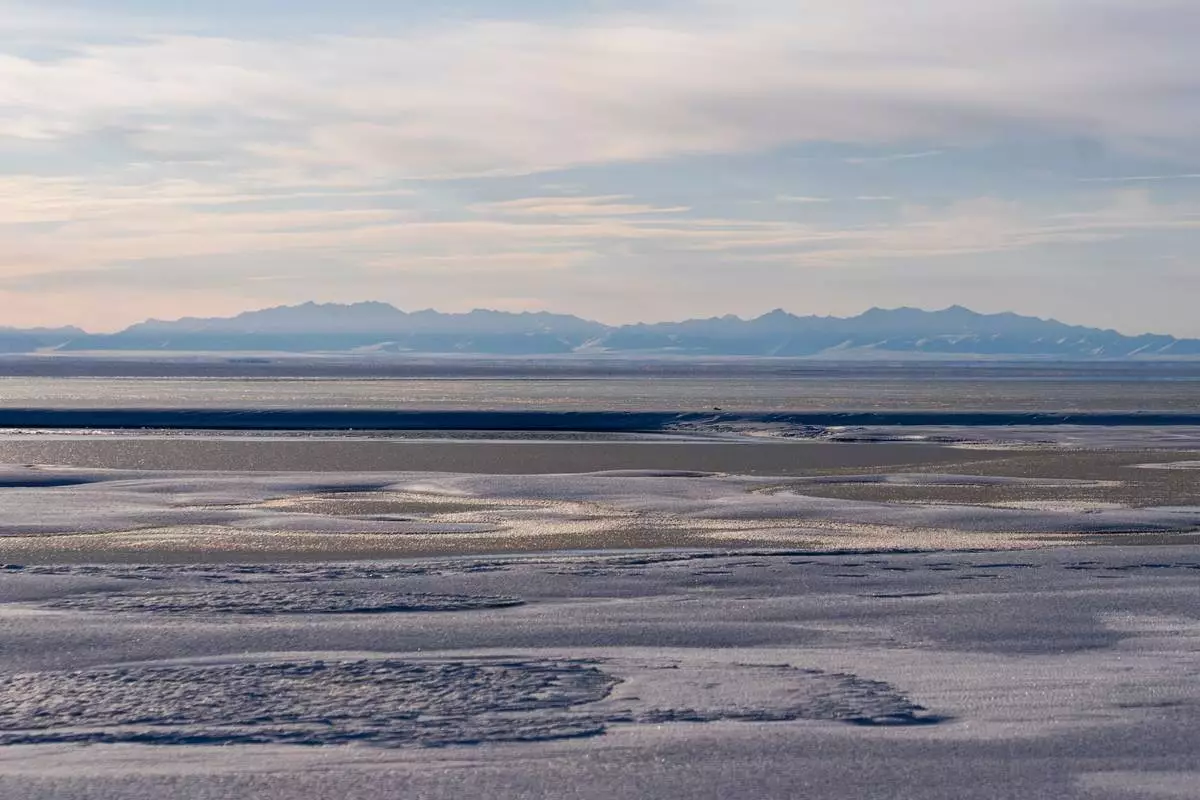
FILE - The Kaktovik Lagoon and the Brooks Range mountains of the Arctic National Wildlife Refuge are seen in Kaktovik, Alaska, Oct. 15, 2024. (AP Photo/Lindsey Wasson, File)
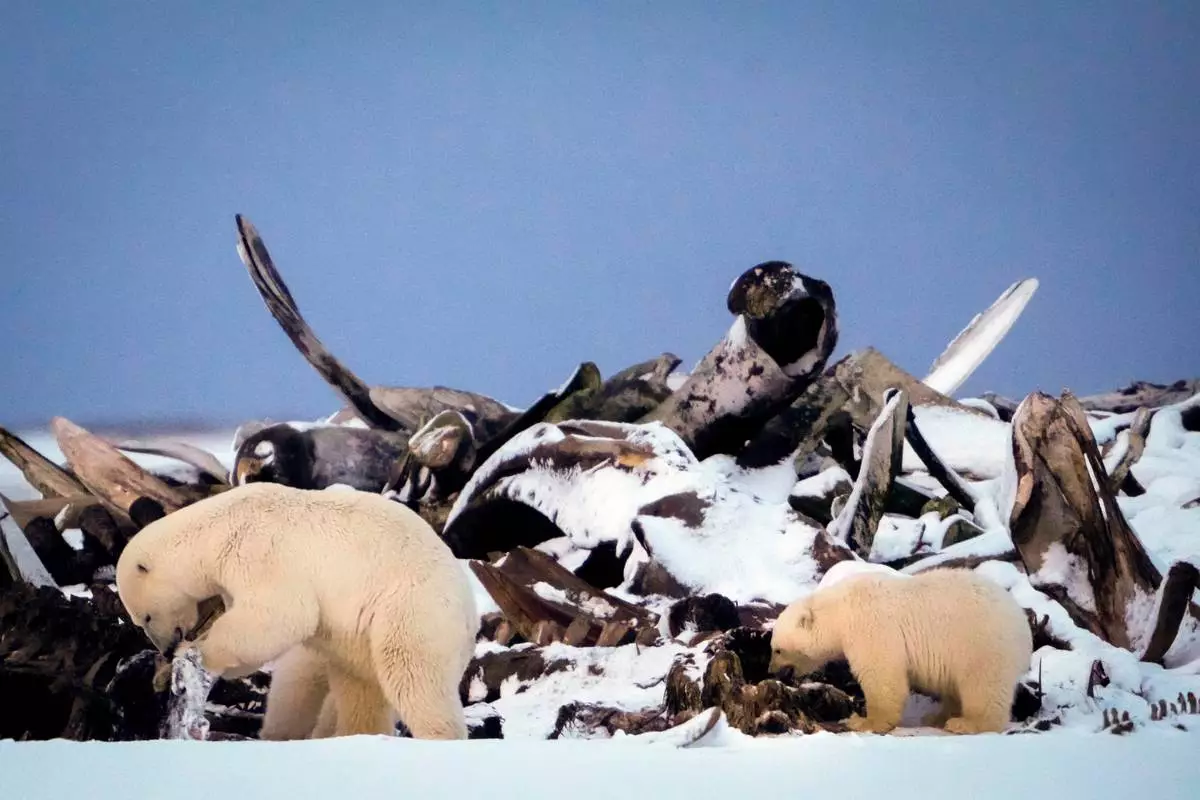
FILE - A polar bear and a cub search for scraps in a large pile of bowhead whale bones left from the village's subsistence hunting at the end of an unused airstrip near the village of Kaktovik, Alaska, on Oct. 15, 2024. (AP Photo/Lindsey Wasson, File)
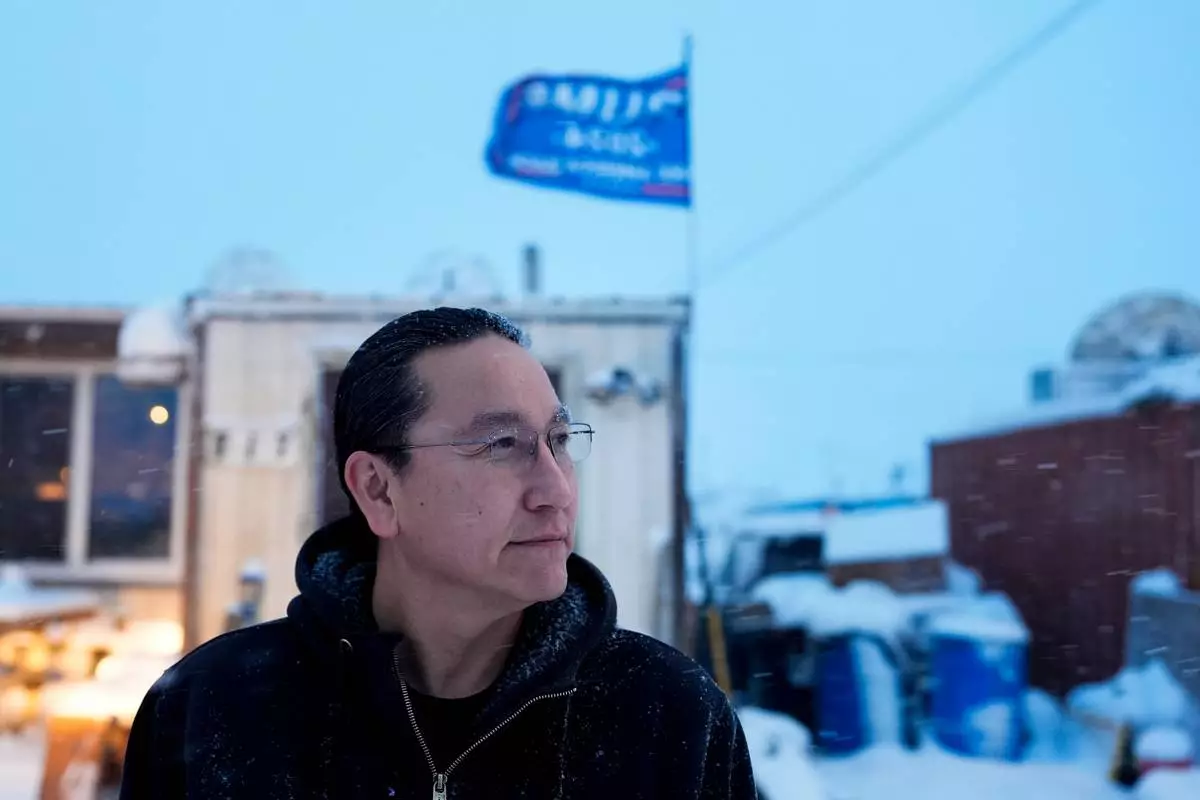
FILE - Charles Lampe, president of the Kaktovik Inupiat Corporation, poses for a portrait outside his home in Kaktovik, Alaska, Wednesday, Oct. 16, 2024. (AP Photo/Lindsey Wasson, File)