JAKARTA, Indonesia (AP) — Cheers broke out in Indonesia's capital on Friday as residents, city workers and environmental volunteers hauled bulging nets of invasive fish to the surface of a reservoir in an operation to crack down on “janitor fish.”
Authorities are seeking to remove at least 10 tons (9 metric tons) of the fish from Jakarta's waterways, an effort officials hope will restore balance to the Ciliwung River and renew public attention on water quality.
Click to Gallery
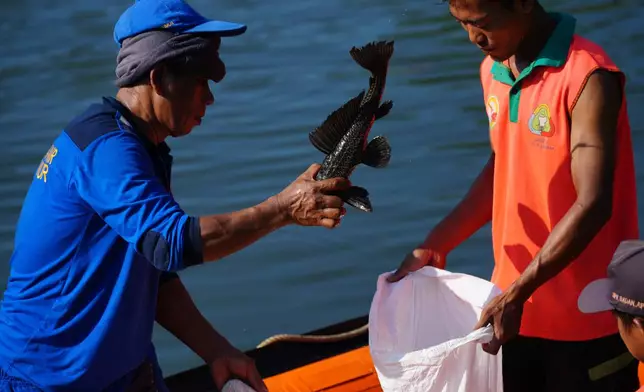
Municipal workers catch a janitor fish during a campaign to remove the invasive species from the city's rivers, canals and water reservoirs, in Jakarta, Indonesia, Friday, April 24, 2026.(AP Photo/Tatan Syuflana)
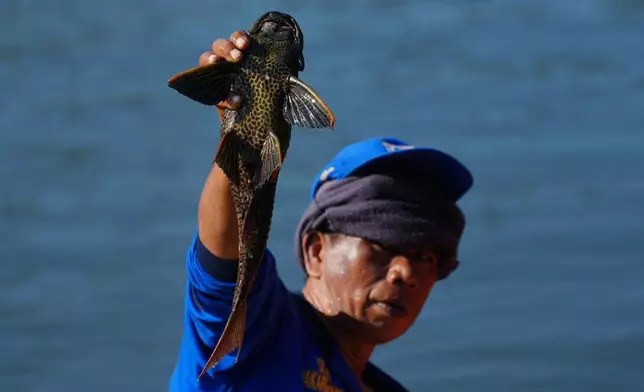
A municipal workers holds up a janitor fish he catches during a campaign to remove the invasive species from the city's rivers, canals and water reservoirs, in Jakarta, Indonesia, Friday, April 24, 2026.(AP Photo/Tatan Syuflana)
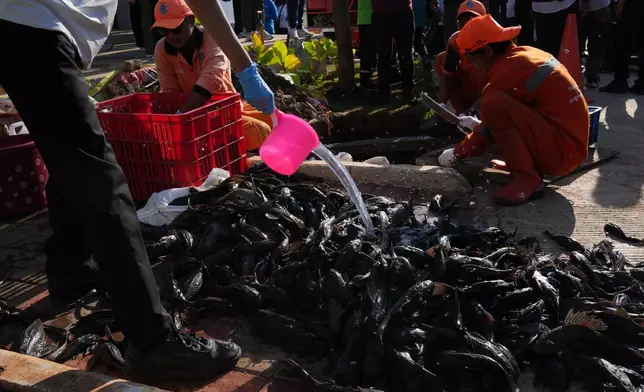
A municipal worker pours water on a recently caught janitor fish before killing and burying them during a campaign to remove the invasive species from the city's rivers, canals and water reservoirs, in Jakarta, Indonesia, Friday, April 24, 2026.(AP Photo/Tatan Syuflana)
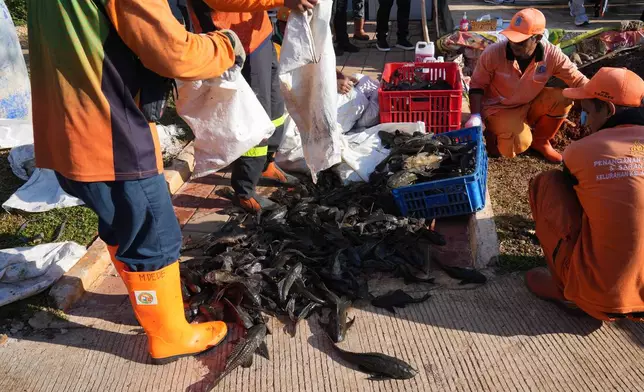
Municipal workers unload sacks of recently caught janitor fish to be killed and buried during a campaign to remove the invasive species from the city's rivers, canals and water reservoirs, in Jakarta, Indonesia, Friday, April 24, 2026. (AP Photo/Tatan Syuflana)
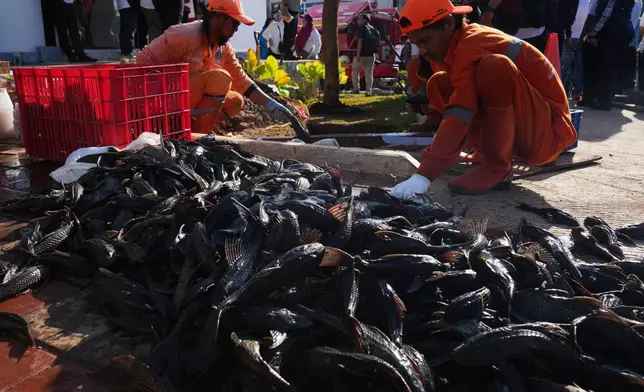
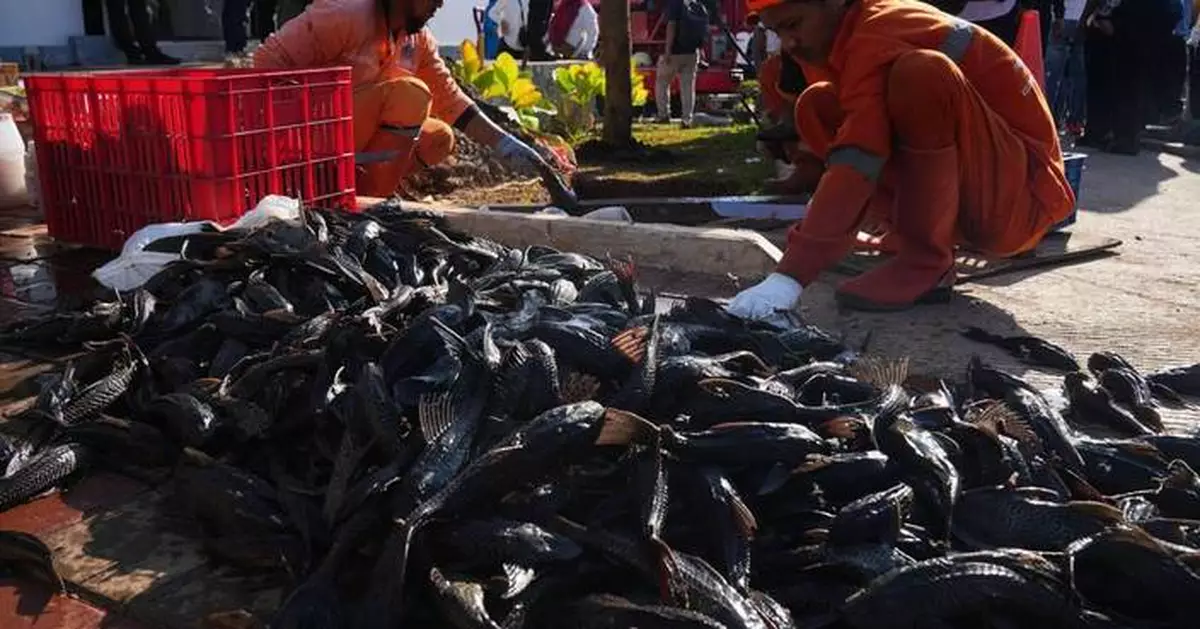
Municipal workers kill recently caught janitor fish before burying them during a campaign to remove the invasive species from the city's rivers, canals and water reservoirs, in Jakarta, Indonesia, Friday, April 24, 2026. (AP Photo/Tatan Syuflana)
From the polluted river to the concrete embankments and skyscraper-lined canals of the city’s heart, the dark shapes of the fish cling tightly to the river walls. At first glance, they appear almost prehistoric, with armored bodies gleaming a dull brown beneath the murky surface.
Janitor fish, or suckermouth catfish, known scientifically as Pterygoplichthys and locally as “sapu-sapu,” aren't native to Indonesia. Imported decades ago for aquariums because of their ability to consume algae, they were later released and found a home in Jakarta’s heavily polluted rivers. The fish can grow up to 50 centimeters (nearly 20 inches) and live for 10-15 years.
Experts have long warned that unchecked populations of invasive species can destabilize freshwater ecosystems, particularly in densely populated urban areas like Jakarta.
Dian Rosleine, an ecologist from the Bandung Institute of Technology, said that the adaptability of janitor fish is very high, so that even in polluted conditions, it can survive when other species can't.
“So, these fish are biological indicators that the water is in poor condition,” she said.
The Ciliwung once carried clear water from the mountains of West Java into Jakarta. Today, it flows through dense neighborhoods, carrying untreated household waste and industrial runoff. Concrete walls replaced riverbanks. During dry months, the water warms and slows — conditions that favor janitor fish over native species, Rosleine said.
Jakarta authorities have responded with mass removals, targeting the janitor fish in city waterways. The campaign began last week.
The cleanup drive, ordered by Jakarta Gov. Pramono Anung, was carried out simultaneously in all five administrative cities of the capital, involving hundreds of personnel, including firefighters, disaster officers and local residents. They have netted and buried more than seven tons of janitor fish across the city within a week.
The cleanup on Friday at a 6-meter-deep (19-foot-deep) reservoir in East Jakarta’s Ciracas neighborhood drew curious crowds as city workers collected about 320 kilograms (705 pounds) of the fish.
Piles of wriggling janitor fish filled red barrels along the reservoir — tangible proof that something, at last, was being done.
“The janitor fish populations have reproduced at a notable level while also feeding on native species," East Jakarta's mayor, Munjirin, told reporters when visiting Friday's cleanup. “The impact extends beyond ecosystem destruction, contributing to structural damage to riverbank and embankment walls.”
Munjirin, who like many Indonesians uses a single name, said that the coordinated operation marks the beginning of a sustained effort to control the species, with regular monitoring and removal planned to prevent further ecological damage.
However, he vowed a review of the program’s method after the Indonesian Ulema Council, or MUI, raised concerns over perceived cruelty, pledging that all fish will be dead before burial.
While endorsing the cleanup, MUI’s fatwa commission warned that burying the janitor fish alive amounts to a violation of animal rights enshrined in Islamic teaching.
Authorities are still cautious about what happens next. As janitor fish are edible in some countries, concerns over heavy metal contamination mean they won't be immediately approved for consumption in Jakarta. Instead, officials are exploring alternatives, including processing the fish into animal feed or fertilizer.
Anung said that the cleanup method will require the fish to be dead before burial at designated sites, with hygiene standards applied to block their return to rivers or trade.
The Jakarta governor noted that buried janitor fish can serve as natural compost and suggested adopting Brazil’s model, where the fish are turned into charcoal to generate greater economic benefits.
Yet experts caution that removal is only a beginning. Without improving wastewater management and reducing pollution, the river could quickly return to the same condition.
“The Ciliwung River requires rehabilitation, our major challenge that must be addressed,” Rosleine said. “Addressing the symptoms without tackling the root causes will not provide a lasting solution.”
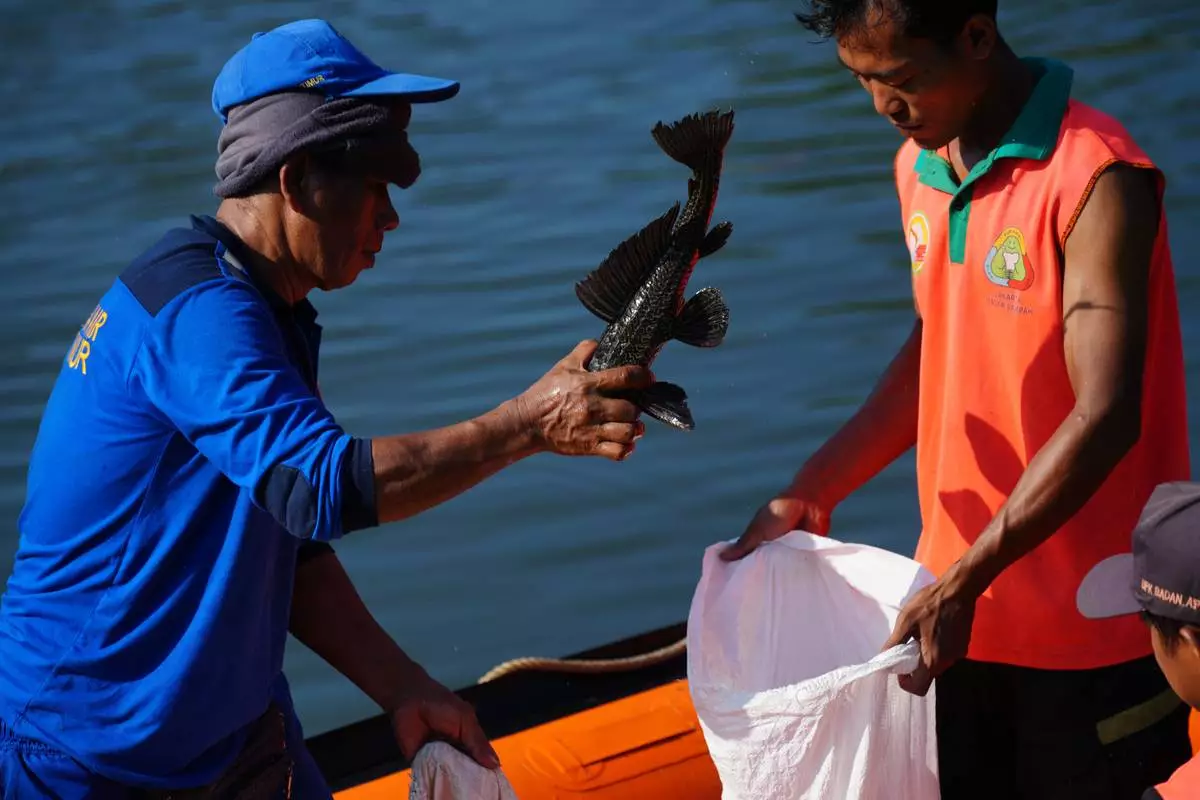
Municipal workers catch a janitor fish during a campaign to remove the invasive species from the city's rivers, canals and water reservoirs, in Jakarta, Indonesia, Friday, April 24, 2026.(AP Photo/Tatan Syuflana)
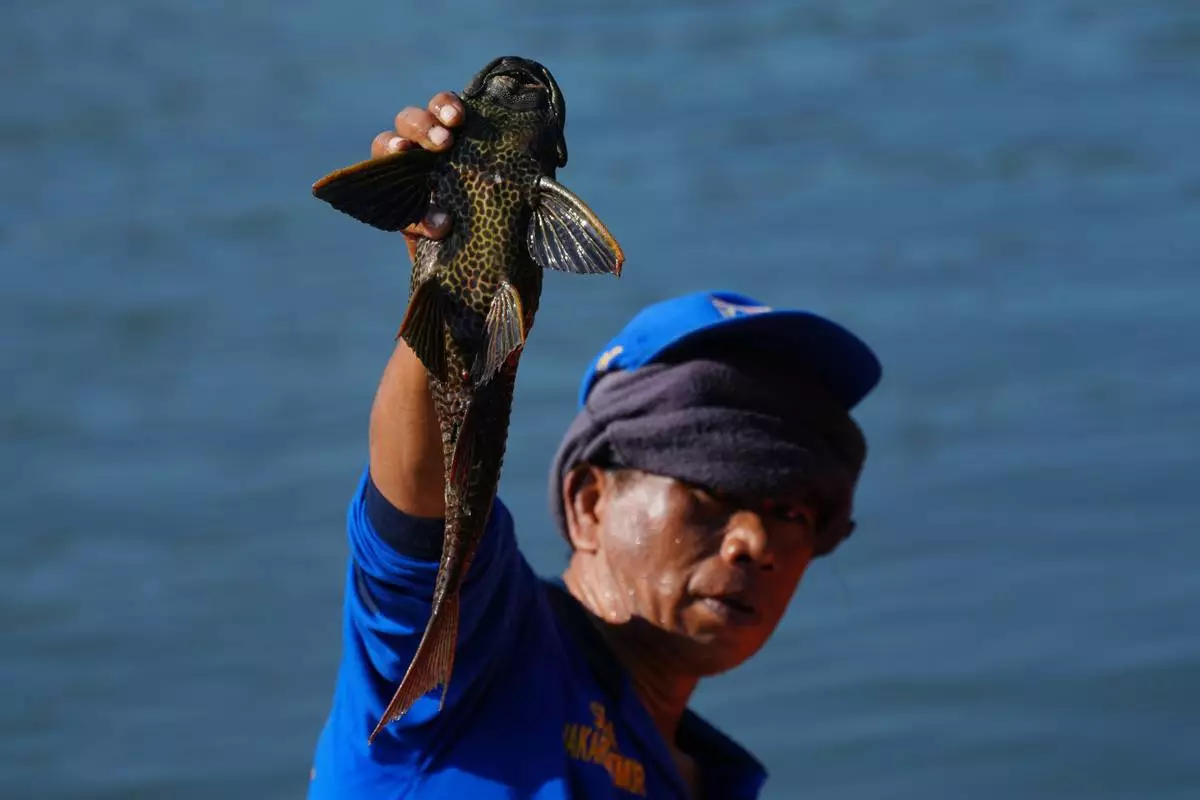
A municipal workers holds up a janitor fish he catches during a campaign to remove the invasive species from the city's rivers, canals and water reservoirs, in Jakarta, Indonesia, Friday, April 24, 2026.(AP Photo/Tatan Syuflana)
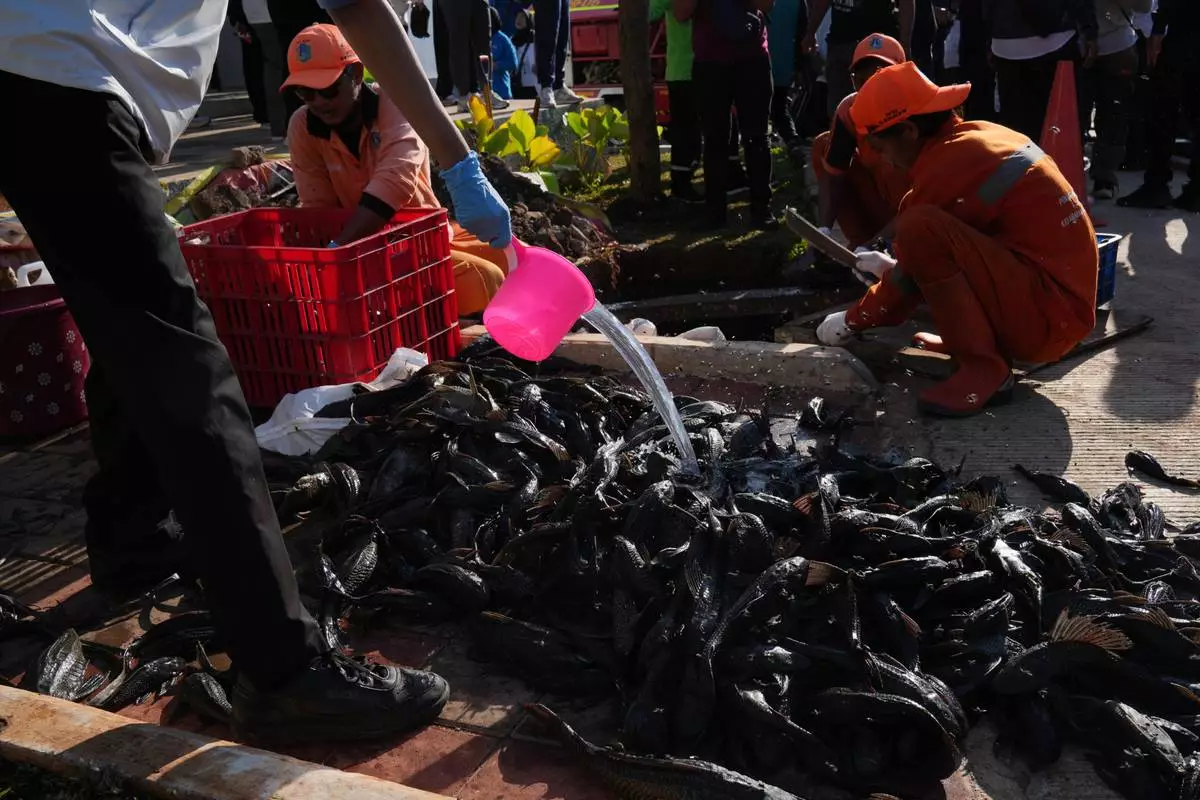
A municipal worker pours water on a recently caught janitor fish before killing and burying them during a campaign to remove the invasive species from the city's rivers, canals and water reservoirs, in Jakarta, Indonesia, Friday, April 24, 2026.(AP Photo/Tatan Syuflana)
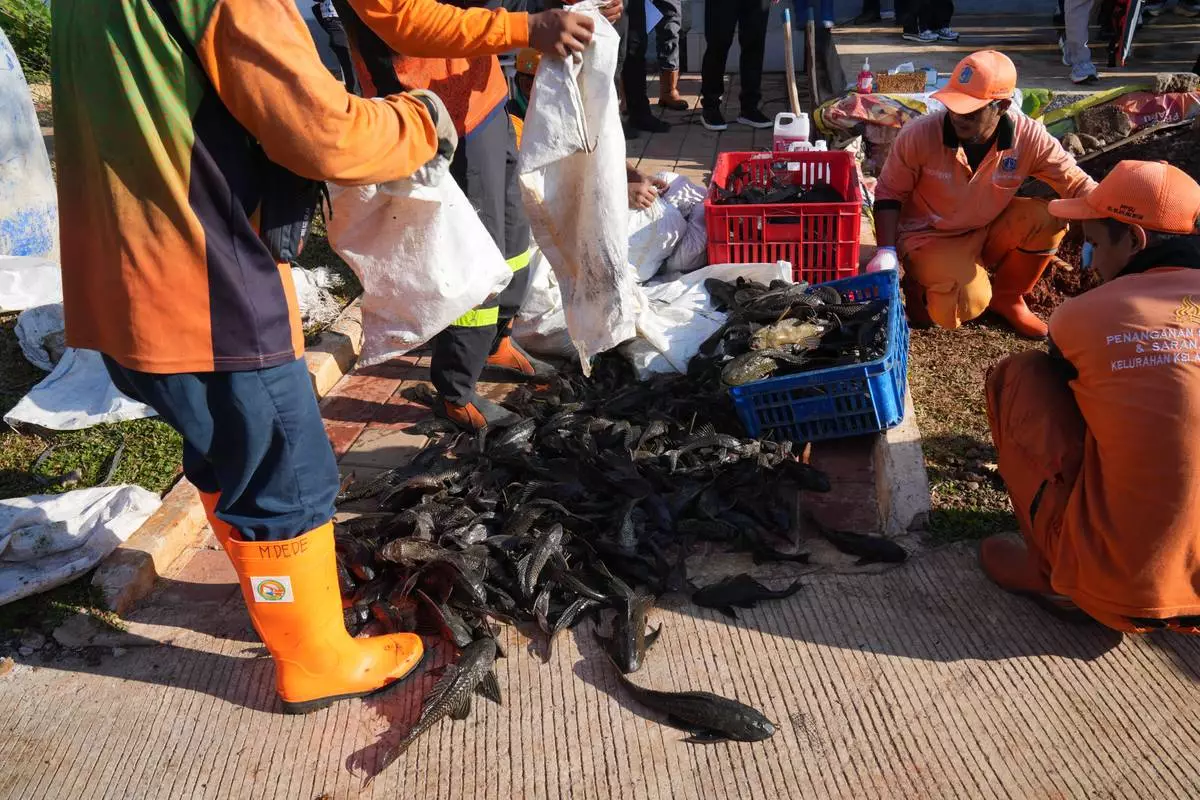
Municipal workers unload sacks of recently caught janitor fish to be killed and buried during a campaign to remove the invasive species from the city's rivers, canals and water reservoirs, in Jakarta, Indonesia, Friday, April 24, 2026. (AP Photo/Tatan Syuflana)
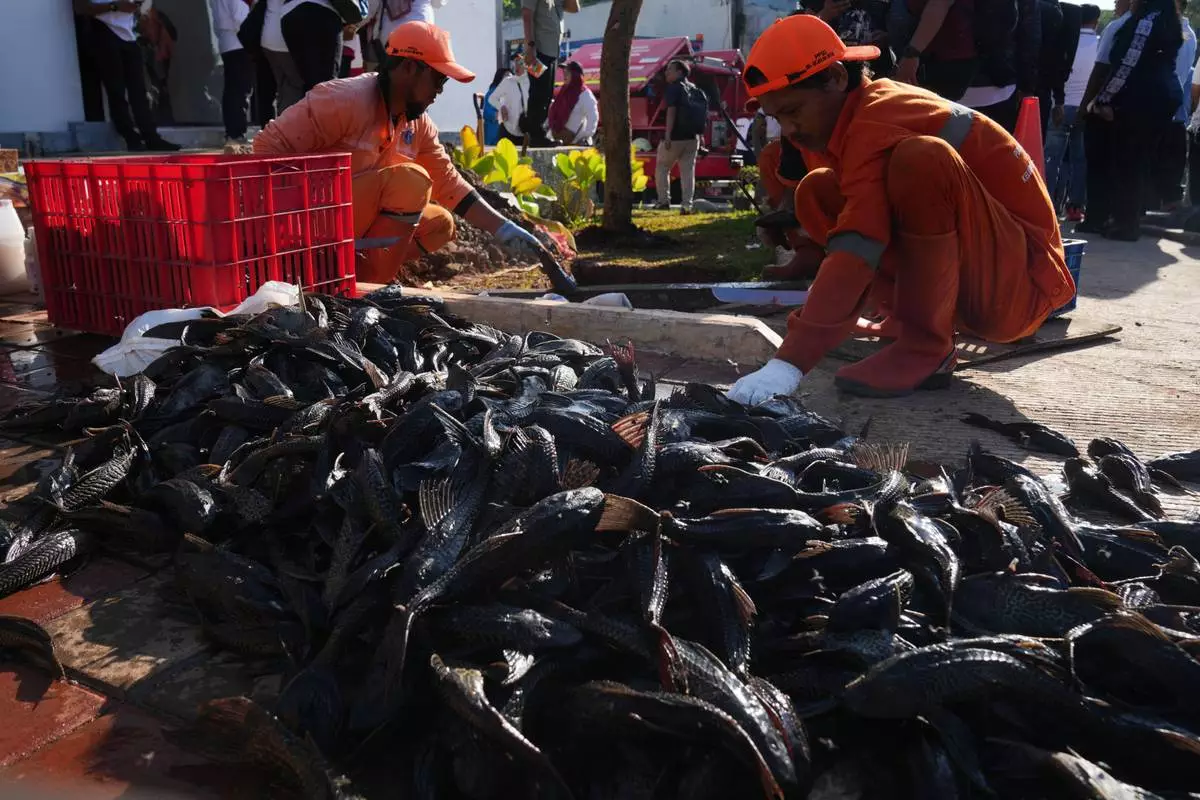
Municipal workers kill recently caught janitor fish before burying them during a campaign to remove the invasive species from the city's rivers, canals and water reservoirs, in Jakarta, Indonesia, Friday, April 24, 2026. (AP Photo/Tatan Syuflana)