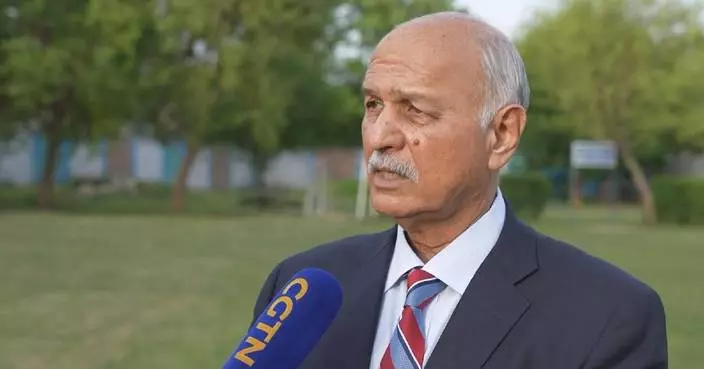
The U.S. blockade and coercion have become a major obstacle to the stable operation of the ceasefire mechanism, said senior Iranian journalist Afzel Reza who serves as a bureau chief of the Islamic Republic News Agency in Islamabad, Pakistan.
The process of the expected second round of peace talks between the United States and Iran seems stalled as Iran reportedly decided not to take part, accusing the United States of violating the ceasefire.
Just as the two-week truce that began on April 8 was nearing expiration, U.S. President Donald Trump on Tuesday extended the ceasefire "at Pakistan's request," but continued to blockade Iranian ports.
Citing the blockade as a ceasefire violation, Iran refused to attend the talks, together with the cancellation of U.S. Vice President JD Vance's Pakistan visit, further shadowing the expectation on the fresh Iran-U.S. peace talks in Islamabad.
Reza said the crux of the current situation does not lie in whether Iran will respond to the call for negotiations, but rather in the actions taken by the United States.
"[The initial ceasefire was] applied on the April 8th with the initiative and the request of the Pakistani prime minister. Obviously, Iran has shared its 10-point agenda to the mediators in Pakistan, which actually was accepted once by the U.S. and Iran, giving the green signal for the Pakistani that 'OK, we are ready for the ceasefire.' But one of the very bad habit by the U.S. is to put pressure on Iran using the negotiation table as a tool to ensure the maximum demand from the Iranian side. I think it was some of the reason for why JD Vance, vice president of the United States, packed up everything in rush, and next morning he went back to the Washington D.C.," he said.
Reza said Iran will not participate in negotiations under the U.S. coercion.
"Iran denied and rejected any kind of negotiation in the shadow of the pressure and dictation by the U.S. But for the current situation, unfortunately, the U.S. is using the tool of the blockade which seriously causing hurdles for the negotiation. It is making Pakistani mediators worried. As far as I have information, Pakistan leadership are trying their best to convince the U.S. side saying 'OK, you have to end this blockade to let the diplomacy coming on the path of the peace, then you can have this conversation and the contact with the Iranian to solve your problems and make a peaceful deal to end this current war in the region,'" he said.
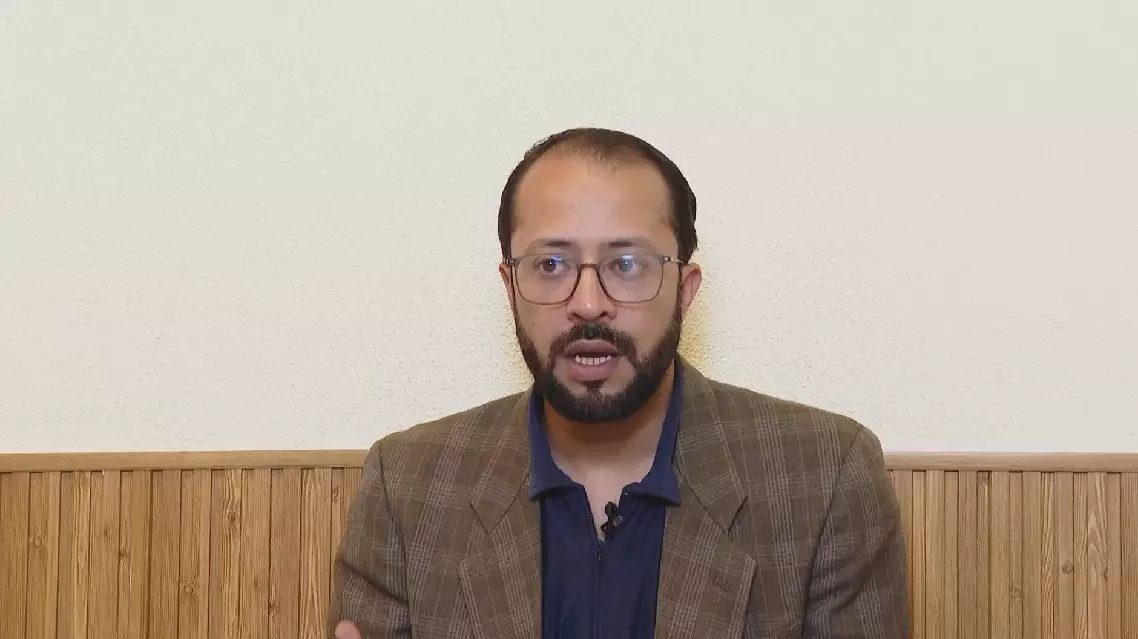
US blockade, coercion hinder its peace talks with Iran: analyst