The sharp rise in global shipping and energy costs, driven by the ongoing crisis in the Middle East, is severely affecting small economies like Panama, as the trade-dependent nation faces mounting inflation.
According to data from Panama's National Institute of Statistics and Census (INEC), consumer prices rose by 0.9 percent in March, the largest monthly increase in several months. Cumulative inflation reached 1.1 percent, a stark contrast to the stability seen in 2025.
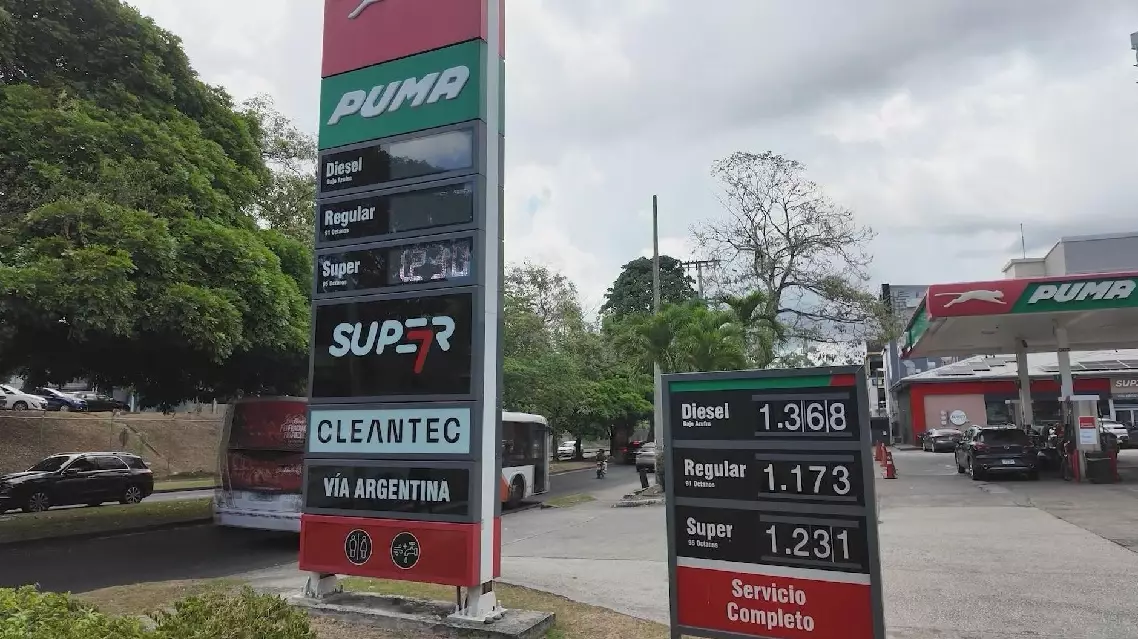
The trigger has been the rise in fuel prices, which have increased between 20 and 30 percent since the war in Iran began. Prices of 91-octane gasoline increased from 0.89 to 1.15 U.S. dollars per liter, while 95-octane rose from 0.95 to 1.2 U.S. dollars, and diesel -- crucial for transportation -- from 0.90 to 1.35 U.S. dollars.
Panama is particularly affected by these increases, as it is a country heavily dependent on imports and has no domestic fuel production.
"There have been warnings from various sectors, especially agriculture and livestock, that prices for things like fertilizers and other inputs used in the agricultural sector have gone up," said Erick Molino Ferrer, an economist in the country.
Production costs for crops have also soared due to rising fuel prices.
"Thirty-five percent of our urea came from the Persian Gulf region, so many producers are already seeing the impact. Eventually, this could be reflected in higher prices at supermarkets," Ferrer said.
Producers confirmed that they are already feeling the impact.
"Everything is getting more expensive, and that's affecting my production costs. In April, we received price increase notices from our suppliers -- some went up by 12 percent, others by 15 percent, depending on the supplier," said Vanessa Silva, a coffee producer at Susan's Farm.
In local markets, food prices have risen between 5 and 7 percent in a matter of weeks. Garlic rose more than 70 percent, from 17 U.S. dollars to nearly 30 U.S. dollars per sack; melon went from 0.75 U.S. dollars to 1.25 U.S. dollars; and watermelon from 4 U.S. dollars to 6 U.S. dollars per pound, according to information from Panama's Consumer Protection Authority.
"With diesel prices on the rise, shipping costs here have gone up as well. So we try our best to offer competitive prices to attract customers, even selling products below cost to make a profit. But if we don't have sales, how can we turn a profit? If we can't sell our products, our losses will be even greater," said Virgilio Perez, a vegetable distributor.
Middle East crisis drives up prices in Panama
The United Arab Emirates' (UAE) exit from the Organization of the Petroleum Exporting Countries (OPEC) and the broader OPEC+ is unlikely to jolt oil markets in the short term, but sets the stage for lower prices once the Iran conflict ends and Gulf exports resume, experts said.
Effective Friday, the UAE formally withdrew from OPEC in a move poised to reshape global oil markets. The decision came amid heightened geopolitical tensions driven by the ongoing Iran conflict.
The UAE Energy Minister Suhail Al Mazrouei said the timing was chosen to cause the least market disruption. But analysts say the exit reflects the UAE's long-simmering frustrations over production quotas that no longer align with its capacity.
"It gives the UAE flexibility to move from a quota within OPEC of 3.3 million barrels a day to 5 million barrels a day in 2027. It won't radically change the pricing. It will make more energy available. So, it will take some of the price pressures off," said John Defterios, senior advisor for APCO Worldwide, a global advisory firm, and also senior fellow at the Center for Energy and Materials of the World Economic Forum.
While immediate market impact remains muted amid wartime volatility, experts anticipate meaningful shifts once regional stability returns.
"It has no impact right now, because obviously oil prices right now depend on the state of the war and whether exports can start freely through the Gulf and so on. But assume, once the war is over and a normal transit resumes, I would expect the UAE will move quickly to increase production and try to refill some of that storage that was drained. And that should mean, in general, lower prices for oil importers, for oil consumers. In the longer term, yes, I think also probably it means lower prices," said Robin Mills, CEO of Qamar Energy, a Dubai-based independent consultancy company.
The UAE's departure highlights structural tensions within OPEC+. As a low-cost producer with billions invested in upstream expansion, Abu Dhabi increasingly chafed against collective quotas.
However, other members, including Iraq and Kazakhstan, also sought higher production allowances.
"This pressure has been building up for some time. But Saudi Arabia was also in a difficult position. If it agreed to grant higher production levels to the UAE, then it would have to grant them to Iraq as well. Kazakhstan wanted more [allowance as well]. Everybody wants special treatment," said Mills.
Strategically, the move aligns with the UAE's broader vision to diversify its economy.
"They made this announcement ahead of a very important forum, Make It In the Emirates, which displays what the UAE is doing in terms of diversification outside of oil and gas. So, they want that revenue from oil and gas -- the extra 50 billion dollars a year to go into greater diversification. It's advanced manufacturing, it's artificial intelligence, it's the next wave of financial services, and it is trade," said Defterios.
The exit also signals a broader recalibration of legacy energy institutions in a world confronting new climate imperatives, geopolitical fragmentation, and energy transition pressures.
"I do think it shows definitely a world in which there's a new energy reality, there's a new climate reality, there's a new geopolitical reality. And these legacy institutions have to adapt. And if they don't, then of course, their members will either leave or at least won't take them seriously," said Mills.

UAE's OPEC exit long expected, may ease oil prices after Iran war ends: experts