A historic global energy shock linked to the U.S.-Israel war on Iran is causing significant turbulence in the world's air travel, leaving many unable to fly as planned and placing financial pressure on airlines.
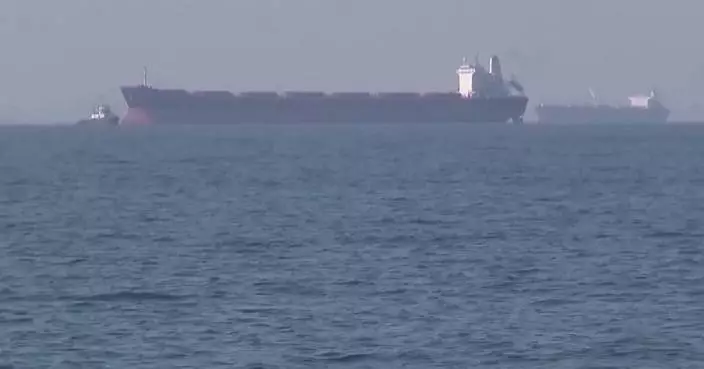
The conflict and disruptions in the Strait of Hormuz -- a crucial waterway for about 20 percent of global oil shipments -- have caused jet fuel prices to roughly double since March, creating supply chain havoc.
"Fuel is, let's say, 30 percent of the cost of travel, but it's the most variable portion. You double the price of jet fuel, that's the entire margin of the airline, and putting it into a loss," said Joseph Foudy, an economics professor at New York University's Stern School of Business.
The impact is already being felt in the aviation industry, particularly in parts of Asia and Europe, which depend heavily on Middle Eastern oil. This comes as a growing chorus of international agencies warns that Europe could start facing jet fuel shortages in the next few weeks.
Across the industry, airlines are cutting routes, trimming capacity, and increasing ticket prices and baggage fees to cope with fuel shortages and rising operating costs.
Germany's Lufthansa Group announced it is cutting 20,000 of its less profitable short-haul flights through October. Air France will increase long-haul ticket prices, while Hong Kong's Cathay Pacific has increased fuel surcharges on most routes by more than 30 percent this month.
Even record passenger demand in the U.S. is not enough to insulate American operators. Distressed U.S. budget carrier Spirit Airlines is seeking a significant bailout from the federal government to remain operational.
Foudy noted that bailouts are not necessarily the best solution and that conditions could worsen for airlines and passengers before improving.
"Financially, large carriers, there's a history, we saw this during COVID, of going to governments for money. And again, that can sort of keep them afloat. That's not much comfort to shareholders. What's unusual in this case, it's not simply a financial hit, it's going to be operationally, if there's a shortage of fuel, which flights from which carriers do you cancel? Ultimately, if there's a shortage, it means, you know, some flights won't take off. Again, in some individual countries, like the U.S. or like China are better off, but if you're Japan or Korea, you're nervous. And for Europe in particular, they're highly dependent on Middle Eastern oil," said the economist.
Further complicating the situation for airline passengers, the U.S. Department of Homeland Security warns that it could run out of funding for security agents at the nation’s airports by May, potentially leading to long security lines and wait times.
Experts advise travelers to book flights early, purchase travel insurance, be prepared for cancellations, and, if possible, consider skipping the flight altogether in favor of a road trip.

Global energy shortage disrupts air travel amid Iran war
Gulf states remain deeply concerned about the outcome of the negotiations between the United States and Iran, particularly concerning the future of navigation in the Strait of Hormuz, said an observer of Gulf affairs.
The regional powers are now closely watching for any progress that could lead to the resumption of navigation in the strait, one of the world's most critical waterways.
On April 11, Pakistan hosted a round of direct negotiations between Iran and the United States, but no agreement was reached to end the war.
Since then, despite an indefinite extension of the ceasefire, the two sides have been unable to agree on holding a new round of negotiations. Instead, they have continued to exchange threats.
Iranian Foreign Minister Seyed Abbas Araghchi left Islamabad on Saturday, following "fruitful" talks with Pakistani officials. His departure came just before U.S. President Donald Trump announced the cancellation of his envoys' visit to Pakistan, prolonging the stalemate over a new round of negotiations between the two rival nations.
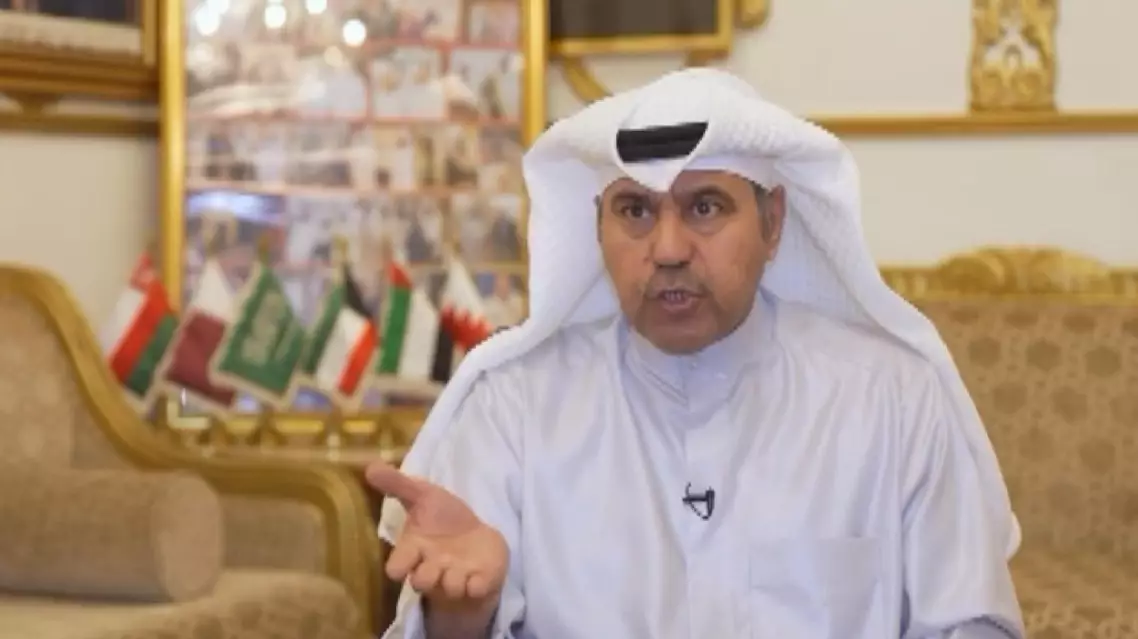
Against the backdrop, Fahd Al-Shalimi, a Kuwaiti strategic expert and political analyst, has underscored that regional concerns remain unaddressed.
"In the Islamabad negotiations, there is no Gulf representation at the table, but there are Gulf concerns at the table. We want our relations with Iran to be normal and stable. I believe that no one wants to threaten regional security and peace in the Gulf. The Gulf states were the first to assure Iran that no planes from our bases would strike Iran," he said.
Al-Shalimi pointed out that Kuwait and the other Gulf Cooperation Council (GCC) countries are committed to ensuring freedom of navigation in the Strait of Hormuz, stressing that they are working continuously to consolidate and maintain this principle.
"The statements of all the GCC countries, including Kuwait, call for freedom of navigation. China has requested freedom of open navigation in the Strait of Hormuz. International law protects the Strait of Hormuz as an international waterway. The Gulf countries have proven that they are influential and prominent countries through their geographical location and through the raw materials used by the world. One-fifth of the world's oil and 30 percent of international trade come out of this region. This is a very large percentage," he said.
Looking ahead, Al-Shalimi expressed his belief that Gulf-Iran relations may improve after the end of the war, especially given Iran's need for Gulf ports to support reconstruction efforts.
"In the near future, after the end of the conflict, whether the Iranian ideological idea changes or not, Iran will still need Gulf ports for reconstruction, such as the Port of Jebel Ali (in the UAE), Hamad Port in Qatar, and the Mubarak Al-Kabeer Port (in Kuwait), because Iranian ports are not deep and large enough to meet the requirements of reconstruction. There may be an economic exchange that could lead to political cooperation," the expert said.
Gulf states have strong interest in outcomes of US-Iran talks: analyst