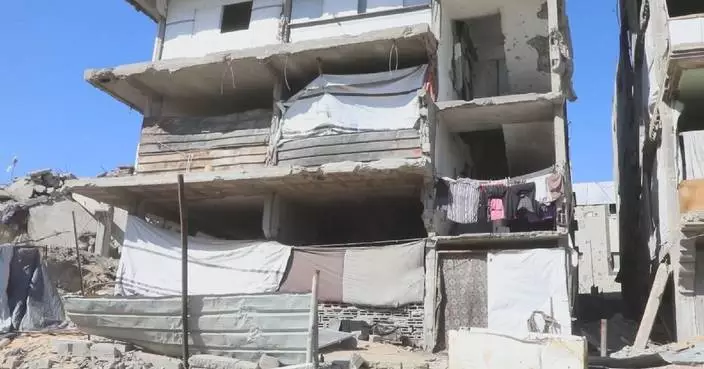
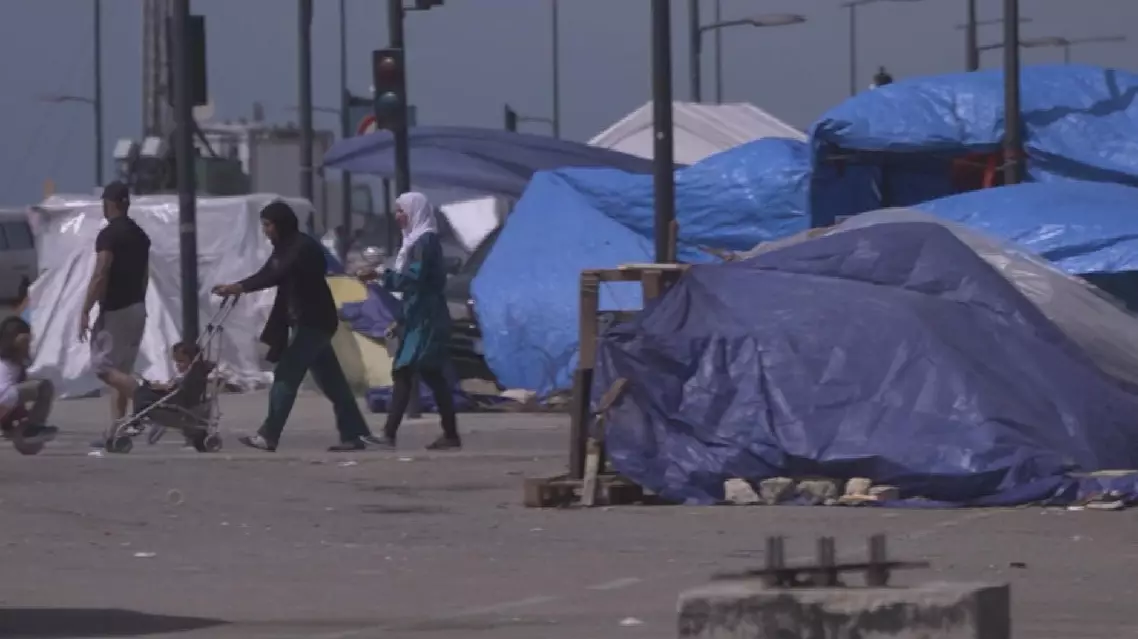
People in southern Lebanon are being displaced once again, after many had only recently returned home to rebuild from the 2024 war.
Since the latest escalation began on March 2, more than 1.1 million people have been uprooted, including over 390,000 children, according to the United Nations. More than 139,000 people are now sheltering in 680 official collective shelters across Lebanon.
In Beirut, a school has again become a shelter. Classrooms now serve as bedrooms, while tents outside house families forced to flee.
"It is something that kills you. It is like a fish being taken out of water. Your home is your country. You lived there. You raised your family there. Your whole life is there," said Narman Al-Shreem, a displaced woman from Houla in south Lebanon.
The strain is visible everywhere -- overcrowded spaces, long days of uncertainty, and families trying to maintain some sense of routine.
"The building should have held a maximum of around 200 people. But we have about 300 now. At times, it reached 400. We saw people sleeping on the playground and outside. And there are only four bathrooms," said Hussein Shreim, director of one shelter.
The crisis deepened on April 8, when Israeli strikes killed more than 250 people, the deadliest day of the current conflict.
The International Committee of the Red Cross (ICRC) has also warned that attacks on its staff and facilities in southern Lebanon are gravely concerning.
For displaced families, diplomacy feel far away. Their struggle is daily survival -- rent, water, medicine, and children losing school and stability yet again.
For Al-Shreem, displacement is not only about losing a home. It is also about giving birth and raising children in uncertainty.
"When my baby was born and she cried for the first time, I cried too. I said to her: what will your fate be? What kind of life will you have to suffer through?" said Al-Shreem.
Parents are re-packing bags once more, children are losing their classrooms again, and families are locking up homes, not knowing if they will ever return.
As villages in southern Lebanon empty once more, the question is no longer only when people can return, but whether temporary displacement is becoming permanent.
Lebanon families displaced again, with no end in sight
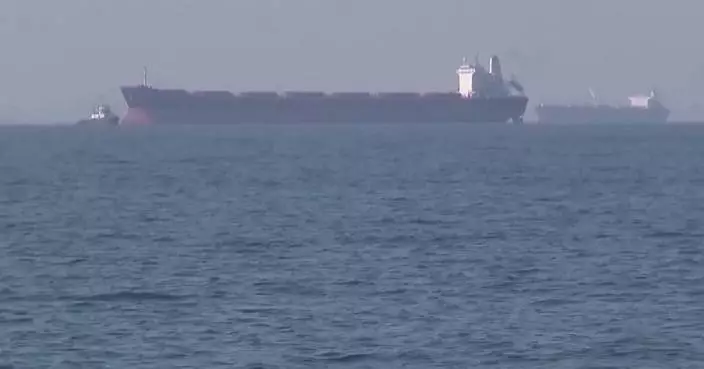
Gulf states remain deeply concerned about the outcome of the negotiations between the United States and Iran, particularly concerning the future of navigation in the Strait of Hormuz, said an observer of Gulf affairs.
The regional powers are now closely watching for any progress that could lead to the resumption of navigation in the strait, one of the world's most critical waterways.
On April 11, Pakistan hosted a round of direct negotiations between Iran and the United States, but no agreement was reached to end the war.
Since then, despite an indefinite extension of the ceasefire, the two sides have been unable to agree on holding a new round of negotiations. Instead, they have continued to exchange threats.
Iranian Foreign Minister Seyed Abbas Araghchi left Islamabad on Saturday, following "fruitful" talks with Pakistani officials. His departure came just before U.S. President Donald Trump announced the cancellation of his envoys' visit to Pakistan, prolonging the stalemate over a new round of negotiations between the two rival nations.
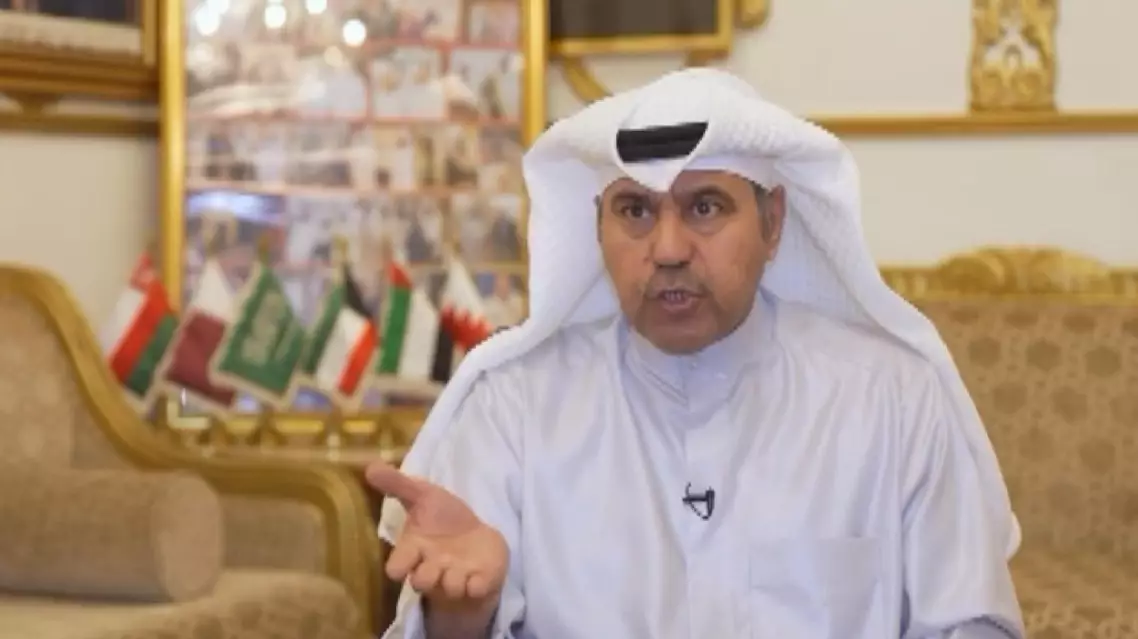
Against the backdrop, Fahd Al-Shalimi, a Kuwaiti strategic expert and political analyst, has underscored that regional concerns remain unaddressed.
"In the Islamabad negotiations, there is no Gulf representation at the table, but there are Gulf concerns at the table. We want our relations with Iran to be normal and stable. I believe that no one wants to threaten regional security and peace in the Gulf. The Gulf states were the first to assure Iran that no planes from our bases would strike Iran," he said.
Al-Shalimi pointed out that Kuwait and the other Gulf Cooperation Council (GCC) countries are committed to ensuring freedom of navigation in the Strait of Hormuz, stressing that they are working continuously to consolidate and maintain this principle.
"The statements of all the GCC countries, including Kuwait, call for freedom of navigation. China has requested freedom of open navigation in the Strait of Hormuz. International law protects the Strait of Hormuz as an international waterway. The Gulf countries have proven that they are influential and prominent countries through their geographical location and through the raw materials used by the world. One-fifth of the world's oil and 30 percent of international trade come out of this region. This is a very large percentage," he said.
Looking ahead, Al-Shalimi expressed his belief that Gulf-Iran relations may improve after the end of the war, especially given Iran's need for Gulf ports to support reconstruction efforts.
"In the near future, after the end of the conflict, whether the Iranian ideological idea changes or not, Iran will still need Gulf ports for reconstruction, such as the Port of Jebel Ali (in the UAE), Hamad Port in Qatar, and the Mubarak Al-Kabeer Port (in Kuwait), because Iranian ports are not deep and large enough to meet the requirements of reconstruction. There may be an economic exchange that could lead to political cooperation," the expert said.
Gulf states have strong interest in outcomes of US-Iran talks: analyst