Skip to Content Facebook Feature Image

APEC business leaders call for decisive action to restore global trade stability

HotTV

HotTV

HotTV

APEC business leaders call for decisive action to restore global trade stability

2026-04-26 17:40 Last Updated At:04-27 11:16

The 2026 APEC Business Advisory Council (ABAC) concluded its second meeting in Mexico City on Saturday with a strong call for restoring global trade stability and long-term prosperity across the Asia-Pacific.

Leaders from China and 20 other APEC economies urged bold and coordinated measures to counter trade fragmentation and supply chain disruption.

The four-day gathering brought together about 200 corporate executives and government policymakers from 21 economies, which together account for roughly 62 percent of global GDP.

Delegates emphasized open markets and a pragmatic embrace of digital and green infrastructure.

"We are at a critical inflection point from trade fragmentation to supply chains disruption. What is needed now is a decisive collective action to restore stability and set a clear path toward a sustainable growth," said Li Fanrong, ABAC 2026 chair.

ABAC leaders said they will develop practical recommendations to enhance physical, institutional and people-to-people connectivity, aiming to enable the seamless flow of goods, services, information, technology, and talent across the region.

Mexico's role as host of the APEC leaders' meeting in 2028 also underscored its recalibration toward Pacific-focused economic diplomacy. The ABAC gathering marked a step toward positioning the country as a key regional influence within the APEC process.

Going forward, the public and private sectors should work hand in hand on all key messages and in a working group to be aligned in every way by 2028, said Francisco Suarez, executive of the FEMSA, a leading Mexican multinational beverage and retail company headquartered in Monterrey.

Suarez echoed Li's concern, stressing that business confidence is under strain on several fronts.

"Our business confidence is being tested on multiple fronts, from trade fragmentation to supply chain disruption. What is needed now is a decisive, collective action to restore stability and set a clear path toward a sustainable growth," he said.

Mexico's former ambassador to China, Sergio Ley, also attended the conference, emphasizing the country's centuries-long history of trade with Asia. He firmly rejected the idea put forth some politicians in North America that expanding trade with Asia poses some sort of major risk.

"I don't think so, from an economic point of view. From a political perspective, I don't think it represents any danger, but at APEC, we don't discuss political issues, strictly economic ones," he said.

The Asia-Pacific's corporate and policy elites who gathered in Mexico City also expressed their commitment to managing interdependence even amid geopolitical fragmentation triggered by armed conflicts and trade tariffs.
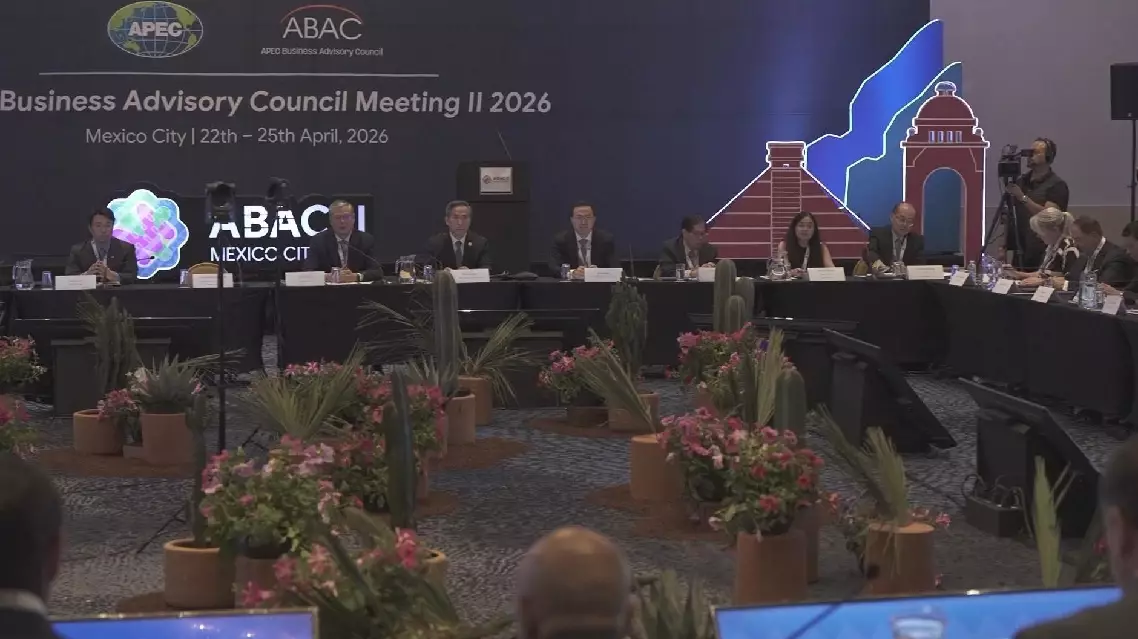
APEC business leaders call for decisive action to restore global trade stability

APEC business leaders call for decisive action to restore global trade stability

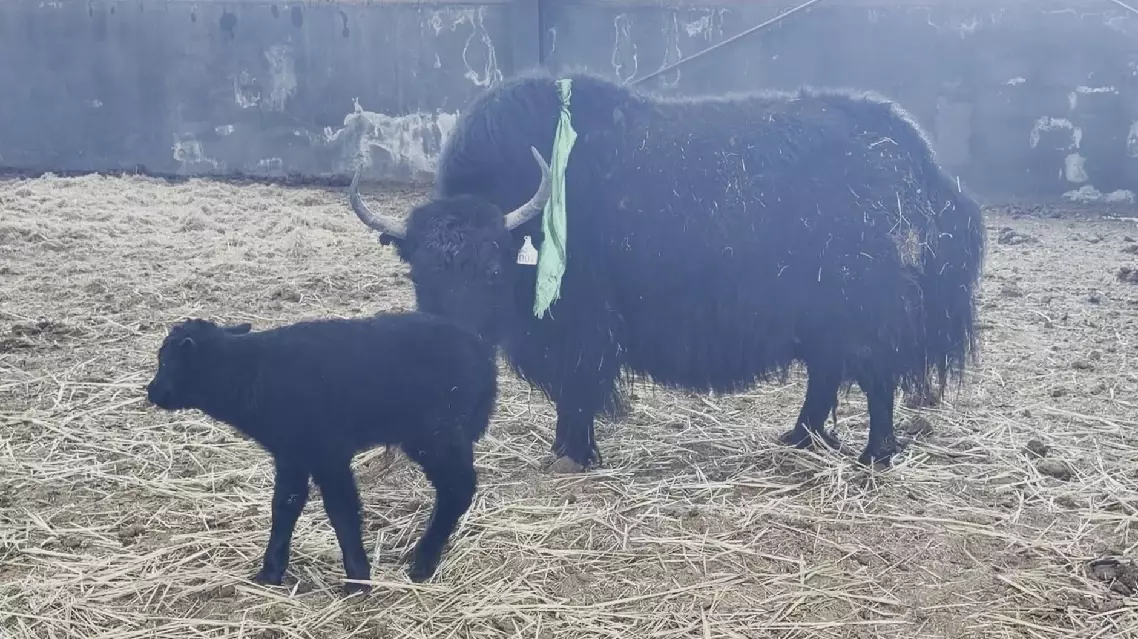
Chinese scientists announced Monday that they have achieved a breakthrough in yak cloning, with 10 cloned calves all naturally delivered in southwest China's Xizang Autonomous Region.

These calves, consisting of three black yaks and seven white ones, were born from March 25 to April 5 at a yak breeding and research base in Xizang's Damxung County, all meeting expected standards and steadily gaining weight.

The mass births came after the first cloned yak was born in July 2025, which has grown healthily and weighs about 183 kg now.

The achievement was made using a domestically developed breeding system that combines whole-genome selection with somatic cell cloning, following three years of research by a Chinese scientific team.

"Whole-genome selection can accurately pinpoint excellent genetic loci associated with large body size, fast growth, strong fecundity and disease resistance, high feed conversion efficiency, and tolerance to high-altitude and low-oxygen conditions (cold resistance). On this basis, somatic cell cloning enables 1:1 precise replication of the genotype through asexual rapid propagation (cloning), thereby compressing the breeding cycle to within five years," said Fang Shengguo, a professor at the College of Life Sciences at Zhejiang University and director of the State Conservation Center for Gene Resources of Endangered Wildlife.

Yak farming is one of the key industries targeted for development in Xizang during the country's 15th Five-Year Plan period (2026-2030). Traditional yak breeding has relied on phenotype selection, a process that can take up to 20 years and often leads to declining genetic quality.

Researchers said the new method can shorten the breeding cycle to less than five years by accurately identifying desirable genetic traits such as faster growth, disease resistance, feed efficiency and adaptation to high-altitude, low-oxygen environments, while enabling rapid replication of elite breeding stock.

Experts added that the technology could also support conservation efforts for rare yak genetic resources, including the endangered golden wild yak, whose population in Xizang is estimated at more than 300.

So far, the research team has developed more than 200 cloned embryos of golden wild yaks and hybrid wild-blood yaks, laying the groundwork for future embryo transfer and species recovery programs.

China achieves large-scale births of cloned yaks

China achieves large-scale births of cloned yaks

Recommended Articles