Moving beyond simple vehicle exports, Chinese automakers are expanding overseas markets in new modes, including full value-chain deployment and deeply localized operations abroad.
Official data show that in the first quarter of this year, China exported more than 2.22 million vehicles, up 56.7 percent year on year, with overseas markets becoming a core engine of growth.
The Guangzhou Automobile Group (GAC Group) reported an 86-percent surge in overseas sales during the period. Alongside establishing five overseas vehicle assembly plants and nine component warehousing hubs, the company is leveraging its comprehensive powertrain technology to accelerate the global rollout of electric drive systems and intelligent cockpit solutions.
"Going overseas today is no longer just about exporting products. Building on product exports, we are advancing industrial deployment and ecosystem abroad. In the Asia-Pacific region, we have made Thailand a pacesetter, including the building of manufacturing bases, sales networks, energy ecosystems, and mobility services there to ensure that our products reach out, our industry settles down locally, and our brand goes high," said Wei Haigang, president of GAC International, in an interview with China Media Group at the ongoing 2026 Beijing International Automotive Exhibition (Auto China 2026).
Similarly, the Chongqing-based China Changan Automobile Group is accelerating the construction of key industrial links in overseas markets.
"We are pacing up the construction of key links across the full automotive industrial chain overseas, including design, research and development, manufacturing, marketing channels, logistics and transportation. By 2030, we plan to achieve an overseas production capacity of 800,000 units," said Zhao Fei, president of Changan Automobile.
A batch of Lotus vehicles under the Hangzhou-based Geely Holding Group rolled off the production line at a smart factory in Wuhan City, central China's Hubei Province days ago.
Unlike previous shipments, these vehicles mark the first export of Chinese-made electric vehicles to Canada following the country's announcement to significantly reduce tariffs on Chinese EVs effective on March 1.
"Over the next five years, we will launch more than 10 new car models for markets worldwide, covering different segments, body styles, and energy options," said Yang Xueliang, senior vice president of Geely Holding Group, which acquired a controlling 51-percent stake in the British sports car maker Lotus in 2017.
The Guangxi-based SAIC-GM-Wuling is concentrating on core markets in Southeast and Central Asia. The company has built a vehicle assembly plant in Indonesia with an annual capacity of 120,000 units and pioneered a "five-chain global expansion" model encompassing manufacturing, supply chain, sales, finance and talent development.
"We introduced 17 suppliers from China to Indonesia. Moving forward, we are to replicate this model and gradually expand it to other ASEAN markets," said Xiao Qiang, president of the SAIC-GM-Wuling's overseas department.
Other Chinese carmakers are leveraging core technologies to pursue differentiated global strategies. EV maker XPeng has established research and development centers and production bases in over 60 countries and regions. The Chongqing-based Seres Group is focusing on intelligent driving technologies to support the premium positioning of Chinese vehicles abroad.
"By pursuing differentiation and technology-driven solutions, we can better achieve win-win outcomes with local markets," said He Xiaopeng, chairman of XPeng.
"We hope to work with partners of the entire industry to jointly accelerate the deployment of more cutting-edge technologies in overseas markets," said Kang Bo, senior vice president of Seres Group.
The Auto China 2026 opened in Beijing on Friday and will run through May 3. As the world's largest auto show, it has brought together over 2,000 companies from 21 countries and regions. A total of 1,451 vehicles are on display, including a record-breaking 181 global premieres -- the highest number in the show's history -- along with 71 concept cars.
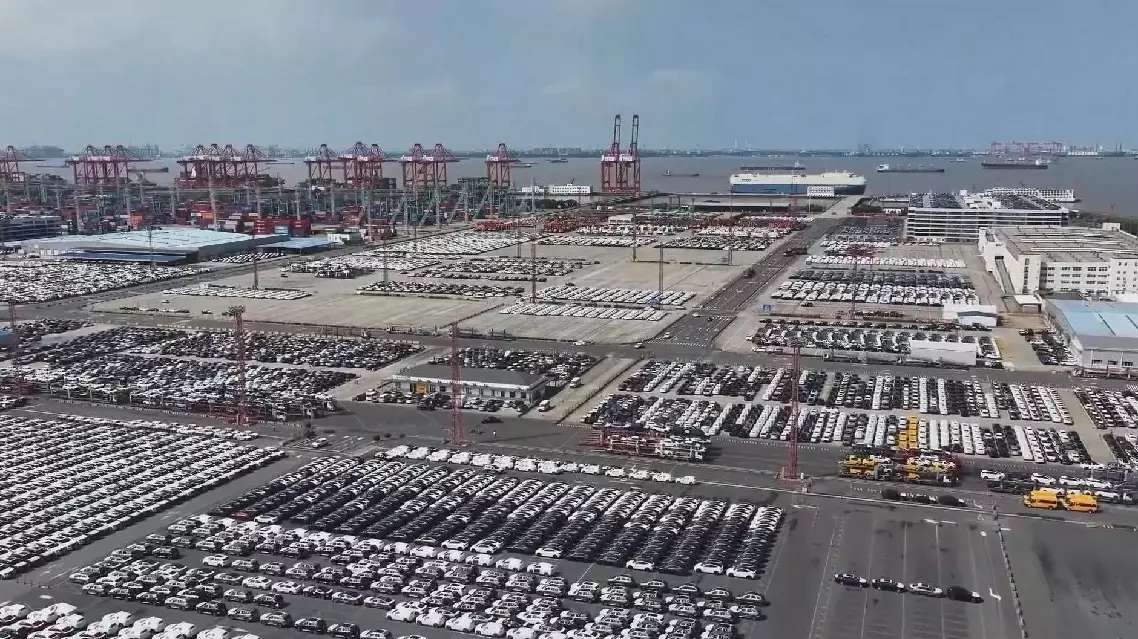
Chinese automakers expand globally with full value-chain deployment abroad