A wild Asian elephant wandered into a temporary border checkpoint in southwest China's Yunnan Province in the early hours of Friday, prompting police and auxiliary officers to evacuate to safety before the animal calmly left without causing damage.
The elephant approached the checkpoint in Jiangcheng Hani and Yi Autonomous County of Pu'er, bypassed barriers and traffic cones, and eventually walked away peacefully.
Officers followed established procedures, withdrawing to safe areas and ensuring no disturbance to the elephant, personnel or facilities.
The county, located at the junction of China, Laos and Vietnam, is a key habitat for wild Asian elephants. Local checkpoints often see elephants "drop by," and officers have developed a routine response when facing such an elephant encounter.
Upon receiving alerts or spotting elephant activity, officers are expected to immediately clear the area, close access routes, and monitor the animals until they depart, before swiftly restoring order.
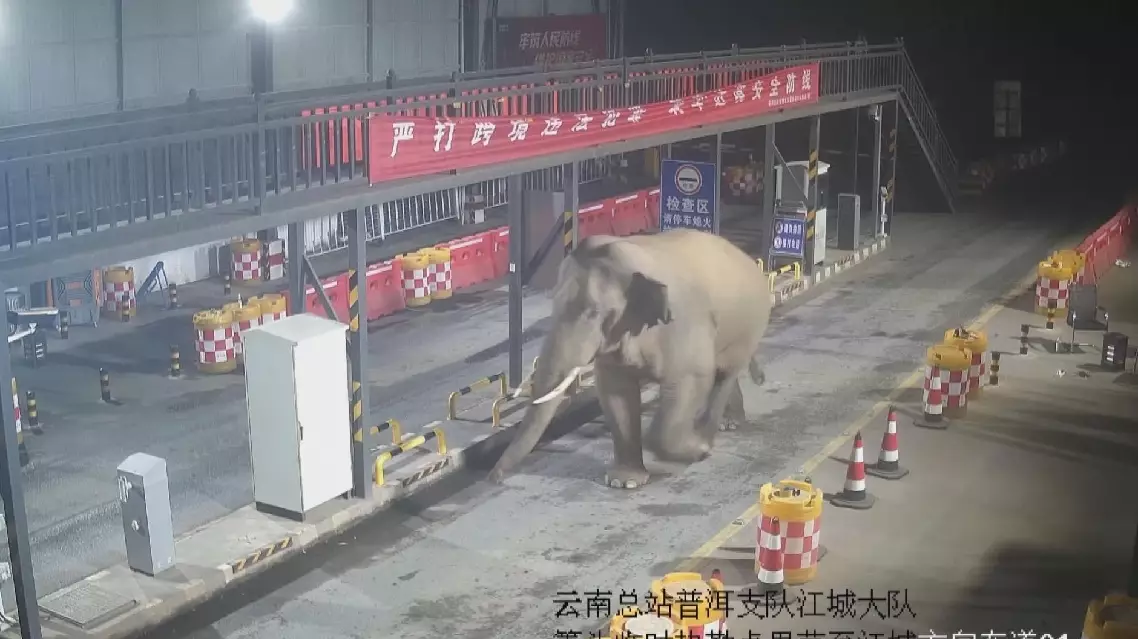
Wild Asian elephant strolls into border checkpoint in Yunnan
Exhibition booth construction for the 9th China International Import Expo (CIIE) began on Tuesday in Shanghai, ahead of the event scheduled to run from November 5 to 10.
The construction work is proceeding in an orderly manner at the National Exhibition and Convention Center, the main venue for the event, and some booths have already taken shape.
The Shanghai police have launched support operations to ensure a smooth and orderly preparation process. To prevent congestion caused by the concentrated arrival of heavy trucks, the police have optimized the freight vehicle entry process this year.
"We use remote security checks and waiting areas before freight vehicles enter the north square. This can avoid vehicle pile-ups in the north square and prevent traffic congestion on the roads surrounding the National Exhibition and Convention Center," said Li Lei, a police officer.
To further facilitate the expo, the police have reduced the closed management time and extended the setup period, allowing exhibitors to enter the venue earlier to build their booths.
The police have also increased patrol frequency to ensure safety and order throughout the preparation phase.
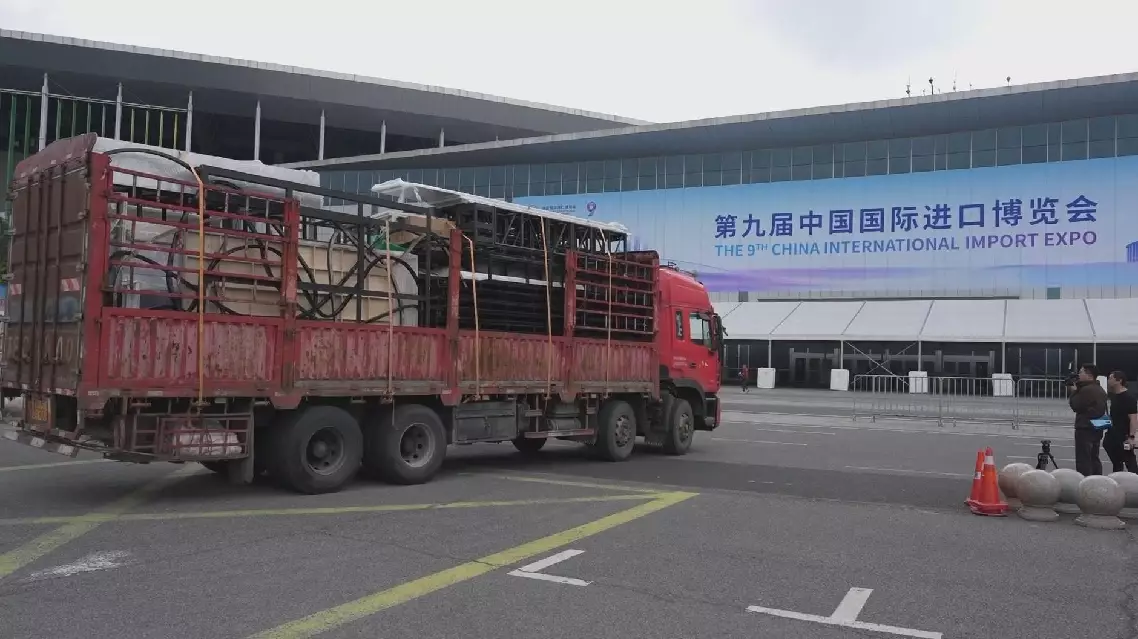
Construction of exhibition booths begins for 9th CIIE in Shanghai