China will accelerate the development of its modern ecological environment monitoring system during the 15th Five-Year Plan period (2026-2030), focusing on four key areas, which are network, technology, management and support, said an official from the Ministry of Ecology and Environment on Monday.
At a press conference in Beijing, Zhang Dawei, director of the ministry's Department of Ecological and Environmental Monitoring, China aims to expand the ecological and environmental monitoring network from the current 33,000 sites to more than 50,000, covering carbon reduction, pollution control, and ecological restoration across the country.
"We will focus our efforts on four key areas -- network, technology, management and support, and ensure that our monitoring data is true, accurate, comprehensive, fast and new with higher standards. We aim to serve as a 'mirror' reflecting the beauty of China, a 'scout' detecting environmental problems, and a 'powerful tool' supporting the targeted, scientific, and law-based pollution control," said Zhang.
"A series of integrated multi-function monitoring stations will be deployed for joint atmospheric, water, and ecological observation in sensitive zones like Sanjiangyuan and key regions such as the Beijing-Tianjin-Hebei and the Yangtze River Delta. We will also develop and launch six ecological environment satellites and construct 30 supporting ground verification stations to raise the precision of main data products of homegrown satellites to over 80 percent," he said.
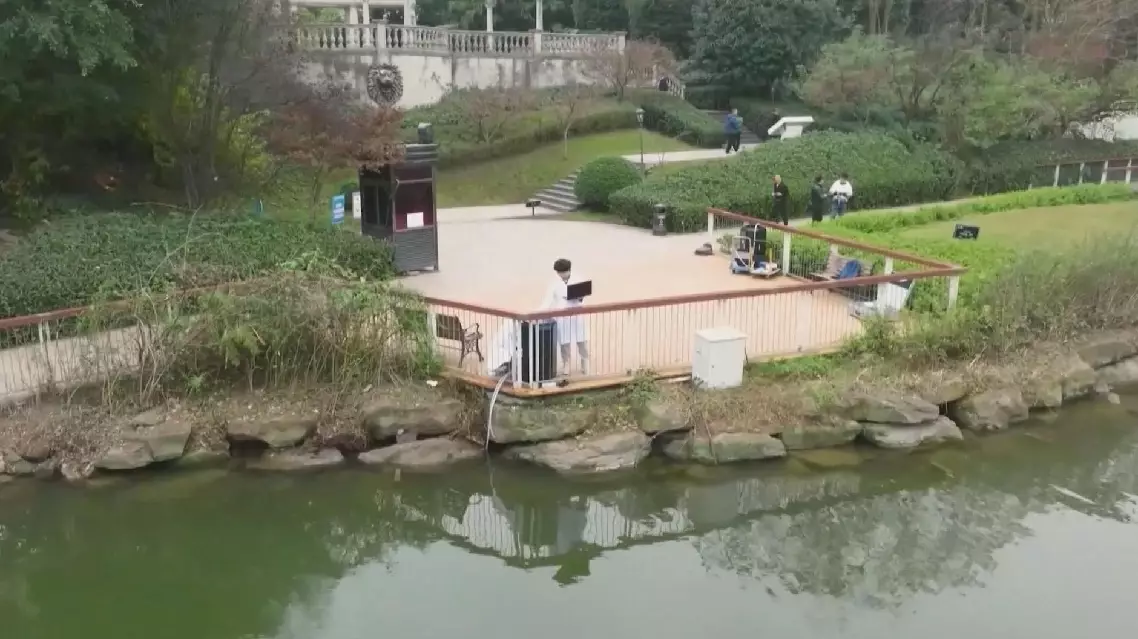
Zhang said that during the 15th Five-Year Plan period, China will also push for digital and intelligent transformation of the monitoring system by establishing around ten advanced unmanned laboratories nationwide, which operate around the clock with fully automated and intelligent processes, and upgrading over 3,000 water and air automatic monitoring stations.
By 2030, manual intervention in essential monitoring areas will be cut by 70 percent and operational efficiency will be increased by more than fivefold, he said.
China to focus on four areas to advance modern ecological monitoring in 2026-2030: official
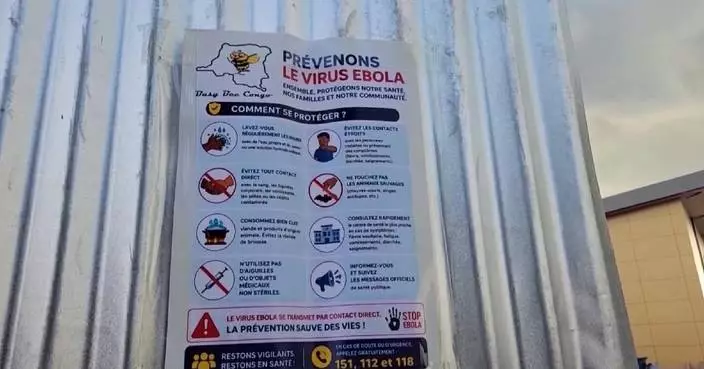
Ugandan scientists are accelerating vaccine research and development efforts to curb the Bundibugyo strain of the ongoing Ebola outbreak, which is spreading across the country and in neighboring Democratic Republic of the Congo (DRC).
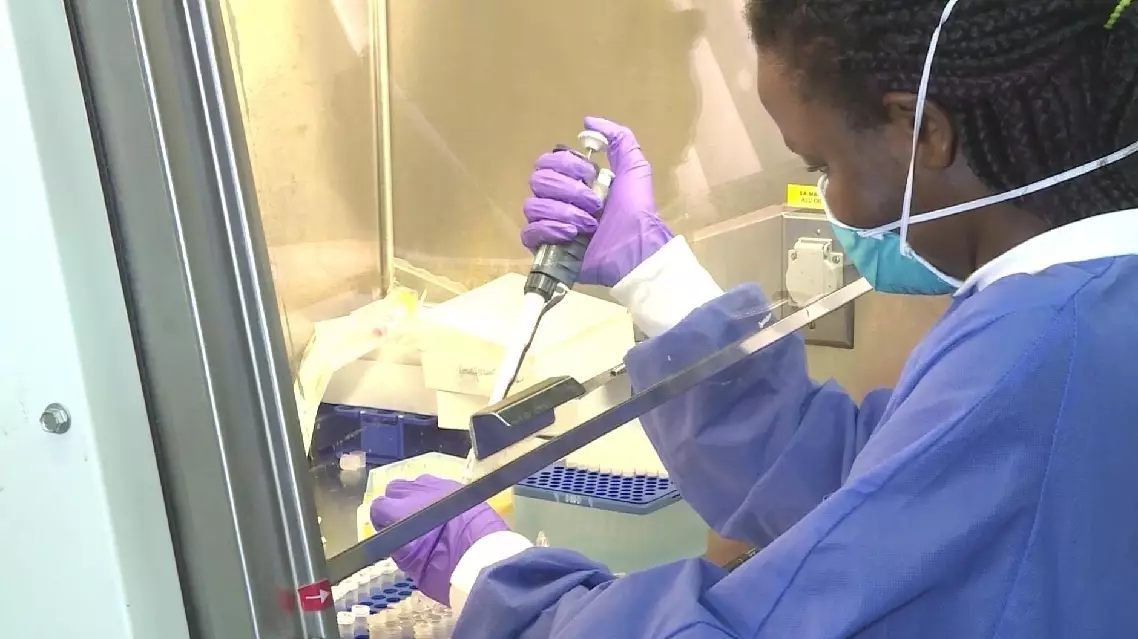
Scientists at the Uganda Virus Research Institute are collaborating with global health organizations and pharmaceutical companies in developing an effective vaccine.
According to the World Health Organization (WHO), the Bundibugyo virus, which currently lacks approved vaccines or specific therapeutics, is one of three ebolavirus species that cause large Ebola outbreaks, alongside the Zaire and Sudan viruses.
Pontiano Kaleebu, director of the Uganda Virus Research Institute, told CGTN (The China Global Television Network) that researchers at the institute are examining whether existing Ebola vaccine options can offer protection for the Bundibugyo virus, and they are also studying whether experimental drugs used to treat other Ebola strains can work against the new strain.
"The health workers got some of these vaccines for Zaire, and if you boost them with another vaccine - let's say the Sudan vaccine [which is] not yet licensed but available - do you broaden the immune response and [make] people protected?" Kaleebu said in a recent interview.
Although uncertainties remain, ongoing clinical trials are designed to provide clearer answers.
Researchers are also exploring options for conducting trials in both Uganda and the Democratic Republic of the Congo (DRC), including the use of antibodies from Ebola survivors.
According to Kaleebu, similar tests were conducted during the West African Ebola outbreak in 2014-2016, and the results were successful.
"We already have individuals who got infected with Zaire, those who got infected with Bundibugyo, those who got infected with Sudan. If you get their antibodies, can they kill the other one, can someone who has antibodies against Zaire, can those antibodies work against Budibugyo? Those lab studies are also being planned," he said.
The WHO says a promising vaccine trial by the International AIDS Vaccine Initiative could be available in as little as seven months.
Following a visit to an Ebola isolation unit at a hospital in Uganda's capital Kampala on Monday, WHO Director-General Tedros Adhanom Ghebreyesus highlighted the need to accelerate research and development efforts, including work currently underway on monoclonal antibodies and antiviral treatments for Ebola. He noted that investment in vaccines, therapeutics, and diagnostics remains critical for future outbreak preparedness.
He also reaffirmed WHO's commitment to supporting Uganda's response and emphasized that governments must remain at the center of emergency response efforts.
"There are other support we give - I already told you the emergency medical team, I mean the emergency medical training we started many years ago and many Ugandans were certified, I think I had 148 [of them] - that helps in preparedness and that helps in response," the WHO chief said.
According to the WHO and health authorities in both Uganda and the DRC, most of the 19 confirmed Ebola cases in Uganda are imported from the DRC, where the latest outbreak was declared by its health ministry in mid-May, with the confirmed infections rising to 689 and the death toll reaching 139 as of Friday.
Uganda fast-tracks vaccine development for Bundibugyo Ebola strain