Skip to Content Facebook Feature Image

EVelution Energy Secures $850 million Cobalt Offtake Agreement with Mitsui, Advancing U.S. and Allied Critical Minerals Independence

Business

EVelution Energy Secures $850 million Cobalt Offtake Agreement with Mitsui, Advancing U.S. and Allied Critical Minerals Independence
Business

Business

EVelution Energy Secures $850 million Cobalt Offtake Agreement with Mitsui, Advancing U.S. and Allied Critical Minerals Independence

2026-04-28 19:36 Last Updated At:20:01

YUMA, Ariz.--(BUSINESS WIRE)--Apr 28, 2026--

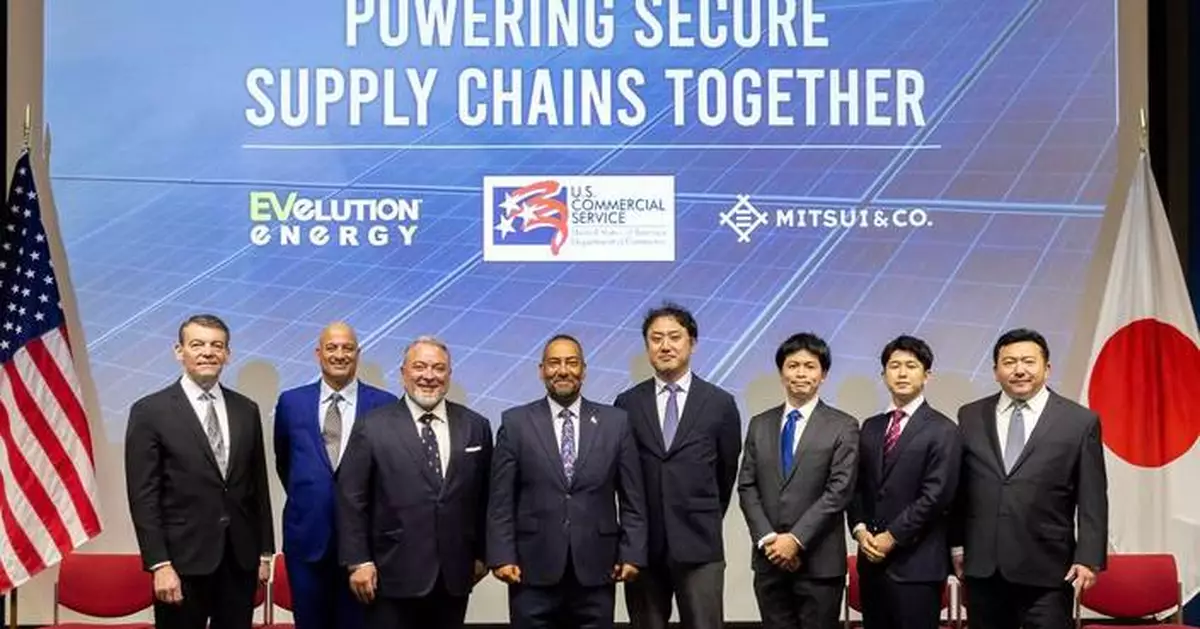
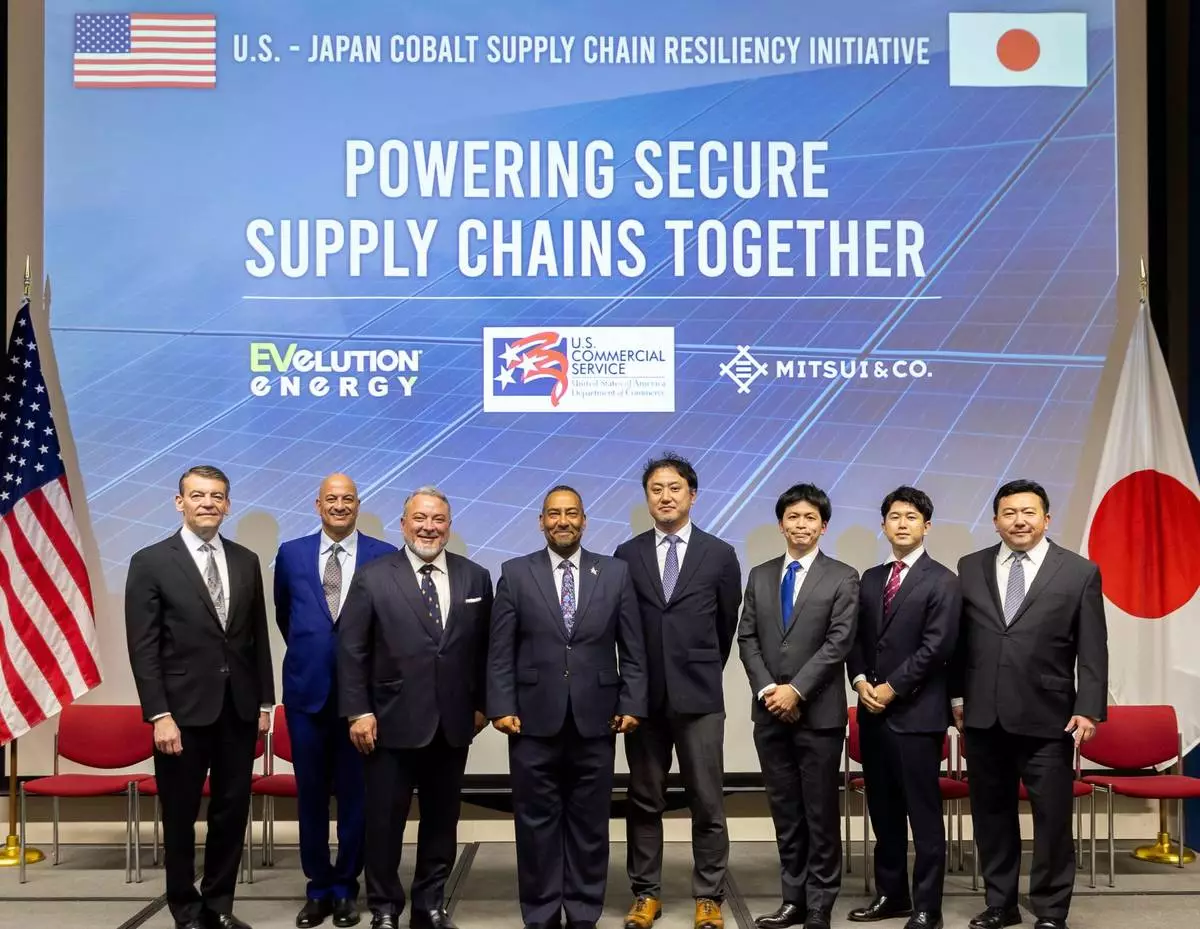
EVelution Energy LLC (“EVelution Energy” or the “Company”), a U.S. critical minerals company developing the first commercial-scale cobalt metal and cobalt sulfate processing facility in the United States, today announced the signing of a binding long-term offtake agreement with Mitsui & Co., Ltd. (“Mitsui”; Head Office: Tokyo; President and CEO: Kenichi Hori), valued at approximately $850 million over the five-year term of the agreement (based on current market prices).

This press release features multimedia. View the full release here: https://www.businesswire.com/news/home/20260427105741/en/

Under the terms of the agreement, EVelution Energy will supply Mitsui with a substantial majority of the cobalt metal production from its facility currently under development in Yuma County, Arizona (up to 3,000 metric tons (contained cobalt) per year).

Mitsui’s participation underscores the commercial and strategic relevance of EVelution Energy’s platform and reflects strong demand from U.S. and allied industrial partners for secure and resilient cobalt supply chains.

Strategic Supply Chain Milestone

The agreement comes at a time when the United States and Japan are advancing coordinated measures to strengthen allied supply chains and address non-market distortions in critical minerals.

More than 75% of global refined cobalt production comes from China, while the United States has no commercial-scale domestic cobalt processing infrastructure. The planned facility is designed to address this structural vulnerability by establishing secure domestic refining capacity aligned with U.S. industrial base resilience priorities.

When fully operational, the facility is expected to produce an aggregate of up to 7,000 metric tons (contained cobalt) per year of cobalt sulfate and/or cobalt metal. At projected capacity, the facility is expected to supply a substantial portion of U.S. cobalt demand across aerospace and the U.S. industrial base, EV batteries, and other advanced manufacturing applications.

Cobalt is a critical input not just in EV batteries, but also in jet engine superalloys, satellite systems, permanent magnets (including samarium cobalt (SmCo) magnets), high performance microchips, and other critical advanced technologies.

This agreement represents a strategic milestone for EVelution Energy in advancing U.S. critical mineral processing capacity, ” said Navaid Alam, President & CEO of EVelution Energy. “ Establishing secure cobalt processing infrastructure in the United States is essential to strengthening the resilience of the U.S. industrial base and reducing long-term strategic dependence on non-allied refining capacity.”

Strengthening Allied Industrial Cooperation

The offtake agreement establishes a long-term commercial framework supporting the development of U.S. refining capacity while advancing deeper U.S.–Japan industrial coordination in strategic materials essential to the industrial base.

The Yuma County facility will be located in a federally designated rural qualified opportunity zone and is designed to generate its own solar power, recycle approximately 70% of its process water, and operate without on-site tailings storage or disposal. The project aligns with U.S. federal initiatives, including programs under the Defense Production Act, aimed at reshoring critical mineral processing capacity.

Construction of the facility is currently expected to commence in early 2027, with completion targeted by the end of 2029. This project is expected to have a substantial economic impact on Yuma County, generating more than $750 million in economic activity and creating more than 3,300 direct, indirect and induced jobs over the life of the project.

This Press Release shall not constitute an offer to sell or the solicitation of an offer to buy any securities, nor shall there be any sale of the securities in any jurisdiction in which such offer, solicitation or sale would be unlawful prior to registration or qualification under the securities laws of such state or jurisdiction.

ABOUT EVELUTION ENERGY

EVelution Energy LLC is developing the first solar-powered commercial-scale cobalt sulfate and cobalt metal processing facility in the United States, designed to establish secure and resilient domestic refining capacity for the U.S. aerospace, defense, electric battery and advanced manufacturing sectors.

The facility will be constructed in a rural qualified opportunity zone in Yuma County, Arizona. The Opportunity Zone Program, originally established under the U.S. Tax Cuts and Jobs Act of 2017 and subsequently made permanent under federal law, provides long-term tax certainty and enhanced incentives for investors supporting strategic domestic manufacturing and community revitalization.

EVelution Energy’s leadership team brings extensive experience in international infrastructure development, capital markets structuring, and strategic project execution, with a focus on building a resilient U.S. critical minerals platform.

Learn more atwww.evelutionenergy.com.

Cautionary Statement Concerning Forward-Looking Statements

This press release contains forward-looking statements within the meaning of the U.S. Private Securities Litigation Reform Act of 1995. These forward-looking statements are not historical facts and EVelution Energy has based these statements on management’s current expectations and assumptions. Forward-looking statements involve inherent risks and uncertainties, and a number of factors could cause actual results to differ materially from those contained in any forward-looking statement. These factors include, but are not limited to, (i) regulatory or policy changes affecting advanced manufacturing, defense procurement, or federal critical minerals initiatives and/or the funding available to the Export Import Bank under the Make More in America initiative, (ii) potential construction delays, supply chain issues, governmental approvals and regulatory, environmental or other issues encountered in connection with the development and construction of the facility, (iii) growth in U.S. demand for defense, aerospace, and advanced manufacturing applications utilizing refined cobalt products, (iv) capital and credit market volatility, (v) local and global economic conditions, (vi) changes within USCIS relating to projects that qualify for priority treatment, and (vii) our future business development, results of operations and financial condition. In some cases, forward-looking statements can be identified by words or phrases such as “may,” “will,” “expect,” “anticipate,” “target,” “aim,” “estimate,” “intend,” “plan,” “believe,” “potential,” “continue,” “is/are likely to” or other similar expressions. All information provided in this press release is as of the date of this press release, and EVelution Energy undertakes no duty to update such information, except as required under applicable law.”

ABOUT MITSUI & CO., LTD.

Mitsui & Co. is a global trading and investment company with a presence in more than 60 countries and a diverse business portfolio covering a wide range of industries. The company identifies, develops, and grows its businesses in partnership with a global network of trusted partners including world leading companies, combining its geographic and cross-industry strengths to create long-term sustainable value for its stakeholders.

Mitsui has set three key strategic initiatives for its Medium-term Management Plan 2026: supporting industries to grow and evolve with stable supplies of resources and materials, and providing infrastructure; promoting a global transition to low-carbon and renewable energy; and empowering people to lead healthy lives through the delivery of quality healthcare and access to good nutrition.

For more information, please visit:https://www.mitsui.com/jp/en/
EVelution Energy Secures $850 million Cobalt Offtake Agreement with Mitsui, Advancing U.S. and Allied Critical Minerals Independence

EVelution Energy Secures $850 million Cobalt Offtake Agreement with Mitsui, Advancing U.S. and Allied Critical Minerals Independence
BEIRUT (AP) — Ahed Badawi lived for more than a decade in Bahrain, a small Gulf country that — unlike her native Syria — rarely made headlines.

It provided a refuge for her, her sister and their elderly mother during Syria’s 14 years of civil war.

“Nothing at all ever happened there,” she said. “I mean, the Bahrainis don’t even know what war is.”

But after the U.S. and Israel attacked Iran, sparking a regional war, Bahrain and neighboring Gulf countries found themselves in Iran's crosshairs. So the family fled back to their home in Aleppo, which was once the site of some of the civil war's fiercest battles but now offered a safe haven.

War-battered Syria has stood out as one of the few spots of calm in the region’s latest conflagration. Its leaders have been working to rebuild relations with Arab and Western countries that had shunned Syria under former President Bashar Assad, who was ousted in December 2024 by rebels, who then installed a new government.

Since the outbreak of the U.S.-Israeli war with Iran and the closure of the Strait of Hormuz, Damascus has seized on the opportunity to strengthen those relationships by staying neutral.

Syria has “presented itself as the solution to strategic crises in the region,” said Obayda Ghadban, an official with the Syrian Foreign Ministry.

After the U.S.-Israeli attacks, Iran rained missiles not only on Israel but on Gulf countries hosting U.S. bases. In Lebanon, the dormant war between Israel and the Iran-backed militant group Hezbollah reignited. And Iraq — which is home to both Iran-backed militias and U.S. bases — found itself in the crosshairs of both sides.

Despite missiles flying overhead — and occasionally falling on Syrian territory — Syria managed to stay on the sidelines and positioned itself as an alternative transport route for oil exports that could no longer be sent through the strait.

“Syria, which was once an arena for others’ conflicts, has today chosen, through the will of its people and institutions, to be a bridge to security and a fundamental pillar of the solution,” interim Syrian President Ahmad al-Sharaa said last week at a meeting of European leaders in Cyprus.

He touted his country as “the alternative and secure artery connecting Central Asia and the Gulf to the heart of the European continent.”

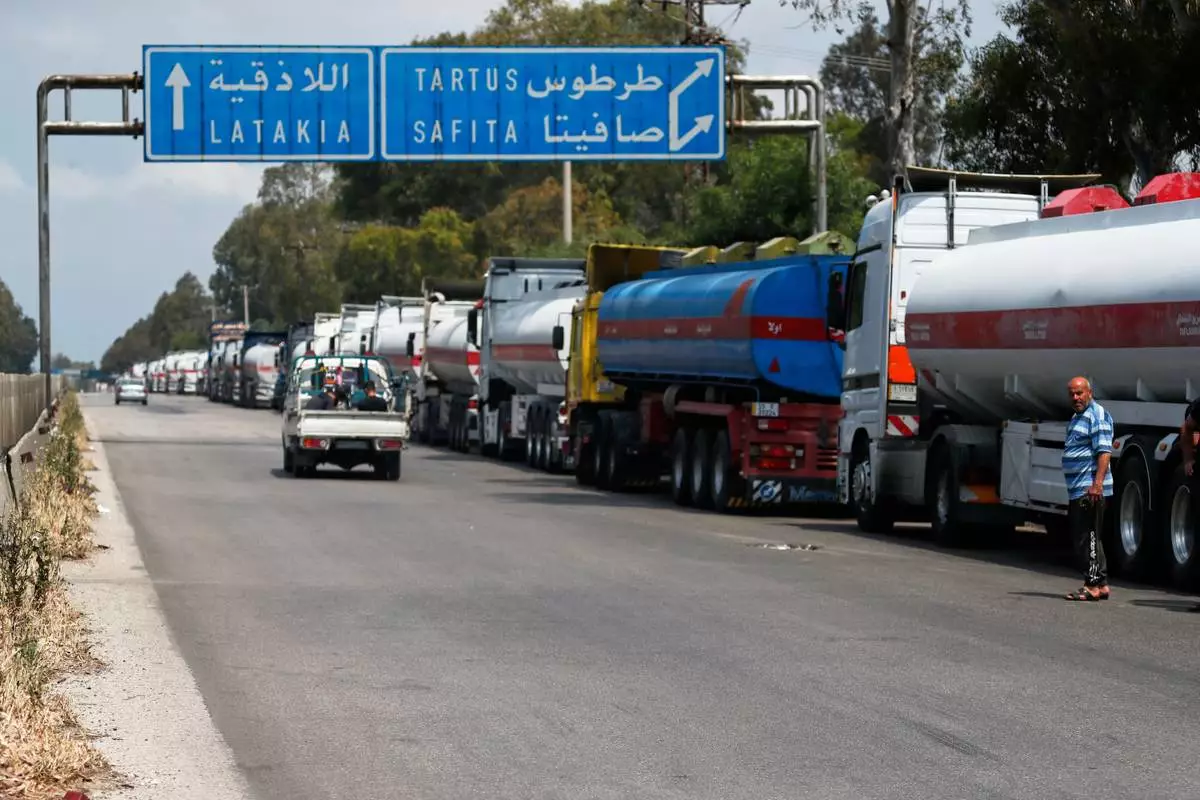
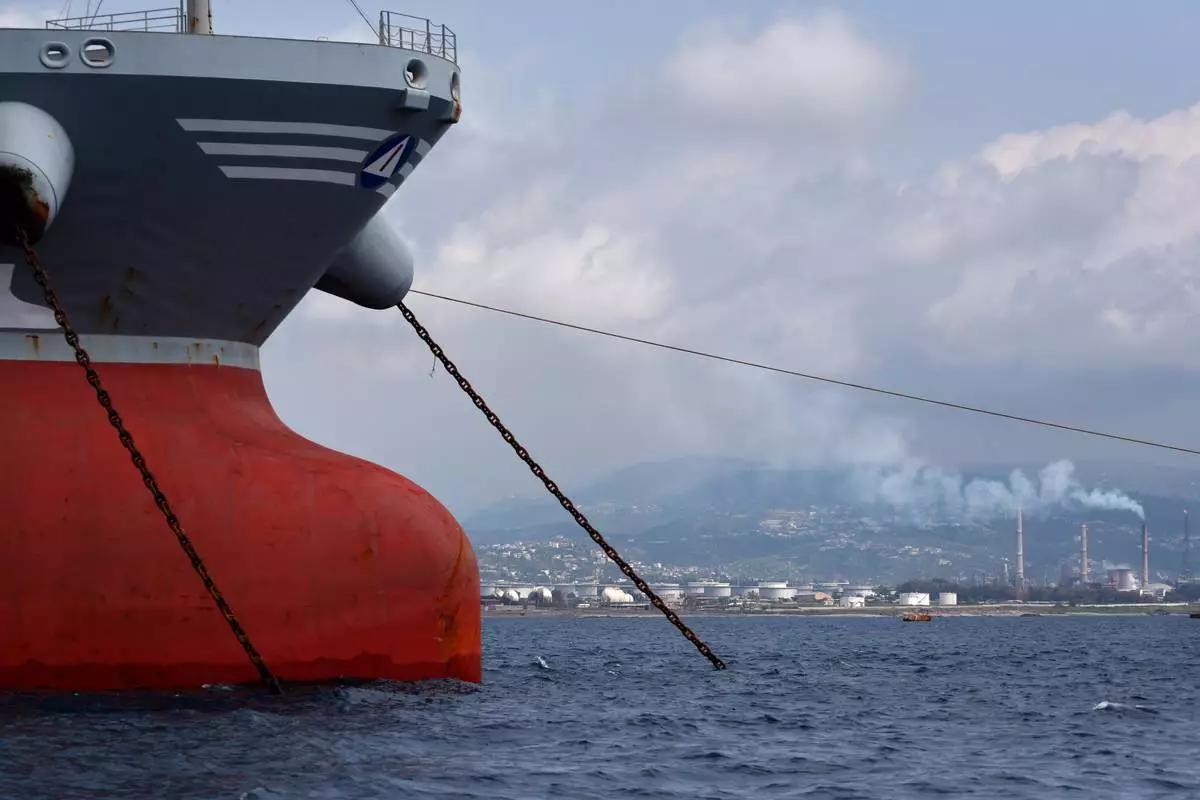
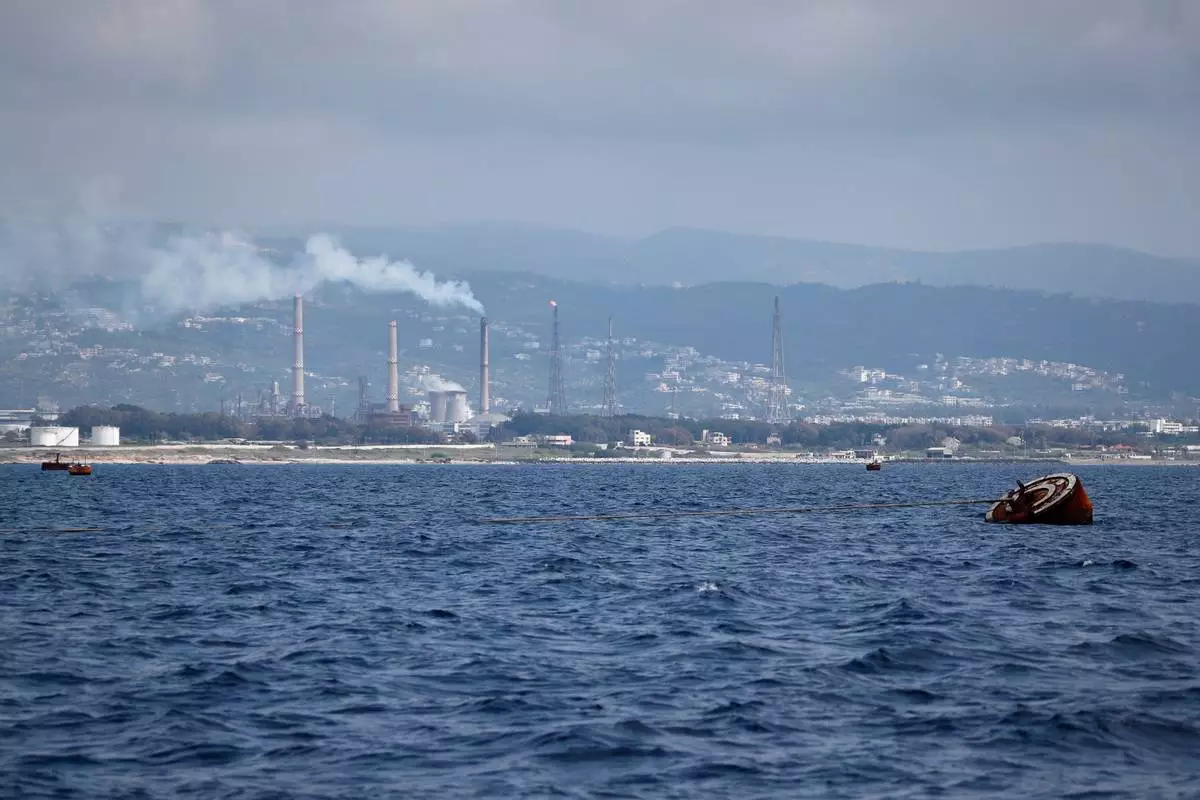
Since Iran blocked access to the strait, oil shipments have been trucked from Iraq into Syria and shipped to European markets via Syria’s Baniyas port, bypassing the Hormuz route. A key border crossing between northern Iraq and Syria reopened last month after being closed for more than a decade, with officials touting it as an additional route for energy exports.

The overland route is less efficient and more expensive than shipping exports through the strait, but it provides a workaround as long as Iran maintains its stranglehold on the channel.

Ghadban said his country had no interest in allying with either side in the war.

“The parties participating in it are strategic enemies of Syria, whether we talk about Iran and its affiliates, or if we talk about Israel and its aggressive expansionist policy in Syria,” he said. “Both parties have an interest in weakening Syria.”

Iran was a key ally of Assad and came to his aid during the civil war, as did Hezbollah and allied Iraqi militias. That put them in conflict with the groups that are now ruling in Damascus.

Israel, meanwhile, has been suspicious of and sometimes openly hostile toward Syria's new Islamist-led authorities. After Assad’s fall, the Israeli military seized control of a U.N.-patrolled buffer zone in southern Syria and has been occupying it.

In the early weeks of the U.S.-Israeli war against Iran, some had speculated that Syria might join the fray to settle scores against Hezbollah.

But the Syrian military made no such move, and al-Sharaa and other officials insisted they had no interest in intervening in Lebanon.

Noah Bonsey, senior adviser on Syria with the International Crisis Group, said that while “Damascus was really clear from the beginning that it wanted no part of this war and signaled to everyone accordingly,” its ability to actually stay out of the fray was in part due to fortuitous timing.

Eastern Syria had for years hosted bases housing U.S. troops, but the U.S. had drawn down its presence before the war with Iran started.

After fighting broke out between forces of the central Syrian government and the Kurdish-led Syrian Democratic Forces in northeastern Syria in January, the U.S. military moved thousands of suspected Islamic State militants held in detention centers in Syria to Iraq. The military also scaled down its own presence in Syria, where the main mission was to prevent a resurgence of IS.

“Because the withdrawal had gone so far by the time the war (with Iran) started, there were very few U.S. assets and personnel still in the country” that could have drawn Iranian fire, Bonsey said.

Syria may have gained politically from its neutral positioning in the regional war, but it will still suffer from the conflict economically, Bonsey said.

Damascus had counted on Syria’s postwar reconstruction receiving investment from wealthy Gulf Arab countries once known for their shopping malls and skyscrapers.

But now those countries will have fewer resources and "less bandwidth to spare for lower-priority issues” as they focus on “shoring up their own defense and getting their own economies back up to speed” after the war, Bonsey said.

While Syria could benefit in the long term from infrastructure projects such as proposed rail lines and gas pipelines that would link the Gulf to Turkey and to European markets, those projects will take years, if they happen at all.

In the meantime, Syria’s new government faces increasing discontent from the population over the country’s flagging economy.

But Badawi, for now at least, is happy to be back home, despite the difficulties.

“There’s nothing like being in your own country," she said. "When you’re in your own country, you feel a different kind of security.”

Associated Press journalist Ghaith AlSayed in Damascus, Syria, contributed to this report.

An oil tanker is anchored off the Baniyas refinery, north of the Mediterranean coastal city of Baniyas in Tartus Governorate, western Syria, Friday, May 1, 2026. (AP Photo/Omar Sanadiki)

An oil tanker is anchored off the Baniyas refinery, north of the Mediterranean coastal city of Baniyas in Tartus Governorate, western Syria, Friday, May 1, 2026. (AP Photo/Omar Sanadiki)

The Baniyas refinery, north of the Mediterranean coastal city of Baniyas in Tartus Governorate, western Syria, Friday, May 1, 2026. (AP Photo/Omar Sanadiki)

The Baniyas refinery, north of the Mediterranean coastal city of Baniyas in Tartus Governorate, western Syria, Friday, May 1, 2026. (AP Photo/Omar Sanadiki)

Iraqi trucks loaded with oil wait to drive toward the Baniyas oil refinery along a highway in Tartus Governorate, western Syria, Friday, May 1, 2026. (AP Photo/Omar Sanadiki)

Iraqi trucks loaded with oil wait to drive toward the Baniyas oil refinery along a highway in Tartus Governorate, western Syria, Friday, May 1, 2026. (AP Photo/Omar Sanadiki)

FILE — A man takes a cellphone photo as missiles fired from Iran toward Israel fly over Syrian territory in Damascus, Syria, early Wednesday, June 18, 2025. (AP Photo/Ghaith Alsayed, File)

FILE — A man takes a cellphone photo as missiles fired from Iran toward Israel fly over Syrian territory in Damascus, Syria, early Wednesday, June 18, 2025. (AP Photo/Ghaith Alsayed, File)

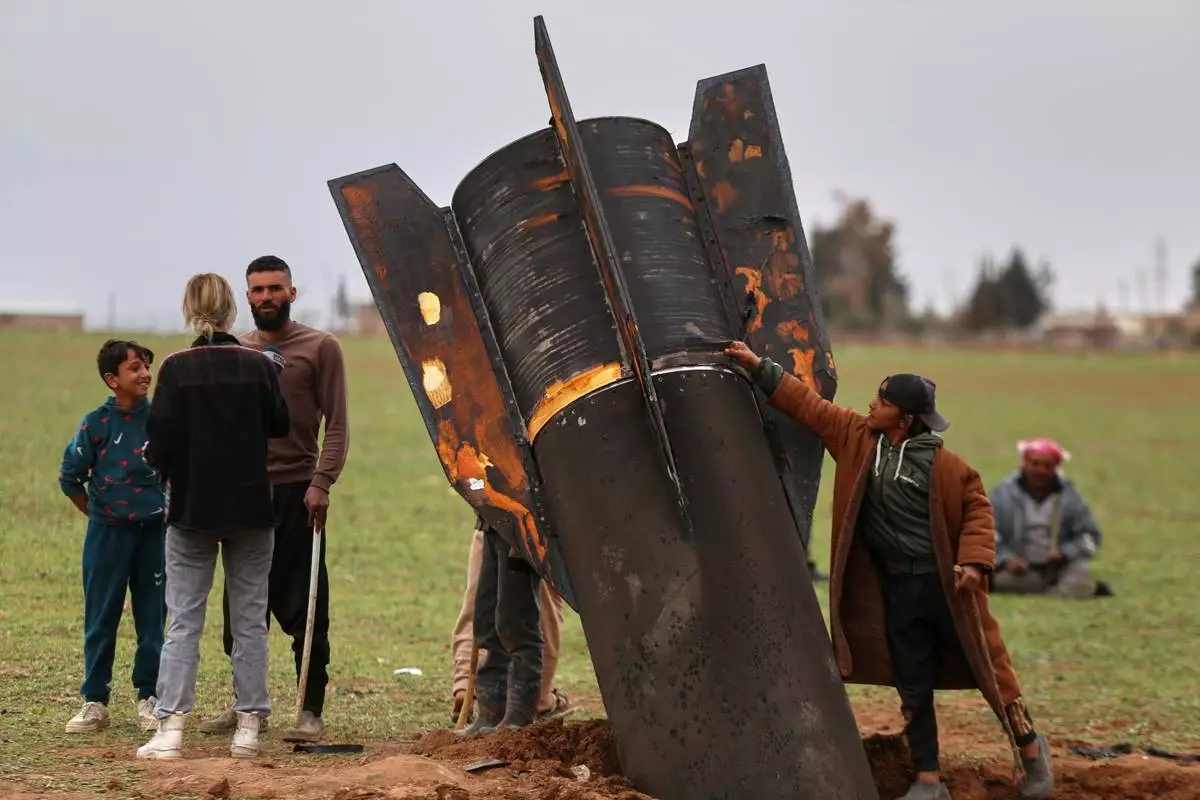
FILE — Exposing himself to the danger of unexploded ordnance, a boy touches an unexploded Iranian projectile that landed in an open field in the outskirts of Qamishli, eastern Syria, March 4, 2026.(AP Photo/Baderkhan Ahmad, File)

FILE — Exposing himself to the danger of unexploded ordnance, a boy touches an unexploded Iranian projectile that landed in an open field in the outskirts of Qamishli, eastern Syria, March 4, 2026.(AP Photo/Baderkhan Ahmad, File)

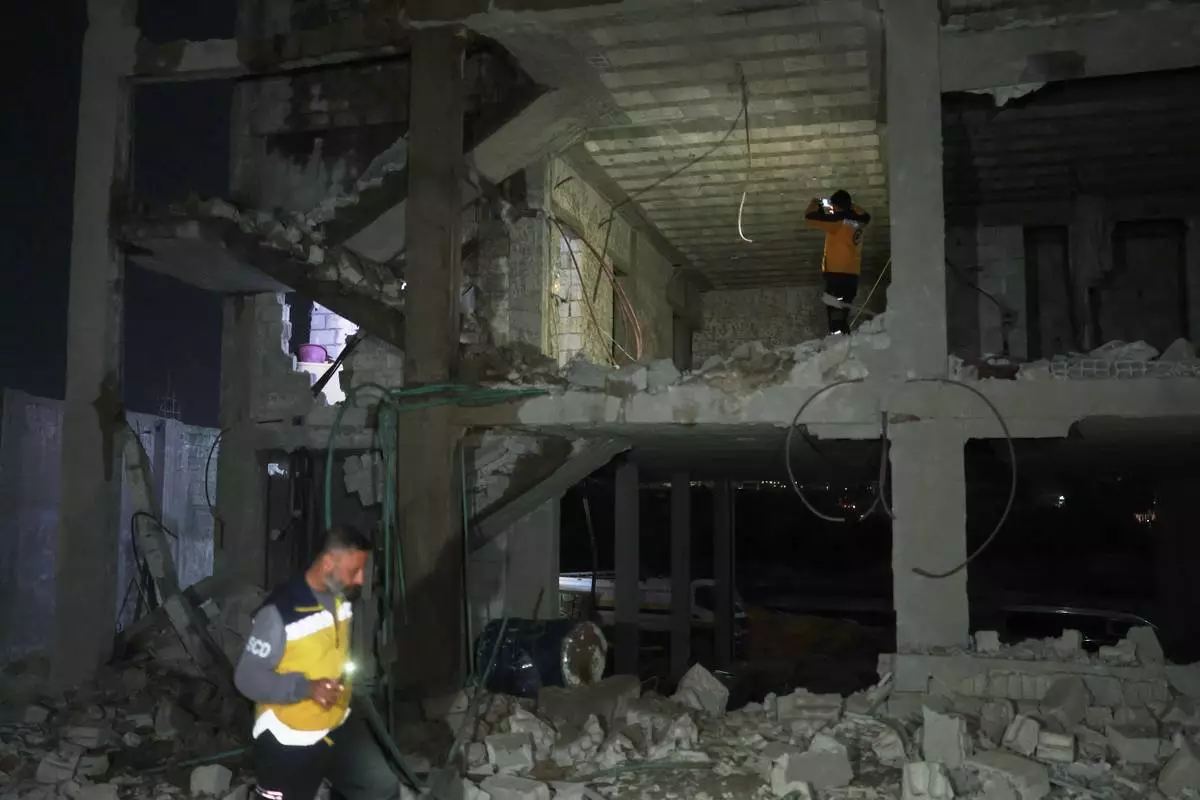
FILE — Members of the Syrian Civil Defense inspect a building after debris from an Iranian missile fell, injuring at least four people, including three children, according to Syria's state news agency SANA, in the town of Ain Terma, near Damascus, Syria, March 1, 2026. (AP Photo/Ghaith Alsayed, File)

FILE — Members of the Syrian Civil Defense inspect a building after debris from an Iranian missile fell, injuring at least four people, including three children, according to Syria's state news agency SANA, in the town of Ain Terma, near Damascus, Syria, March 1, 2026. (AP Photo/Ghaith Alsayed, File)

Recommended Articles