Nigerian President Bola Tinubu has agreed in principle to write off 30 percent of domestic airlines' debts to aviation agencies to stabilize the country's aviation sector.
The move follows high-level talks with airlines, which had warned they would halt operations due to soaring jet fuel prices.
"No airline in this country will fly in the next seven days if something is not done. Not because they don't want to fly, but because the pricing not only of our tickets, but the pricing of the fuel product that we need to fly in the first place may not be available to us, because we don't have the money," said Allen Onyema, CEO of Air Peace.
Rising aviation fuel costs are no longer just an airline problem. They're spilling into the broader economy, pushing up transport expenses for businesses and ultimately the prices of goods for consumers.
For business owners, who rely on air travel to move across cities, the impact is immediate and unavoidable.
"It's definitely going to affect everybody, down to those who don't even fly. Because if, for example, I'm going to bring products from a place like Lagos down to Abuja, of course, I'm going to build in the excess that comes from the cost of my transport. I'm going to build it into the sales. So, it's going to affect everybody," said Qlaypole Edache Ochola, chairman of BIUSPHOROUS Creative Communications.
Meanwhile, regulators are stepping in to prevent a breakdown in the aviation sector, as soaring jet fuel costs continue to strain both airlines and fuel marketers.
They insist efforts are now focused on finding a balance that keeps operators in business while easing the pressure across the value chain.
"We would not like to see a situation where the airlines will shut down. In as much as we want the airlines to run, we also want the marketers to continue doing their business. So, we have to have to reach midway, and this is a very, very urgent matter that has to be dealt with," said Saidu Aliyu Mohammed, CEO of the Nigerian Midstream and Downstream Petroleum Regulatory Authority.
In order to prevent disruptions and to maintain stability in the sector, the government is offering financial relief to ease pressure on airlines, targeting the backlog of debts owed to aviation agencies.
"Regarding the discounts to be given to the airlines from the debts they owe to the aviation agencies, Mr. President has definitely approved a 30-percent discount," said Festus Keyamo, Nigeria's Minister of Aviation and Aerospace Development.
For Africa's largest economy, where air travel remains key to business and regional movement, the stakes are high.
Experts say any prolonged disruption could ripple beyond the aviation sector, affecting trade, investment, and connectivity across the country.
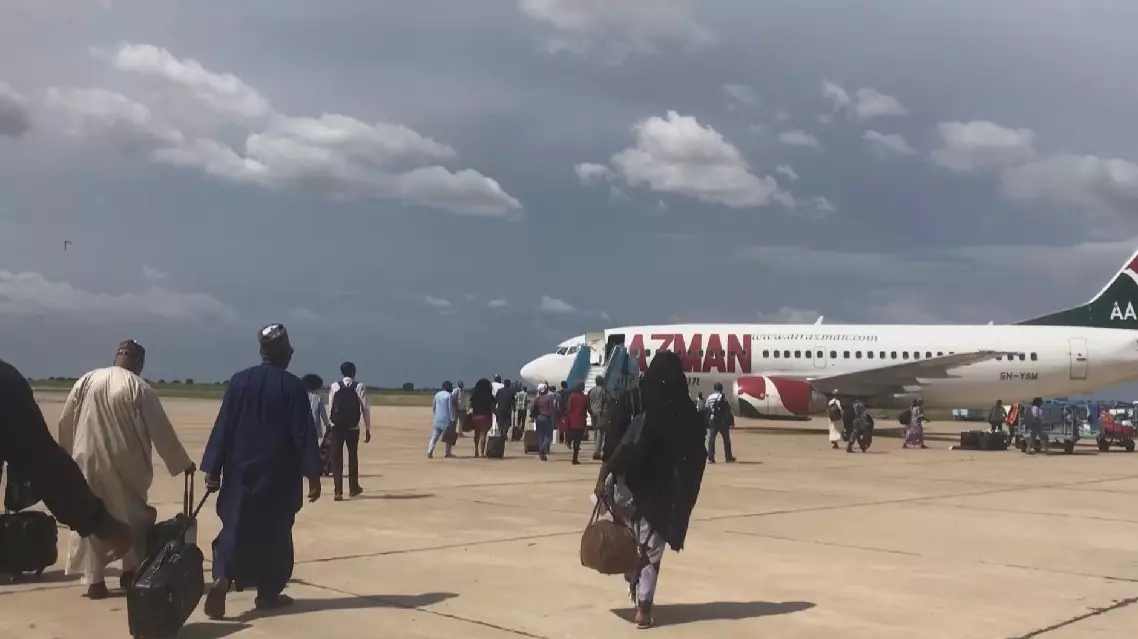
Nigeria offers debt relief to airlines facing fuel crisis