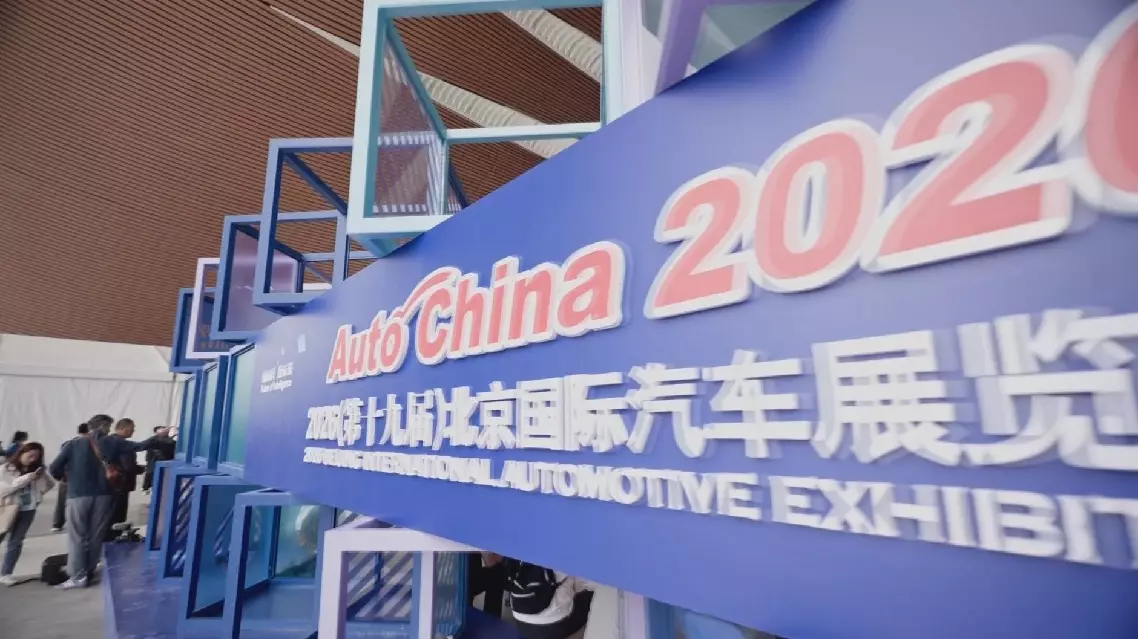
At the ongoing 2026 Beijing International Automotive Exhibition (Auto China 2026), Chinese car brands are showcasing their transformation into tech powerhouses, forging partnerships with global rivals in smart driving and battery technology as the era of new energy vehicles takes shape.
From smart driving to battery technology, Chinese automakers now stand as serious global contenders. Global rivals remain strong, yet partnerships with Chinese firms are reshaping the landscape.
Industry voices highlight how Chinese brands are gaining recognition abroad.
"Before Chinese brands were like cheap brands, now Chinese brands are technology brands," said Antoine Maria, SAIC Maxus dealer in France.
"So nowadays Chinese ones have come up too," said Shan Brakash, automotive engineer from India.
"Everybody is catching up with the China speed," said Francios Marion, Head of Communication at Valeo.
What looks like rivalry on the surface often masks extensive cooperation behind the scenes as global automakers are increasingly embedded in China's supply chain.
Tesla now sources about 95 percent of its components locally, Volkswagen is working with Chinese tech firms to accelerate its smart‑vehicle strategy, and Stellantis is helping Chinese EV makers such as Leapmotor expand into overseas markets.
The reality is that "Chinese" and "international" are no longer easy to define, with competition giving way to collaboration as technology, capital and supply chains become increasingly intertwined.
"Last year, 63 percent of the orders that we had in China were with the Chinese OEMs (Original Equipment Manufacturers)," said Marion.
"We have Chinese customers, but also we have French customers, and some friends in South America. So I think Maxus is a global brands," said Maria.
The event kicked off in Beijing on Friday and will run through May 3. As the world's largest auto show, it has brought together over 2,000 companies from 21 countries and regions. A total of 1,451 vehicles are on display, including a record-breaking 181 global premieres -- the highest number in the show's history -- along with 71 concept cars.
Global automakers deepen partnerships with Chinese firms at Auto China 2026
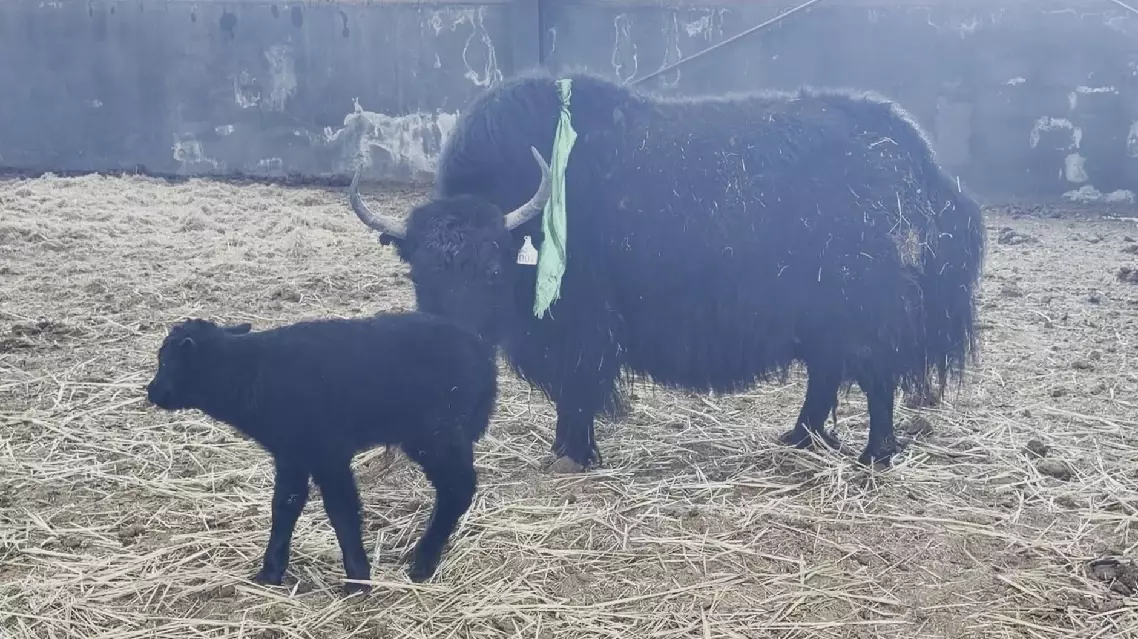
Chinese scientists announced Monday that they have achieved a breakthrough in yak cloning, with 10 cloned calves all naturally delivered in southwest China's Xizang Autonomous Region.
These calves, consisting of three black yaks and seven white ones, were born from March 25 to April 5 at a yak breeding and research base in Xizang's Damxung County, all meeting expected standards and steadily gaining weight.
The mass births came after the first cloned yak was born in July 2025, which has grown healthily and weighs about 183 kg now.
The achievement was made using a domestically developed breeding system that combines whole-genome selection with somatic cell cloning, following three years of research by a Chinese scientific team.
"Whole-genome selection can accurately pinpoint excellent genetic loci associated with large body size, fast growth, strong fecundity and disease resistance, high feed conversion efficiency, and tolerance to high-altitude and low-oxygen conditions (cold resistance). On this basis, somatic cell cloning enables 1:1 precise replication of the genotype through asexual rapid propagation (cloning), thereby compressing the breeding cycle to within five years," said Fang Shengguo, a professor at the College of Life Sciences at Zhejiang University and director of the State Conservation Center for Gene Resources of Endangered Wildlife.
Yak farming is one of the key industries targeted for development in Xizang during the country's 15th Five-Year Plan period (2026-2030). Traditional yak breeding has relied on phenotype selection, a process that can take up to 20 years and often leads to declining genetic quality.
Researchers said the new method can shorten the breeding cycle to less than five years by accurately identifying desirable genetic traits such as faster growth, disease resistance, feed efficiency and adaptation to high-altitude, low-oxygen environments, while enabling rapid replication of elite breeding stock.
Experts added that the technology could also support conservation efforts for rare yak genetic resources, including the endangered golden wild yak, whose population in Xizang is estimated at more than 300.
So far, the research team has developed more than 200 cloned embryos of golden wild yaks and hybrid wild-blood yaks, laying the groundwork for future embryo transfer and species recovery programs.
China achieves large-scale births of cloned yaks