ABUJA, Nigeria (AP) — Militants with the Islamic State group attacked a village overnight in northeastern Nigeria, killing at least 29 people, authorities said Monday. It was the latest violence in Africa’s most populous country that has long been battling a complex security crisis.
The attack took place late on Sunday in Guyaku, a village in the Gombi local government area in the country’s Adamawa state, according to the state governor.
Click to Gallery
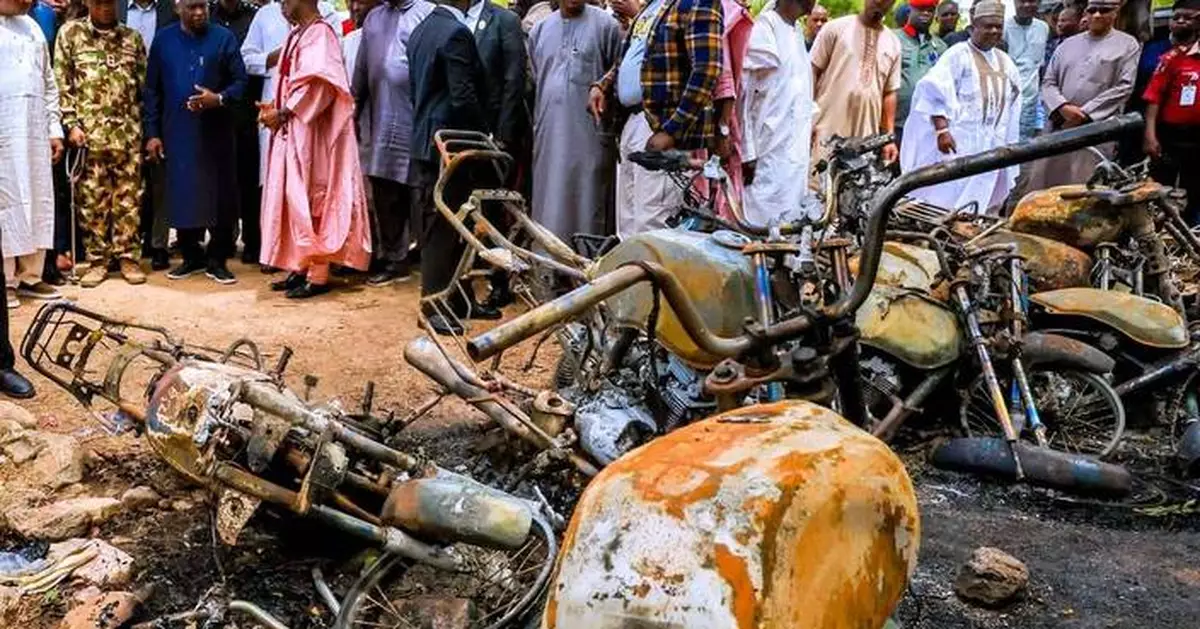
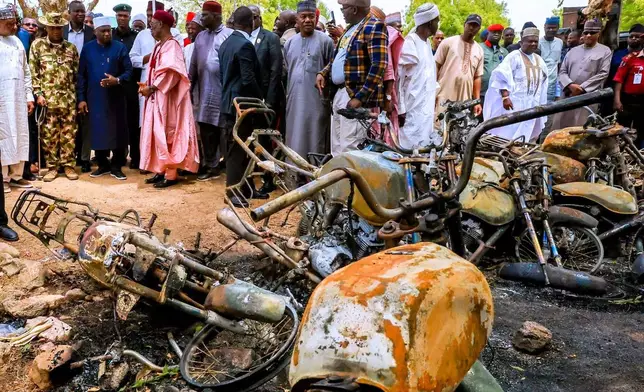
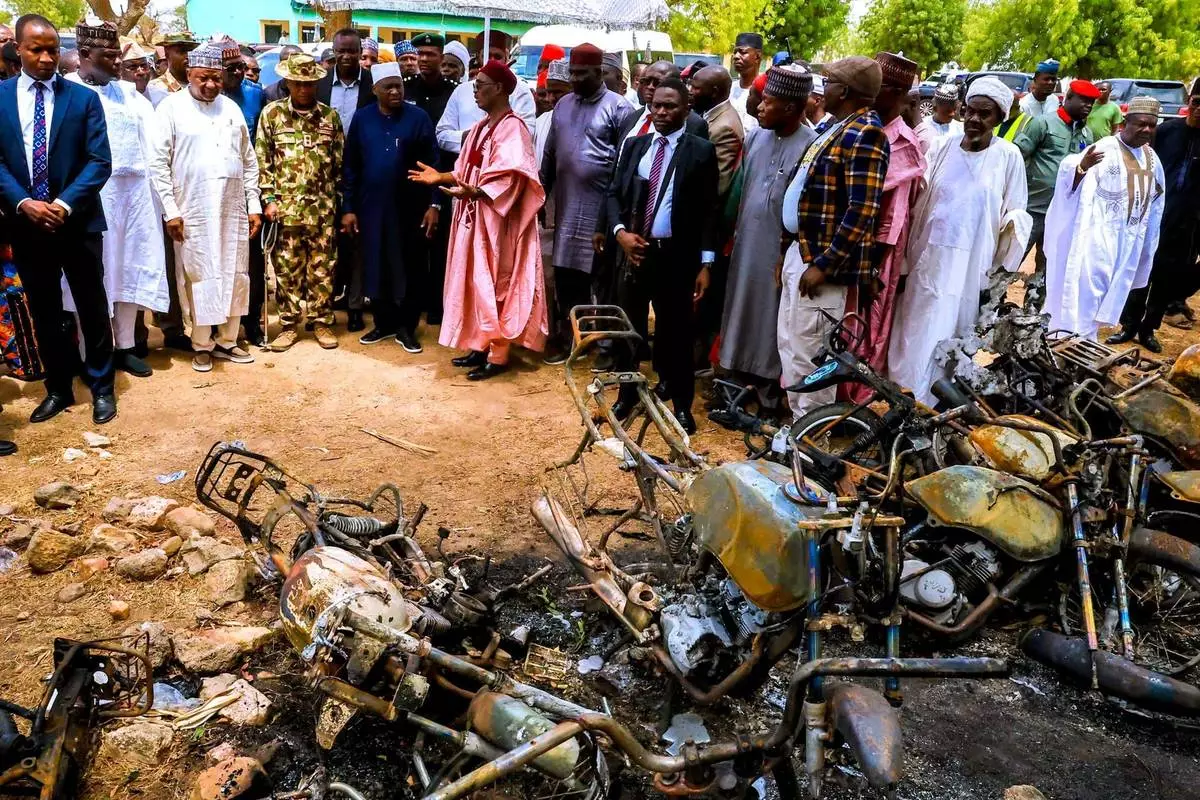
In this photo, released by Adamawa State Government House, Adamawa State Governor Ahmadu Umaru Fintiri, front left, inspects an area in Guyaku, northeastern Nigeria, Monday, April 27, 2026, that was attacked by Militants with the Islamic State group on Sunday. (Adamawa state government house via AP)
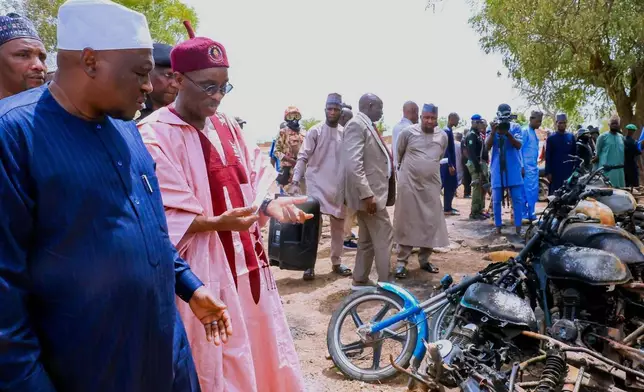
In this photo, released by Adamawa State Government House, Adamawa State Governor Ahmadu Umaru Fintiri, center left white hat, inspects an area in Guyaku, northeastern Nigeria, Monday, April 27, 2026, that was attacked by Militants with the Islamic State group on Sunday. (Adamawa state government house via AP)
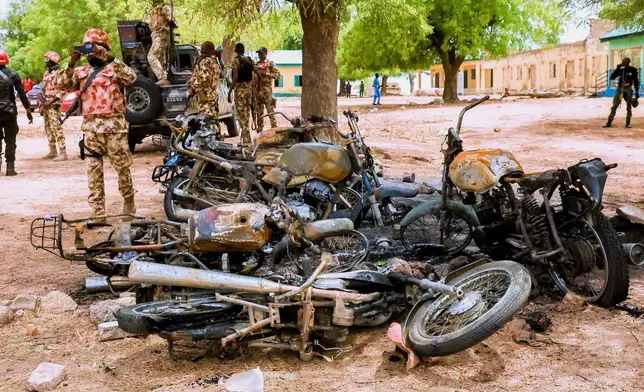
In this photo, released by Adamawa State Government House, a soldier takes photos of burned motorbikes in Guyaku, northeastern Nigeria, Monday, April 27, 2026, following an attack by Militants with the Islamic State group on Sunday. (Adamawa state government house via AP)
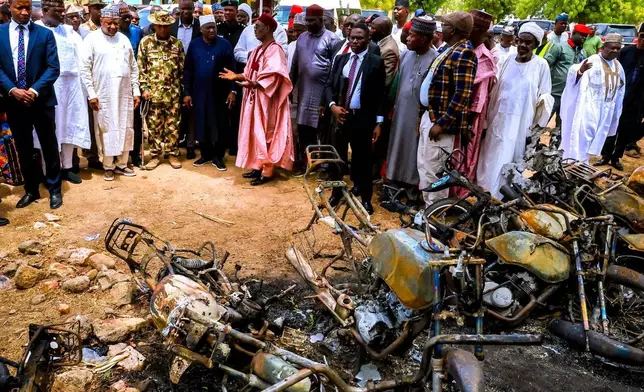
In this photo, released by Adamawa State Government House, Adamawa State Governor Ahmadu Umaru Fintiri, left white hat, inspects an area in Guyaku, northeastern Nigeria, Monday, April 27, 2026, that was attacked by Militants with the Islamic State group on Sunday. (Adamawa state government house via AP)
The Islamic State group claimed responsibility for the attack in a message on the Telegram messaging app.
Adamawa State Governor Ahmadu Umaru Fintiri denounced the attack as tragic and unacceptable during a visit to the village on Monday.
Nigeria is facing myriad security challenges, especially in the north, where an insurgency has simmered for more than two decades. In February, the United States sent troops to the West African nation to help advise its military on the fight against insecurity.
There are two major IS-backed militant groups in Nigeria but it wasn't immediately clear which one was behind the attack in Guyaki.
The Islamic State West Africa Province, or ISWAP, is known to be operating in the northeast, including in Adamawa state, while another IS-linked group known locally as Lakurawa often attacks villages further away in the northcentral states of Sokoto and Kebbi.
The Guyaki attack occurred on the same day that gunmen raided an orphanage in north-central Nigeria and abducted 23 pupils. Fifteen were later rescued and the government said “intensive operations” were underway to "secure the safe return of the remaining eight victims and apprehend the perpetrators.”
Students’ kidnappings have come to define the insecurity in Nigeria, where analysts say armed gangs see schools and students as “strategic” targets to draw attention.
The attack took place in an “isolated area” of Lokoja, capital of Kogi State, according to a statement by the state’s commissioner, Kingsley Femi Fanwo. The facility, Dahallukitab Group of Schools, was operating illegally, he said.
No group immediately claimed responsibility for the attack in a region has seen an increase in kidnappings for ransom. The statement did not say how old the abducted children are, but the term “pupil” in Nigeria usually refers to someone in kindergarten or primary school, covering ages up to 12.
Banchereau reported from Dakar, Senegal.
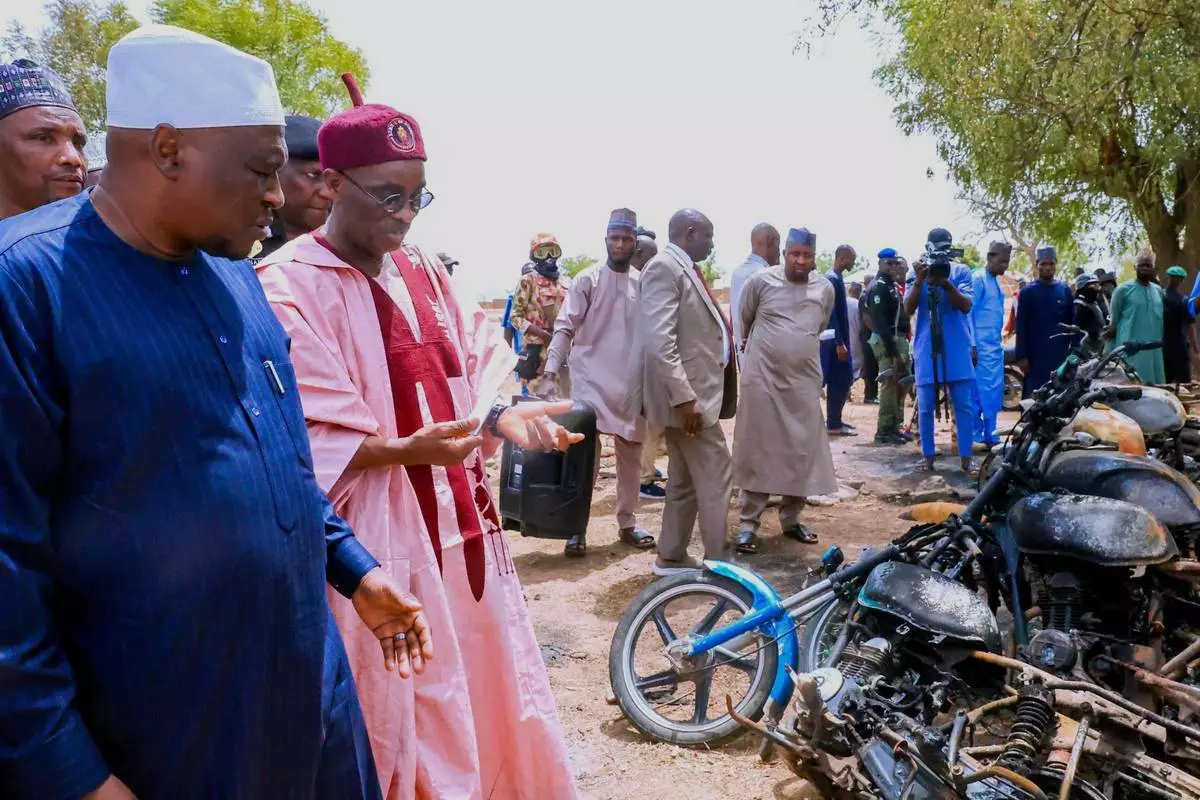
In this photo, released by Adamawa State Government House, Adamawa State Governor Ahmadu Umaru Fintiri, front left, inspects an area in Guyaku, northeastern Nigeria, Monday, April 27, 2026, that was attacked by Militants with the Islamic State group on Sunday. (Adamawa state government house via AP)
In this photo, released by Adamawa State Government House, Adamawa State Governor Ahmadu Umaru Fintiri, center left white hat, inspects an area in Guyaku, northeastern Nigeria, Monday, April 27, 2026, that was attacked by Militants with the Islamic State group on Sunday. (Adamawa state government house via AP)
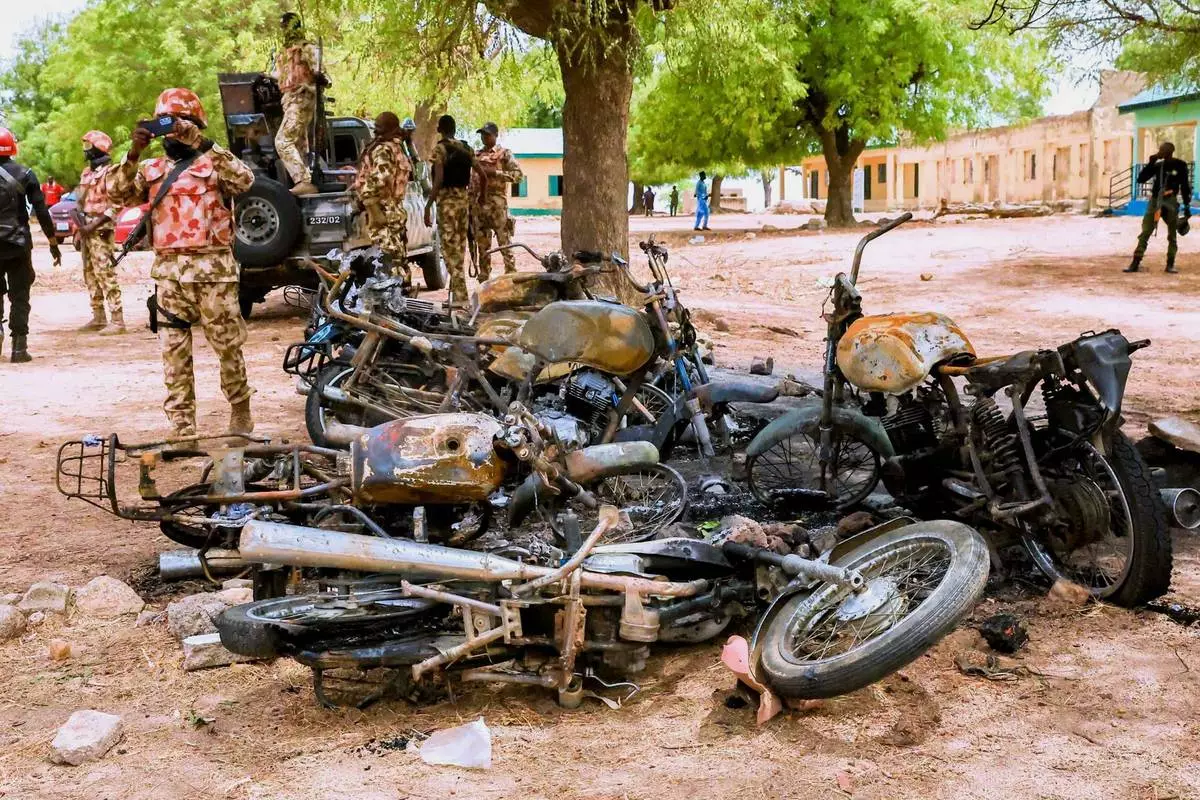
In this photo, released by Adamawa State Government House, a soldier takes photos of burned motorbikes in Guyaku, northeastern Nigeria, Monday, April 27, 2026, following an attack by Militants with the Islamic State group on Sunday. (Adamawa state government house via AP)
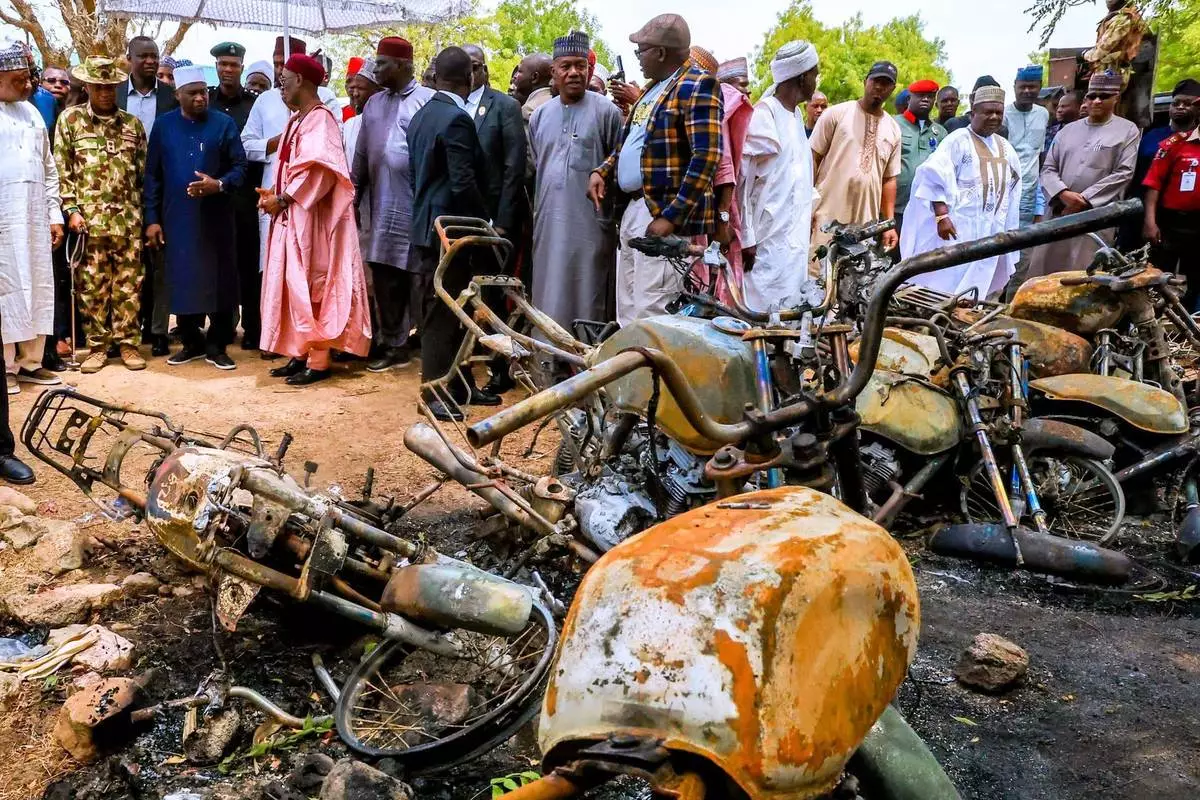
In this photo, released by Adamawa State Government House, Adamawa State Governor Ahmadu Umaru Fintiri, left white hat, inspects an area in Guyaku, northeastern Nigeria, Monday, April 27, 2026, that was attacked by Militants with the Islamic State group on Sunday. (Adamawa state government house via AP)
DUBAI, United Arab Emirates (AP) — Iran's supreme leader said Thursday that the Islamic Republic will protect its “nuclear and missile capabilities” as a national asset, likely seeking to draw a hard line as U.S. President Donald Trump presses for a wider deal to cement the war's shaky three-week ceasefire.
Ayatollah Mojtaba Khamenei maintained his defiant tone since taking over following the killing of his father in the war's opening airstrikes. In a written statement read by a state television anchor, Khamenei — who has not been seen in public since becoming supreme leader — said the only place Americans belonged in the Persian Gulf is “at the bottom of its waters" and that a “new chapter” was being written in the region's history.
His remarks come as Iran's oil industry is being squeezed by a U.S. Navy blockade halting its oil tankers from getting out to sea. But the world economy is also under pressure as Iran maintains its chokehold on the Strait of Hormuz, through which a fifth of all crude oil is transported. On Thursday, the global benchmark for oil, Brent crude, traded as high as $126 a barrel.
That shock to oil supplies and prices is putting pressure on Trump, who is floating a new plan to reopen the Strait of Hormuz.
Under the plan, the United States would continue its blockade on Iranian ports, while coordinating with allies to impose higher costs on Iran’s attempts to subvert the free flow of energy, according to a senior administration official.
Trump is weighing multiple diplomatic and policy options to push Iran to end its chokehold on the waterway, said the official, who spoke on condition of anonymity because they were not authorized to comment publicly.
The new proposal, first reported by The Wall Street Journal, is Trump's latest effort to persuade other nations to help reopen the strait.
With a fragile ceasefire in place, the U.S. and Iran are locked in a standoff over the strait. The U.S blockade is designed to prevent Iran from selling its oil, depriving it of crucial revenue while also potentially creating a situation where Tehran has to shut off production because it has nowhere to store oil.
The strait’s closure is also problem for the U.S.'s Gulf allies, which use the waterway to export their oil and gas.
A recent Iranian proposal would push negotiations on the country’s nuclear program to a later date. Trump said one of the major reasons he went to war was to deny Iran the ability to develop nuclear weapons. Iran long has maintained its program is peaceful, though it enriched uranium at near-weapons-grade levels of 60%.
Pakistan on Thursday said it was still facilitating indirect talks between the U.S. and Iran aimed at easing tensions, but Islamabad would also welcome direct communication between the two sides, even by phone.
“If the two parties can engage in real-time conversations, that could ease the sticking points,” said Ministry of Foreign Affairs spokesperson Tahir Andrabi at a weekly news briefing. He declined to share details of any Iranian or U.S. proposals.
Speaking to mark Persian Gulf Day in Iran, Khamenei's remarks signaled that nuclear issues and Iran's ballistic missile program wouldn't be traded away.
“Ninety million proud and honorable Iranians inside and outside the country regard all of Iran’s identity-based, spiritual, human, scientific, industrial and technological capacities — from nanotechnology and biotechnology to nuclear and missile capabilities — as national assets, and will protect them just as they protect the country’s waters, land and airspace,” Khamenei said.
Khamenei referred to America as the “Great Satan,” a long hurled insult by Iranian leaders toward the U.S. since the 1979 Islamic Revolution. He said Americans should have no business in the Persian Gulf.
“Foreigners who come from thousands of kilometers away to act with greed and malice there have no place in it — except at the bottom of its waters," said Khamenei, who was reportedly was wounded in the Feb. 28 attack that killed his father, the 86-year-old Supreme Leader Ayatollah Ali Khamenei,
In his remarks, Khamenei seemed to signal Iran would maintain its control over the waterway, which sits in the territorial waters of Iran and Oman. Iran had been charging some ships reportedly $2 million apiece to travel through the strait.
He said that Iran's control of the Strait of Hormuz will make the Gulf more secure, and that Tehran's “legal rules and new management” of the strait will benefit all the region’s nations.
However, the world considered the strait an international waterway, open to all without paying tolls. Gulf Arab nations, chief among them the United Arab Emirates, have decried Iran's control of the strait as akin to piracy.
Associated Press writers Aamer Madhani in Washington, Munir Ahmed in Islamabad and Amir Vahdat in Tehran, Iran, contributed to this report.
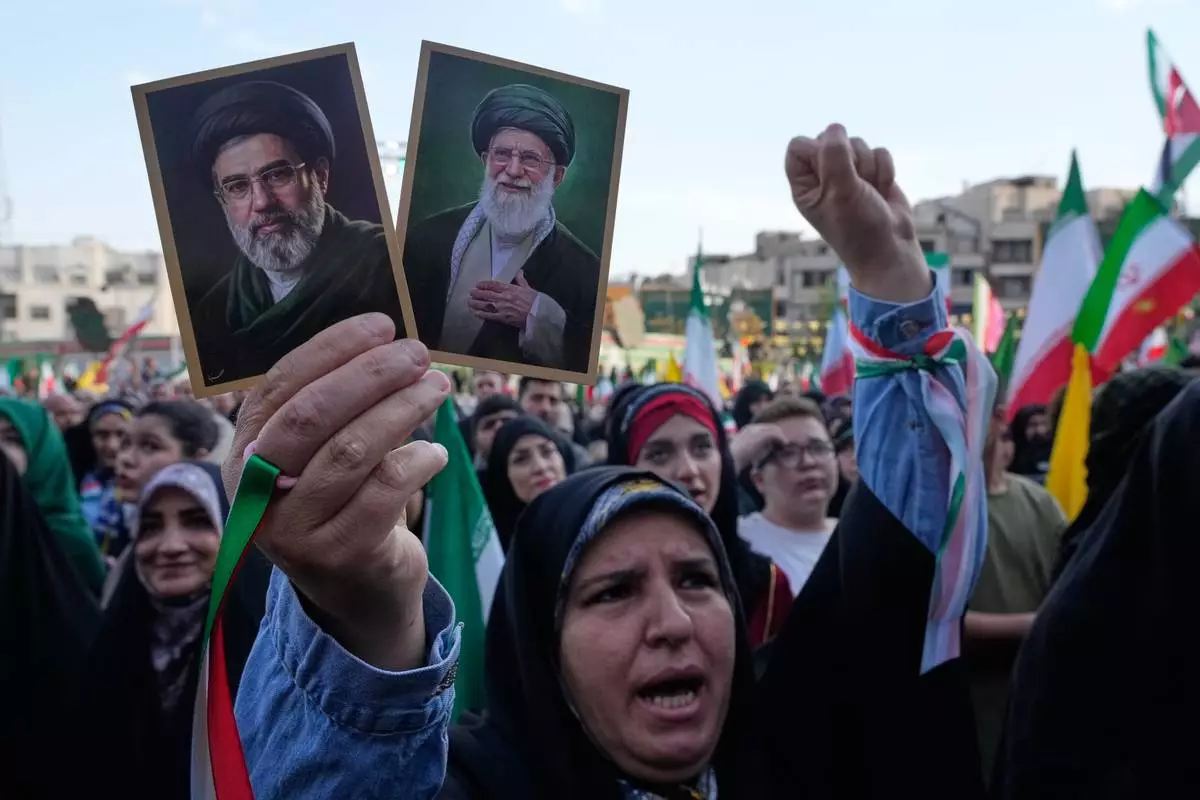
A woman holds up pictures of the Iranian Supreme Leader Ayatollah Mojtaba Khamenei, left, and his father, the slain Ayatollah Ali Khamenei in a state-organised rally celebrating the birthday of Imam Reza, the 8th Shiite Muslims' Imam, and supporting the supreme leader, in Tehran, Iran, Wednesday, April 29, 2026. (AP Photo/Vahid Salemi)
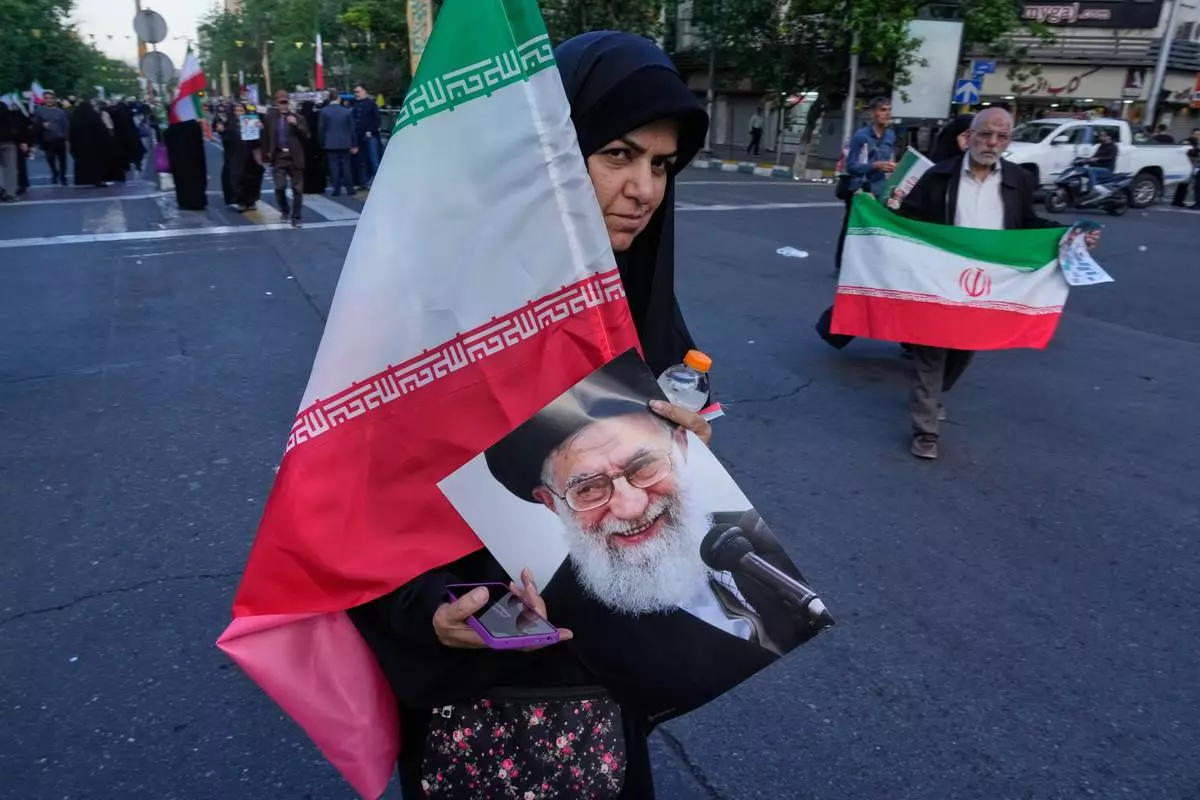
A woman carries an Iranian flag and a poster of the late Supreme Leader Ayatollah Ali Khamenei during a state-organised rally in Tehran, Iran, Wednesday, April 29, 2026, celebrating the birthday of Imam Reza, the 8th Shiite Muslims' Imam, and supporting Supreme Leader Ayatollah Mojtaba Khamenei. (AP Photo/Vahid Salemi)
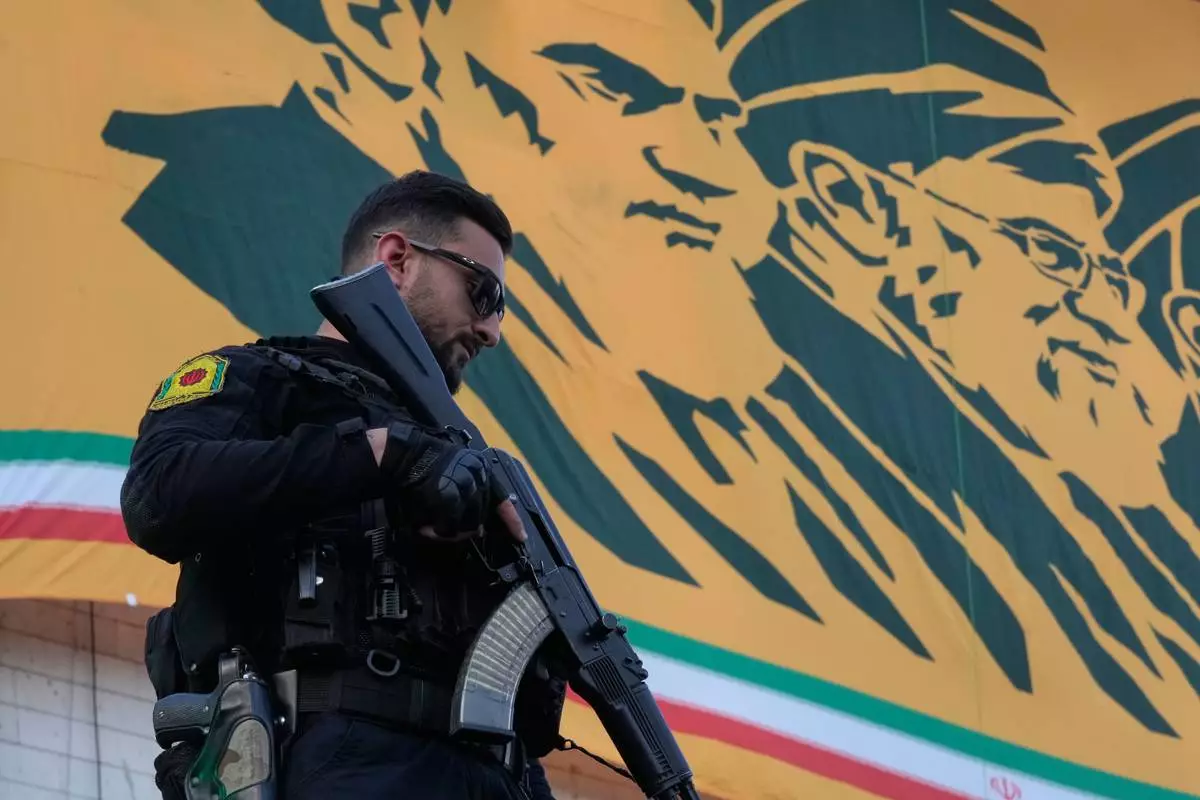
A police officer stands guard in front of a banner with portraits of the late Iranian revolutionary founder Ayatollah Khomeini, left, and late Supreme Leader Ayatollah Ali Khamenei in a state-organised rally celebrating the birthday of Imam Reza, the 8th Shiite Muslims' Imam, and supporting the supreme leader, in Tehran, Iran, Wednesday, April 29, 2026. (AP Photo/Vahid Salemi)
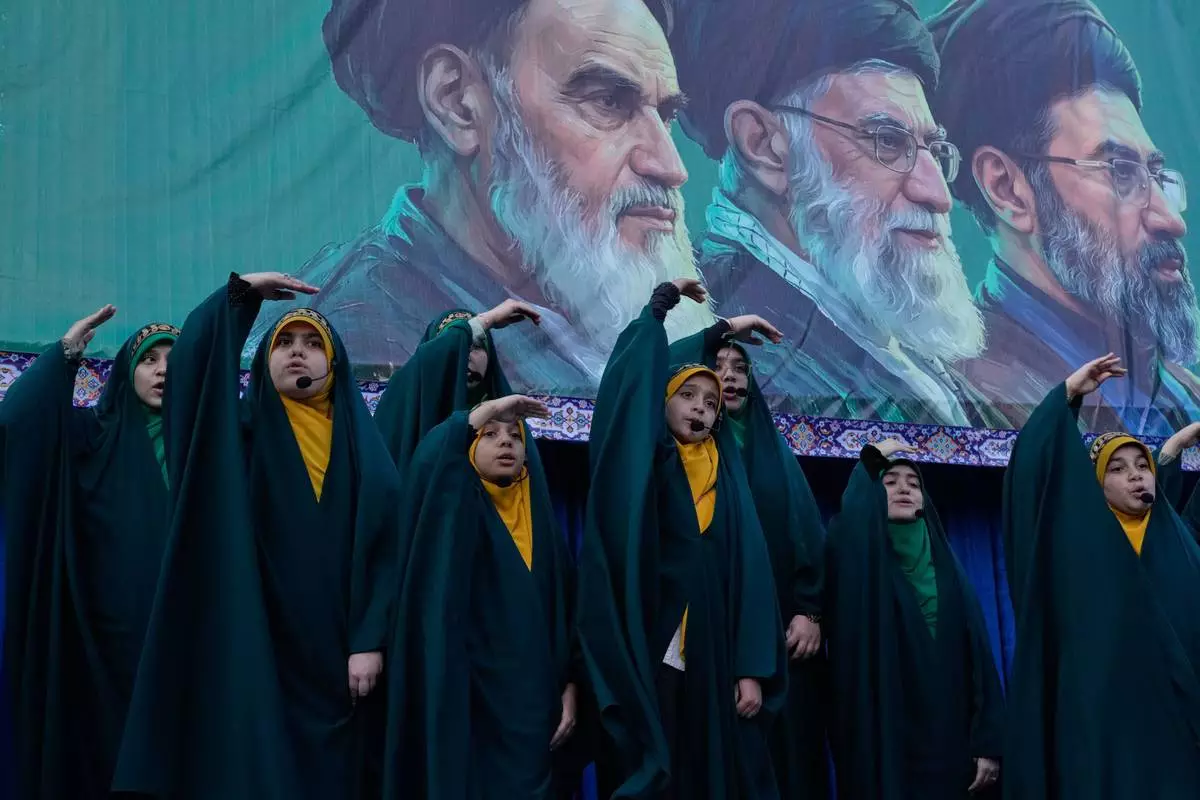
Girls sing a song as they show the movement of missiles with their hands next to the portraits of the late Iranian revolutionary founder Ayatollah Khomeini, left, late Supreme Leader Ayatollah Ali Khamenei, center, and Supreme Leader Ayatollah Mojtaba Khamenei, in a state-organised rally celebrating the birthday of Imam Reza, the 8th Shiite Muslims' Imam, and supporting the supreme leader, in Tehran, Iran, Wednesday, April 29, 2026. (AP Photo/Vahid Salemi)