Pakistani President Asif Ali Zardari on Sunday visited Sany Heavy Industry in Changsha, central China's Hunan Province, where he was deeply amazed by China's advanced high-tech equipment, saying that's the secret of China.
Zardari is paying a week-long visit to China from April 25 to May 1, with his first stop in Hunan Province and the second in south China's Hainan Province.
When seeing products such as unmanned counterbalanced forklifts in Sany Heavy Industry, the president asked, "Why haven't you been invited to Pakistan?"
"I consider the Chinese should come there and build there. We are closer to Iran, we're closer to a lot of other places. We have water there, the place I'm thinking of. And we have a position where we can even develop a cohort," he said.
The president gave his genuine praise for China's high-tech gears and industrial innovation, saying that's the secret of China.
In Changsha, he also visited Hunan Tea Group to explore Pakistan-China cooperation in agro-processing and value addition. Zardari was briefed on the supply chain mechanism and invited the Chinese company to bring their expertise in tea cultivation and exports to Pakistan.
This year marks the 75th anniversary of the establishment of diplomatic relations between China and Pakistan.
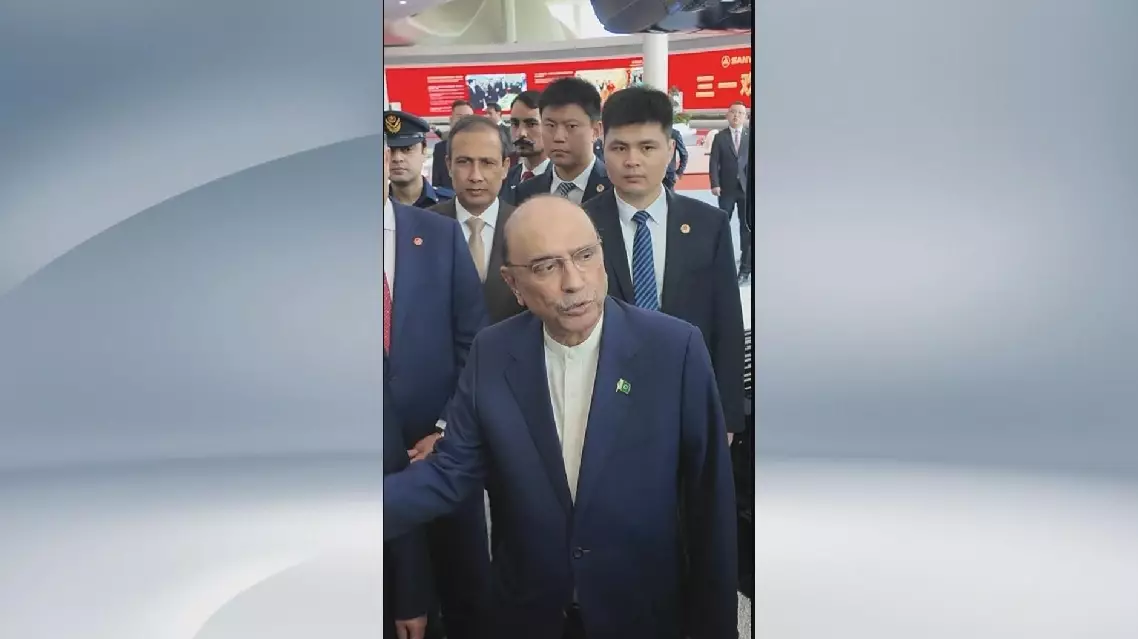
Pakistani president awed by China's high-tech gears
Rescue and recovery work is ongoing at the site of a deadly train collision at a station on the outskirts of the Indonesian capital Jakarta which has killed at least 15 people and left dozens injured, while the search for potential survivors trapped in the wreckage continues.
The incident unfolded at around 20:50 local time on Monday when a commuter train on the Jakarta-Bekasi route hit an electric taxi and came to a halt. Minutes later, a long-distance express train traveling from Jakarta to Surabaya crashed into the stationary commuter train from behind. The rear carriage, designated for women only, bore the full force of the impact.
One anxious mother, Fitria Yunis, said she had been waiting at a hospital overnight following the crash. Her daughter, who was on board the commuter train, suffered serious injuries and is receiving treatment in the ICU.
"My daughter didn't realize at first that a train had hit a taxi. She was on her phone. When the second crash happened and the train collided, she was immediately thrown across the carriage. Her legs flew up in the air, and she became trapped between two metal poles. She screamed for help, and after several hours, they were able to evacuate her through a nearby window," she said.
Rescue teams have remained on-site since the collision and have been using heavy-duty equipment to reach victims who who are trapped inside the damaged carriages. Officials say the scale of destruction has made the operation slow and highly challenging.
Indonesian President Prabowo Subianto visited survivors at a hospital in Bekasi on Tuesday morning, extending condolences on behalf of the government and promising a swift investigation.
Agus Yudhoyono, Coordinating Minister for Infrastructure and Regional Development of Indonesia, gave an update from the site of the tragic incident.
"Right now we are in the second stage: the recovery process. We aim to have the damaged carriages lifted from the tracks. We will continue to evaluate the technical and operational side of this accident. We are aware that having a rail network that overlaps with our road and land transport is challenging, but we will investigate this further to find out what steps are needed to prevent a similar incident from happening," he said.
The accident has disrupted services across Jakarta's commuter rail network, which carries nearly one million passengers daily, affecting hundreds of thousands of commuters who rely on the trains for their daily journeys.
An investigation into the cause of the incident is being conducted by the rail operator and the National Transportation Safety Committee.
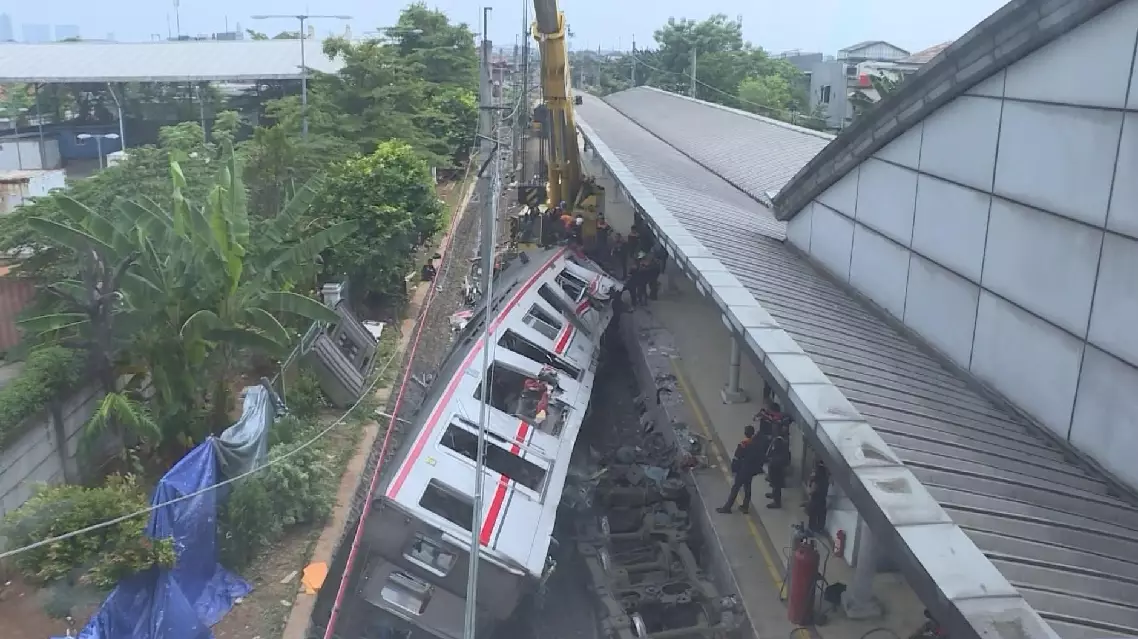
Death toll rises in Indonesian train collision as rescue, recovery work continues