SAN FRANCISCO--(BUSINESS WIRE)--Apr 29, 2026--
Today, Visa (NYSE: V) announced that it is adding five blockchains to its global stablecoin settlement pilot, expanding how issuers and acquirers can settle with the network. As stablecoins move into mainstream payment flows, Visa’s stablecoin settlement pilot now supports nine blockchains and has reached a $7 billion annualized stablecoin settlement run rate, up 50% since last quarter.
This press release features multimedia. View the full release here: https://www.businesswire.com/news/home/20260429143049/en/
“Our partners are building in a multi-chain world, and they expect their options to reflect that reality,” said Rubail Birwadker, Global Head of Growth Products and Strategic Partnerships, Visa. “Expanding our stablecoin settlement pilot program to more blockchains means our partners can choose the networks that best fit their needs, while relying on Visa to provide a common settlement layer across all of them.”
Newly supported blockchains
Visa is adding support for five additional blockchains, further expanding its multi-chain settlement capabilities:
With these additions, Visa now supports nine blockchains across its global stablecoin settlement pilot program, giving partners more choice while building on existing support for Avalanche, Ethereum, Solana, and Stellar.
From experimentation to multi-chain reality
Over the past year, stablecoins have evolved from a promising innovation to a practical way to move money globally, and Visa’s settlement pilots are helping partners streamline operations.
This builds on years of live pilots and regional rollouts across LAC, Europe, AP and CEMEA, as well as the recent expansion of USDC settlement to U.S. banks and 130+ stablecoin-linked card programs in more than 50 countries. The move to nine supported blockchains mirrors a broader trend: liquidity and activity now span a diverse, multi-chain ecosystem, and settlement infrastructure is evolving to match to provide more choice.
Visa is building toward a future where interoperability is essential. Supporting multiple blockchains gives partners more choice in how they access liquidity across ecosystems and adapt as the landscape changes, while Visa eases some of the underlying complexity so institutions can use stablecoins through a trusted, global network.
Continued momentum
The growth to a $7B run rate underscores increasing confidence in blockchain infrastructure from financial institutions, fintechs, and payment providers. Stablecoin settlement over blockchain infrastructure is becoming a viable complement to traditional settlement rails.
As adoption continues, Visa remains focused on bridging traditional finance and blockchain-based systems - bringing the same standards of reliability, security, and scale to both.
Partner perspectives
“Arc is designed to provide the performance, predictability, and reliable access to liquidity needed to support real-time settlement at a global scale. Our work with Visa reflects growing demand for stablecoins like USDC and blockchain infrastructure that can settle today’s payment flows instantly while enabling the next era of programmable commerce and agent-driven economic activity.” Nikhil Chandhok, Chief Product and Technology Officer, Circle.
“Our goal with Base has always been to make onchain the new standard. Visa’s expansion is a pivotal step in making stablecoin payments a daily reality for billions of people, enabling a faster, cheaper, and more useful financial system for everyone,” said Jesse Pollak, Founder of Base.
“Canton was designed to meet demanding requirements of regulated institutions, and Visa’s stablecoin settlement platform provides a bridge that lets them explore onchain settlement while staying aligned with their compliance requirements,” said Eric Saraniecki, Head of Network Strategy at Digital Asset, co-founder of the Canton Network.
“Visa adding Polygon signals that stablecoins are moving into real world payments at scale. By combining Visa’s global reach with Polygon’s fast, low-cost infrastructure, we are making stablecoin settlement more practical, reliable, and accessible for partners around the world,” said Marc Boiron, CEO, Polygon Labs.
“Tempo is focused on real-time stablecoin settlement, and Visa’s participation as both a validator and settlement partner helps bring always-on, programmable payments closer to the mainstream,” said Ani Narayan, GTM, Tempo.
About Visa
Visa (NYSE: V) is a world leader in digital payments, facilitating transactions between consumers, merchants, financial institutions and government entities across more than 200 countries and territories. Our mission is to connect the world through the most innovative, convenient, reliable and secure payments network, enabling individuals, businesses and economies to thrive. We believe that economies that include everyone everywhere, uplift everyone everywhere and see access as foundational to the future of money movement. Learn more at Visa.com.
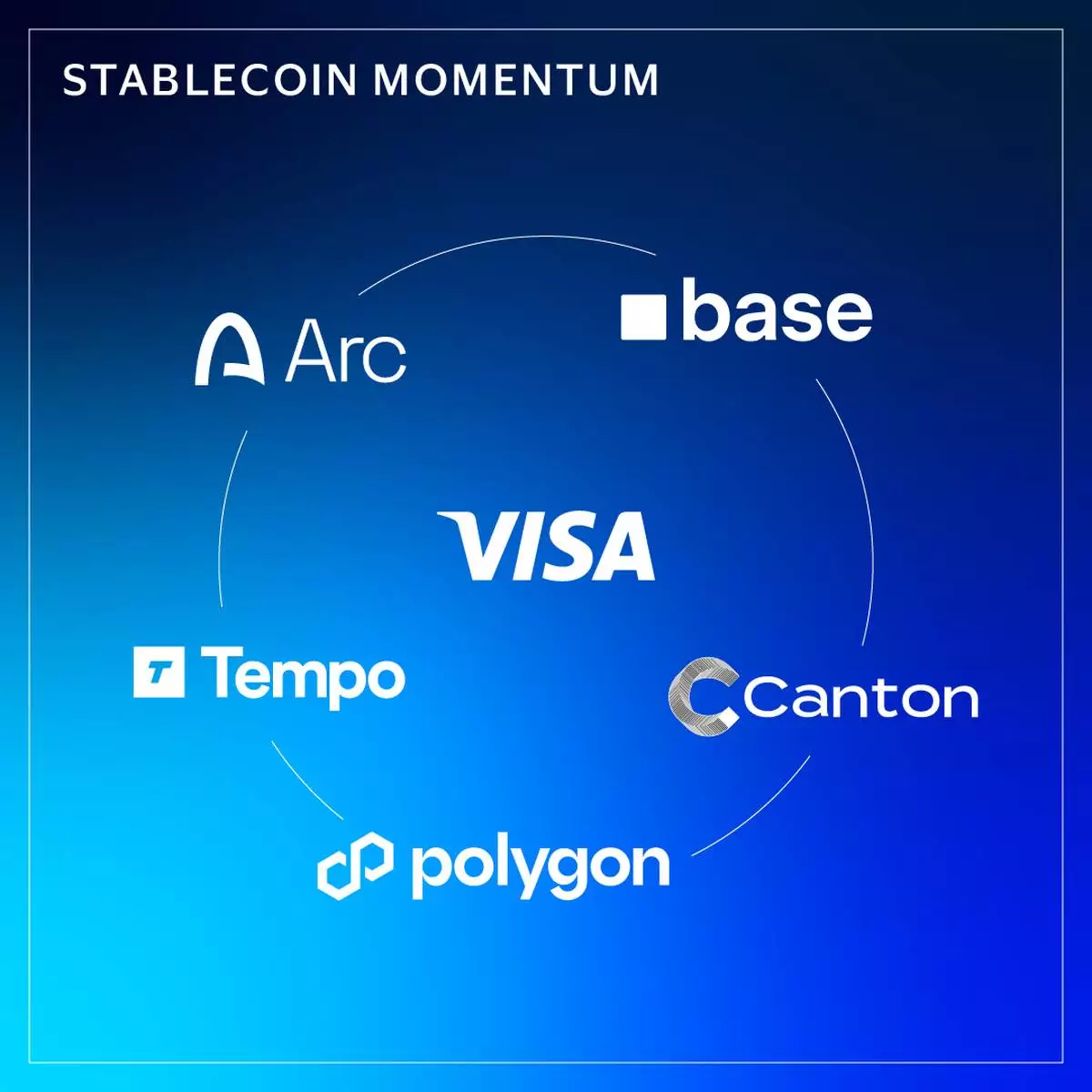
Visa is adding support for five additional blockchains, further expanding its multi-chain settlement capabilities.