Skip to Content Facebook Feature Image

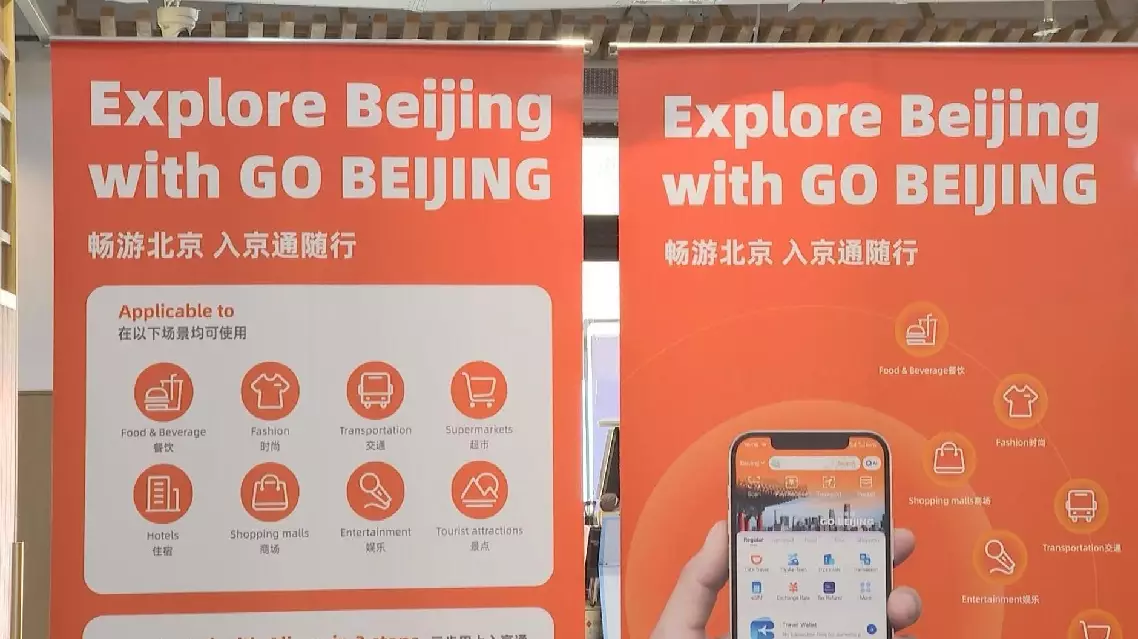
Beijing unveils "GO BEIJING" platform to better serve foreign travelers

China

China

China

Beijing unveils "GO BEIJING" platform to better serve foreign travelers

2026-04-29 17:07 Last Updated At:04-30 11:24

Beijing has launched "GO BEIJING," a comprehensive online service platform offering a full range of services for inbound visitors across different scenarios, local authorities said Tuesday.

The platform was jointly built by the Beijing Municipal Administration of Government Services and Data Management and payment services platform Alipay, in cooperation with other local government departments, such as the Beijing Municipal Bureau of Culture and Tourism, the Beijing Municipal Commerce Bureau and the Beijing Municipal Tax Service.

Overseas visitors can access the platform via the international version of Alipay and enjoy 39 services in 16 languages, including ride-hailing, ticket booking and hotel reservations. The platform also features digital services such as an "AI tour companion."

International visitors can open a "travel wallet" account on the platform, transfer funds into the account via cross-border remittance, and use it to make payments in the Chinese mainland. The service is available to users from 40 countries and regions.

"When I arrived in Beijing, I saw this new thing, the icon saying Tax Refund, and this is very convenient. Because when I bought anything in China before, I didn't think that refund was quite feasible. But this time, I used this mini-program, it was very fast. I did my tax refund in like two minutes. I think it has elevated the quality of service, which we've never seen in other countries, and it's way more convenient now, especially this travel wallet. I just love it because international cards are not needed anymore," said Humberto, a Brazilian traveler.

"I think the very convenient thing is that I can translate, and I can see the whole menu in English. I think it's super convenient. And I think it's not just about scanning to pay, also there are so many different things. For example, I can take metro or taxi just through this app. I can buy train tickets and airplane tickets," said Jelena, a Serbian traveler.

"Foreign visitors to Beijing no longer need to download multiple mobile apps. With just a registration on 'GO BEIJING', they can conveniently access 39 services including ride-hailing, shopping, ticket booking, and hotel reservations, with seamless switching between 16 languages. Meanwhile, we have also launched the Travel Wallet for the first time, a convenient payment solution designed to enhance the spending experience for foreign tourists. In addition, the platform has introduced an AI agent named 'Jingjing,' offering digital services such as itinerary planning and AI tour companion to help visitors explore Beijing more easily and conveniently," said Zhang Li, director of Urban International Service Coordination of Beijing Municipal Administration of Government Services and Data Management.

Beijing has been continuously improving services for foreigners. For example, one-stop service counters have been operational since last year in the international arrival areas of Beijing Capital International Airport and Beijing Daxing International Airport, offering over 20 types of essential services in areas such as finance, communication, transportation, culture and tourism.

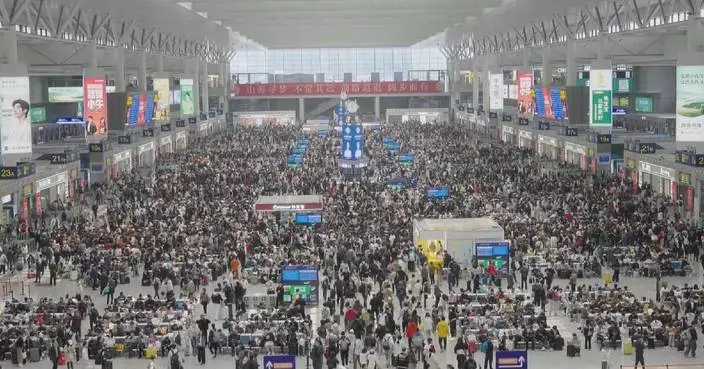
Beijing had recorded more than seven million border crossings in 2026 as of Sunday morning, representing a year-on-year increase of 13 percent. The recent surge in Beijing's inbound tourism is partly attributable to the continuous optimization of visa-free policies. To date, China has introduced unilateral visa-free policies for 50 countries and implemented 240-hour transit visa-free arrangements for 55 countries.
Beijing unveils "GO BEIJING" platform to better serve foreign travelers


Beijing unveils "GO BEIJING" platform to better serve foreign travelers

South Africa's sugarcane sector, a cornerstone of the country's agriculture, stands ready to further integrate into the vast Chinese market as the zero-tariff policy for African countries officially takes effect.

China's Customs Tariff Commission of the State Council announced Tuesday that from May 1, 2026 to April 30, 2028, the country will grant zero-tariff treatment to 20 African countries that have established diplomatic ties with China and are not classified as the least developed countries.

This follows the country's earlier decision to grant zero-tariff treatment on 100 percent of tariff lines, effective from Dec 1, 2024, for the 33 least developed African countries with which it maintains diplomatic relations.

In effect, the zero-tariff treatment has been expanded to cover all 53 African countries that maintain ties with China.

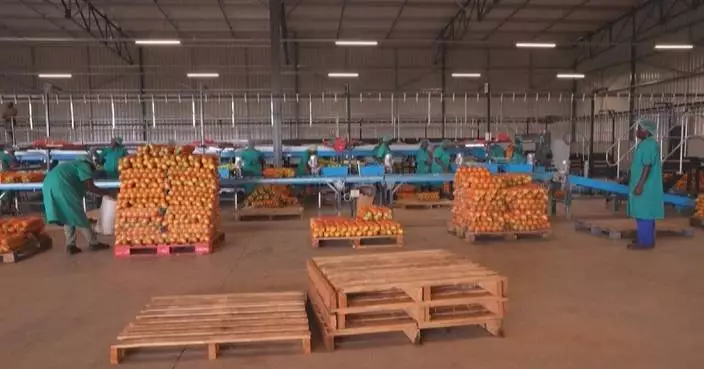
In KwaZulu-Natal province, one of South Africa's traditional agricultural powerhouses, local farmers are hopeful that their sugarcane products will soon reach Chinese consumers.

Pratish Sharma, a sugarcane grower in the province, has witnessed the industry endure an unprecedented winter of challenges, including volatile international prices and trade barriers. When he heard of China's zero-tariff policy, however, his hope returned.

"It'll make trading in China a lot easier. It will create a better revenue stream for exports of sugar to China. And agreements like these assist in rejuvenating our economy within the industry and making us more viable," the farmer said.

Official data shows that China has been South Africa's largest trading partner for 17 consecutive years, with bilateral trade exceeding 53.5 billion U.S. dollars.

Yet, the country's agricultural products currently account for only 0.4 percent of China's total agricultural imports, indicating huge growth potential.

Kulani Siweya, market and trade policy director at the South African Sugar Association, sees greater opportunity ahead for the country's roughly 25,000 registered sugarcane growers.

"Main regions or destinations are the U.S., Europe. [We are] exporting about between 35,000 to 70,000 tonnes to the China market. South Africa stands ready to give you quality sweet sugar that will satisfy the Chinese palate," said Siweya.

Beyond sugar, South African specialties such as citrus, macadamia nuts, wine, and other high-quality agricultural products are also expected to gain broader market access in China. This has encouraged farmers like Sharma to experiment with a wider range of crops.

"I've converted 18 hectares of sugar cane into macadamias. So that process of diversification has already begun. And with trade initiatives such as the zero-rated making all of us more sustainable and viable," Sharma said.

John Steenhuisen, South African Minister of Agriculture, said China's zero-tariff initiative will help reshape the agricultural sector.

"The tariff-free access that's been granted us is going to be a game changer for not only citrus but also for the entire agricultural sector. We're now going to be able to compete with excellent quality wines and other agricultural goods in that market in a far more competitive basis," said the minister.

South African sugarcane growers eye sweeter exports as China's zero-tariff policy for Africa takes effect

South African sugarcane growers eye sweeter exports as China's zero-tariff policy for Africa takes effect

Recommended Articles