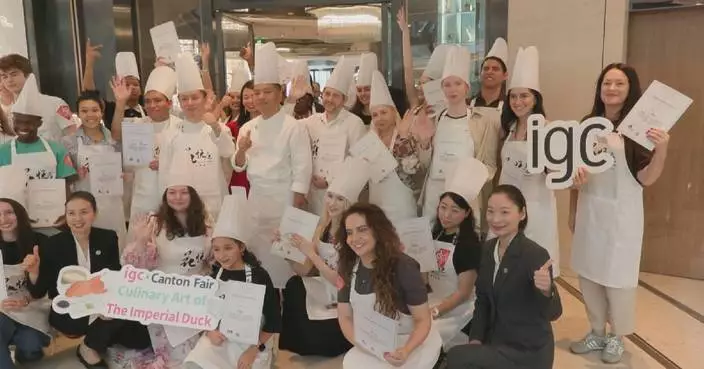
International merchants attending the 139th Canton Fair stepped beyond exhibition halls on Tuesday to explore the revitalized countryside in the southern Chinese city of Guangzhou, experiencing firsthand how China's "Baiqianwan Project" is transforming rural life.
The Jingxia Village in Huangpu District of Guangzhou is a model community showcasing China's vision for future rural development. With a history spanning nearly 300 years, the village has undergone a remarkable transformation under accelerated implementation of the "Baiqianwan Project" ("High-quality Development Project for Hundreds of Counties, Thousands of Towns"), emerging as a new calling card for Guangzhou's rural revitalization efforts.
Nestled against mountains and beside water, the village's new farmhouses are encircled by greenways, offering panoramic views of pastoral landscapes.
The international visitors were particularly intrigued to learn that the neat rows of buildings were assembled efficiently and rapidly using a "building block" prefabrication method.
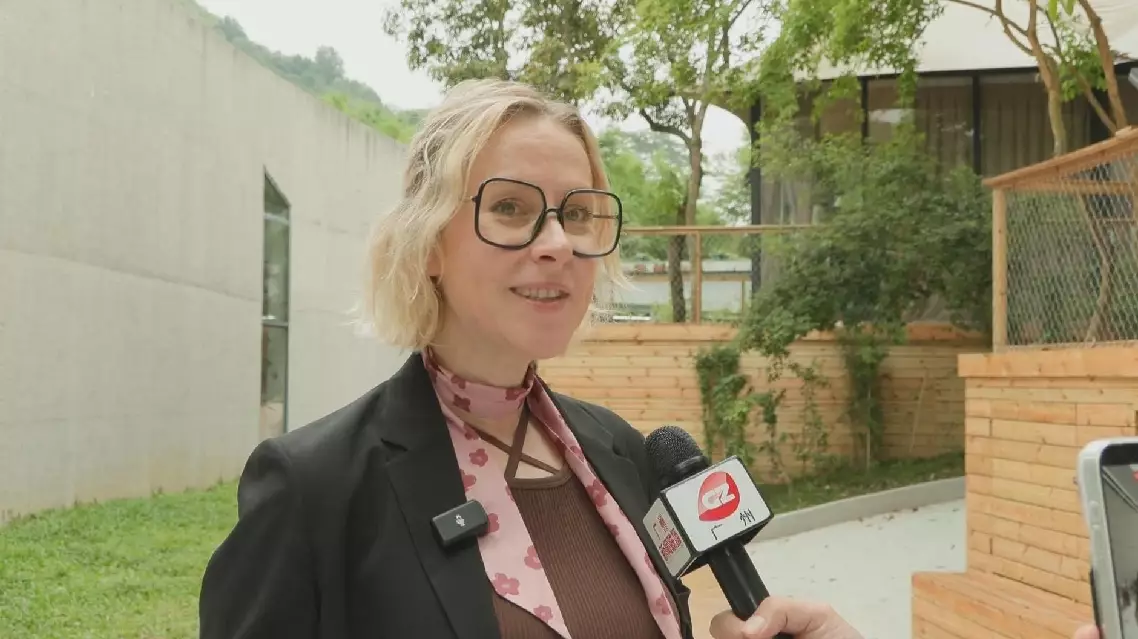
"That's very, very impressive, because that means that you could mass produce this kind of projects worldwide with minimum effort," said Samuel Siles, a participant in the second phase of the 139th Canton Fair that was held from April 23 to 27.
Each new building is equipped with its dedicated "zero-carbon heart," featuring large-scale installation of high-efficiency photovoltaic panels on rooftops. Leveraging the village's new-type rural power system, surplus electricity generated during daylight hours can be intelligently stored to ensure stable power supply during nighttime and cloudy weather.
Adding a cultural dimension to the Jingxia Village, a cat-themed art gallery has opened a window into the village's artistic side. The village is actively exploring an "artistic rural construction" model, leveraging niche cultural initiatives to drive rural development. The art museum regularly hosts art exhibitions, music salons, writer exchanges, and rural aesthetics workshops, infusing village life with a vibrant artistic atmosphere.
"Cool place to work, to live. I mean, nice place to walk around, to see the lake, the water, get connected with the nature," said Tina Refen, another participant in the Canton Fair.
"Currently, Jingxia Village has achieved an organic integration of key elements for future rural development -- including scientific innovation, pastoral landscapes, natural scenery, and low-carbon practices. It has initially unveiled a new vision for future rural communities, characterized by concentrated settlements, contiguous fertile farmland, clustered industries, and a beautiful ecological environment. This provides a vivid and practical 'Huangpu experience' for the entire province in addressing the urban-rural dual structure," said Zhao Dongdong, deputy director of the command office for "Baiqianwan Project" in Huangpu District.
In Jingxia, the international merchants witnessed both the "hard technology" for building prefabricated farmhouses and zero-carbon applications, as well as the grounded implementation of concepts promoting urban-rural integration and green, shared development. Their journey offers a tangible glimpse into Chinese modernization in action.
Canton Fair merchants head out to rural area to experience Chinese modernization
Chinese President Xi Jinping on Thursday urged greater efforts and more concrete measures to strengthen basic research, enhance China's capacity for original innovation, and further solidify the foundation for building the country's strength in science and technology.
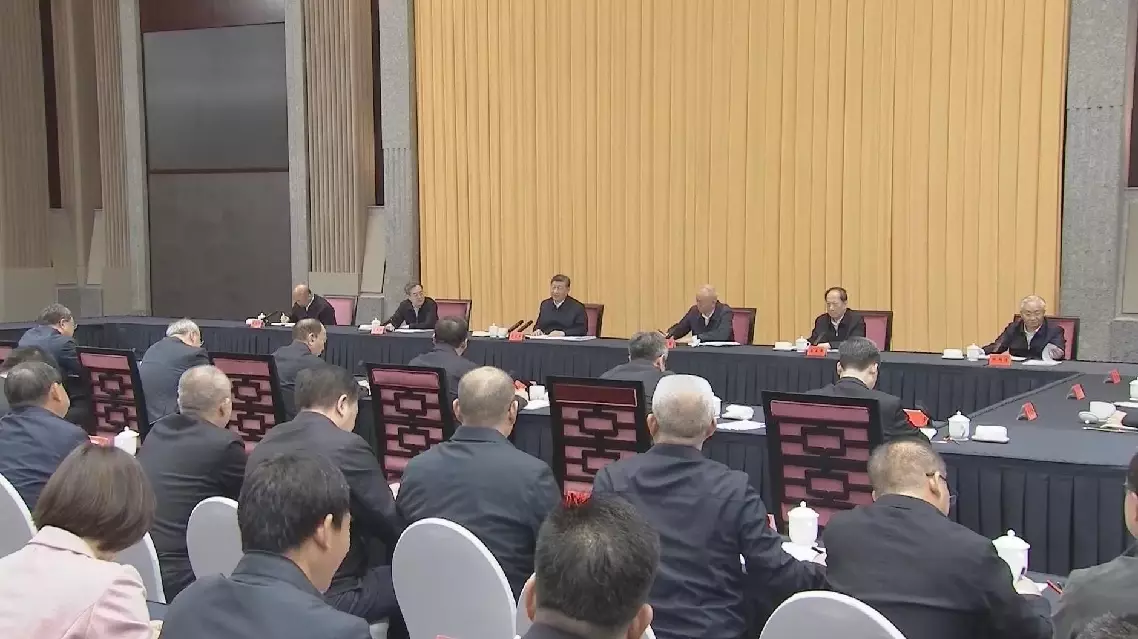
Xi, also general secretary of the Communist Party of China (CPC) Central Committee and chairman of the Central Military Commission, made the remarks while attending a symposium on strengthening basic research in Shanghai.
Several other attendees also spoke at the symposium. After hearing their remarks, Xi delivered a speech.
Xi noted that breakthroughs are accelerating in the new round of technological revolution and industrial transformation, global sci-tech competition has increasingly focused on basic and frontier areas, and the significance of original and disruptive innovation has become increasingly prominent.
Against such a backdrop, he said, China should seize opportunities, respond to challenges, and give high priority to basic research with sustained efforts, to keep generating new outcomes.
Xi emphasized the need to further define the main direction and key sectors of basic research, strengthen the leading role of national research institutions and high-level research universities, encourage and regulate the development of new types of research and development institutions, bolster enterprise-led collaboration between industries, universities, research institutes and end-users, and unclog the chain of innovation featuring basic research, application development and technology transfer.
He urged efforts to strengthen the construction of basic disciplines and promote coordinated development of applied disciplines and basic disciplines. Stressing the need to promote integrated development of education, science and technology, and talent, he called for comprehensive efforts to cultivate, attract and utilize talents in order to build a strong workforce for basic research.
Xi demanded strong support and guarantees for basic research, calling for a gradual increase in the share of basic research spending and the establishment of a diversified investment framework.
He also called for systematic development of major science and technology infrastructure facilities, and the establishment of intelligent research platform systems.
According to Xi, efforts should be made to improve the category-based evaluation system tailored to the distinctive nature of basic research, enhance working and living conditions for basic researchers, and foster an innovation environment that is open, inclusive and tolerant of failure.
He also pointed to the importance of actively integrating into the global innovation network, deepening international exchanges and cooperation in basic research, joining forces to tackle major scientific-technological challenges such as climate change, energy and the environment, and life and health, as well as actively participating in global science and technology governance.
Cai Qi, a member of the Standing Committee of the Political Bureau of the CPC Central Committee and director of the General Office of the CPC Central Committee, also attended the symposium.
Chinese Vice Premier Ding Xuexiang, also a member of the Standing Committee of the Political Bureau of the CPC Central Committee, presided over the symposium.
Ding highlighted the significance of Xi's speech in charting the course and providing fundamental guidance for strengthening basic research.
Xi stresses advancing basic research to solidify foundation for building China's strength in science, technology