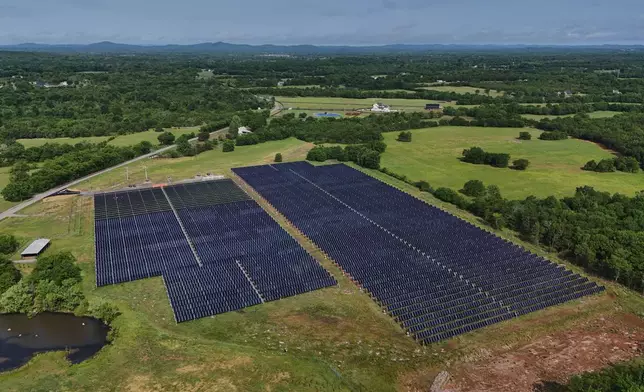
CHRISTIANA, Tenn. (AP) — From a distance, the small solar farm in central Tennessee looks like others that now dot rural America, with row upon row of black panels absorbing the sun's rays to generate electricity.
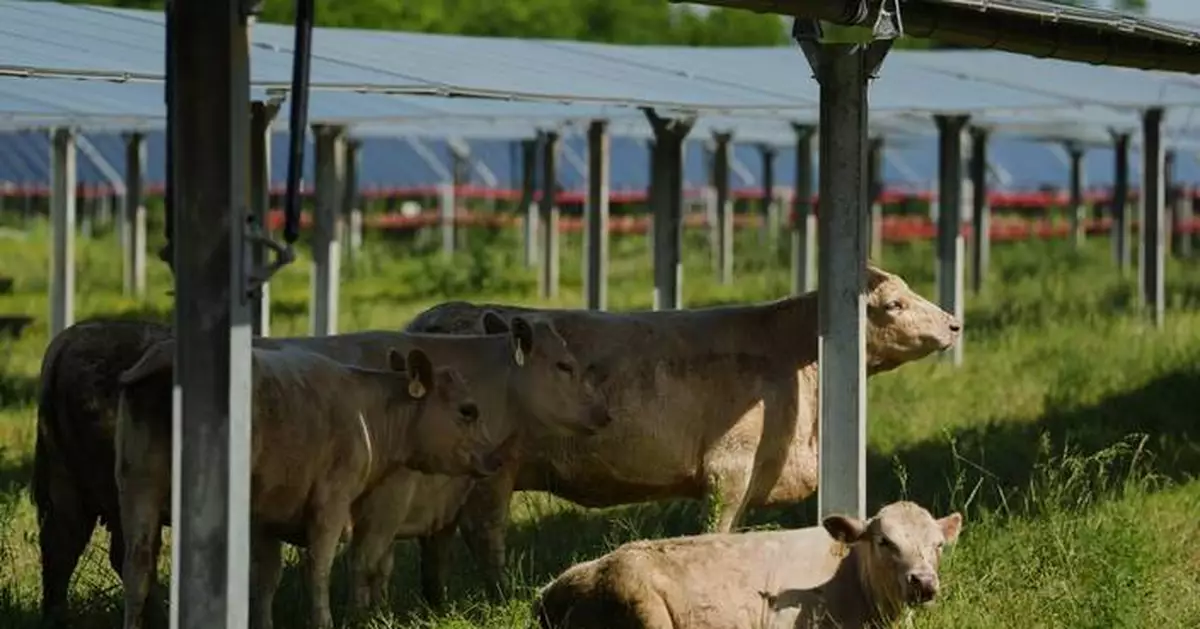
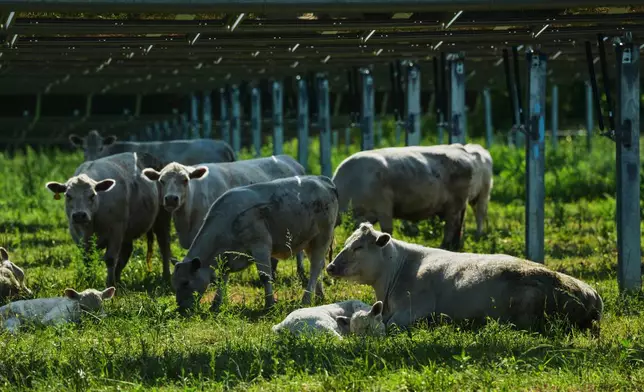
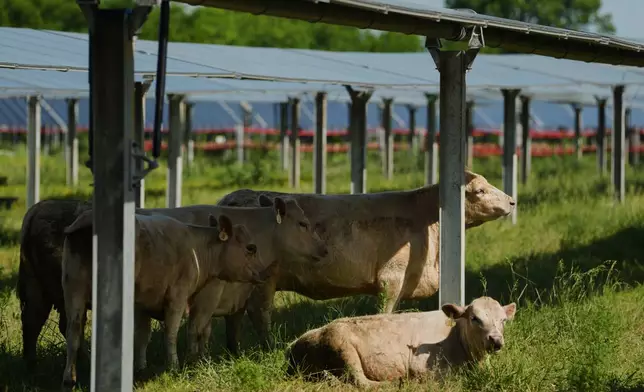
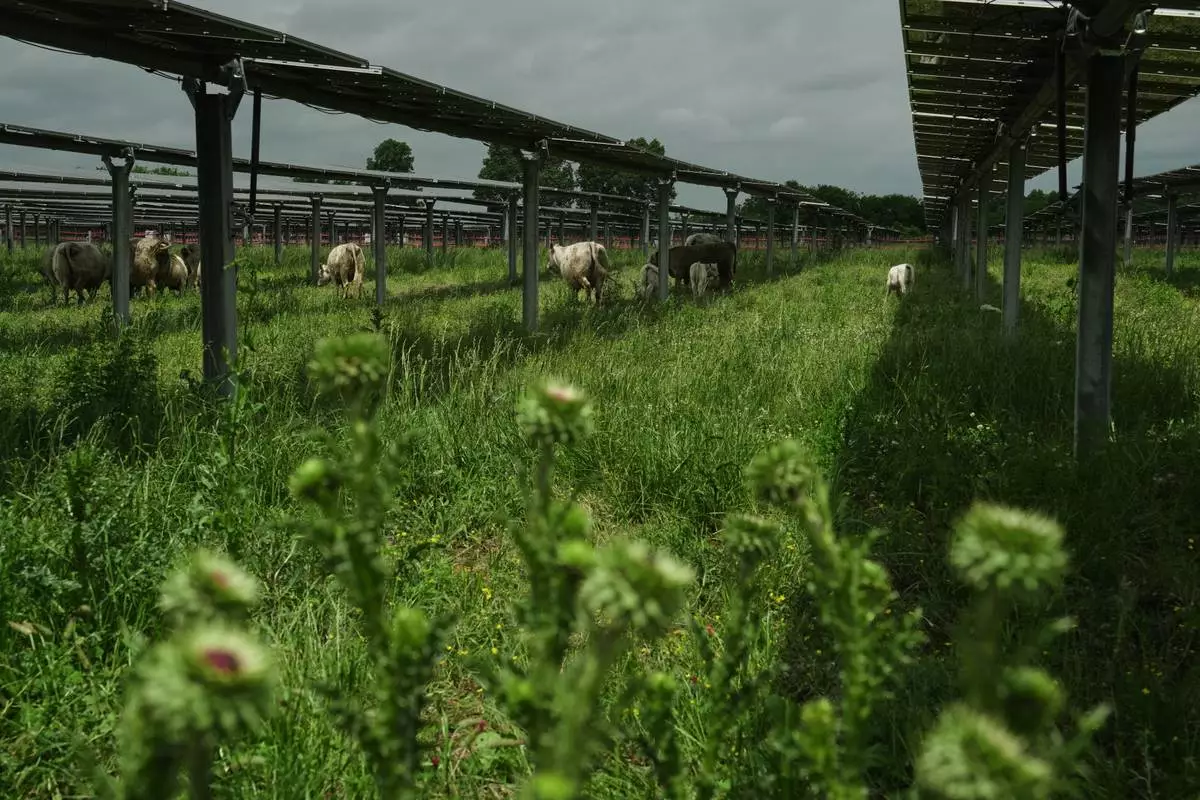
But beneath these panels is lush pasture instead of gravel, enjoyed by a small herd of cattle that spends its days munching grass and resting in the shade.
Click to Gallery
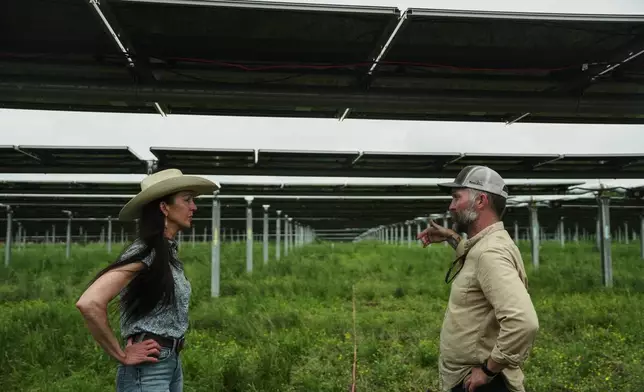
Anna Clare Monlezun, left, a rangeland scientist, chats with Loran Shallenberger, right, vice president of regenerative energy and agrivoltaics at Silicon Ranch, Tuesday, April 28, 2026, in Christiana, Tenn. (AP Photo/Joshua A. Bickel)
Cattle graze under solar panels Tuesday, April 28, 2026, at a farm in Christiana, Tenn. (AP Photo/Joshua A. Bickel)
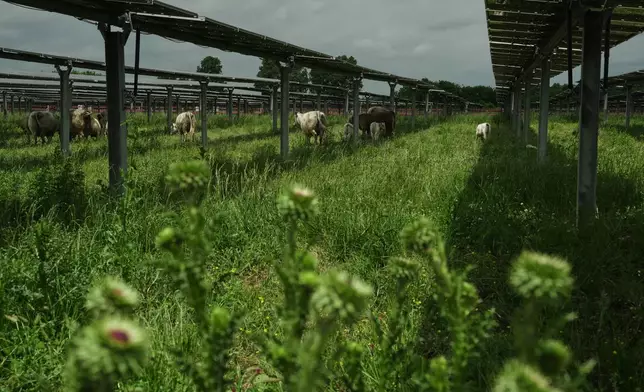
Cattle graze under solar panels Tuesday, April 28, 2026, at a farm in Christiana, Tenn. (AP Photo/Joshua A. Bickel)
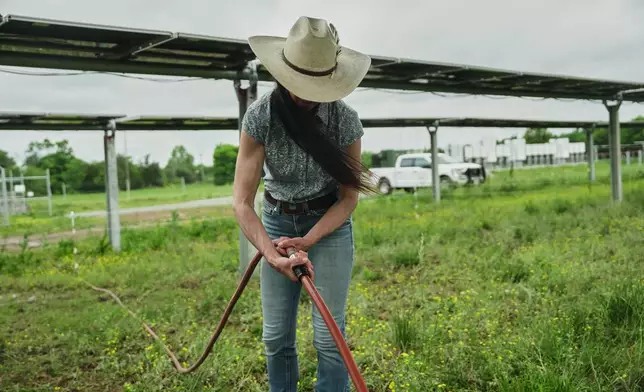
Anna Clare Monlezun, a rangeland scientist, connects a hose while working near solar panels Tuesday, April 28, 2026, at a solar farm in Christiana, Tenn. (AP Photo/Joshua A. Bickel)
Cattle graze under solar panels Tuesday, April 28, 2026, at a farm in Christiana, Tenn. (AP Photo/Joshua A. Bickel)
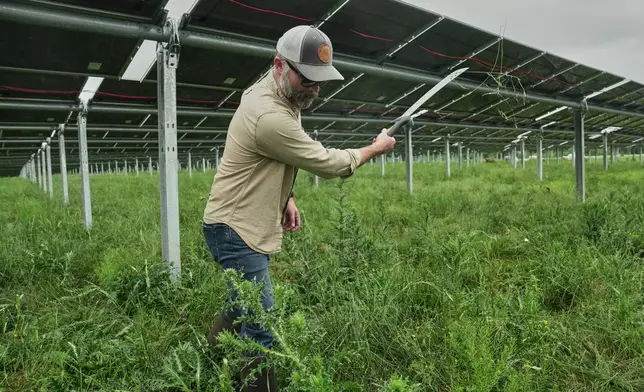
Loran Shallenberger, vice president of regenerative energy and agrivoltaics at Silicon Ranch, clears weeds out from under solar panels Tuesday, April 28, 2026, at a farm in Christiana, Tenn. (AP Photo/Joshua A. Bickel)
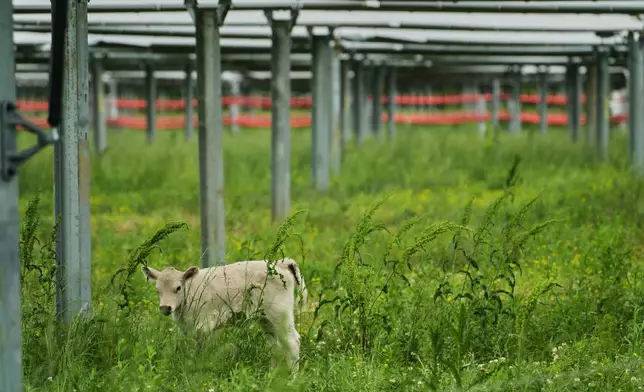
A calf stands under solar panels Tuesday, April 28, 2026, in Christiana, Tenn. (AP Photo/Joshua A. Bickel)
Crimson Clover grows in a field under solar panels Tuesday, April 28, 2026, at a farm in Christiana, Tenn. (AP Photo/Joshua A. Bickel)
A cow grazes near solar panels Tuesday, April 28, 2026, at a farm in Christiana, Tenn. (AP Photo/Joshua A. Bickel)
Cattle rest under solar panels Tuesday, April 28, 2026, at a farm in Christiana, Tenn. (AP Photo/Joshua A. Bickel)
Anna Clare Monlezun, left, a rangeland scientist, chats with Loran Shallenberger, right, vice president of regenerative energy and agrivoltaics at Silicon Ranch, Tuesday, April 28, 2026, in Christiana, Tenn. (AP Photo/Joshua A. Bickel)
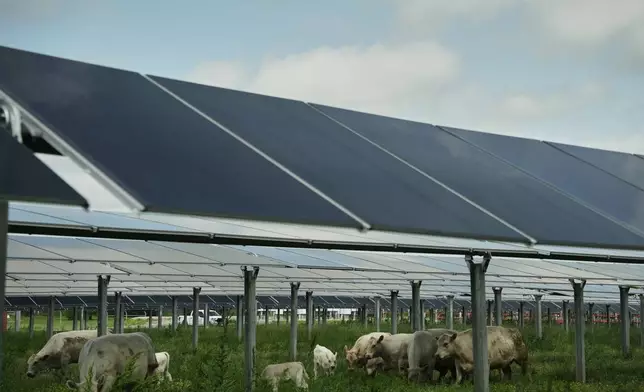
Solar panels operate on a farm with cattle Tuesday, April 28, 2026, in Christiana, Tenn. (AP Photo/Joshua A. Bickel)
A cow, back right, scratches on a support beam of a solar panel Tuesday, April 28, 2026, at a farm in Christiana, Tenn. (AP Photo/Joshua A. Bickel)
Silicon Ranch, which owns the 40-acre farm in Christiana, outside of Nashville, believes cattle-grazing is the next frontier in so-called agrivoltaics, which mostly has involved growing crops or grazing sheep beneath the panels.
The solar company debuted the project this week and will spend the next year working to demonstrate to farmers that much larger cattle also can thrive at solar sites. If successful, advocates say, that could jump-start new projects to meet the soaring electricity demand driven by rapidly expanding data centers — without contributing climate-warming carbon emissions — and help cattle producers hold onto their land and livelihoods.
“Solar is one of the most powerful tools we have for cutting emissions and ... is cost-competitive with fossil fuels,” said Taylor Bacon, a doctoral student at Colorado State University who has studied ecological outcomes at solar grazing sites. “I think we’re starting to see enough research that, when you do it well, the land use can be more of an opportunity than a downside."
Though there are far more cattle than sheep in the U.S., their size poses challenges at solar sites, where both expensive equipment and the animals, which can weigh more than half a ton, must be protected.
Solar panels often pivot to near-vertical angles to capture the sun’s rays, leaving little room underneath for cattle; simply raising the panels is cost-prohibitive because of the amount of steel required. So Silicon Ranch raised the panels a little but also developed software that workers activate to turn the panels close to horizontal when cattle are grazing, giving them room to wander, said Nick de Vries, the company's chief technology officer.
Workers rotate the cattle — currently 10 cows and their calves — between paddocks every few days so panels on the ungrazed portion of the site operate normally, generating a supply of roughly 5 megawatts of electricity for Middle Tennessee Electric, a rural electric co-op.
The hope is that the technology eventually will be adopted more broadly, company officials said.
“We know it works," said de Vries. "But you need to prove it to other people."
For solar companies, agricultural land is generally easier to develop than other types of sites. But many farmers — and communities — will need to be convinced that solar grazing will benefit them because of past practices that destroyed topsoil and took land out of production permanently.
"For many agricultural stakeholders, it is offensive to see high-quality farmland getting graded and piled when that’s a farm family’s legacy,” said Ethan Winter, national smart solar director at American Farmland Trust.
But he sees potential for solar grazing partnerships to help farmers keep their land in production and earn extra income.
“Agriculture is in a really tough spot right now, so maybe this is our moment where we can be helping states meet their energy needs and do that in a way that’s providing new opportunities for farmers,” Winter said.
Silicon Ranch this year will have almost 15,000 acres of pasture being grazed — mostly by sheep — since launching five years ago, and is working with ranchers, farmers, university researchers and others to adopt best-practices for keeping soils and animals healthy.
What they're finding is that pasture beneath solar panels retains more moisture, making it more drought tolerant, said Anna Clare Monlezun, a rancher and rangeland ecosystem scientist who's working on the Tennessee project. Grazing in the shade leaves animals less prone to heat stress, enabling them to gain more weight and drink less water.
“There are more win-wins than trade-offs,” she said.
Farmers often earn about $1,000 an acre by leasing their land for solar, easily 10 times more than what they historically earned through traditional agriculture, Winter said. That can help them to diversify operations, pay down debt and buy more land.
“I think you’ll start to hear more interest from farmers who are up against a serious financial wall right now and looking for income diversification opportunities that keep land in production,” Winter said. “We need and want to grow America’s energy capacity but not at the expense of our best farmland or at the expense of agricultural livelihoods.”
The Associated Press’ climate and environmental coverage receives financial support from multiple private foundations. AP is solely responsible for all content. Find AP’s standards for working with philanthropies, a list of supporters and funded coverage areas at AP.org.
Cattle graze under solar panels Tuesday, April 28, 2026, at a farm in Christiana, Tenn. (AP Photo/Joshua A. Bickel)

Cattle graze under solar panels Tuesday, April 28, 2026, at a farm in Christiana, Tenn. (AP Photo/Joshua A. Bickel)
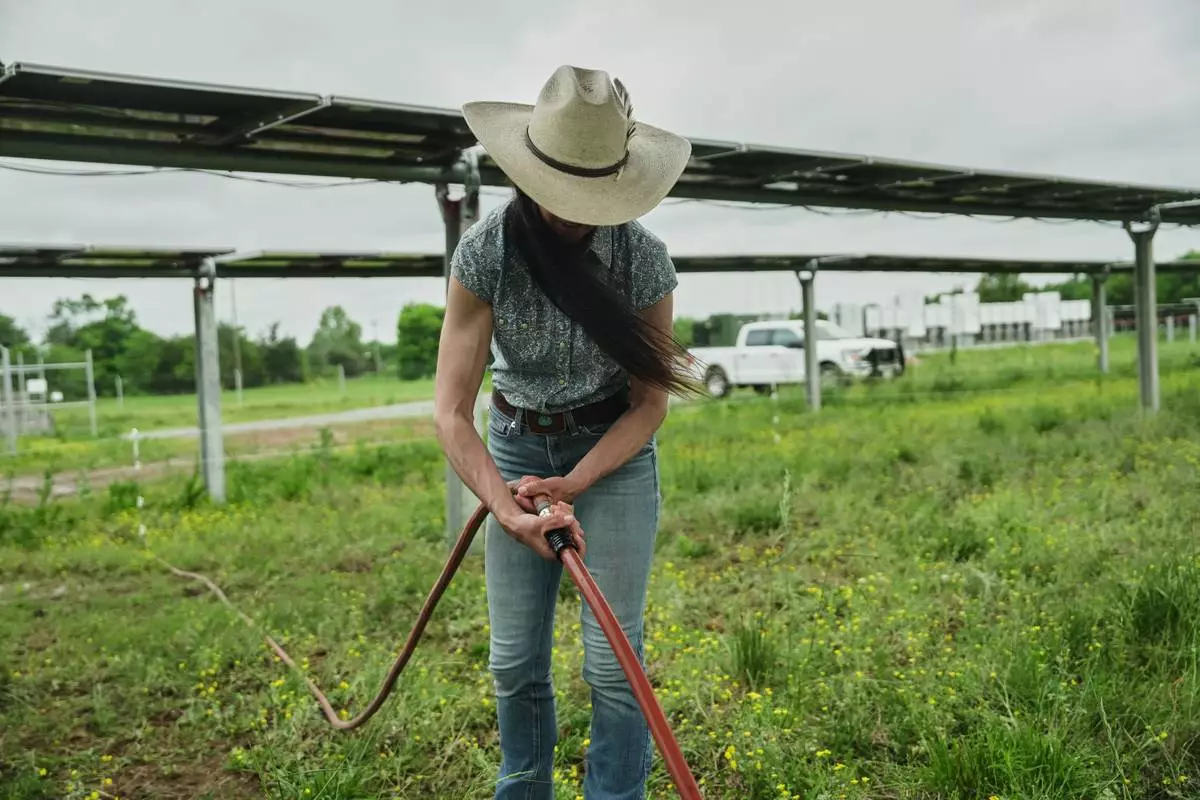
Anna Clare Monlezun, a rangeland scientist, connects a hose while working near solar panels Tuesday, April 28, 2026, at a solar farm in Christiana, Tenn. (AP Photo/Joshua A. Bickel)
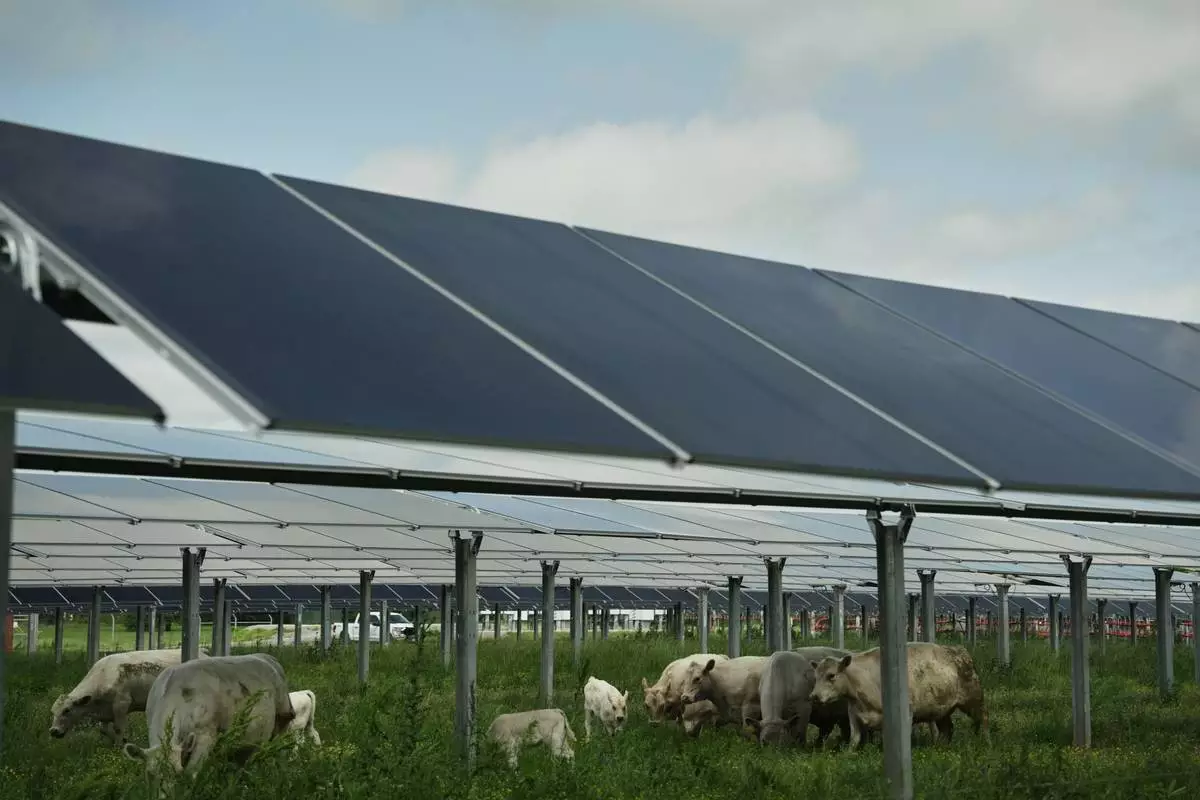
Cattle graze under solar panels Tuesday, April 28, 2026, at a farm in Christiana, Tenn. (AP Photo/Joshua A. Bickel)
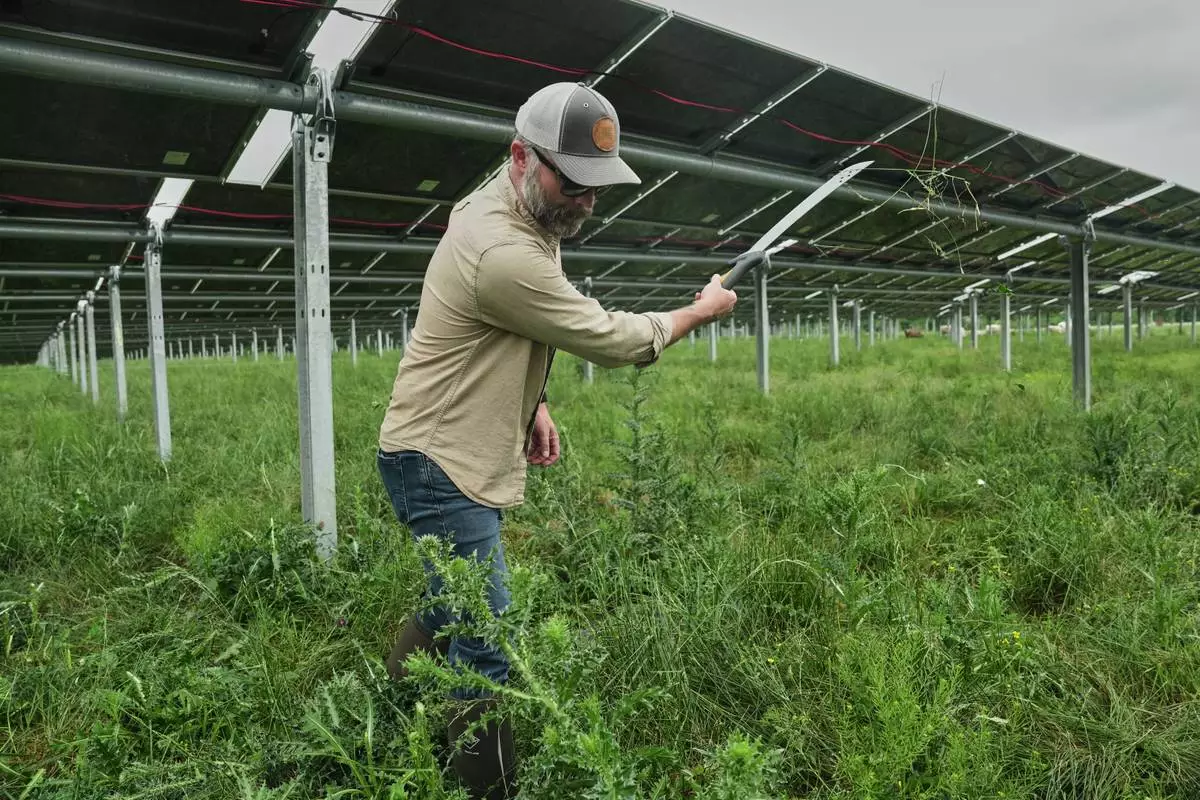
Loran Shallenberger, vice president of regenerative energy and agrivoltaics at Silicon Ranch, clears weeds out from under solar panels Tuesday, April 28, 2026, at a farm in Christiana, Tenn. (AP Photo/Joshua A. Bickel)
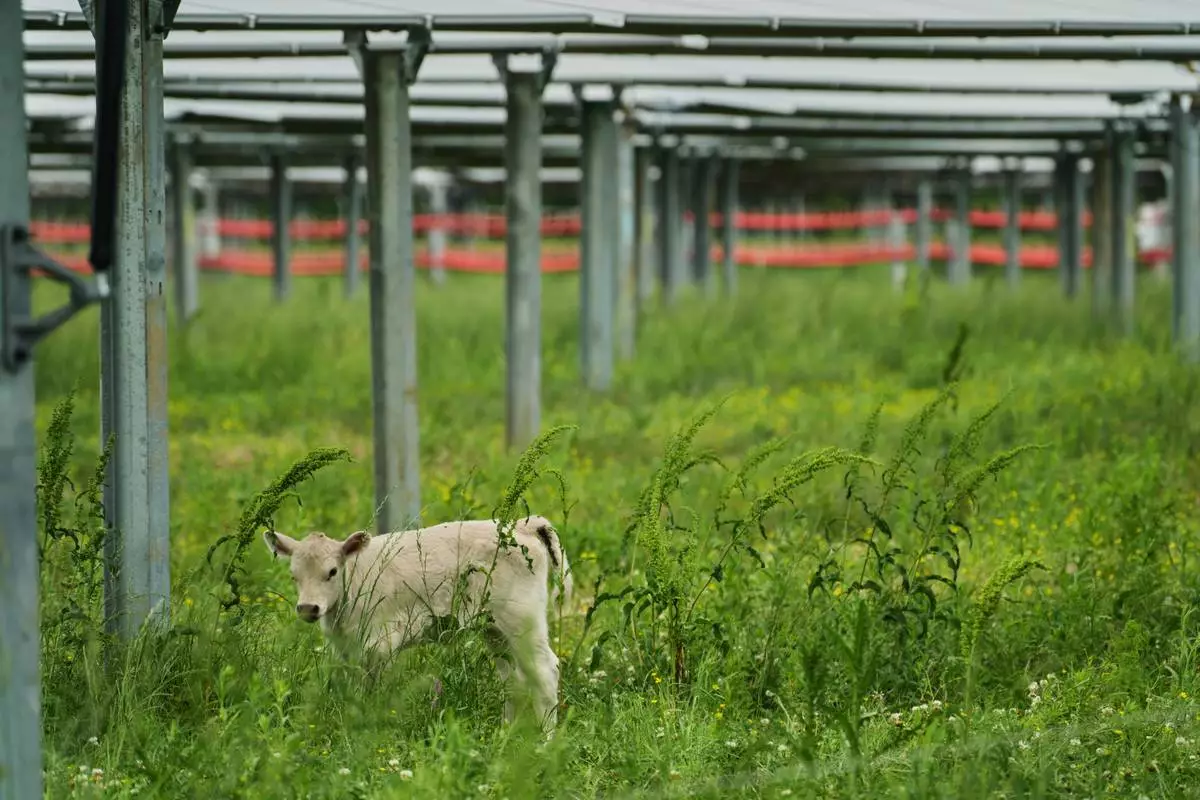
A calf stands under solar panels Tuesday, April 28, 2026, in Christiana, Tenn. (AP Photo/Joshua A. Bickel)

Crimson Clover grows in a field under solar panels Tuesday, April 28, 2026, at a farm in Christiana, Tenn. (AP Photo/Joshua A. Bickel)

A cow grazes near solar panels Tuesday, April 28, 2026, at a farm in Christiana, Tenn. (AP Photo/Joshua A. Bickel)
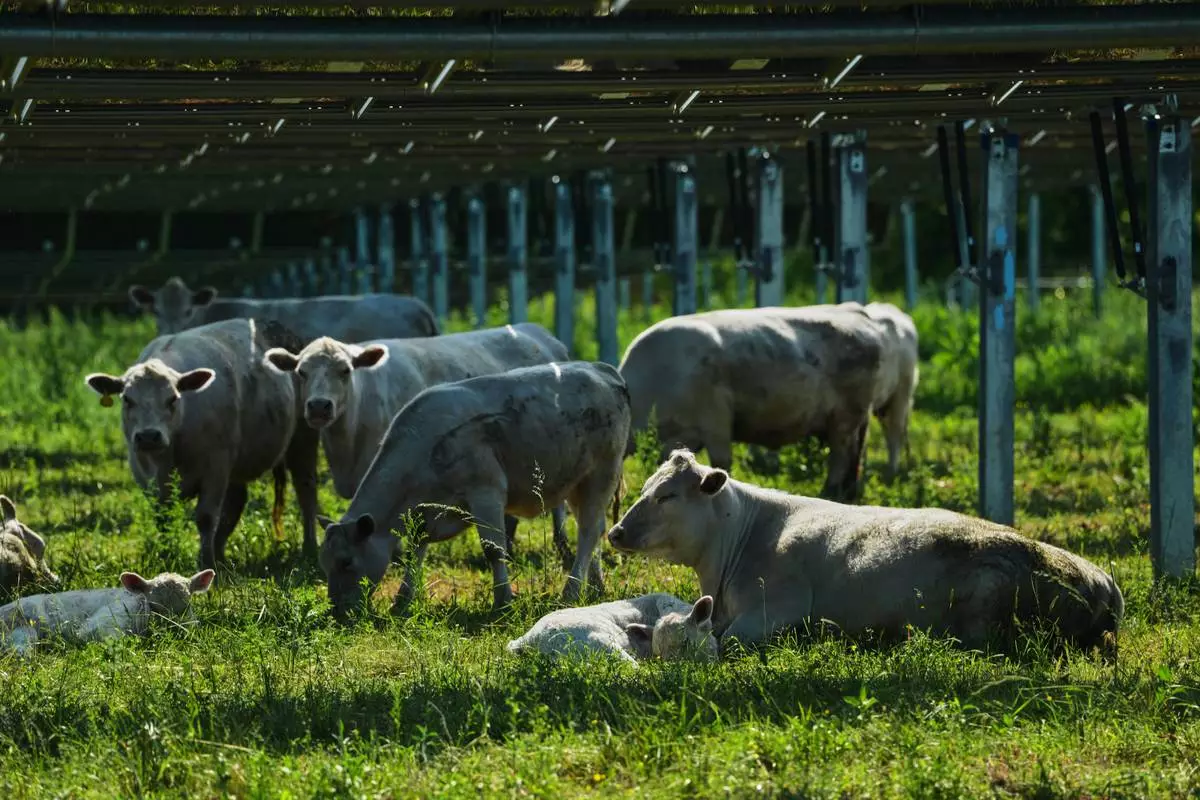
Cattle rest under solar panels Tuesday, April 28, 2026, at a farm in Christiana, Tenn. (AP Photo/Joshua A. Bickel)
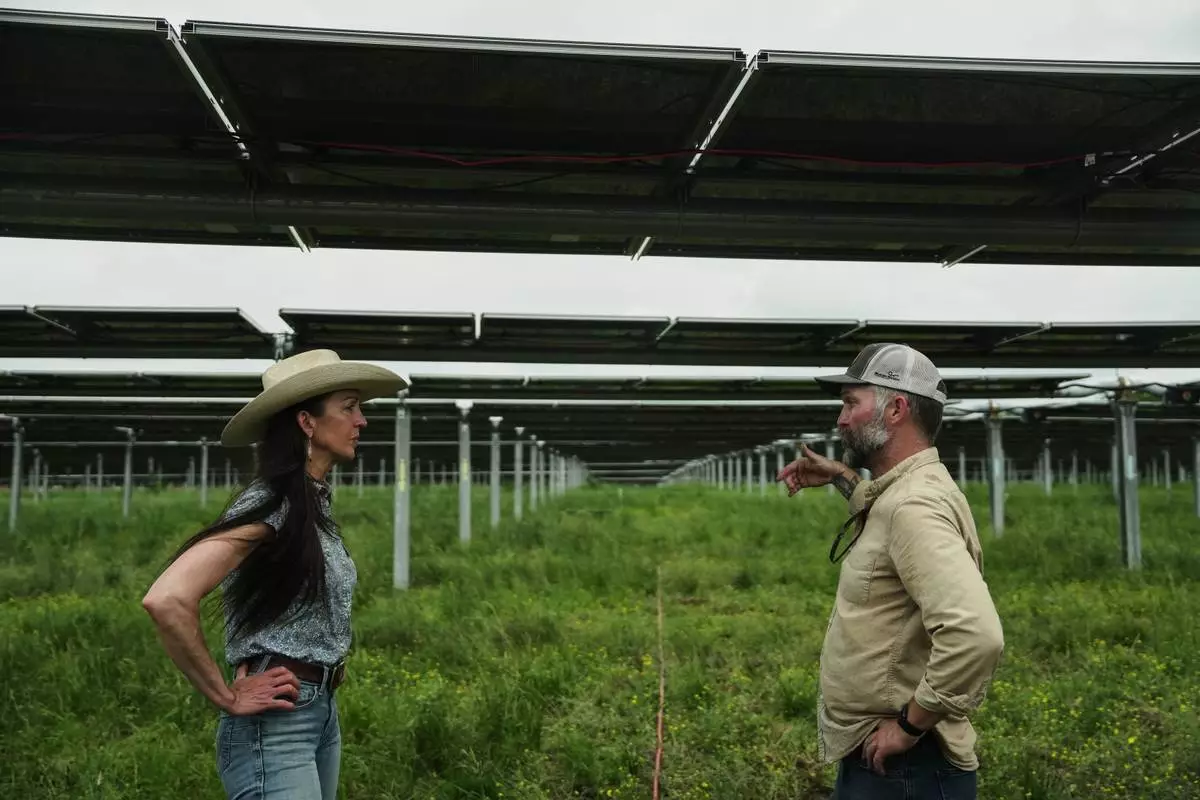
Anna Clare Monlezun, left, a rangeland scientist, chats with Loran Shallenberger, right, vice president of regenerative energy and agrivoltaics at Silicon Ranch, Tuesday, April 28, 2026, in Christiana, Tenn. (AP Photo/Joshua A. Bickel)
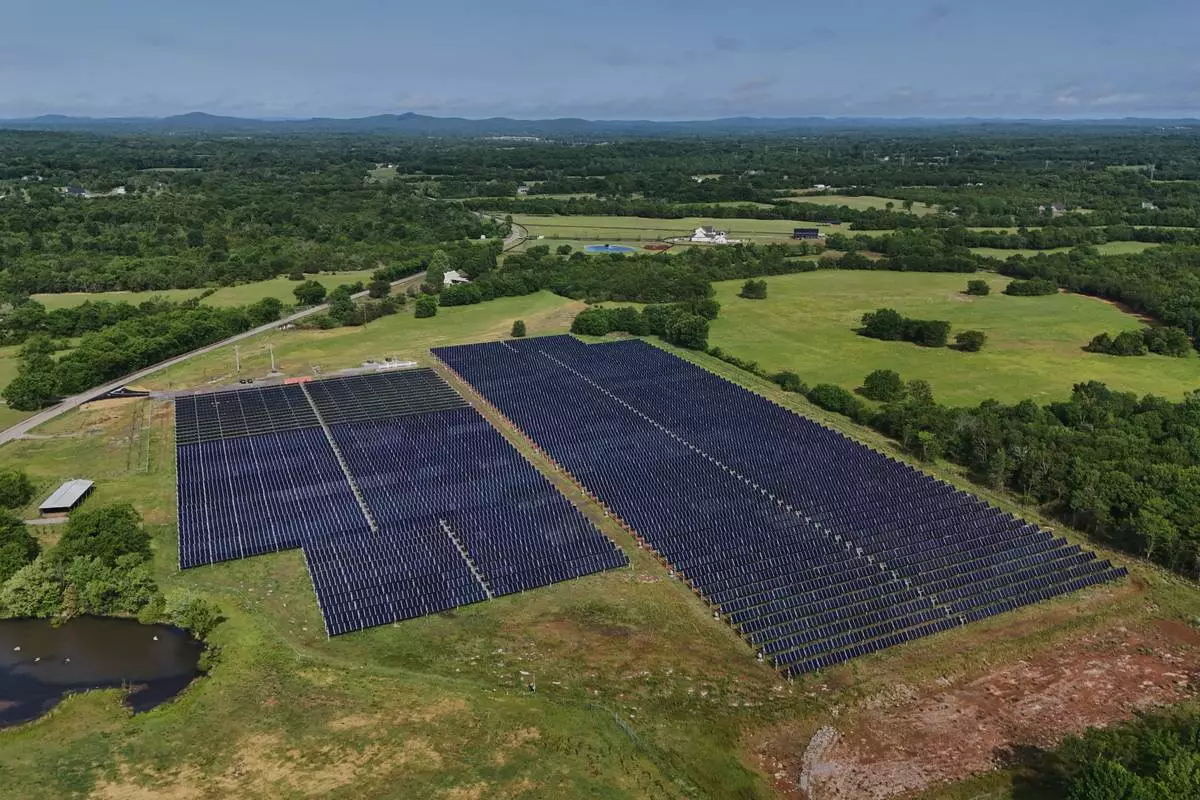
Solar panels operate on a farm with cattle Tuesday, April 28, 2026, in Christiana, Tenn. (AP Photo/Joshua A. Bickel)
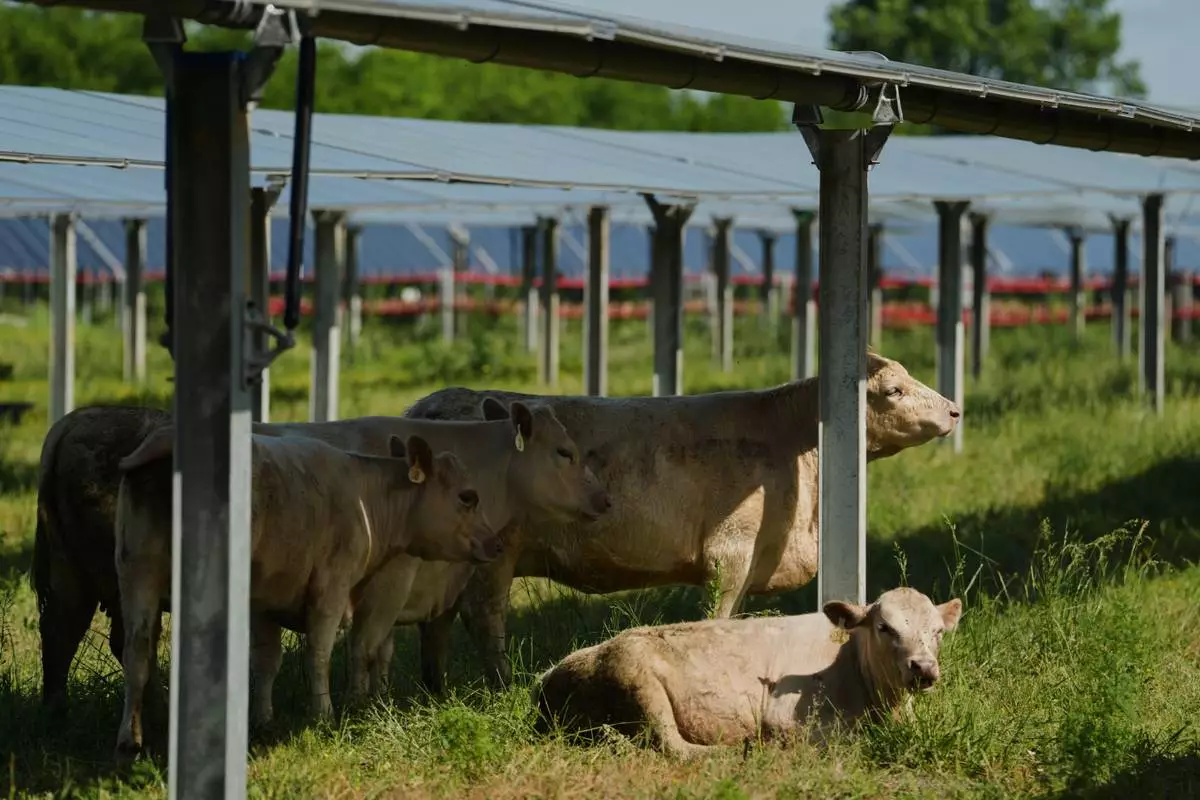
A cow, back right, scratches on a support beam of a solar panel Tuesday, April 28, 2026, at a farm in Christiana, Tenn. (AP Photo/Joshua A. Bickel)
Defense Secretary Pete Hegseth will face a second day of grilling from Democrats on Capitol Hill, with senators getting their first opportunity on Thursday to confront or praise the Pentagon chief over his handling of the Iran war.
Hegseth battled with Democrats — and some Republicans — a day earlier during a nearly six-hour House Armed Services Committee hearing, where he faced sharp questioning over the war’s costs in dollars, lives and the diminishing stockpiles of critical weapons.
The Senate Armed Services Committee will hear a similar presentation on the Trump administration’s 2027 military budget proposal, which would boost defense spending to a historic $1.5 trillion. Hegseth and the chairman of the Joint Chiefs of Staff, Gen. Dan Caine, will again stress the need for more drones, missile defense systems and warships.
Here's the latest:
In opening remarks, GOP Sen. Roger Wicker of Mississippi outlined threats to the United States he said were a “growing alliance” of China, Russia, Iran and North Korea, saying the current moment represents “the most dangerous security environment since World War II.”
Saying Chinese President Xi Jinping led a “growing alliance” among the countries, Wicker said they shared a goal ”to oppose America’s interests and the interests of other like minded, democratic countries across the globe.”
“Ties have never been closer among these four dictators,” Wicker said. “Among these four dictatorships, they support each other’s aggressive endeavors.”
The Republican Florida governor told reporters Thursday he would not delay signing the new congressional map the GOP-dominated Legislature passed Wednesday at his and President Trump’s urging.
There had been some speculation that DeSantis could hold the bill for as long as possible — as much as two weeks or so depending on when the Legislature adjourns — to delay when the bill’s critics can file lawsuits challenging the measure.
The new map is intended to help Republicans gain as many as four more U.S. House seats in November, making the GOP advantage in Florida up to 24-4.
DeSantis said Wednesday’s U.S. Supreme Court decision curtailing the strength of nonwhite voters in redistricting vindicated his decision to call a special session for what he insists is a “race neutral” map.
Defense Secretary Pete Hegseth is sitting before senators in what’s expected to be another fiery hearing on the Hill.
The defense secretary’s hearing is ostensibly to discuss the Pentagon’s $1.5 trillion budget request to Congress, but it’s the first time that senators will get to publicly question him since the Iran War began nearly two months ago. Joint Chiefs of Staff, Gen. Dan Caine, is also seated beside Hegseth.
The defense secretary also appeared for a House hearing Wednesday and he drew a large crowd of anti-war protesters to the hallways of the House office building where the hearing was held.
On Thursday, things feel a bit more low-key in the Senate, although there are a handful of people in the hearing room wearing pink shirts that state “Peace with Iran.”
Chinese Vice Premier He Lifeng on Thursday spoke by video with U.S. Treasury Secretary Scott Bessent and U.S. Trade Representative Jamieson Greer, China’s state media reported, ahead of a planned state visit by President Trump to Beijing in mid-May.
The two sides had a “candid, in-depth and constructive” exchange, the state broadcaster China Central Television said. The Chinese side lodged “solemn concerns” over recent restrictive trade measures imposed by the U.S. on China, but the statement didn’t specify the measures.
Last week, the U.S. Treasury sanctioned a China-based oil refinery and 40 shippers involved in transporting Iranian oil. The U.S. Trade Representative Office this week held a hearing on the use of forced labor in foreign goods.
The president is continuing to pillory German Chancellor Friedrich Merz, who’s been increasingly critical of the U.S.-Israel war against Iran.
Trump in a social media post said Merz “should spend more time on ending the war with Russia/Ukraine” and “fixing his broken Country, especially Immigration and Energy” and less time concerning himself with the Iran war.
The latest criticism by Trump of Merz came the day after the U.S. president announced he was reviewing the U.S. military presence in Germany, a NATO ally that hosts several American military installations.
U.S. officials are appealing a judge’s order that blocks the government from cutting the number of vaccines recommended for every U.S. child.
Government lawyers on Wednesday filed the one-sentence appeal.
It was a delayed response to a March 16 order by U.S. District Judge Brian Murphy, who blocked an order by U.S. Health Secretary Robert F. Kennedy, Jr. — announced in January — to end broad recommendations for all children to be vaccinated against flu, rotavirus, hepatitis A, hepatitis B, some forms of meningitis and RSV.
Murphy’s order also stopped a meeting of a Kennedy-appointed vaccine advisory committee. The stay continues while the appeal is considered.
The Trump administration is constrained by the 1973 law, which requires several notification and approval steps meant to keep a commander-in-chief’s military powers in check.
One of its provisions is that military action authorized by the president must end after 60 days unless Congress has explicitly approved it, or has declared war. That 60-day clock runs out Friday.
One White House official said the administration is in “active conversations” with lawmakers on addressing the deadline, but did not elaborate. The official was granted anonymity to discuss private deliberations. The administration can request a 30-day extension by telling Congress in writing that there’s a continued need for military action. The White House, which has long stressed that the president is working toward a diplomatic option in Iran, hasn’t indicated publicly whether Trump will seek that extension.
— Seung Min Kim
Under the plan, the United States would continue its blockade on Iranian ports, while coordinating with allies to impose higher costs on Iran’s attempts to subvert the free flow of energy, according to a senior administration official.
Trump is weighing multiple diplomatic and policy options to push Iran to end its chokehold on the waterway, said the official, who spoke on condition of anonymity because they were not authorized to comment publicly.
— Aamer Madhani
U.S. jobless aid applications for the week ending April 25 fell by 26,000 by to 189,000, down from the previous week’s 215,000, the Labor Department reported Thursday. That’s well below the 214,000 new applications analysts surveyed by the data firm FactSet were expecting.
Filings for unemployment benefits are considered a proxy for U.S. layoffs and are close to a real-time indicator of the health of the job market.
The four-week moving average of jobless claims, which evens out some of the weekly volatility, came in at 207,500, about 3,500 lower than the previous week.
The total number of Americans filing for unemployment benefits for the previous week ending April 18 fell to 1.79 million, a decrease of 23,000.
▶ Read more
But the outlook is clouded by the Iran war.
The Commerce Department reported Thursday that gross domestic product — the nation’s output of goods and services — rebounded from a lackluster 0.5% expansion the last three months of 2025. The federal government’s spending and investment grew at a 9.3% annual rate in the first quarter, adding more than half a percentage point to growth after lopping off 1.16 percentage points in fourth-quarter 2025.
Growth in consumer spending, which accounts for 70% of U.S. economic activity, slowed to 1.6% in the first quarter from 1.9% at the end of 2025. But business investment, likely driven by investments in artificial intelligence, rose at an 8.7% pace.
Iran has blocked the Strait of Hormuz through which a fifth of the world’s oil and liquefied natural gas passes. That has driven energy prices higher, fueling inflation and hurting consumers.
▶ Read more
It’s the latest sign that the Iran war is pushing up the cost of living and delaying any interest rate cuts by the Federal Reserve.
An inflation gauge monitored by the Fed rose 0.7% in March from February, up slightly from the previous month. Compared with a year ago, prices rose 3.5%, the biggest increase in almost three years.
Excluding the volatile food and energy categories, core inflation rose 0.3% in March from February, and it was 3.2% higher than a year earlier. The annual figure is above February’s reading of 3%.
Rising gas prices have caused inflation to move further away from the Fed’s 2% target, which has caused the central bank to keep its key short-term interest rate unchanged after cutting it three times last year. The Fed typically keeps rates elevated — or even raises them — to combat higher inflation.
▶ Read more
President Trump has again threatened that the United States could reduce its military presence in Germany, a key NATO ally and the European Union’s largest economy. Europeans have heard this before.
Trump’s social media post on Wednesday followed comments by Chancellor Friedrich Merz that the U.S. was being “ humiliated ” by Tehran as it slow-walks its diplomacy over the U.S.-Israel war against Iran.
Trump has mused for years about reducing America’s military presence in Germany, and has recently repeatedly railed against NATO for the its refusal to assist the U.S. in its two-month-old war.
U.S. allies at NATO have been waiting for the Trump administration to pull troops out since just after it came to office, warning that Europe would have to look after its own security, and that of Ukraine, in the future.
▶ Read more
A divided federal appeals court said Wednesday it won’t grant a rare meeting of its active judges to hear an appeal of an $83 million verdict against President Donald Trump for defaming a magazine advice columnist over an encounter three decades ago.
The 2nd U.S. Circuit Court of Appeals’ decision to reject a so-called “en banc” hearing comes several months after Trump appealed to the Supreme Court another jury’s decision to grant $5 million the writer, E. Jean Carroll, after concluding he had sexually abused her in a department store dressing room in 1996 and later defamed her. The high court hasn’t yet decided whether to hear the case.
Lawyers for Trump did not immediately respond to a request for comment.
Carroll’s attorney, Roberta Kaplan, said in a statement that her client was “eager for this case, originally filed in 2019, to be over so that she can finally obtain justice.”
▶ Read more
Senate Democrats accused the Trump administration of abandoning the Environmental Protection Agency’s mission to protect human health and the environment at a congressional hearing Wednesday, slamming agency leadership over a proposal to cut its budget in half.
EPA Administrator Lee Zeldin’s appearance before the Senate environment committee was his last of three budget hearings this week where he argued for sharply reduced funding for the agency, which already has seen its staffing reduced to its lowest level in decades under his leadership. During much of the week, the former Republican congressman from New York took an aggressive approach, responding to Democrats in the House and Senate with his own questions and at times accusing them of being unprepared or failing to care about the EPA’s track record.
Zeldin has eliminated major climate change programs, promoted deregulatory efforts he calls the biggest in American history and canceled billions of dollars in Biden-era environmental justice grants to halt what he calls “EPA’s radical diversity, equity, and inclusion programs.”
▶ Read more
The price of Brent crude oil briefly surged past $126 a barrel early Thursday as stalled U.S.-Iran talks raised doubts over the reopening of the Strait of Hormuz and a permanent end to the Iran war.
Brent crude to be delivered in June jumped 3.3% to $121.90 after briefly soaring past $126 per barrel. Brent to be delivered in July rose 1.4% to $112.02.
Benchmark U.S. crude climbed 1.3% to $108.28 per barrel.
Before the war began in late February, Brent crude was trading around $70 per barrel.
There’s no clear path to an end to the war. The U.S. has continued its blockade of Iranian ports while the Strait of Hormuz is closed, pushing oil prices higher. Reports Thursday suggesting a possible escalation by Trump doused hopes for a quick end to the conflict.
▶ Read more
Jerome Powell said Wednesday he plans to remain on the board of the Federal Reserve after his term as chair ends next month “for a period of time, to be determined,” saying the “unprecedented” legal attacks by the Trump administration have put the independence of the nation’s central bank at risk.
“I worry these attacks are battering this institution and putting at risk the things that really matter to the public,” Powell said in remarks at a news conference after the Fed announced its decision to keep its benchmark interest rate unchanged.
Powell’s decision to stay — the first time a Fed chair will remain on the board as a governor since 1948 — denies Trump a chance to fill a seat on the central bank’s seven-member governing board with his own appointee. The Senate Banking Committee earlier approved Powell’s successor as chair, Trump appointee Kevin Warsh, on a party-line vote. Powell will continue as a Fed governor, possibly until January 2028. Warsh, if confirmed, will take a seat currently held by Stephen Miran, a previous Trump appointee, whose term ended in January.
▶ Read more
Hegseth will face a second day of grilling from Democrats on Capitol Hill, with senators getting their first opportunity on Thursday to confront or praise the Pentagon chief over his handling of the Iran war.
Hegseth battled with Democrats — and some Republicans — a day earlier during a nearly six-hour House Armed Services Committee hearing, where he faced sharp questioning over the war’s costs in dollars, lives and the diminishing stockpiles of critical weapons.
The Senate Armed Services Committee will hear a similar presentation on the Trump administration’s 2027 military budget proposal, which would boost defense spending to a historic $1.5 trillion. Hegseth and the chairman of the Joint Chiefs of Staff, Gen. Dan Caine, will again stress the need for more drones, missile defense systems and warships.
They are now also likely to face tough questions about American troop levels in Europe after President Donald Trump on Wednesday leveled a new threat against NATO ally Germany, suggesting he could soon reduce the U.S. military presence in the country as he feuds with Chancellor Friedrich Merz over the Iran war.
▶ Read more
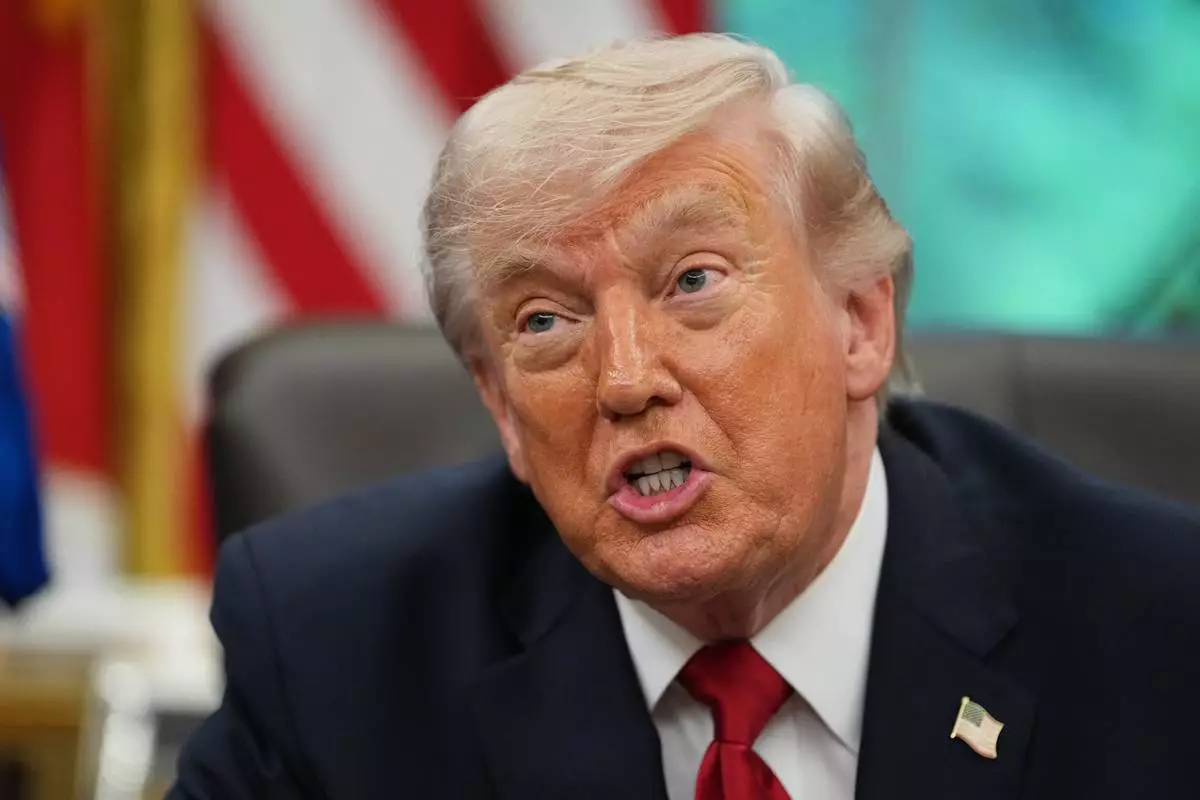
President Donald Trump speaks to reporters as he meets with NASA's Artemis II astronauts Victor Glover, Christina Koch, Reid Wiseman and Jeremy Hansen in the Oval Office of the White House, Wednesday, April 29, 2026, in Washington. (AP Photo/Matt Rourke)
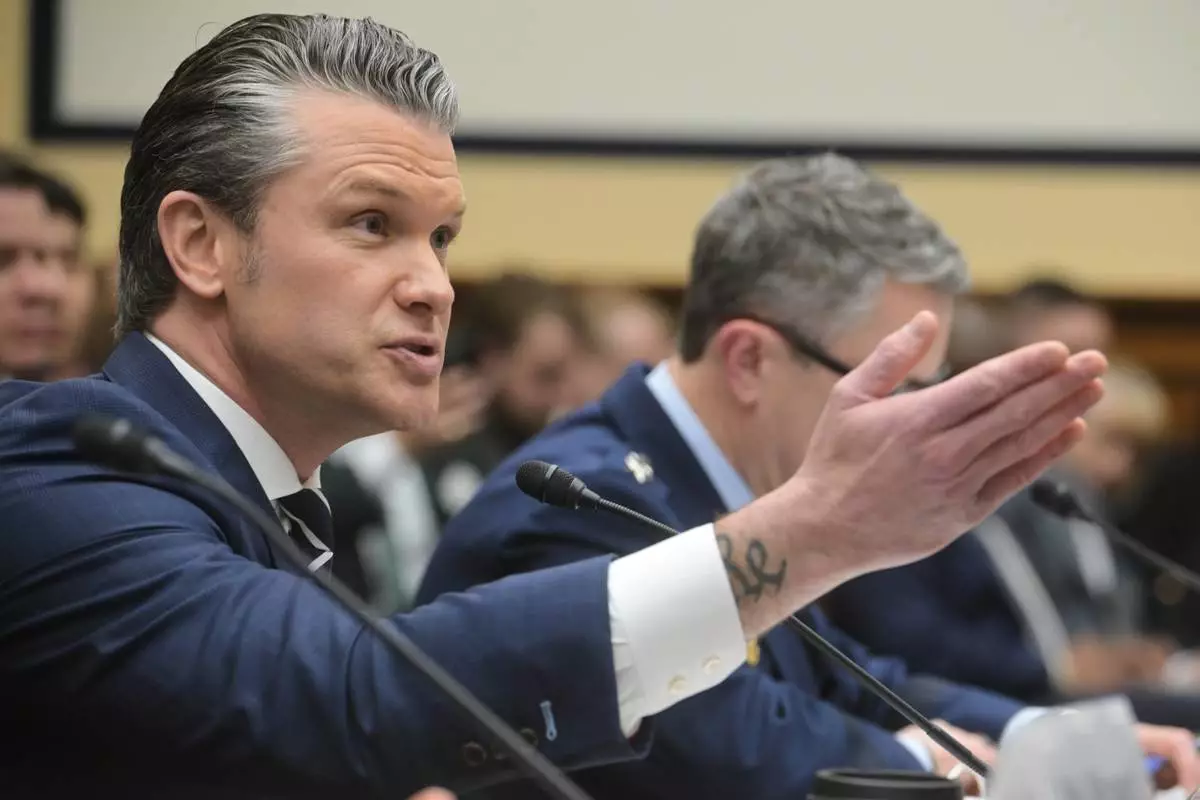
Secretary of Defense Pete Hegseth appears before a House Committee on Armed Services business meeting on the Department of Defense Fiscal Year 2027, on Capitol Hill, Wednesday, April 29, 2026, in Washington. (AP Photo/Rod Lamkey Jr.)