HKSAR Government strongly condemns anti-China organisation and foreign media for misleading public and whitewashing Lai Chee-ying
The Hong Kong Special Administrative Region (HKSAR) Government today (May 1) strongly condemned the attempts by an anti-China organisation and foreign media to sugarcoat the criminal acts of national security offender Lai Chee-ying and to slander, smear, as well as attack the HKSAR by releasing a so-called press freedom index and presenting a so-called "award". Such despicable behaviours totally disregarded the rule of law and twisted the facts, which must be strongly condemned.
A spokesman for the HKSAR Government said, "As guaranteed by the Basic Law and the Hong Kong Bill of Rights, all defendants charged with a criminal offence shall have the right to a fair trial by the Judiciary exercising independent judicial power. The courts of the HKSAR shall exercise judicial power independently, free from any interference. In the Lai Chee-ying case, the court has conducted 156 days of public hearings, considered up to 2 220 pieces of evidence, over 80 000 pages of documents, and a total of over 1 000 pages of written submissions from all parties, etc. Lai Chee-ying himself even testified in court for 52 days. These are the testaments to the fact that Lai Chee-ying and other defendants were found guilty only after a fair trial. The suggestion that any persons or organisations with certain backgrounds should be immune from legal sanctions for their illegal acts and activities is tantamount to granting such persons privileges to break the law and is totally contrary to the spirit of the rule of law.
"Some media organisations and organisations that claim to represent journalists have conflated the criminal acts in the Lai Chee-Ying case with freedom of the press, and have even played up different cases to vilify the HKSAR, with the purpose of misleading the public and defaming the HKSAR's human rights and rule of law. In fact, the Lai Chee-ying case has nothing to do with freedom of the press at all. Over the years, the defendants were using journalism as a guise to commit acts that brought harm to our country and Hong Kong. The public trial of this case revealed Lai Chee-ying's close management and hands-on control of the editorial direction of Apple Daily. He had also repeatedly colluded with foreign forces to beg for sanctions and engaged in hostile activities against the Central Government and the HKSAR Government. The court clearly pointed out that Lai Chee-ying's only intent, whether pre or post Hong Kong National Security Law (HKNSL), was to seek the downfall of the Communist Party of China, even though the ultimate cost was the sacrifice of the interests of the people of the People's Republic of China and the HKSAR.
"The court clearly pointed out in the reasons for verdict that Lai Chee-ying was not on trial for his political views or beliefs. The court's publicly released reasons for verdict and sentence have meticulously explained the court's analysis of the relevant legal principles and evidence, as well as the reasons of the conviction and sentencing of Lai Chee-ying and the three defendant companies, which are well-founded and reasoned, fully demonstrating that the court has made its decision on the case strictly in accordance with the law and evidence, free from any interference, and absolutely free of any political considerations. External forces with ulterior motives, when being faced with these ironclad facts, continue to distort the truth and launch maliciously attack. The HKSAR Government must again firmly refute these claims to set the record straight."
The spokesman stressed, "Hong Kong citizens enjoy freedom of the press and freedom of speech as protected under the Basic Law and the Hong Kong Bill of Rights. In fact, the HKNSL and the Safeguarding National Security Ordinance (SNSO) clearly stipulate that human rights shall be respected and protected in safeguarding national security. The rights and freedoms, including the freedoms of the press, of speech and of publication, enjoyed by Hong Kong people under the Basic Law and the provisions of the International Covenant on Civil and Political Rights and the International Covenant on Economic, Social and Cultural Rights as applied to the HKSAR, are protected in accordance with the law.
"Since the implementation of the HKNSL and the SNSO, the media landscape in Hong Kong has remained vibrant. However, some people with ulterior motives deliberately fabricated facts about freedom of the press and speech in Hong Kong. As the funding of Reporters Without Borders' funding has largely come from the European Union, the United States (US) State Department and other European governments, it serves as a tool for anti-China forces for the US and some western countries. The so-called "rankings" lack credibility which the HKSAR Government disregards."
The spokesperson reiterated, "The HKSAR Government will, as always, resolutely and strictly adhere to the principle of the rule of law to ensure that 'laws are observed and strictly enforced to bring offenders to account', so as to prevent, suppress and impose punishment for acts and activities endangering national security while protecting the lawful rights and interests of Hong Kong residents and other people in Hong Kong. The HKSAR Government urges all sides to recognise the objective facts and stop any baseless malicious attacks."

Source: AI-found images
FEHD releases fifth batch of gravidtrap indexes for Aedes albopictus in April
The Food and Environmental Hygiene Department (FEHD) today (April 30) released the fifth batch of gravidtrap indexes and density indexes for Aedes albopictus in April, covering 39 survey areas, as follows:
District |
Survey Area |
April 2026 |
First Phase Gravidtrap Index |
First Phase Density Index |
Eastern |
North Point and Quarry Bay |
6.7% |
1.0 |
Islands |
Cheung Chau |
5.6% |
1.7 |
North |
Fanling South |
2.5% |
1.0 |
Sha Tin |
Ma On Shan |
6.3% |
1.3 |
Tai Wai |
1.7% |
1.0 |
Kwai Tsing |
Kwai Chung East |
10.5% |
1.5 |
Kwai Chung West |
2.3% |
1.0 |
Tsuen Wan |
Tsuen Wan Town |
1.8% |
1.0 |
Tuen Mun |
Tuen Mun North |
9.7% |
1.3 |
District |
Survey Area |
April 2026 |
Area Gravidtrap Index |
Area Density Index |
Central and Western |
Kennedy Town and Shek Tong Tsui |
6.7% |
1.0 |
Eastern |
Chai Wan |
7.3% |
1.0 |
Shau Kei Wan and Sai Wan Ho |
12.6% |
1.4 |
Southern |
Aberdeen and Ap Lei Chau |
6.5% |
1.0 |
Deep Water Bay and Repulse Bay |
5.9% |
1.1 |
Wan Chai |
Happy Valley and Tai Hang |
3.5% |
1.3 |
Tin Hau and Causeway Bay |
7.6% |
1.1 |
Wan Chai |
4.5% |
1.0 |
Islands |
Tung Chung |
1.0% |
1.0 |
Kowloon City |
Ho Man Tin |
5.3% |
1.2 |
Kai Tak |
10.6% |
1.4 |
Kowloon Tong |
8.5% |
1.5 |
Kwun Tong |
Kwun Tong Central |
2.4% |
1.0 |
Mong Kok |
Mong Kok and Tai Kok Tsui |
1.7% |
1.0 |
Sham Shui Po |
Cheung Sha Wan |
8.5% |
1.1 |
Lai Chi Kok |
4.4% |
1.4 |
Sham Shui Po and Shek Kip Mei |
5.7% |
1.1 |
Yau Tsim |
Tsim Sha Tsui and Yau Ma Tei |
7.1% |
1.0 |
North |
Fanling North |
2.4% |
1.0 |
Sheung Shui |
20.3% |
1.1 |
Sai Kung |
Tseung Kwan O East |
8.9% |
1.1 |
Tseung Kwan O North |
13.6% |
1.5 |
Tseung Kwan O West |
6.4% |
1.6 |
Sha Tin |
Sha Tin Town Centre and Fo Tan |
9.3% |
1.2 |
Tai Po |
Tai Po East |
34.7% |
1.9 |
Tai Po West |
7.0% |
1.0 |
Tsuen Wan |
Sheung Kwai Chung |
4.7% |
1.0 |
Tuen Mun |
Tuen Mun South |
11.8% |
1.1 |
Yuen Long |
Tin Shui Wai |
6.1% |
1.0 |
Yuen Long Town |
5.2% |
1.3 |
Among the fifth batch of First Phase Gravidtrap Indexes covering nine survey areas and Area Gravidtrap Indexes covering 30 survey areas in April, all were below 10 per cent, except for the First Phase Gravidtrap Index of Kwai Chung East in Kwai Tsing District, and the Area Gravidtrap Indexes of Shau Kei Wan and Sai Wan Ho in Eastern District, Kai Tak in Kowloon City District, Sheung Shui in Northern District, Tseung Kwan O North in Sai Kung District, Tai Po East in Tai Po District and Tuen Mun South in Tuen Mun District.
With reference to the data in the past few years, the gravidtrap indexes start to rise from April or May every year. The actual beginning time and extent of rise are affected by factors like weather and rainfall. The average temperature and rainfall in April this year were higher than those of the same period last year, creating favourable conditions for mosquito growth and breeding and thus leading to the earlier rise of gravidtrap indexes this year, but the overall trend and extent of rise are similar to those of previous years. In response to the rise of gravidtrap indexes, the FEHD, together with relevant departments and stakeholders, have implemented rapid response measures and deployed targeted actions.
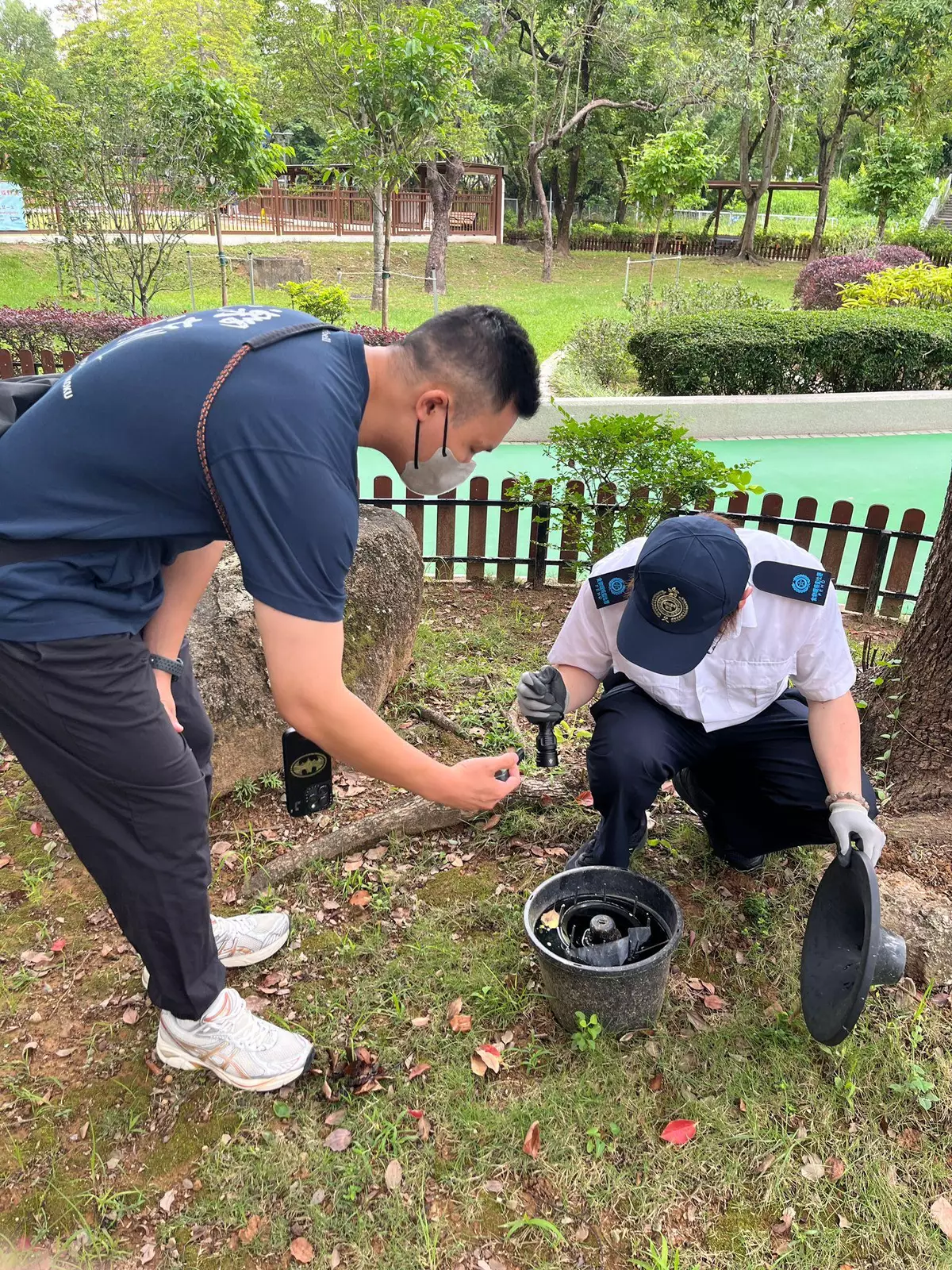
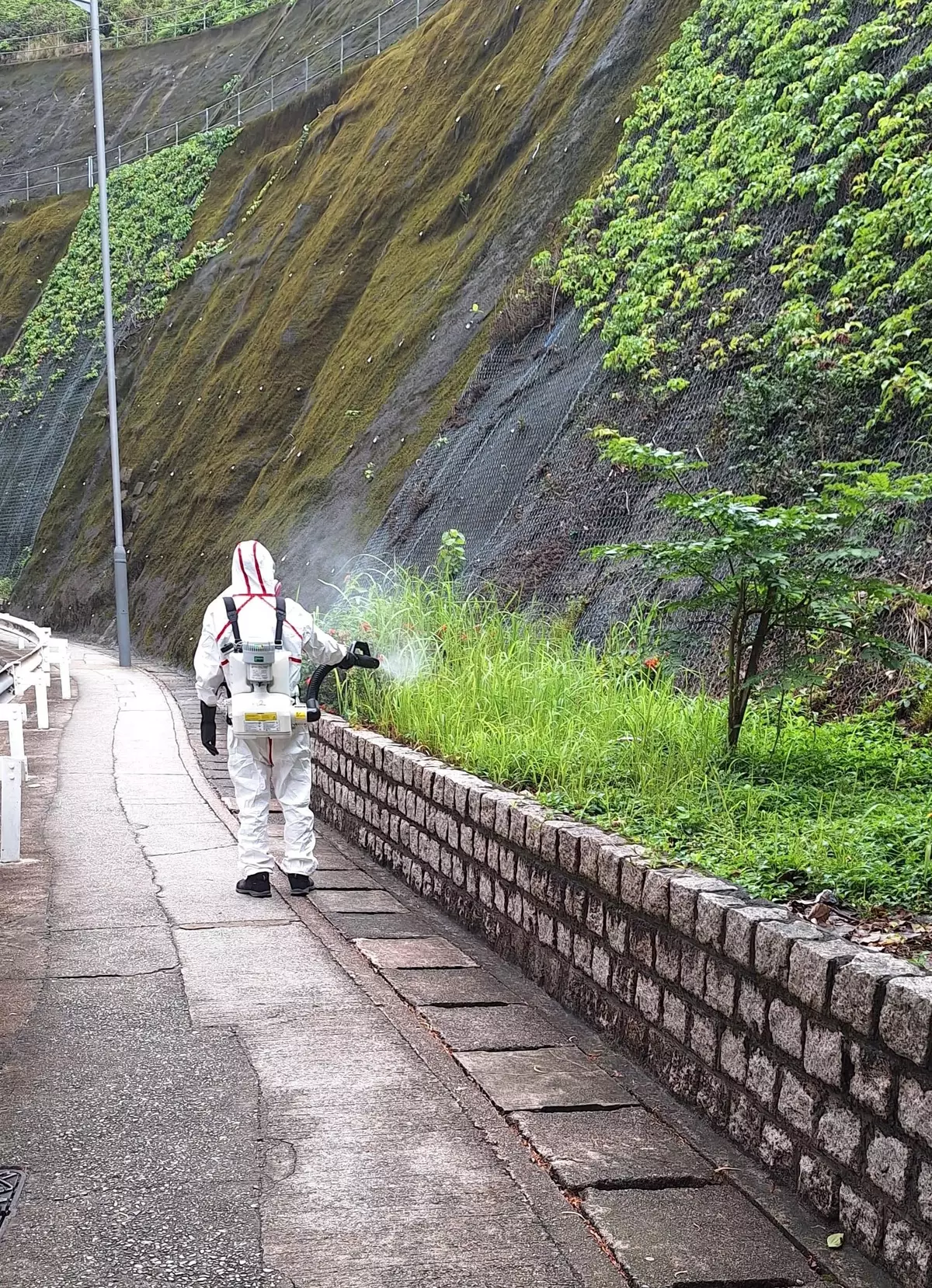
For Kwai Chung East in Kwai Tsing District, Shau Kei Wan and Sai Wan Ho in Eastern District, Kai Tak in Kowloon City District, Sheung Shui in Northern District, Tseung Kwan O North in Sai Kung District, Tai Po East in Tai Po District, and Tuen Mun South in Tuen Mun District, which recorded indexes exceeding 10 per cent, in accordance with the mechanism implemented by the FEHD in response to the chikungunya fever (CF) situation (i.e. strengthening mosquito control work in areas with a gravidtrap index between 10 per cent and 20 per cent, instead of 20 per cent or above under the original mechanism), the FEHD is collaborating with relevant departments and stakeholders to identify locations with high mosquito infestations and carry out intensive and targeted mosquito control measures. In particular, the gravidtrap data for Kwai Chung East showed that areas with more mosquito problems included parks, schools and public housing estates; the gravidtrap data for Shau Kei Wan and Sai Wan Ho, Kai Tak, and Tseung Kwan O North showed that areas with more mosquito problems included parks, schools, and public and private housing estates; the gravidtrap data for Sheung Shui showed that areas with more mosquito problems included parks, schools, public housing estates and village houses; the gravidtrap data for Tai Po East showed that areas with more mosquito problems included parks, schools, public and private housing estates, and hospitals; and the gravidtrap data for Tuen Mun South showed that areas with more mosquito problems included parks, and public and private housing estates.
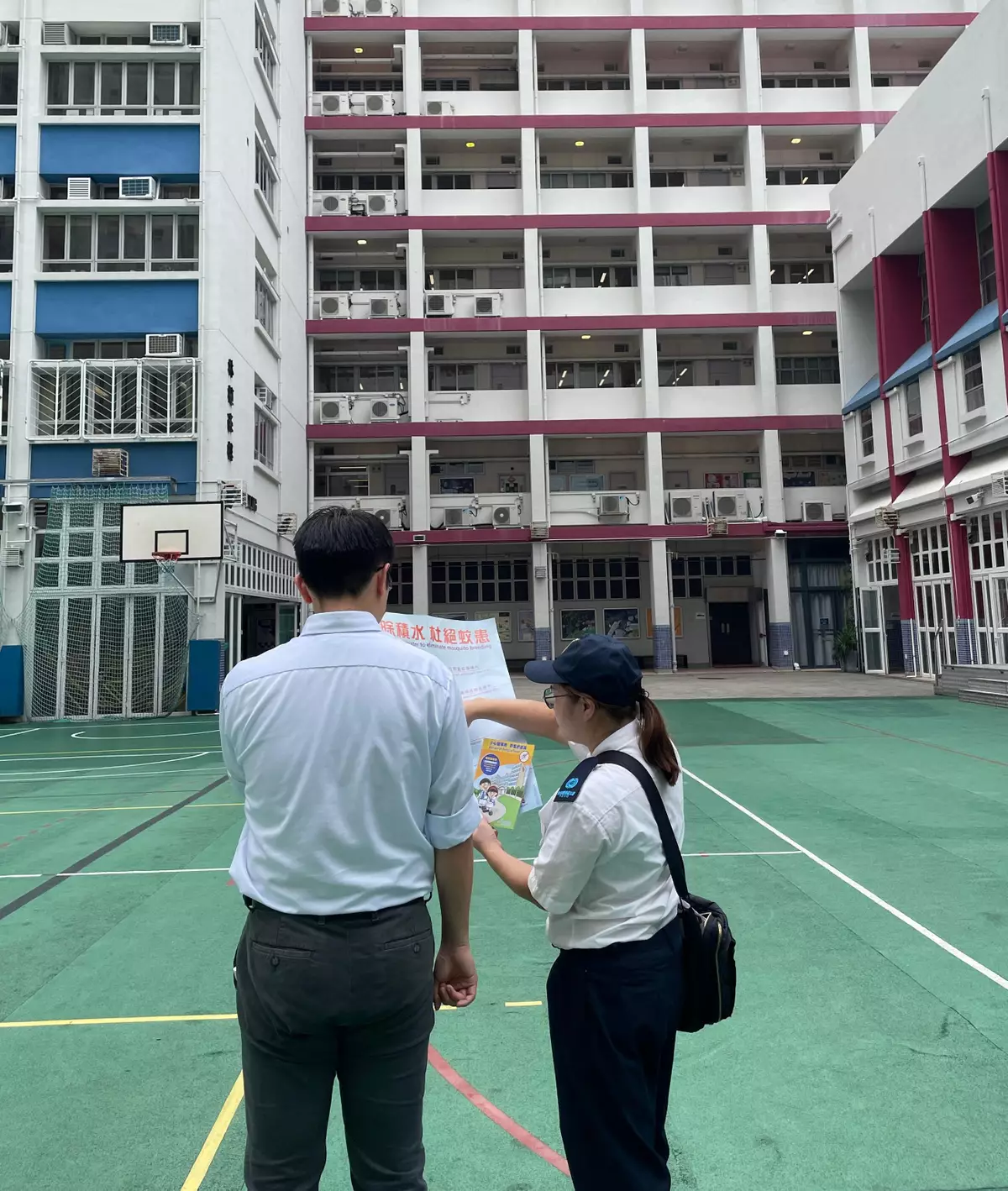
In response to the high-risk areas identified in the said survey areas, the FEHD has initiated two prosecutions against a relevant construction site contractor and a venue management contractor following the discovery of mosquito breeding at a construction site and a park in Tai Po District. Furthermore, following the discovery of stagnant water and stagnant water containers in a construction site in Eastern District and two private housing estates in Tai Po District, a total of three statutory notices have been issued to the relevant construction site contrctor and property management companies, requiring the clearance of such items within specified timeframe. The FEHD and the relevant departments are following up on the mosquito control work, and will also organise exhibitions, distribute leaflets and posters, and notify residential estates that have subscribed to the gravidtrap Rapid Alert System, advising property management agents and residents to stay vigilant and work together in taking mosquito prevention and elimination measures. In addition, the FEHD will strengthen the monitoring of the gravidtrap index in the areas to review the effectiveness of the mosquito control work.
The FEHD has so far released five batches of gravidtrap indexes for Aedes albopictus in April 2026, covering 61 survey areas. Among these 61 survey areas, one recorded a decrease or remained unchanged as compared to the Area Gravidtrap Index last month (i.e. March 2026), representing that the area’s mosquito infestation improved or maintained a low level. Fifty other areas recorded a slight increase, but the indexes were lower than 10 per cent.
Public participation is crucial to the effective control of mosquito problems. The FEHD appeals to members of the public to continue to work together in strengthening personal mosquito control measures, including:
tidy up their premises and check for any accumulation of water inside their premises;
remove all unnecessary water collections and eliminate the sources;
check household items (those placed in outdoor and open areas in particular), such as refuse containers, vases, air conditioner drip trays, and laundry racks to prevent stagnant water;
change water in flower vases and scrub their inner surfaces thoroughly, and remove water in saucers under potted plants at least once a week;
properly cover all containers that hold water to prevent mosquitoes from accessing the water;
properly dispose of articles that can contain water, such as disposable meal boxes and empty cans; and
scrub drains and surface sewers with alkaline detergent at least once a week to remove any mosquito eggs.
Starting in August 2025, following the completion of the surveillance of individual survey areas, and once the latest gravidtrap index and the density index are available, the FEHD has been disseminating relevant information through press releases, its website and social media. It aims to allow members of the public to quickly grasp the mosquito infestation situation and strengthen mosquito control efforts, thereby reducing the risk of CF transmission.
Following recommendations from the World Health Organization and taking into account the local situation in Hong Kong, the FEHD sets up gravidtraps in districts where mosquito-borne diseases have been recorded in the past, as well as in densely populated places such as housing estates, hospitals and schools to monitor the breeding and distribution of Aedes albopictus mosquitoes, which can transmit CF and dengue fever. At present, the FEHD has set up gravidtraps in 62 survey areas of the community, with a surveillance period of two weeks. During the surveillance period, the FEHD will collect the gravidtraps once a week. After the first week of surveillance, the FEHD will immediately examine the glue boards inside the retrieved gravidtraps for the presence of adult Aedine mosquitoes to compile the Gravidtrap Index (First Phase) and Density Index (First Phase). At the end of the second week of surveillance, the FEHD will instantly check the glue boards for the presence of adult Aedine mosquitoes. Data from the two weeks of surveillance will be combined to obtain the Area Gravidtrap Index and the Area Density Index. The gravidtrap and density indexes for Aedes albopictus in different survey areas, as well as information on mosquito prevention and control measures, are available on the department's webpage (www.fehd.gov.hk/english/pestcontrol/dengue_fever/Dengue_Fever_Gravidtrap_Index_Update.html#).
FEHD releases fifth batch of gravidtrap indexes for Aedes albopictus in April Source: HKSAR Government Press Releases
FEHD releases fifth batch of gravidtrap indexes for Aedes albopictus in April Source: HKSAR Government Press Releases
FEHD releases fifth batch of gravidtrap indexes for Aedes albopictus in April Source: HKSAR Government Press Releases