China's expanded zero-tariff policy for African countries took effect early Friday, with the first shipment of imports covered by the latest preferential treatment completing customs clearance in Shenzhen City of south China's Guangdong Province.
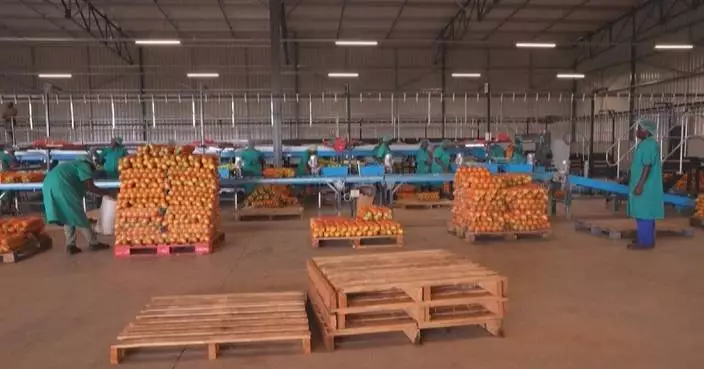
In the early hours at the Shenzhen Bay Port, 24 tonnes of apples imported from South Africa passed customs inspection and were released for distribution to local supermarkets and wholesale markets.
With the new zero-tariff arrangement in place, the import duty on these apples dropped from 10 percent to zero.
Traders expressed delight at the immediate savings, saying the policy offers tangible relief. Lower duties will ease costs and bring more affordable fruit to Chinese consumers, they said.
"Last year, we imported a total of 12,000 tonnes of fruit from Africa, mainly South African apples, oranges and citrus. [Benefiting from the zero-tariff policy,] each container of imports can now save about 20,000 yuan (2,930 U.S. dollars) in tariffs on average, with annual savings estimated at around 10 million yuan. Lower import costs will also accordingly help bring down market prices," said Luo Shengcong, general manager of the Shenzhen Jianchengye International Freight Forwarding Co., Ltd.
Trade between China and Africa has kept growing over recent years. In the first quarter of 2026, Shenzhen's imports from and exports to Africa reached 31.19 billion yuan (4.57 billion U.S. dollars), up 47 percent year on year. Imports were mainly precious metals, minerals, marble and diamonds, while exports included electrical equipment, footwear, furniture and clothing.
"For imports in Shenzhen City, the latest tariff cuts mainly cover fresh apples, wine, organic chemicals and leather raw materials. The tax rate on fresh apples has dropped by 10 percentage points, while the rate on modified ethanol has fallen by 30 percentage points. Industries such as catering, fresh produce and fine chemicals will directly benefit therefrom," said Xia Yingli, section chief of the Comprehensive Business Department at the Shenzhen Bay Customs.
China expanded zero-tariff treatment on Friday to all 53 African countries that had established diplomatic ties with the country, extending benefits beyond the 33 least developed countries (LDCs) already covered since December 2024. The new policy applies preferential rates to the remaining 20 African nations for two years, during which China will promote the signing of the China-Africa Economic Partnership for Shared Development agreement to make zero tariffs a long-term arrangement.
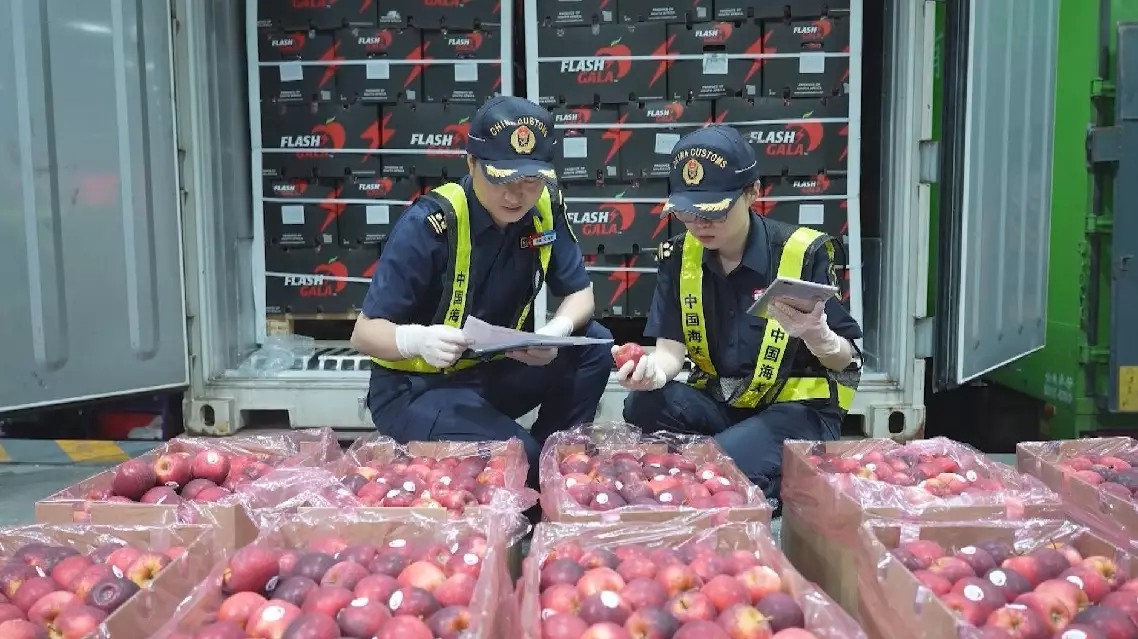
First African import shipment under new zero-tariff policy clears customs in Shenzhen
A car carrier with a capacity of 10,800 car equivalent units, described as the world's largest of its kind, was delivered Tuesday in the southern Chinese city of Guangzhou, demonstrating China's growing capabilities in high-end shipbuilding.
The vessel, named Glovis Leader, was built by Guangzhou Shipyard International Company Limited, a subsidiary of China State Shipbuilding Corporation (CSSC), together with China Shipbuilding Trading Co., Ltd.
It was delivered to HMM, a leading shipping company in the Republic of Korea (ROK). After delivery, the vessel will be operated by Hyundai Glovis Co., Ltd., a logistics company also based in the ROK.
Classified as a pure car and truck carrier, the ship is 230 meters long and 40 meters wide, with a design draft of 10.5 meters and a cruising speed of 19 knots. It features 14 vehicle decks and can carry a range of cargo, including electric, hydrogen-powered, and heavy trucks.
The Glovis Leader is powered by a dual-fuel system using liquefied natural gas and conventional fuel, meeting the International Maritime Organization's Tier III emissions standards. It also incorporates energy-saving technologies, including optimized hull design, waste heat recovery systems and shore power capability.
During the construction process, the Chinese builders successfully overcame technical challenges, reduced cost and delivered the vessel ahead of schedule.
"Because our company has a complete supply chain control system, the overall construction cost is relatively low. Currently, this ship can accommodate more than 10,800 standard cars, and with our optimized design, the vessel layout can now accommodate up to 11,000 standard cars," said Zhang Fuli, the technical manager of the car carrier from Guangzhou Shipyard International Company Limited.
Guangzhou Shipyard International highlighted its commitment to innovation and efficiency with the delivery of its latest car carrier.
The company has secured more than 40 orders for car carriers and delivered 26 to date. All vessels delivered so far were completed ahead of schedule, with 11 ships delivered in 2025, averaging 151 days early.
The company currently holds orders worth about 100 billion yuan (about 14.58 billion U.S. dollars), with overseas contracts accounting for more than 95 percent of the total. Production is scheduled through 2030.
"During the sea trials and ship delivery, we leverage the smart maritime platform, drones and on-site patrol vessels to strengthen traffic management in the surrounding waters, maintain navigation order, and fully support the manufacturing of high-end ship building and automobile export," said Chen Lizhong, commander of Longxue Maritime Patrol and Law Enforcement Unit of Guangzhou Nansha Maritime Affairs Bureau.
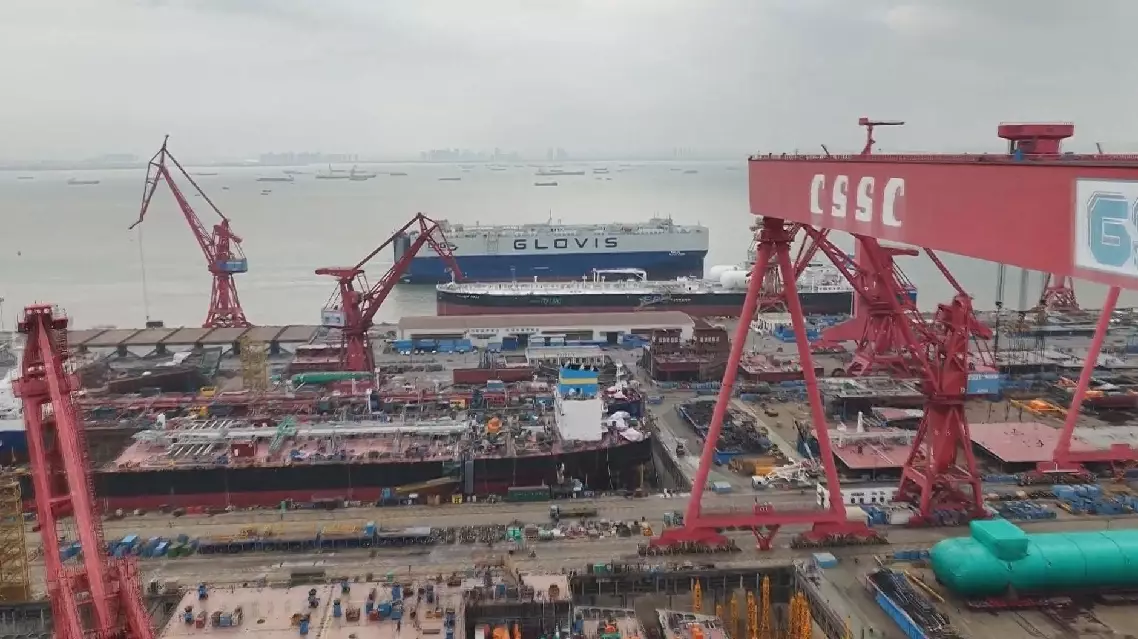
World's largest car carrier highlights China's growing capabilities in high-end shipbuilding