The Urumqi Tianshan International Airport, in the capital of northwest China's Xinjiang Uygur Autonomous Region, is expecting more than 32,000 passenger crossings during the city's spring break in late April and the ongoing five-day May Day holiday, with peak travel on May 1 and 5, according to the airport.
Popular outbound destinations include Kazakhstan, Uzbekistan and Russia, as the hub serves as a key gateway to Central Asia.
During the holiday starting Friday, authorities expect to process 25,000 passenger trips and more than 210 international flights.
"To ensure smooth travel during the spring break and May Day holidays, we have deployed smart e-gates and implemented secondary boarding checks, reducing wait times by 30 percent. Dedicated fast lanes are available for families, children, and the elderly. These efforts contribute to building a safe, efficient, and smart aviation hub," said Wang Wei, captain of the Second Duty Team under the Urumqi Exit-Entry Border Inspection Station.
As of present, the airport operates 36 international cargo routes, connecting 22 other countries across Central Asia, Europe and West Asia. The expanding network underscores the airport's growing role as a regional aviation hub, strengthening Xinjiang's position as a bridge between China and the wider world.

Urumqi airport expects record passenger trips during May Day holiday
The United States' war with Iran has already been "terminated" ahead of a 60-day deadline by law due to the current ceasefire, U.S. media reported on Thursday, citing a senior Trump administration official.
Under the War Powers Resolution, U.S. President Donald Trump had until Friday to seek congressional authorization to continue the conflict or bring it to an end, with the option to extend the deadline by an additional 30 days.
"The hostilities that began on Saturday, Feb. 28 have terminated" between the United States and Iran for purposes of that law, the official, who spoke on condition of anonymity, was quoted as saying.
Washington and Tehran have not exchanged fire since a ceasefire began on April 7 and was later extended.
Earlier on Thursday, Defense Secretary Pete Hegseth argued at a congressional hearing that he believes the ceasefire "pauses or stops" the 60-day clock for congressional authorization of war.
"I do not believe the statute would support that," Democratic Senator Tim Kaine responded, "I think the 60 days runs (out) maybe tomorrow, and that's going to pose a really important legal question for the administration there."
"That deadline is not a suggestion; it is a requirement," said Republican Senator Susan Collins, who voted Thursday for a measure to end U.S. military action in Iran without congressional approval.
The White House notified Congress of the military campaign against Iran on March 2, making Friday the 60-day milestone for the president to start winding down the war unless he gets congressional authorization.
Iranian President Masoud Pezeshkian said on Thursday that any U.S. attempt to impose a naval blockade and maritime restrictions against Iran is "doomed to failure."
Pezeshkian made the remarks in a statement to mark Persian Gulf National Day, which falls on April 30. He said the "enemies" have changed their approach and shifted their pressure to the economic and maritime arenas, using a naval blockade on the Strait of Hormuz and restrictions on maritime trade as a new tool against the Iranian government and people, according to the statement published on his office's website.
The United States imposed its blockade on the Strait of Hormuz after post-ceasefire negotiations with Iran in Pakistan's capital Islamabad on April 11 and 12 failed to lead to an agreement.
The ceasefire between Iran, the United States and Israel took effect on April 8 following 40 days of fighting, which started on Feb. 28 when the United States and Israel launched joint attacks on Tehran and other Iranian cities, killing Iran's then-Supreme Leader Ali Khamenei, senior commanders, and civilians.
Iran responded with waves of missile and drone strikes targeting Israel and U.S. assets in the Middle East, and tightened its grip on the Strait of Hormuz, barring passage to vessels belonging to or affiliated with Israel and the United States.
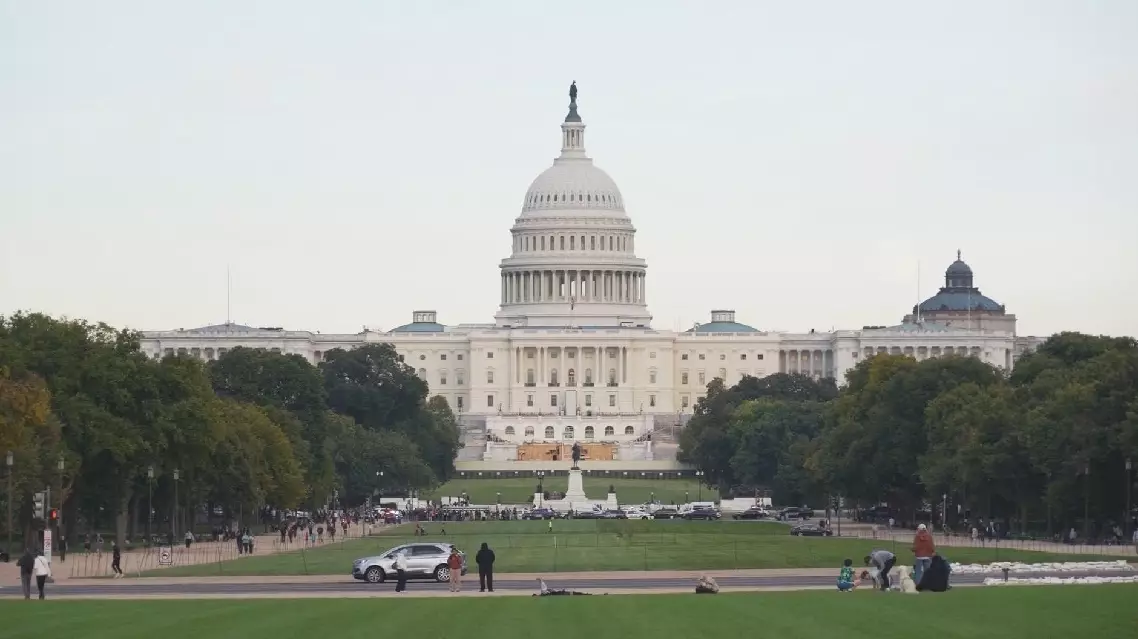
Trump team says Iran war 'terminated' as ceasefire sparks clash over War Powers deadline