China on Thursday released the first complete Chinese translation of the 1956-1948 Tokyo Trial court records 80 years after the landmark tribunal that brought Japan's wartime leaders to justice.
The International Military Tribunal for the Far East, convened in Tokyo in 1946 by 11 countries, sentenced figures including former Japanese Prime Minister Hideki Tojo to death for crimes against humanity. However, the court documents were primarily written in English and Japanese, while Chinese-language records remained fragmented.
The newly published translation spans 40 volumes, totaling more than 20,000 pages and 22 million characters. Launched at the Zhejiang Yuexiu University in Shaoxing, a city in east China's Zhejiang Province, the project fills a domestic archival gap after more than a decade of work.
Xiang Longwan, a professor and son of Chinese procurator Xiang Zhejun (Hsiang Che-chun), who was the chief Chinese prosecutor at the Tokyo Trial and who led the legal effort to convict the Japanese war criminals, said the records are extremely important, as they are first-hand materials of the trial, which reflects the whole course of Japan's aggression.
"Today, we are having a meeting on the 40 volumes of the Chinese-translation of the trial records. The 40 volumes of the Chinese-translation of the trial records are extremely important, as they are first-hand materials. Based on these documents, people can learn about the entire trial process back then, and the whole course of Japan's aggression. This is very important," said Xiang Longwan.
The translation project drew on expertise from multiple fields, including contributions from descendants of Chinese prosecutors involved in the trial.
The publication expands global access to the tribunal's core documents, enabling more people to gain a clearer understanding of truth, according to Yong Heming, president of Zhejiang Yuexiu University.
"The publication of the complete Chinese translation of the court records has greatly expanded the cross-lingual global dissemination of core documents on the Tokyo Trial. It enables more people to access these key historical records," Yong said.
For the translation team, the work means more than mere language conversion. Ye Xingguo, leader of the translation team, described it as an interdisciplinary effort.
"Our translation team mainly handled English materials, while the revision work involved experts not only in history but also in law," Ye said.
As this year marks the 80th anniversary of the start of the Tokyo Trial, and amid recent moves by Japan's right-wing forces, Xiang Longwan -- a participant in the translation project and a witness to history -- warned against the revival of Japanese militarism. He said the records should be made better known to both Chinese and Japanese people, especially to younger generations in Japan, so they can better understand this chapter of history.
"A large part of the judgment records the whole process of how Japanese militarism came into being, expanded, developed and finally collapsed. I was profoundly educated after reading it," he said.
The entire translation process spanned more than a decade. Participants in this 22-million-word project say they believe that after rigorous cross-checks and diligent textual research, the accuracy of the Chinese rendition is higher than that of the English and Japanese versions.
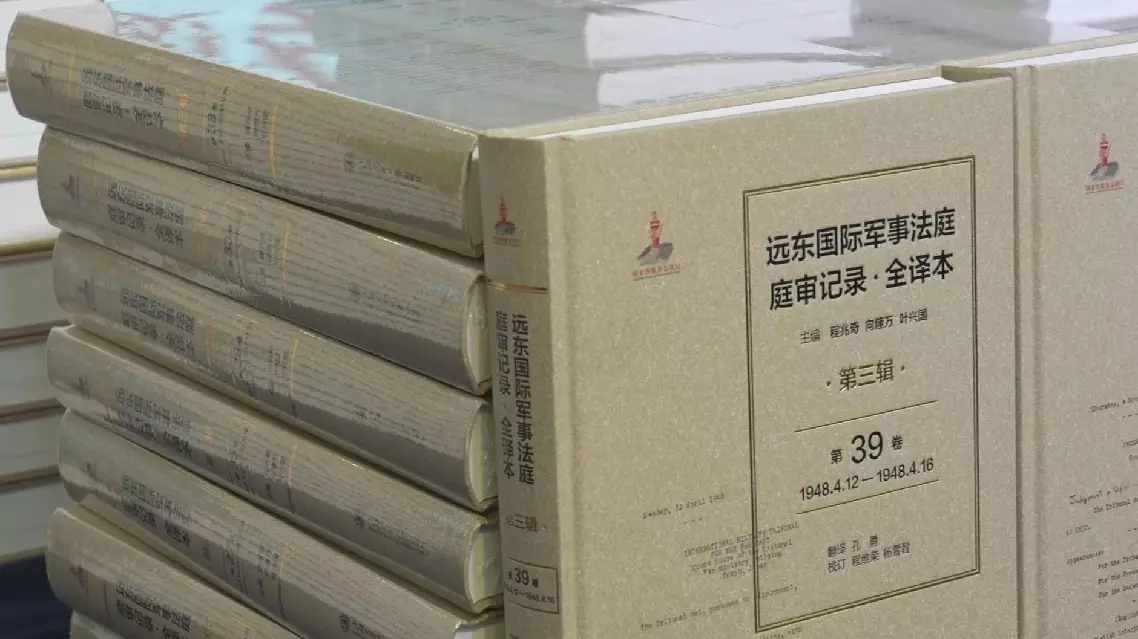
China launches complete Chinese translation of 1946-1948 Tokyo Trials records
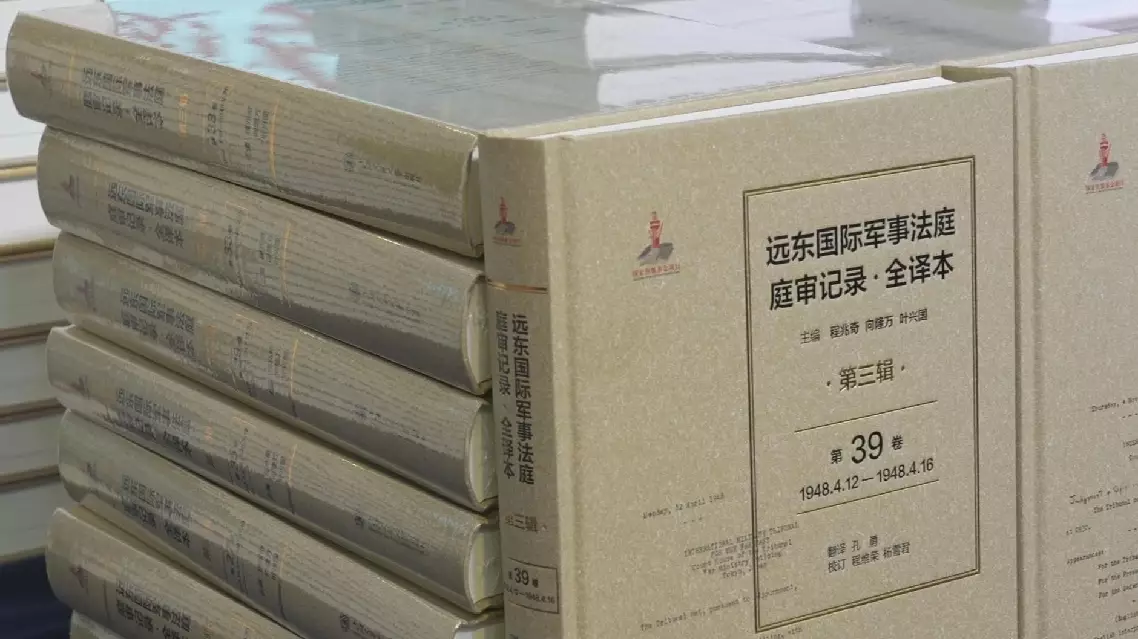
China launches complete Chinese translation of 1946-1948 Tokyo Trials records