Two ferry routes between Fuzhou City of Fujian Province on the Chinese mainland and the Matsu islands witnessed a surge in passenger traffic during the May Day holiday, providing convenient channels for exchanges between people across the Taiwan Strait.
The five-day holiday, starting Friday, is one of the busiest travel periods of the year, driven by strong demand for tourism and family visits.
A total of 115 Taiwan compatriots arrived at the Huangqi Passenger Terminal in Fuzhou from the Baisha Harbor in Matsu a day before the holiday. On average, each person completed all customs clearance procedures in less than 30 seconds. "During the May Day holiday, we would like to visit the Three Lanes and Seven Alleys of Fuzhou and the Meizhou Island in Putian City with our family members, eat some local snacks, and buy some local specialties home to share with relatives and friends," said Chang Ai-li, a Taiwan compatriot.
During the holiday travel rush, port authorities add two round-trip ferry ships daily on Friday and Sunday on the Huangqi to Matsu route.
Currently, there are two passenger ferry routes under the "Mini Three Links" operating between Fuzhou and Matsu. They are the Huangqi-Matsu route and the Mawei-Matsu route.
According to data from the Fuzhou Customs, the two ferry routes saw the operation of 2,284 voyages on them in 2025, handling 98,500 inbound and outbound passenger trips, representing a year-on-year increase of 50.8 percent in passenger traffic.
Launched in 2001, the "Mini Three Links" refer to direct trade, mail and transport services between the islands of Kinmen and Matsu and Fujian Province.

Cross-Strait ferry routes see growing travelers during May Day holiday
The United States' war with Iran has already been "terminated" ahead of a 60-day deadline by law due to the current ceasefire, U.S. media reported on Thursday, citing a senior Trump administration official.
Under the War Powers Resolution, U.S. President Donald Trump had until Friday to seek congressional authorization to continue the conflict or bring it to an end, with the option to extend the deadline by an additional 30 days.
"The hostilities that began on Saturday, Feb. 28 have terminated" between the United States and Iran for purposes of that law, the official, who spoke on condition of anonymity, was quoted as saying.
Washington and Tehran have not exchanged fire since a ceasefire began on April 7 and was later extended.
Earlier on Thursday, Defense Secretary Pete Hegseth argued at a congressional hearing that he believes the ceasefire "pauses or stops" the 60-day clock for congressional authorization of war.
"I do not believe the statute would support that," Democratic Senator Tim Kaine responded, "I think the 60 days runs (out) maybe tomorrow, and that's going to pose a really important legal question for the administration there."
"That deadline is not a suggestion; it is a requirement," said Republican Senator Susan Collins, who voted Thursday for a measure to end U.S. military action in Iran without congressional approval.
The White House notified Congress of the military campaign against Iran on March 2, making Friday the 60-day milestone for the president to start winding down the war unless he gets congressional authorization.
Iranian President Masoud Pezeshkian said on Thursday that any U.S. attempt to impose a naval blockade and maritime restrictions against Iran is "doomed to failure."
Pezeshkian made the remarks in a statement to mark Persian Gulf National Day, which falls on April 30. He said the "enemies" have changed their approach and shifted their pressure to the economic and maritime arenas, using a naval blockade on the Strait of Hormuz and restrictions on maritime trade as a new tool against the Iranian government and people, according to the statement published on his office's website.
The United States imposed its blockade on the Strait of Hormuz after post-ceasefire negotiations with Iran in Pakistan's capital Islamabad on April 11 and 12 failed to lead to an agreement.
The ceasefire between Iran, the United States and Israel took effect on April 8 following 40 days of fighting, which started on Feb. 28 when the United States and Israel launched joint attacks on Tehran and other Iranian cities, killing Iran's then-Supreme Leader Ali Khamenei, senior commanders, and civilians.
Iran responded with waves of missile and drone strikes targeting Israel and U.S. assets in the Middle East, and tightened its grip on the Strait of Hormuz, barring passage to vessels belonging to or affiliated with Israel and the United States.
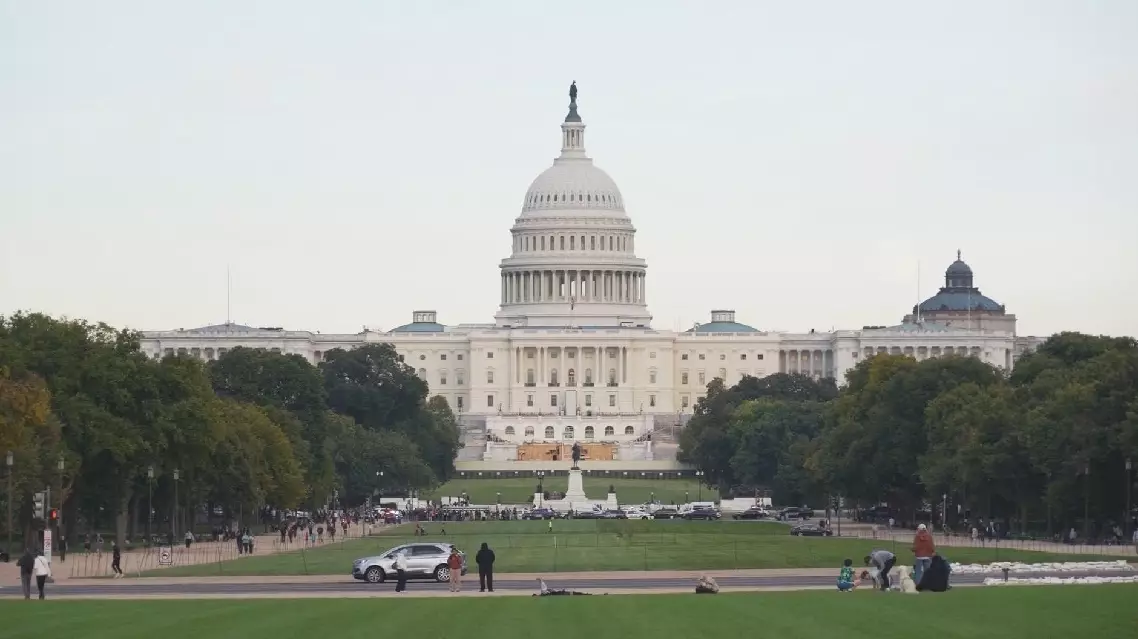
Trump team says Iran war 'terminated' as ceasefire sparks clash over War Powers deadline